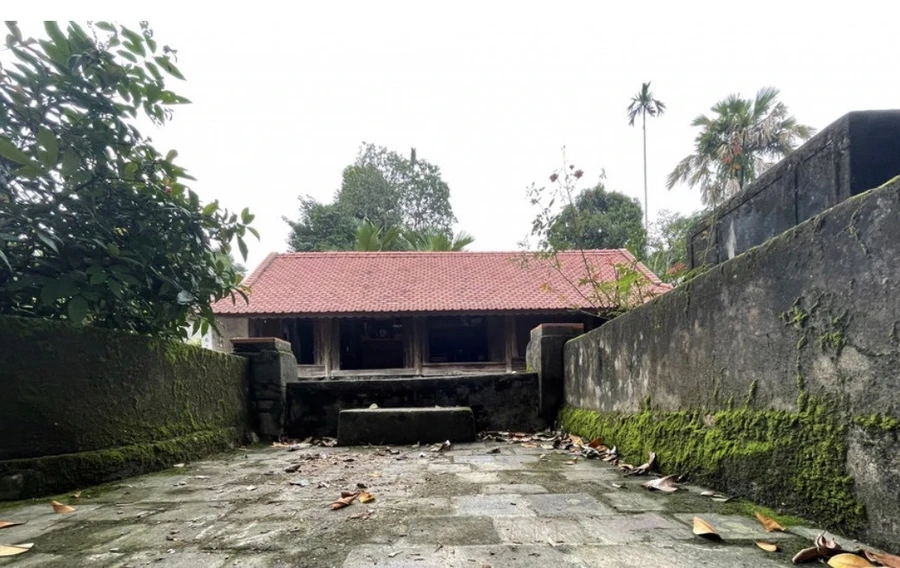
 The old house of Mr. Nguyen Huy Than in Truong Luu village (Kim Song Truong commune, Can Loc district, Ha Tinh province).
Every spring, this ancient village becomes a haven for memories and traditional culture.
Retracing the traces of a century
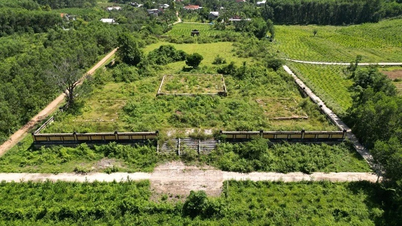
This humble village is nestled in the heart of Kim Song Truong commune (Can Loc district, Ha Tinh province). Visitors from afar, upon their first arrival, are often struck by the ancient charm of this village, which is over 600 years old.
According to records, the ancient village of Truong Luu, formed around the 15th century, comprised four hamlets: Dong Thac, Phuc Truong, Phuong Son, and Tan Tien, all belonging to Kim Song Truong commune.
This is also the home of the Nguyen Huy family, a lineage of scholars that produced many famous figures such as: Minister of Public Works Nguyen Huy Tuu, Thám hoa (Third-ranked scholar) Nguyen Huy Oanh, Doctor Nguyen Huy Quynh, along with many other high-ranking scholars and students who brought glory to the family.
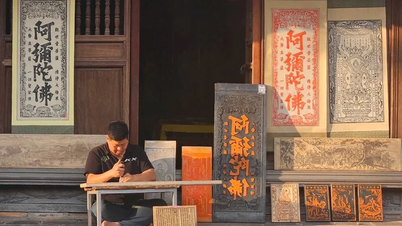
In particular, the valuable documents preserved by the Nguyen Huy family for generations, including the Phuc Giang school woodblocks, the Hoang Hoa envoy's journey map, and the system of Han Nom documents of Truong Luu village, have been recognized as a World Memory Heritage site in the Asia-Pacific region. In addition, Truong Luu also preserves many ancient houses dating back 100-300 years.
Walking around the village, it's easy to spot ancient houses nestled in tranquil grounds with lush, old trees, winding paths embracing stone wells… These old houses share a common feature: they are built of ironwood or red bricks with mortar made from seashells. The wooden beams, columns, and rafters are intricately carved, and many horizontal plaques inscribed with Han Nom characters hang inside. Many of these plaques and couplets are of high value.
Prominent among the ancient houses in Truong Luu is the house of the branch of the Nguyen Huy Than family (Phuong Son village). This is the oldest house located within the garden of Mr. Tham (Nguyen Huy Oanh) - one of the "eight scenic spots" of Truong Luu, a place that once witnessed discussions of poetry, literature, and current affairs between scholars and literary figures of the Nguyen Huy family of Truong Luu and writers, poets, and politicians in the late 19th and early 20th centuries.
Despite having stood for hundreds of years and experiencing some deterioration over time, the house has undergone renovations and repairs by the family, but still retains its original state, including the perennial garden, well, shallow pond, and courtyard.
The house is built entirely of jackfruit wood, with a three-bay, two-wing architectural style. The house is particularly cool in the summer and warm in the winter. The interior space is divided into rooms for worship, rest, and receiving guests.
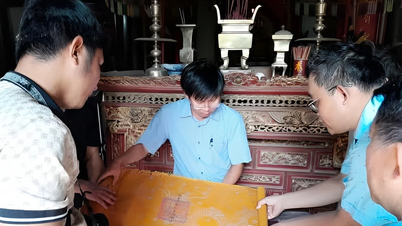
The church area is centrally located and features many artifacts dating back hundreds of years. The beams, columns, and rafters are intricately carved. In each room, artisans have sculpted numerous characters and inscriptions in very special places.
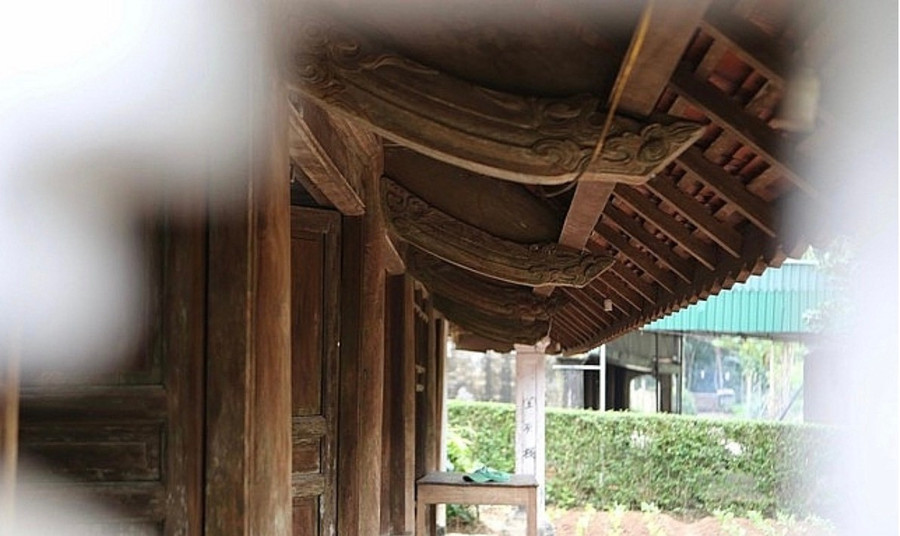 The distinctive architecture of the old houses in Truong Luu village.
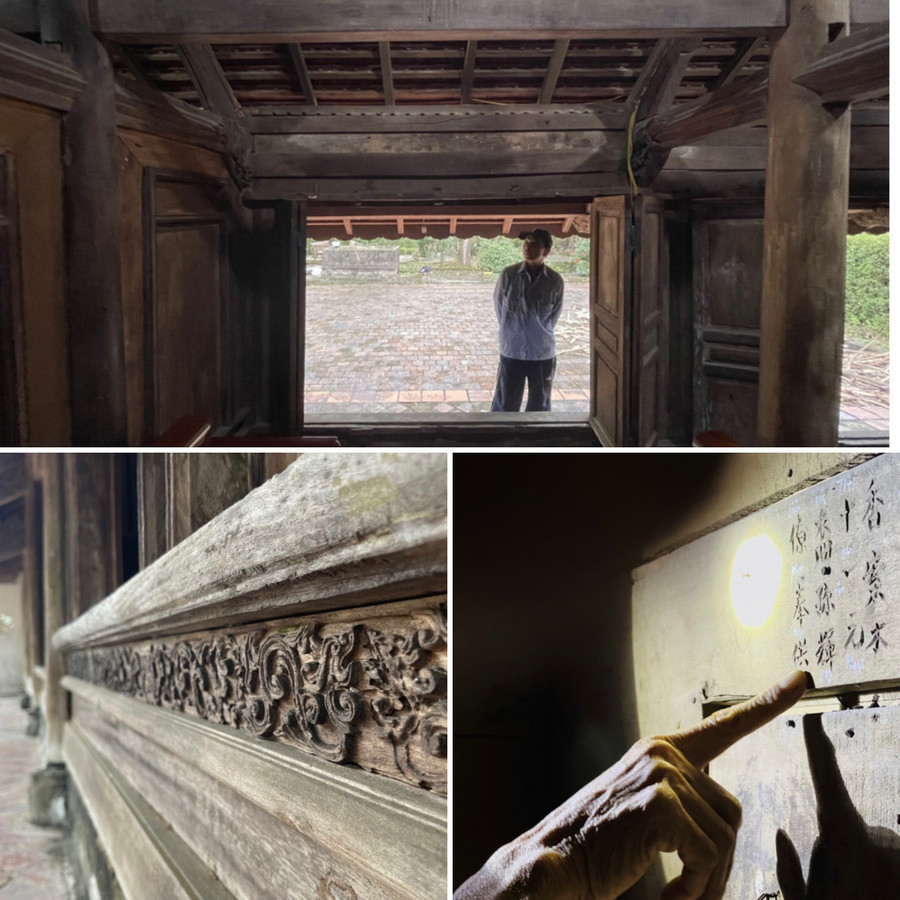 Over the centuries, the details and furnishings in the house have remained unchanged.
Steadfastly preserving the old traditions.
Near Mr. Nguyen Huy Than's house is the house of Mrs. Tran Thi Lan (daughter-in-law of the Nguyen Huy family). The house is currently being looked after and used by Mr. and Mrs. Nguyen Huy Hung. After many historical upheavals, the house has retained its original appearance since its construction.
In Mr. Hung's mind, each old house is not only beautiful in its architectural details, but also holds many childhood memories and traditional cultural values. It's not just a place to receive guests, worship ancestors, rest, and live for the family, but also a symbol of the bond between family members across generations. Preserving these old houses is the foundation of cultural education , preserving the family's identity to pass on to the younger generation.
Mrs. Minh, Mr. Hung's wife, also said that regardless of rain or shine, every morning, the couple cleans the grounds of the old house thoroughly. All items are neatly arranged and tidy. Preserving the house, besides allowing descendants to learn about their ancestors' traditions, also serves as a place to welcome groups, including students, to visit and learn about the traditions, customs, and lifestyles of historical figures.
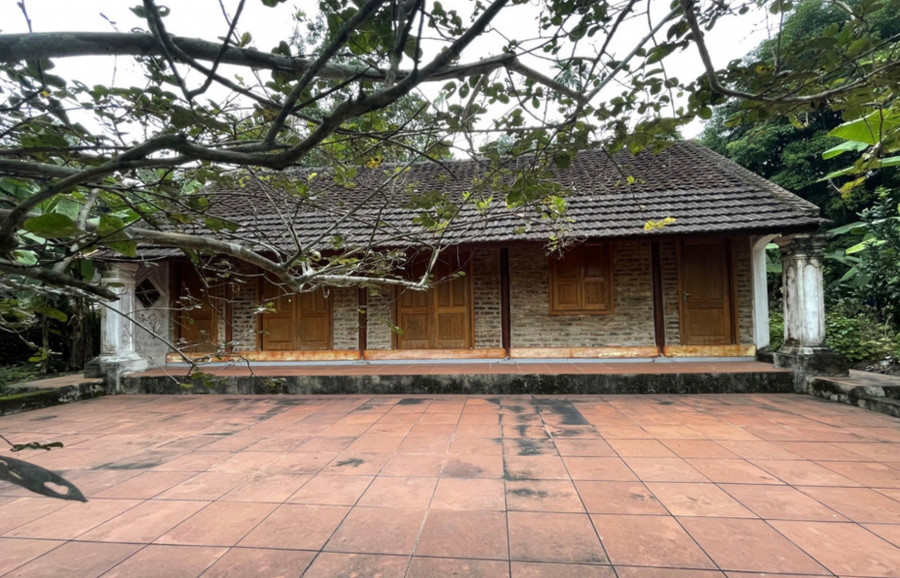 An old house has been restored to protect it from the ravages of time.
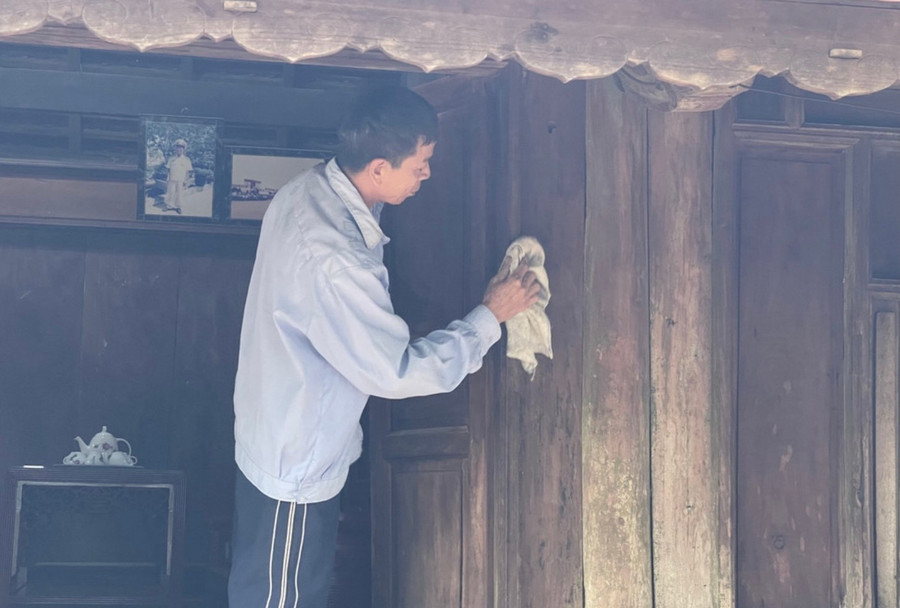
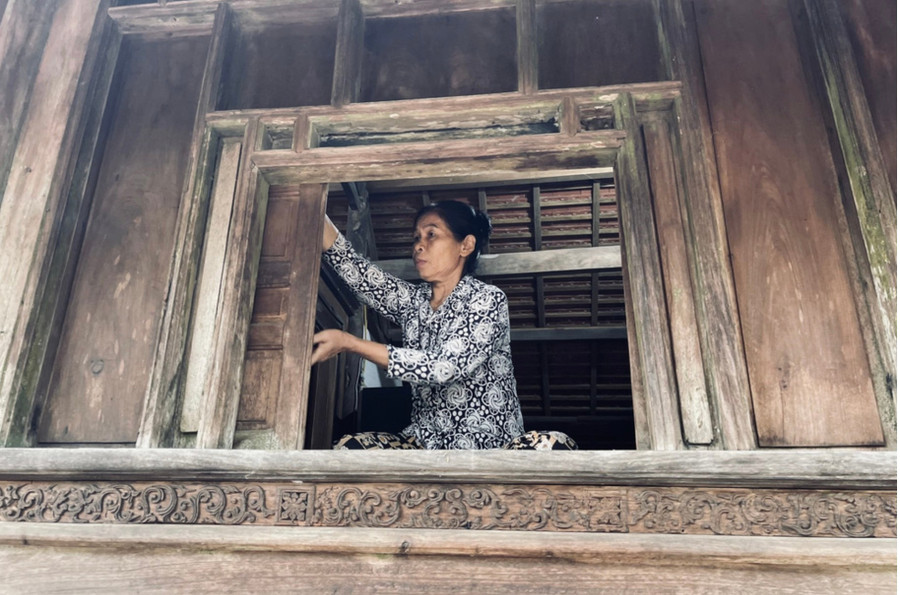 Mr. and Mrs. Nguyen Huy Hung, who look after several old houses, are trying to preserve and protect their family's "treasures."
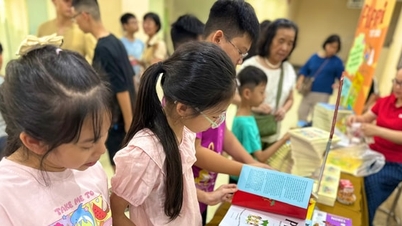
Every year, the old houses in Truong Luu welcome hundreds of teachers and students who come to visit and learn. Ms. Nguyen Thi Quy, Principal of Phan Kinh Primary School (Can Loc district), said that the school always focuses on teaching local history and traditions.
"The cultural values of Truong Luu are the pride of every local resident. These values need to be gradually nurtured and passed down to future generations over a long period of time."
"Every month, the school organizes visits for students in grades 4 and 5 to explore local heritage sites and clean up the Truong Luu Village Cultural Heritage Conservation Center. Through this, we instill in the students a sense of pride and respect for the traditional values of their ancestors," Ms. Quy informed.
The People's Committee of Kim Song Truong commune has also proposed that relevant levels and sectors should soon appraise and recognize the ancient house relics in the area, thereby providing partial financial support for restoration and preservation to safeguard the cultural heritage for future generations. This will also be a highlight in the Truong Luu cultural relic complex that will be included in tourism tours.
Mr. Nguyen Quoc Son, Vice Chairman of the People's Committee of Kim Song Truong commune, said: "To preserve and promote the traditional values of ancient houses, in recent times, the local government has propagated and mobilized descendants of the family lineage, hoping that they will play a role and take responsibility in mobilizing resources to preserve and restore dilapidated structures."
Source: https://giaoducthoidai.vn/hon-que-viet-o-lang-di-san-post719488.html



































































Comment (0)