


In the days leading up to Tet (Lunar New Year), the corner near the Nguyen Dinh Chieu Library in Vinh Long (Long Chau ward) is much busier than usual. Right next to the library, the "Calligrapher's Street" has been recreated, attracting many students and locals who come to "request calligraphy." Amidst the hustle and bustle of life, this precious custom of our ancestors is preserved every spring.
 |
| Artist Tran Co gives calligraphy lessons at "Calligrapher's Street". |
The beautiful custom of asking for calligraphy in the spring
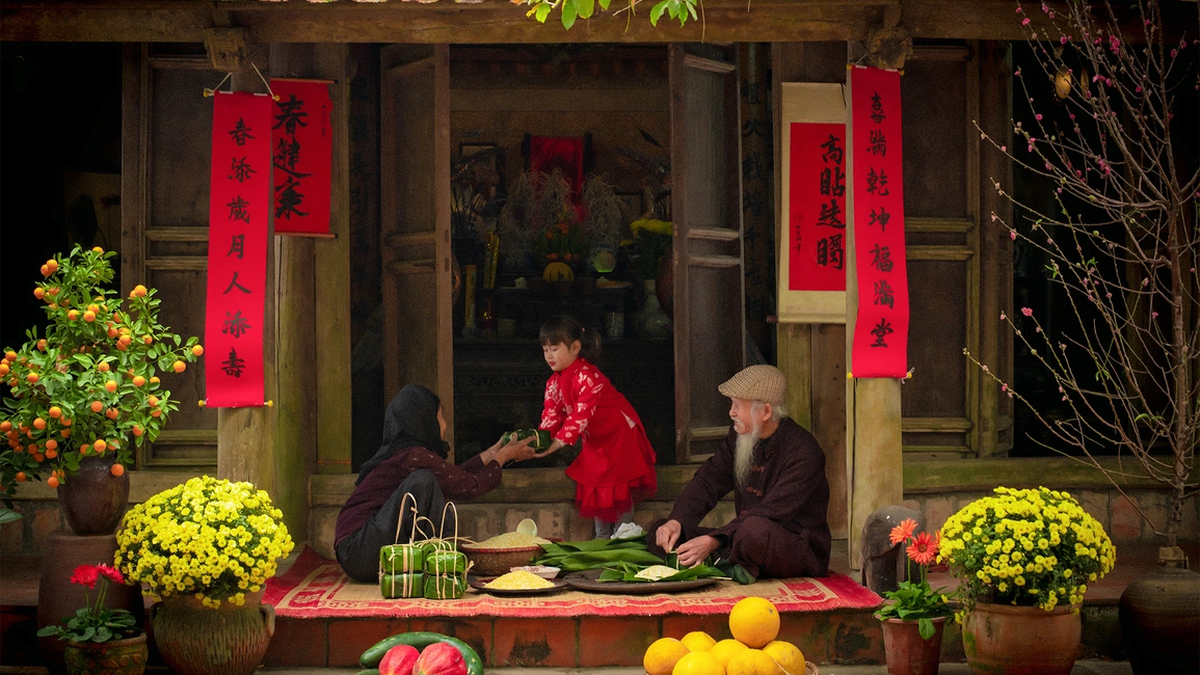
When speaking of refined springtime pastimes, the ancients often said: "First calligraphy, second painting, third ceramics, fourth wood carving." Along with images of sticky rice cakes, firecrackers, and New Year's poles, one cannot forget red couplets. Asking for and giving calligraphy is a beautiful custom to start the new year. This practice can be done on any day or occasion, such as celebrating a new house or honoring someone who has achieved academic success, but it is most common during the spring, amidst the bustling atmosphere: "Every year when the peach blossoms bloom / We see the old calligrapher / Arranging his ink and red paper / On the busy street."
According to artist Tran Co, head of the Vinh Long Calligraphy Club, the club was established in 2010 and has about 20 members. Calligraphy is popular and universal, conveying love for the homeland, virtues such as "benevolence, propriety, righteousness, wisdom, and trustworthiness," and phrases carrying many good wishes.
In the past, people wrote calligraphy using Chinese and Vietnamese characters, on bamboo sticks, tree bark, and dó paper. Today's Vietnamese calligraphy is often written on art paper, or other types of paper, making it accessible to a wide range of ages and demographics, becoming a familiar and widely disseminated cultural art form. It's not just about the art of beautiful handwriting; it also embodies thoughts, philosophies of life, and reflects a blend of tradition and modernity. Each person, in their circumstances and occupation, chooses a character they cherish most, seeking blessings and good fortune for the new year and to witness firsthand the artistic talent of the calligraphers.
 |
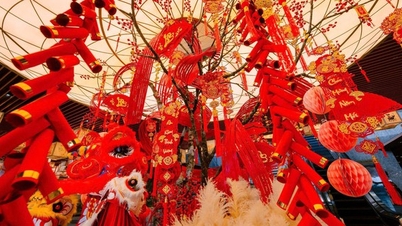
| The spring festival wouldn't be complete without images of banh chung (traditional Vietnamese rice cake), firecrackers, the New Year's pole, and red couplets. |
According to artist Tran Co: "Handwriting reflects character," practicing calligraphy is cultivating one's temperament. Each person has a different writing style, reflecting different intellectual and artistic abilities. The custom of requesting calligraphy guides people towards the beauty of truth, goodness, and beauty, and also contributes to preserving and promoting the cultural values of the nation. The more people love and appreciate calligraphy, the more we see people who love knowledge, culture, and the cultural beauty left behind by our ancestors.
Ms. Le Thi Hong Thu, Deputy Principal of Mang Non 2 Kindergarten (Nhon Phu commune) and Deputy Head of the Provincial Calligraphy Club, shared: “Tet calligraphy is not only an art form but also a custom with cultural significance, respecting literacy and knowledge. Every Tet holiday, I give hundreds of 'peace and tranquility' calligraphy pieces to people. Each character I receive, such as 'happiness,' 'prosperity,' 'longevity,' 'wisdom,' 'peace,' etc., or couplets, contains profound meanings, representing aspirations for a fulfilling life, a harmonious family, career advancement, or a successful love life... People often respectfully hang these calligraphy pieces in prominent positions in their homes as a meaningful reminder of their goals and aspirations for the new year.”
Continuing the beautiful cultural heritage of our ancestors.
According to Ms. Le Thi Hong Thu, despite the modern pace of life, many young people still appreciate and cherish receiving calligraphy at the beginning of the year. Many young people seek out and learn calligraphy. For beginners, the way to hold the brush is very different from holding a regular ballpoint pen. Beautiful handwriting is achieved when one can control the pressure of the brush, write thin and thick strokes, and create a harmonious composition of the characters.
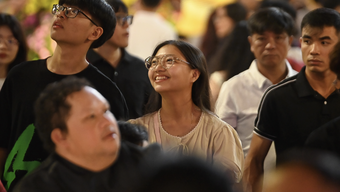
Ms. Dang Phuong Mai, a teacher at Phu Duc Secondary School (Long Ho commune), and her students went to the library to read books, wrote wishes to hang on a plum blossom tree, and then went to the "Calligrapher's Street" to ask for calligraphy. "The students were all very excited and enthusiastic participating in the spring activities. They got to experience the old custom of asking for calligraphy, and watch the calligraphers write firsthand. When the meaning of each character was explained to them, they developed a greater appreciation for and love of Vietnamese cultural traditions," said Ms. Phuong Mai.
Artist Tran Co, head of the Calligraphy Club, hopes that calligraphy will continue to develop, especially among young people who will love and promote it every spring. Through this, this art form preserves the traditional culture of the nation and also serves as a place for people to express their beliefs and aspirations through each character.
Through the masterful calligraphy of the calligraphers, "the soul of the nation shines brightly on the gilded paper." The image of calligraphers in their traditional long robes and turbans, beside red paper and ink, has become a beautiful symbol of Tet (Vietnamese New Year). Their graceful brushstrokes express the thoughts, character, and wishes of the writer. This art form, a blend of tradition and modernity, the giving and receiving of calligraphy, is also a way for every Vietnamese person to remember their roots, cherish literacy, and uphold moral principles.
Text and photos: PHUONG THU
Source: https://baovinhlong.com.vn/van-hoa-giai-tri/202602/hon-xuan-trong-tung-net-chu-0bf41ca/


![[Photo] Prime Minister Pham Minh Chinh presides over a meeting to assess the situation during the Lunar New Year holiday.](https://vphoto.vietnam.vn/thumb/1200x675/vietnam/resource/IMAGE/2026/02/22/1771768925196_ndo_br_dsc-6283-jpg.webp)

























































Comment (0)