

From the urban development program
In recent years, the province's economic structure has shifted strongly towards industry, trade, and services. The formation and development of industrial zones and clusters have promoted urbanization, concentrated the population, contributed to expanding existing towns and townships, and created many new urban settlements.
In 2011, the province developed and implemented the Urban Development Program with many particularly important points. To date, the Construction sector has gradually strived to fulfill the assigned tasks: the Urban Development Program until 2030; submitting for approval the urban development programs of the districts; coordinating with Tan An City to pilot the Smart City Project;...
 The urban landscape in the province is changing dramatically (In the photo: Tan An City prioritizes development into a smart city).
According to Nguyen Van Hung, Director of the Department of Construction, the appearance of urban areas in the province has changed significantly. Many projects have been invested in and built, creating new, spacious, clean, and beautiful landscapes, contributing to the socio-economic development of the locality and improving the lives of the people.
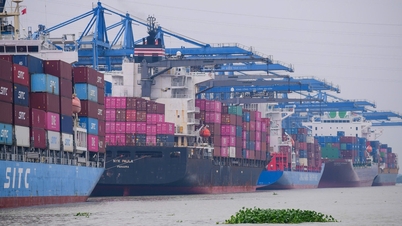
 Ben Luc District has been identified as an important satellite city of Ho Chi Minh City.
The province currently has 15 subordinate administrative units (13 districts, 1 town, 1 city); and 19 urban areas: 1 Type II urban area (Tan An City); 1 Type III urban area (Kien Tuong town); 5 Type IV urban areas (towns: Hau Nghia, Ben Luc, Can Duoc, Can Giuoc, Duc Hoa); and 12 Type V urban areas (towns: Tan Hung, Vinh Hung, Tan Thanh, Thanh Hoa, Thu Thua, Tan Tru, Tam Vu, Dong Thanh, Hiep Hoa, Binh Phong Thanh, Rach Kien area urban area and Long Duc Dong urban area). Among these, Tan An City is the political , administrative, economic, cultural, scientific and technical center and transportation hub of the province; Kien Tuong town is the central urban area of the Dong Thap Muoi region of the province; and the urban areas of Hau Nghia, Duc Hoa, Ben Luc, Can Duoc, and Can Giuoc belong to the province's key economic zone and are located in the border area with Ho Chi Minh City.
According to information from the People's Committee of Kien Tuong town, which is currently a type III urban area, the town will plan to develop its urban architectural space to become the central urban area of the Dong Thap Muoi region of the province during the 2023-2030 period, befitting its position and potential. Simultaneously, it will build 2 to 3 urban areas meeting urban standards as prescribed. The town will also exploit resources and favorable conditions to attract investment in developing infrastructure connecting urban networks within and outside the province; harmoniously combining the renovation and construction of new urban areas with the town's development according to national strategies on green growth and urban development in response to climate change.
The province aims to have 27 urban areas by 2030: 1 Type I urban area (Tan An City), 1 Type II urban area (Kien Tuong town), 3 Type III urban areas (Ben Luc, Can Giuoc, Duc Hoa), 9 Type IV urban areas (Can Duoc, Dong Thanh, Tan Hung, Vinh Hung, Tan Thanh, Thanh Hoa, Thu Thua, Tan Tru and Tam Vu), and 13 Type V urban areas (Rach Kien, Long Cang, Long Huu Dong, Long Trach, My Quy Tay, Binh Hoa Nam, Hung Dien B, Khanh Hung, Thai Binh Trung, Binh Phong Thanh, Hau Thanh Dong, Tan Long and Lac Tan). |
Urban development orientation
 Many new urban areas have been developed within the province.
Besides the achievements, the Department of Construction acknowledges that urban development in the province still faces difficulties and limitations. These include a low urbanization rate compared to the national average; while the appearance of urban areas has improved, they lack distinct characteristics. The overall quality of urban areas in the province is generally not good. Criteria such as average per capita income, population growth rate, total urban population, population density; average housing area, transportation land, and green space are still low. The system of social infrastructure is also inadequate. Most urban areas lack wastewater collection and treatment systems; and digital technology has not yet been applied to develop smart cities. State budget funds allocated for urban development investment are limited. While efforts to mobilize non-budgetary capital for urban development have been made, they have not been significant.
According to Mr. Nguyen Van Hung, the province is focusing on investing in construction, completing the criteria for upgrading existing urban areas, and forming and developing new urban areas in a modern, green, smart, and distinctive direction.
By 2030, urban areas in the province will develop sustainably according to the following objectives: Accelerating the pace and improving the quality of urbanization, developing sustainable urban areas in a network, and forming a number of smart, dynamic cities connected with the region, the country, and the world.
Urban infrastructure, especially key technical and essential social infrastructure, is built and developed synchronously and modernly. The urban economy grows rapidly, efficiently, and sustainably. The quality of life in urban areas is high, ensuring that the basic needs for housing and social infrastructure for urban residents are met. Modern, green, smart urban architecture is developed, rich in identity, and distinctive cultural elements are preserved and promoted.
Furthermore, the formation and development of urban systems within the province must adhere to planning, meet the requirements of sustainable urban development, and ensure the implementation of the roadmap outlined in the Provincial Planning recently approved by the Prime Minister.
 Can Giuoc District is aiming to become a type III urban area.
According to the Provincial Planning, by 2030, the urbanization rate of the province will be approximately 55%. Type III urban areas (Ben Luc, Can Giuoc, Duc Hoa) must ensure the completion of urban classification criteria regarding infrastructure, especially in healthcare, education, and urban-level cultural facilities. Mechanisms and policies should be developed to promote the harmonious development of urban systems, consistent with the potential and advantages of each urban area, ensuring efficient and economical land use. The plan also emphasizes the strong development of Ben Luc, Can Giuoc, and Duc Hoa (adjacent to Ho Chi Minh City), and expanding the boundaries of existing urban areas that do not yet meet the required area standards.
Tan An City is currently a type II urban area, with a defined roadmap to become a type I urban area under the overall goal of: Building and developing Tan An City into one of the ecological, civilized, modern, and smart urban centers with a distinctive character in the Mekong Delta region; worthy of being the political, administrative, economic, cultural, and scientific-technical center of the province. The aim is to basically meet the criteria of a type I urban area by 2025 and be officially recognized before 2030. In recent years, the city has prioritized developing into a smart city, closely linked to the development of Tan An City into a connecting area between Ho Chi Minh City and the Mekong Delta region according to the approved plan, including the completed and operational Smart Operations Center project. This is the first step in implementing the construction of Tan An into the province's first smart city; at the same time, it is also the basis for Tan An to develop digital government, digital economy, and digital society. Currently, the city has been integrating monitoring services, including security and order monitoring; traffic safety monitoring; smart lighting; public administration monitoring; and socio-economic indicators. Regarding the city's development planning orientation, it is necessary to ensure a natural area of 150km2 or more, prioritizing urban expansion towards the Southeast, linked to the Southern development corridor. This involves using the Vam Co Tay River as the main landscape axis and the Tan An City Ring Road as the driving force. Simultaneously, a harmonious, multi-centered urban development plan should be implemented, preserving the unique riverine landscape while simultaneously creating new urban areas. Furthermore, the East-West corridor should continue to be exploited, forming a connecting axis between urban sub-areas, combined with research on administrative boundaries, ensuring compliance with the Resolution of the Standing Committee of the National Assembly.” Chairman of the People's Committee of Tan An City - Vo Hong Thao To date, Can Giuoc district has two urban areas (one Type IV urban area - Can Giuoc town, recognized in 2015, and one Type V urban area - Long Duc Dong urban area, recognized in 2021). According to the plan, the district will be a key urban area in the Southern Key Economic Region, playing a supporting role in reducing population pressure in Ho Chi Minh City; at the same time, it will be a driving urban area for socio-economic development in the eastern region and the entire Long An province. According to the province's orientation, the district strives to establish Can Giuoc urban area within the entire district by 2025 (at the Type III urban level); and to establish Can Giuoc City directly under the province by 2030. Chairman of the People's Committee of Can Giuoc District - Nguyen Anh Duc |
Thanh Nga
Source
![[Photo] Prime Minister Pham Minh Chinh receives the Chinese Ambassador to Vietnam](https://vphoto.vietnam.vn/thumb/1200x675/vietnam/resource/IMAGE/2026/04/05/1775397481797_ndo_br_dsc-5512-jpg.webp)
















































Comment (0)