

Let's work together to get rich.
Recently, we had the opportunity to visit the chicken farm of Mr. Le Van Dang (born in 1968) in Doi Gai village, Luc Nam commune, Bac Ninh province. The 2000 m2 farm is located on a hillside, surrounded by lush eucalyptus trees. It is known that more than 30 years ago, after getting married, Mr. Dang and his wife were given a plot of land at the end of the village, right at the foot of the hill, by their parents. With their diligence and hard work, the couple transformed the rocky hillside to develop their economy . However, due to a lack of knowledge and experience in production, and the barren land, the economic efficiency was low, and the family faced many difficulties.
Nearly 10 years ago, with advice from friends, he invested in building an 800 m2 chicken coop to raise free-range chickens on the hillside. Due to a lack of capital, his family only raised about 5,000 chickens per batch and faced significant fluctuations in the market, prices, and diseases, resulting in unstable income.
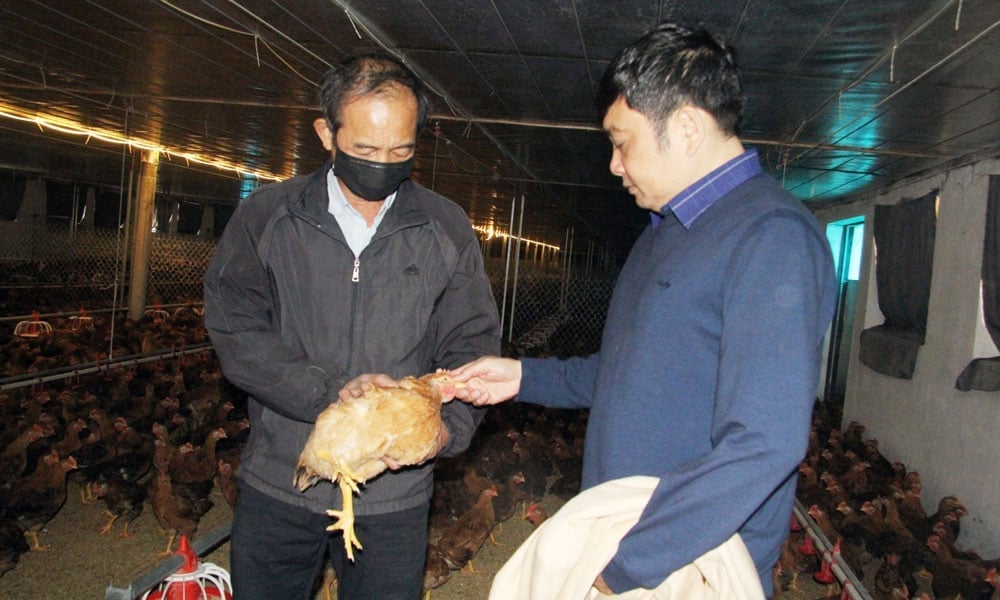
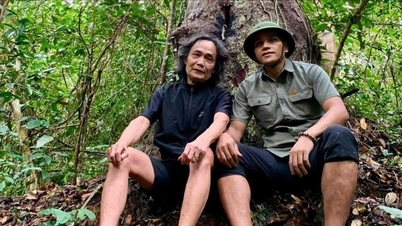
The chicken farming model of Mr. Le Van Dang's family. Photo: Pham Minh.
To mitigate market risks, nearly four years ago, after attending technical training courses organized by the commune's Farmers' Association and learning from several successful production models, Mr. Dang decided to partner with a company specializing in the production of animal feed for livestock, poultry, and aquaculture in Phu Tho province. The company provided all the seeds, feed, medicine, technical support, and guaranteed the purchase of the products. Having found a reliable partner, Mr. Dang decided to invest in building a modern, enclosed poultry farm right at the foot of his family's eucalyptus hill, ensuring he could raise over 24,000 chickens simultaneously.
Thanks to the use of enclosed coops, exhaust fans, cooling systems, and automatic feeders, caring for the flock of chickens is easier, significantly reducing effort, and achieving much higher efficiency, with a survival rate consistently exceeding 95%. Currently, on average, Mr. and Mrs. Dang raise 3 batches of chickens per year, each batch consisting of 24,000 birds. After deducting expenses, they earn a profit of over 1 billion VND per year. “With regular technical training and partnerships with businesses, what I'm most confident about is the low risk because I receive technical support, disease control, and guaranteed product purchase. I am currently finalizing the procedures to build more coops and expand the scale of my farming,” Mr. Dang shared.
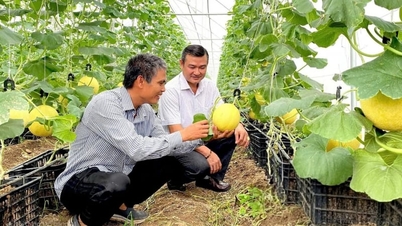
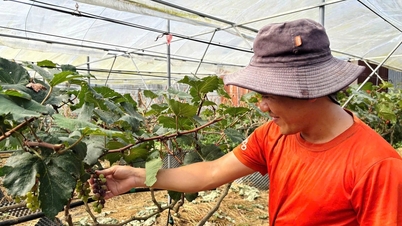
Like Mr. Dang, thanks to applying technology and establishing linkages in production, Ms. Tong Thi Lap (born in 1986) in Nhieu Thi village has gradually become wealthy from growing melons and flowers. Starting with a small area, Ms. Lap has now expanded her melon cultivation to 2,400 square meters and her dahlia cultivation to 3,600 square meters. Not stopping at production, Ms. Lap has also partnered with businesses and cooperatives in purchasing and selling her products. Ms. Lap said: “By partnering with other farmers, I have more land to cultivate, and the farmers have jobs and stable incomes. At the time of sale, the partner is responsible for sorting, packaging, and purchasing directly from the fields, minimizing intermediary costs for farmers, which means higher economic efficiency.”
Sustainable development direction
Luc Nam commune has great potential for agricultural development. Taking advantage of this, local people have boldly invested in and developed commercial agriculture. To date, the total area of annual crops planted in the commune is over 5,000 hectares, including nearly 3,000 hectares of food crops. Dozens of production and consumption chains have been formed in the commune, thereby increasing the production value and income of the people. The total production value of the agriculture, forestry, and fisheries sector (at current prices) in the commune is estimated to reach over 1 trillion VND in 2025; the production value per hectare of cultivated land is estimated to reach 130 million VND…
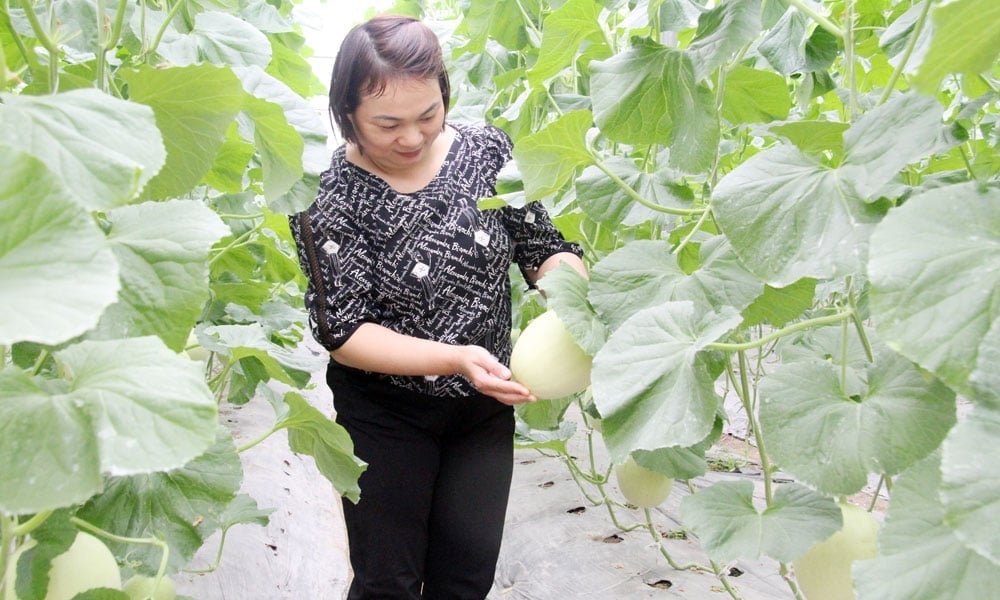
The model of cooperative melon farming by Ms. Tong Thi Lap's family. Photo: Pham Minh.
Despite positive results, agricultural production in the commune has not yet reached its full potential. Therefore, the commune's general orientation is to continue focusing on building and developing commodity production areas, applying science and technology, especially high technology, to production. In addition, the commune regularly directs the Farmers' Association and Women's Association to organize training courses and transfer scientific and technical knowledge to their members. Attention is also paid to applying high technology in livestock farming; introducing new high-yield and high-quality varieties into production, especially key crops such as safe vegetables and medicinal plants; and developing livestock and poultry farming according to farm and semi-industrial models.
At the same time, the commune encourages and facilitates the establishment and development of cooperatives, farms, and family farms to guide production planning, promote trade, and find markets for agricultural products. It supports farmers in connecting with processing businesses and product distribution systems, gradually forming a closed supply chain from production to consumption…
Mr. Tran Van Canh, a specialist in the Economic Department of Luc Nam commune, affirmed that, along with science and technology, linkage is the most sustainable way to increase the value of agricultural products because when there is linkage in production, households will minimize risks and feel secure in investing. This is also the key direction of economic development for the commune.
Source: https://nongnghiepmoitruong.vn/huong-lam-giau-cua-nong-dan-luc-nam-d789493.html


![[Image] A brilliant symphony and explosive power in the skies of Da Nang.](https://vphoto.vietnam.vn/thumb/1200x675/vietnam/resource/IMAGE/2026/05/31/1780196945787_anh-man-hinh-2026-05-31-luc-10-08-51.png)










![[Video] Sunset at Lap An Lagoon – Where the sun sets over the fishing nets](https://vphoto.vietnam.vn/thumb/340x192/vietnam/resource/IMAGE/2026/05/31/1780192137701_beach-landscape-sea-water-nature-grass-745871-pxhere-com.jpeg)

![The Essence of Viet Bac Villages: [Part 3] The Precious Fragrance of Nghinh Tuong](https://vphoto.vietnam.vn/thumb/402x226/vietnam/resource/IMAGE/2026/05/29/1780020600366_5237-tinh-tuy-ban-lang-viet-bac-bai-3-chuyen-o-nghinh-tuong-050626_700.jpeg)
![The Quintessence of Northern Vietnam's Villages: [Part 2] The Famous Cassava Noodles of Kunming](https://vphoto.vietnam.vn/thumb/402x226/vietnam/resource/IMAGE/2026/05/28/1779937455892_3929-3144-mien-dong-15-nongnghiep-023138.jpeg)
![The Essence of the Village: [Part 1] Wine on the mountain, tea in the clouds - Bang Phuc](https://vphoto.vietnam.vn/thumb/402x226/vietnam/resource/IMAGE/2026/05/27/1779841729178_3821-1jpg-nongnghiep-103814.jpeg)
























































Comment (0)