

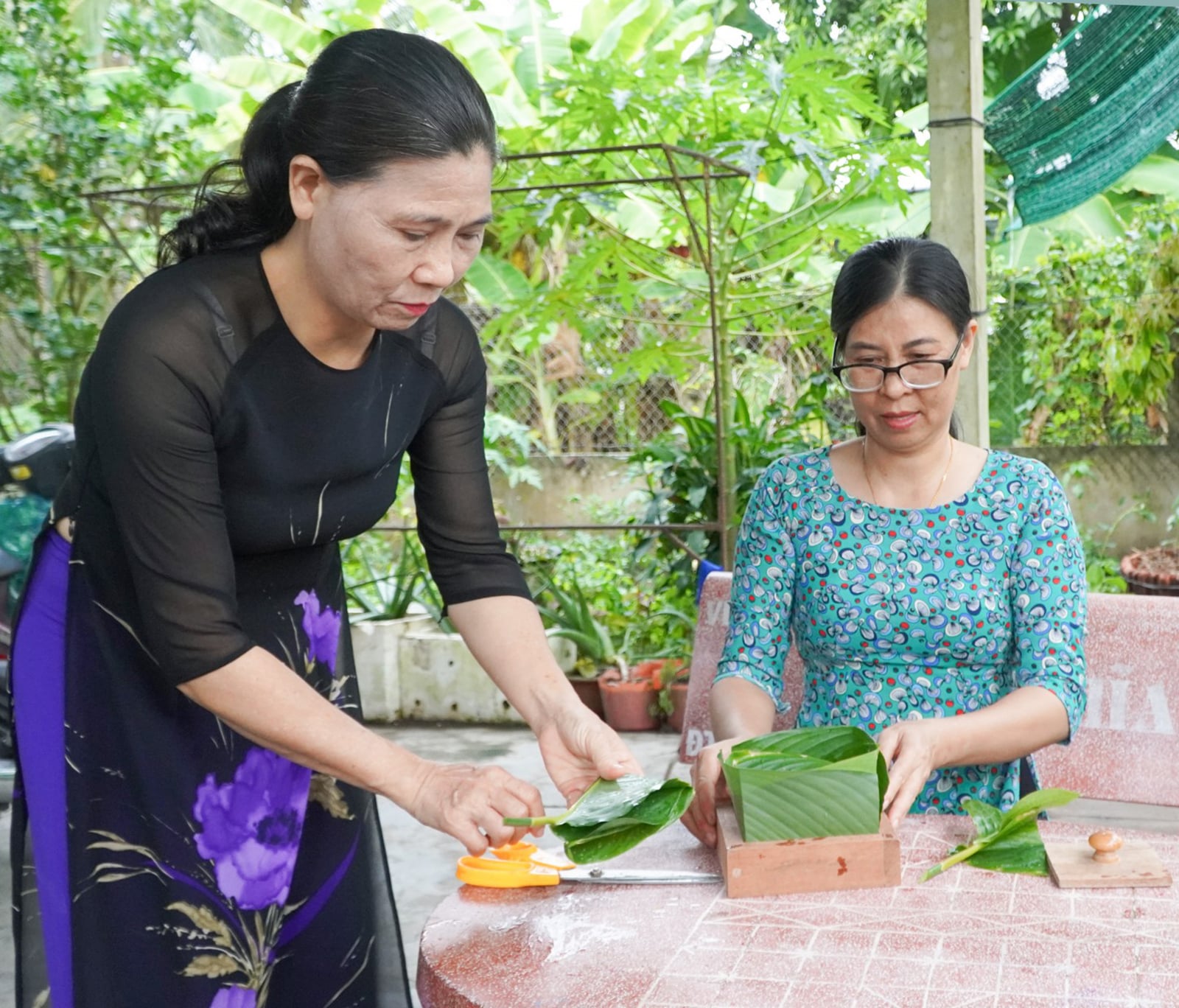
Ms. Vu Thi Tuyet (on the left) and Ms. Vu Thi Huong have been making banh chung (traditional Vietnamese rice cakes) for over 30 years.
In the afternoon, the kitchen of Ms. Vu Thi Tuyet's family was busier than usual. Green banana leaves were neatly arranged beside a basin of white sticky rice, and a pot of water was boiling vigorously on the wood-fired stove. The three sisters were wrapping cakes while chatting, their laughter mingling with the aroma of freshly cooked rice, making the small kitchen feel unusually warm and cozy.
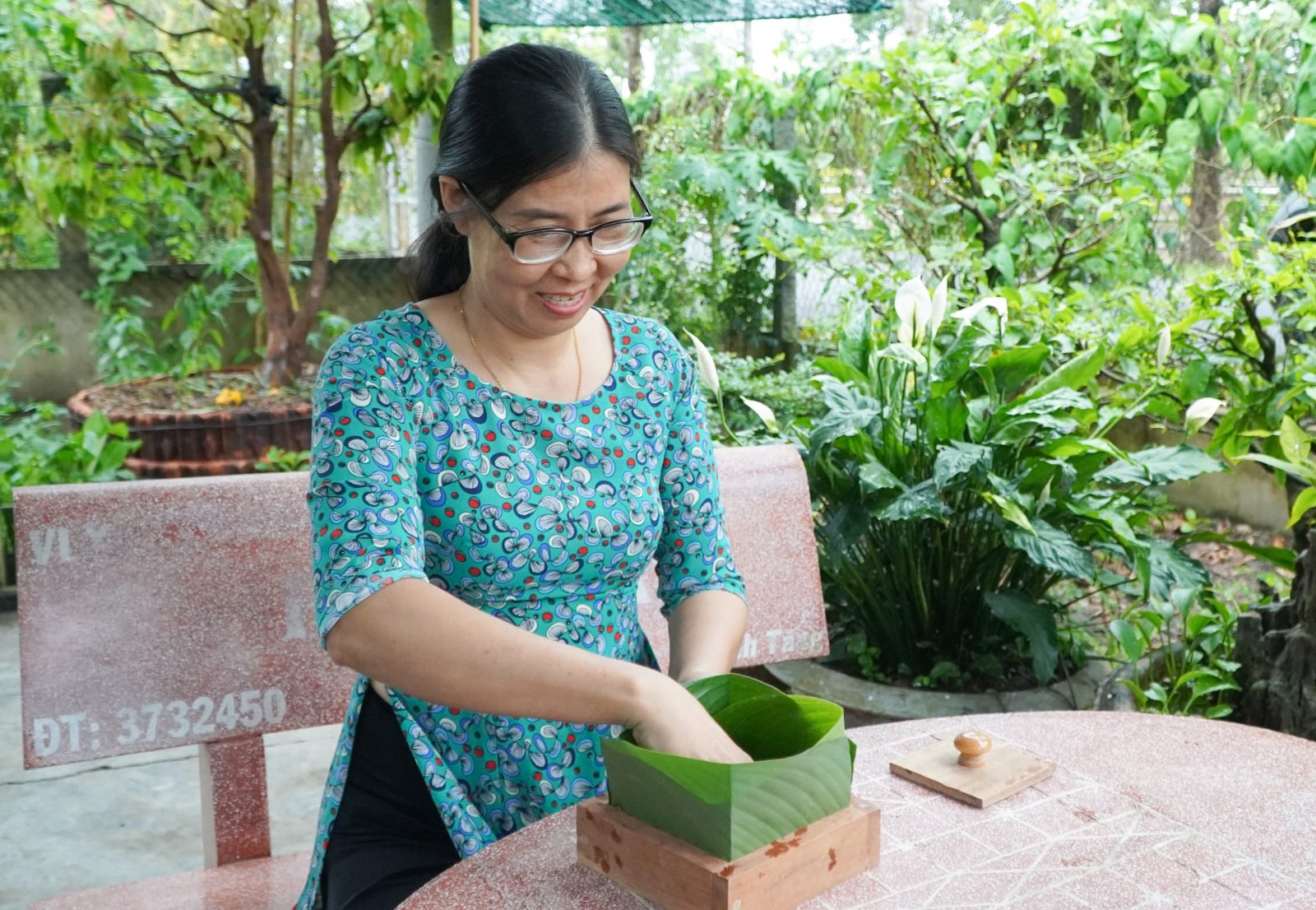
Ms. Vu Thi Huong is the most skilled at wrapping banh chung (Vietnamese rice cakes) among the three sisters.
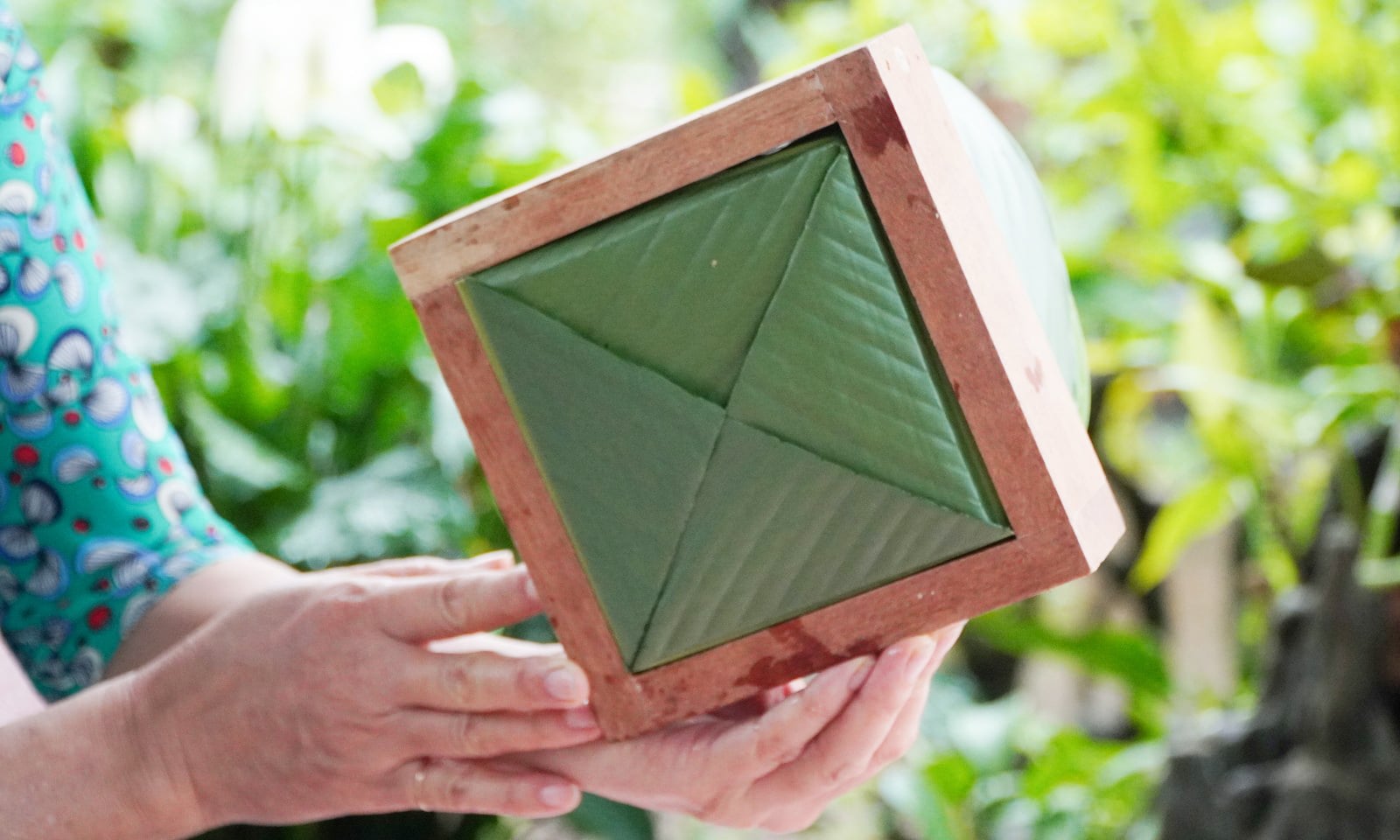
Ms. Huong wrapped the banh chung (Vietnamese rice cakes) in a neat and regular square shape.
Of the three sisters, Vu Thi Huong is well-known in Tan Hiep for her skillful rice cake wrapping. Sitting beside the ingredients, she nimbly arranges the leaves, measures the sticky rice, adds the filling, and folds each edge of the cake neatly. Each time she pulls the bamboo string, she leans slightly to adjust the tightness, ensuring the cake maintains its beautiful shape after hours of boiling.
Meanwhile, Ms. Tuyet meticulously smoothed each layer of banana leaves, adjusting the corners of the cakes before pressing them into molds. As soon as a cake was finished, she gently rotated it in her hand to check for evenness before setting it aside.
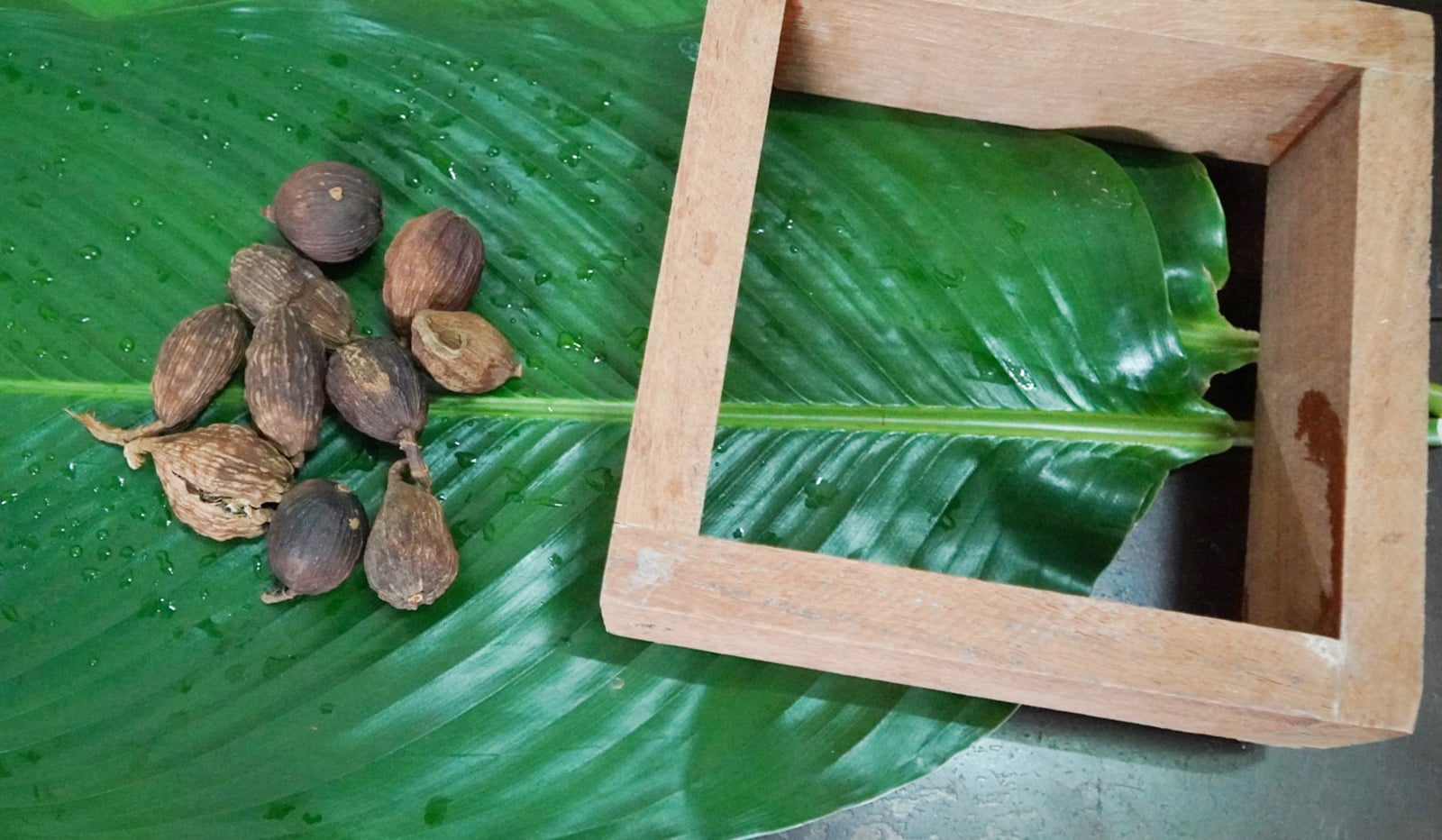
Cardamom gives banh chung (Vietnamese sticky rice cake) its unique flavor.
What gives the family's banh chung (Vietnamese sticky rice cake) its unique flavor is the distinctive aroma of cardamom. According to Ms. Tuyet, this secret was passed down from her father many years ago. The cardamom must be from the northern mountainous region, usually ordered from Sa Pa or traditional Chinese medicine shops to retain its authentic flavor.
"The cardamom pods must be roasted until the outer layer is charred, then the seeds inside are ground into a fine powder. Just adding a little to the meat will give it a completely different aroma," Ms. Tuyet shared.
The strong yet gentle aroma of cardamom blends with the richness of the meat and the nutty flavor of the mung beans, creating an unforgettable taste. Many regular customers order these cakes early each year for offerings during festivals and holidays, or to send to relatives far from home.
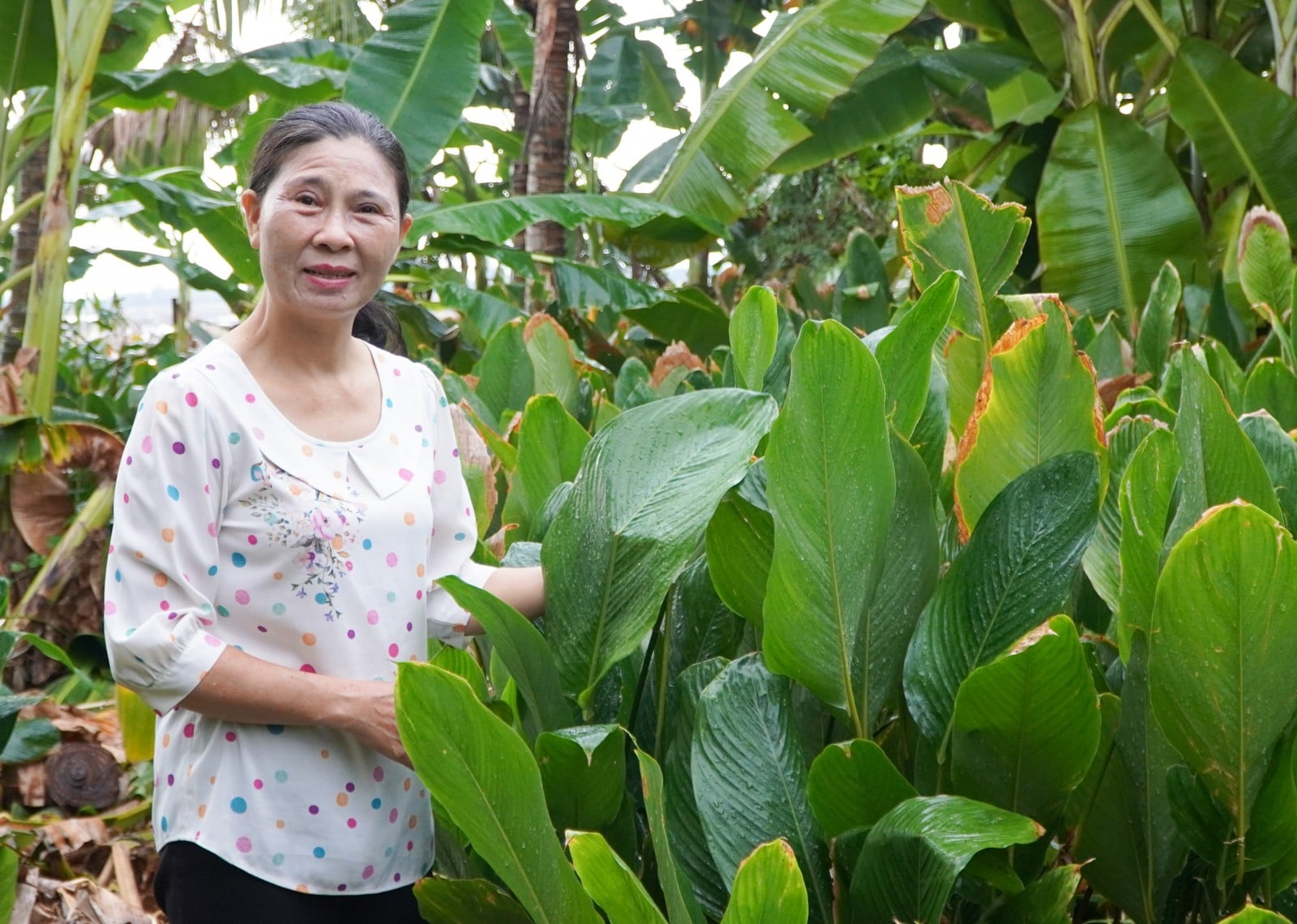
Ms. Vu Thi Tuyet selected large, beautiful banana leaves to wrap the cakes.
To preserve the traditional flavor, the three sisters are particularly meticulous in every step. The rice must be a high-quality glutinous rice, with even, fragrant grains. After washing thoroughly, the rice is drained and then mixed with pandan leaf water to create a natural green color. According to Ms. Tuyet, the rice should not be soaked for too long because the cake will easily become mushy and lose its chewiness.
The filling uses pork belly cut into large, bite-sized pieces. The seasoning is quite simple, consisting only of shallots, pepper, and seasoning powder to maintain a light, Northern-style flavor. In addition, Ms. Tuyet adds a piece of pork fat so that when the cake is cooked, the fat melts and soaks evenly into the sticky rice and mung beans, making the cake rich but not greasy.

The sticky rice cakes made by Ms. Vu Thi Tuyet's family are used to offer to their ancestors during holidays and festivals, and are a familiar flavor that has been associated with the whole family for many years.
Even the bamboo strips used to tie the cakes were ordered by the family from the North. This type of bamboo strip is flexible, strong, and less likely to break when tying. The cakes are wrapped in multiple layers of banana leaves to maintain their beautiful green color. Each corner of the cake is pressed just enough so that when cooked, the cake is firm but not hard.
The process of boiling the cakes also requires a lot of experience. The bottom of the pot is always lined with banana leaf stems to prevent burning. The cakes are arranged upright in pairs to allow water to circulate evenly, helping them cook thoroughly and maintain their beautiful square shape. Pandan leaves are added to the top of the pot to enhance the aroma.
According to Ms. Tuyet, the cakes must be boiled continuously for about seven hours over a wood-fired stove. After being taken out, the cakes are washed clean and pressed to remove excess water, which helps maintain their firmness and allows them to be preserved for several days.
For Ms. Tuyet and her sisters, making banh chung (traditional Vietnamese rice cakes) is a way to preserve the flavors of their hometown, Nam Dinh, in the Mekong Delta. In the fragrant aroma of banana leaves, fresh sticky rice, and cardamom, the longing for home seems to lessen somewhat. "Every time I make banh chung, I feel like my hometown is closer," Ms. Tuyet confided.
THU OANH
Source: https://baoangiang.com.vn/huong-thao-qua-trong-nhung-chiec-banh-chung-a485725.html













































































Comment (0)