

In the spring of 2024, Ky Phu commune (Ky Anh district, Ha Tinh province) continued to develop a large-scale rice field covering an area of 60 hectares in Phu Trung village.
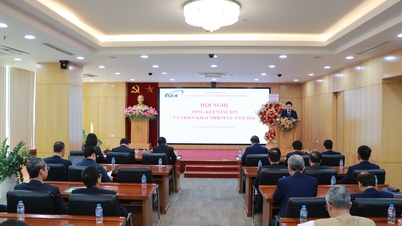
In accordance with Resolution No. 06-NQ/TU of the Provincial Party Committee and Plan 537/KH-UBND of Ky Anh district on the implementation of land consolidation and accumulation, Ky Phu commune (Ky Anh district) organized a ceremony to launch the campaign to break down small field boundaries and create a large 60-hectare plot in Phu Trung village.
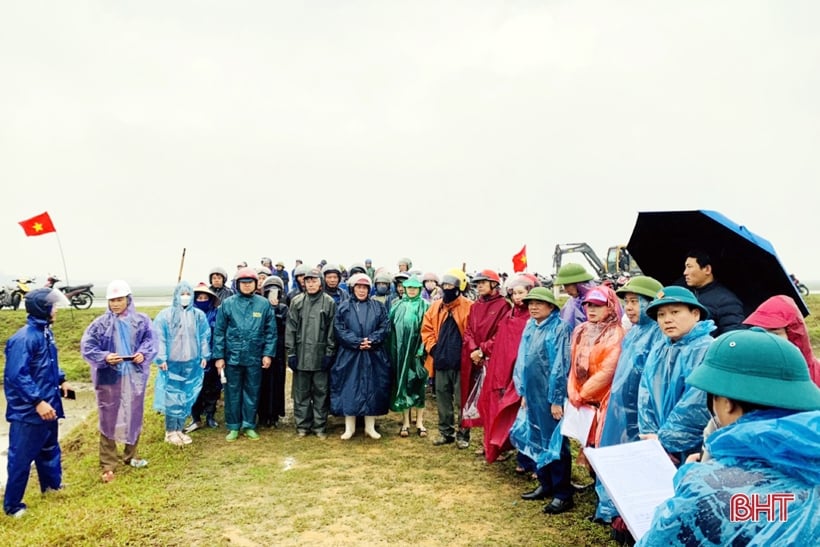
Local authorities and residents attended the launch ceremony on the morning of December 23rd.
Phu Trung village has 200 households engaged in agricultural production on 60 hectares of rice fields, divided into 1,349 plots. After the planning, the entire village now has only 108 large plots remaining (a reduction of 1,241 plots). The internal field transportation system ensures convenient access for motorized vehicles, the canals ensure water supply for irrigation, and the flat fields create a large 60-hectare rice paddy.
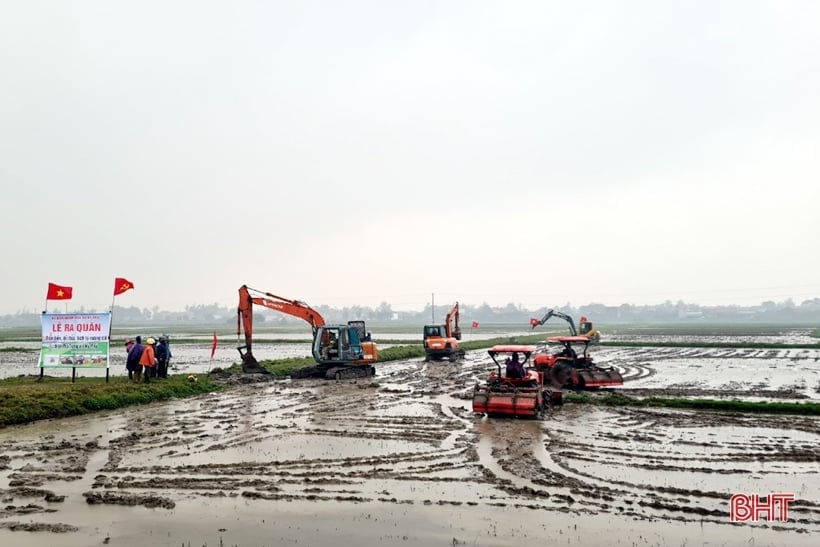
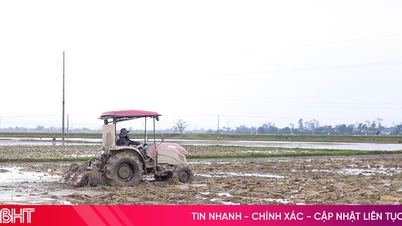
The villagers of Phu Trung hamlet leveled and demolished the field boundaries to consolidate and reorganize the rice paddies.
Immediately after the launching ceremony, the people of Phu Trung village went down to the fields to level and remove field boundaries to consolidate farmland according to the planning scheme, along with building internal irrigation systems and cleaning the fields, in preparation for the 2024 spring crop.
Over the past period, in addition to Phu Trung village, Ky Phu commune has converted and consolidated land plots to form the large rice field in Phu Minh village, with a total rice cultivation area of 66.02 hectares, reducing the number of plots from 1,768 to 116 (a reduction of 1,652 plots).
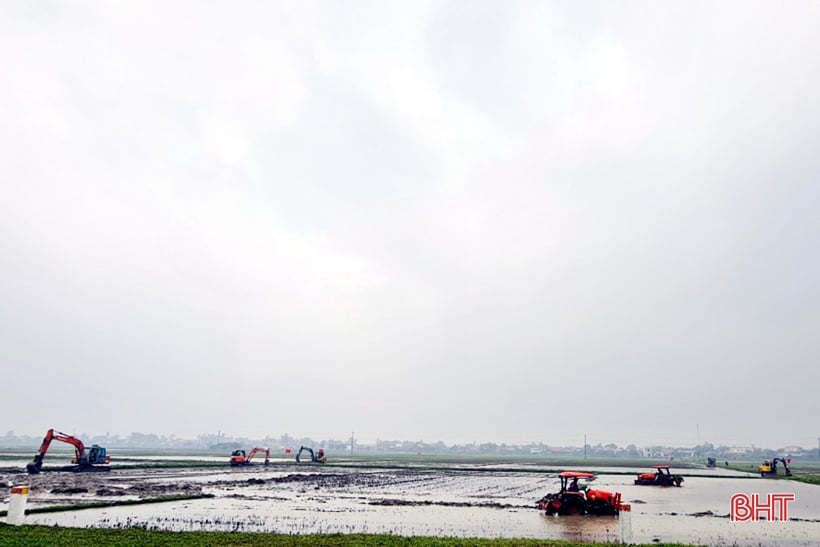
Phu Trung village has 1,349 plots of land; after the planning, only 108 large plots will remain out of a total area of 60 hectares.
The removal of field boundaries and embankments to create large, flat, and uniform fields; a scientific and rational irrigation system; the creation of concentrated specialized production areas; favorable conditions for cultivation, care, disease control, irrigation, and the application of scientific and technological advancements and mechanization; helps reduce costs, improve productivity and product quality, increase production efficiency, and boost farmers' income. Simultaneously, it gradually attracts businesses to invest in agriculture, transfer science and technology, and establish production linkages with farmers, cooperatives, and agricultural associations, promoting the development of large-scale, modern commercial agriculture, linked to the sustainable construction of new rural areas.
Vu Huyen
Source


























































Comment (0)