

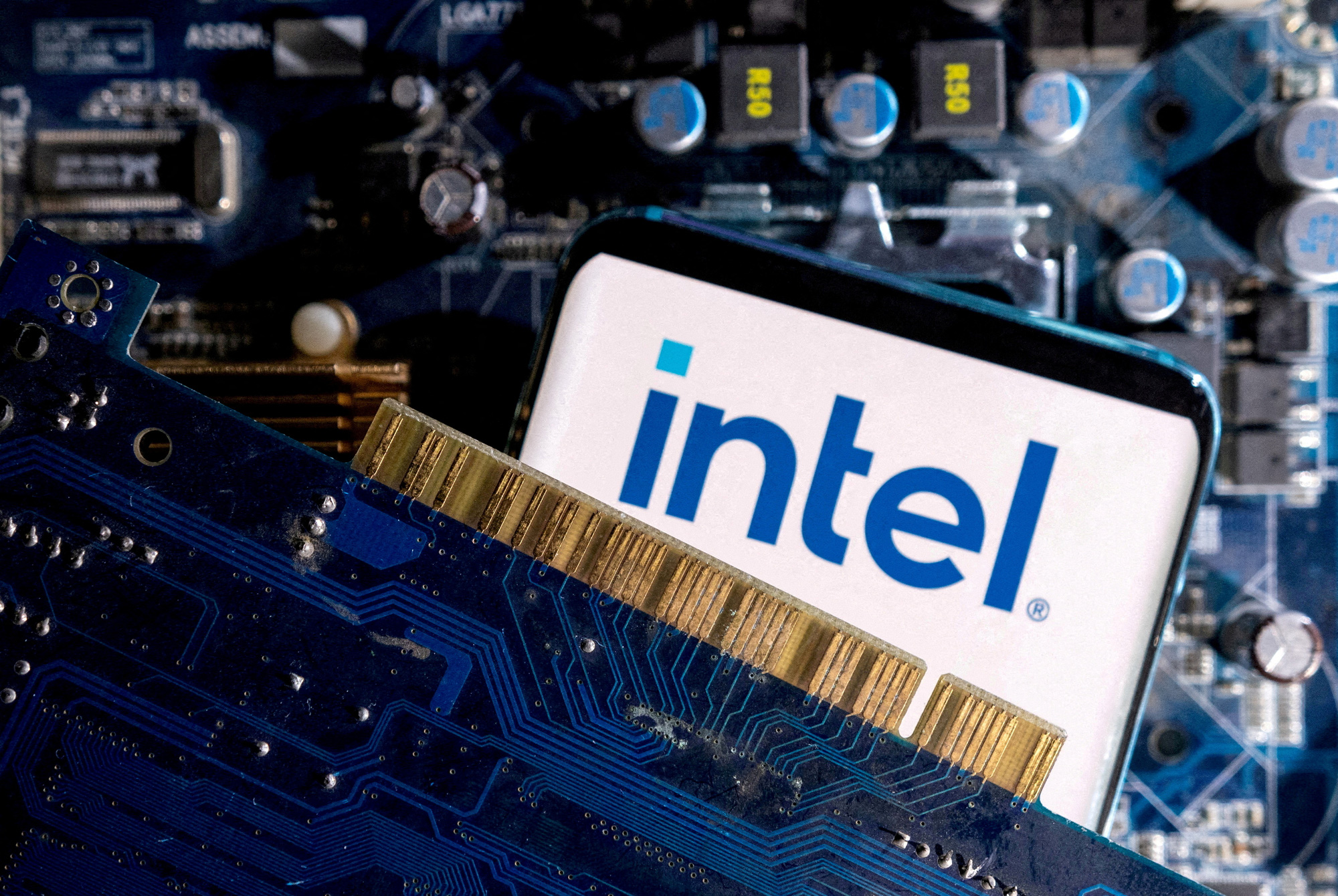
Previously, the prospect of Intel being considered for a takeover was seen as almost unthinkable - Photo: REUTERS
The fact that a tech giant like Intel is facing the risk of being acquired shows how strategic mistakes and the explosion of artificial intelligence (AI) have put the company in a difficult position.
From the peak to the abyss
Recently, the Wall Street Journal reported that Qualcomm has offered to acquire Intel. Although the deal is not yet certain, it highlights the unprecedented decline Intel has experienced in its 56-year history.
The problems began with manufacturing flaws before Pat Gelsinger took over as CEO and worsened when he pursued an expensive restructuring strategy without anticipating that the AI craze would shift demand to chips manufactured by rival Nvidia.
Angelo Zino, an analyst from CFRA Research, commented: "In the last two to three years, the shift to AI has been a fatal blow to them. Intel is unable to meet the new demands."
Intel dominated the global semiconductor market for decades. Their chips were found in virtually every personal computer and server.
Intel is one of the few companies that designs and manufactures its own chips, and has historically been a market leader in both areas.
However, when Gelsinger took over in early 2021, Intel had fallen behind its Asian rivals in the race to produce high-performance chips.
Gelsinger, a veteran Intel executive and the company's first chief technology officer, outlined a plan to restore Intel to its former glory, as it had been under previous leaders such as Andy Grove and Paul Otellini.
He plans to catch up with Asian rivals such as TSMC from Taiwan and Samsung Electronics from South Korea. He also plans to invest heavily in Intel's manufacturing operations and expand its chip manufacturing services to chip-designing companies like Qualcomm.
A high-stakes gamble
Gelsinger used Intel's financial resources to build its contract manufacturing business. He had negotiated to acquire GlobalFoundries for approximately $30 billion the summer after taking office, but the deal fell through.
Ultimately, Intel opted to acquire Tower Semiconductor for over $5 billion, but this deal also failed to gain approval from Chinese regulators.
While costs are rising, the AI boom has spurred demand for a shift toward Nvidia's graphics processing units (GPUs), chips better designed to handle complex AI systems.
While tech companies around the world are scrambling to buy Nvidia's AI chips, many of Intel's processors remain unsold.
Under that pressure, Gelsinger was forced to cut costs to maintain his restructuring strategy. Intel has laid off thousands of employees since 2022 and reduced dividends last year.
However, this was still not enough. Last month, Gelsinger announced he would lay off 15,000 people, cut costs by a further $10 billion next year, and stop paying dividends.
Narrowing prospects
Although Intel's recovery prospects are narrowing, it is still possible. Analysts suggest that cost-cutting could help Intel weather its difficulties, even though the drop in stock price has increased the likelihood of the company becoming a takeover target.
Stacy Rasgon, an analyst at Bernstein Research, believes Intel's future depends on the success or failure of its next-generation chip manufacturing technology, which is expected to begin production next year.
This technology could help Intel regain its technological leadership and improve its profit margins.
However, Intel's biggest problem is that its core chip business is not expected to recover quickly, amid continued strong spending on AI chips.
For Qualcomm, acquiring Intel could help them expand into new segments of the chip industry.
Qualcomm currently focuses on chips for mobile phones and has expanded into the automotive chip and Internet of Things (IoT) sectors in recent years.
However, it remains unclear whether Qualcomm will retain Intel's manufacturing operations, as this is a complex and costly area that Qualcomm typically avoids.
With an uncertain future, Intel is facing one of the most difficult times in its history, and its choices will determine the fate of the once-leading semiconductor company.
Source: https://tuoitre.vn/intel-doi-dien-nguy-co-bi-thau-tom-do-sai-lam-chien-luoc-20240922205616471.htm





















































































Comment (0)