

Three Iranian sources said that Iran's weapons package of approximately 400 missiles includes many missiles from the Fateh-110 series of short-range ballistic missiles, such as the Zolfaghar. Experts say this maneuverable missile can strike targets at distances of 300km to 700km.
The Iranian Defense Ministry and the Revolutionary Guard Corps – an elite force overseeing Iran's missile program – declined to comment. The Russian Defense Ministry did not respond to a request for comment.
An Iranian source said that the shipment began in early January after an agreement was signed in late 2023 between Russian and Iranian military and security officials in Tehran and Moscow.
An Iranian military official said that at least four missile shipments have been made and more are expected in the coming weeks. The official declined to provide further details.
A senior Iranian official said that some of these missiles were transported to Russia via the Caspian Sea, and others were shipped by air.
"There will be more shipments. There's no reason to hide anything. We have the right to export weapons to whichever country we want."
The UN Security Council's export restrictions on missiles, drones, and other technologies expired last October. However, the United States and the European Union (EU) have continued to impose sanctions on Iran's missile program amid concerns about Iran's potential to export weapons to proxies in the Middle East and Russia.
Another source confirmed that Russia recently received a large quantity of missiles from Iran, but provided no further details.
White House National Security spokesman John Kirby said in early January that the U.S. was concerned that Russia was about to acquire short-range ballistic missiles from Iran, in addition to those already purchased from North Korea.
A U.S. official said Washington has seen evidence of ongoing progress in discussions between the two countries, but has not yet seen any indication that shipments have been made.
The Pentagon did not respond to requests for comment on the missile shipments.
Ukraine's top prosecutor said on Friday that missiles supplied by North Korea to Russia had not been reliably effective on the battlefield, with only two of 24 missiles hitting their targets. Moscow and Pyongyang have both denied allegations that North Korea supplied the weapons Russia is using in Ukraine.
Conversely, Jeffrey Lewis, an expert at the Middlebury Institute of International Studies in Monterey, stated that the Fateh-110 and Zolfaghar missiles are highly accurate weapons.
He stated, "These are weapons used to destroy high-value targets and require precision strikes," and that these 400 missiles could cause significant damage if used in Ukraine. However, he also noted that Russian bombings have already had "quite serious" consequences.
Delays in US aid are weakening Ukraine's defenses.
A Ukrainian military source said Kyiv has not detected any use of Iranian ballistic missiles by Russia during the conflict. The Ukrainian defense ministry did not respond to Reuters' request for comment.
A Ukrainian Air Force spokesman stated on national television that there was no official information about Russia purchasing these missiles. He said that these ballistic missiles would pose a serious threat to Ukraine.
Former Ukrainian Defense Minister Andriy Zagorodnyuk said that Russia wants to bolster its missile stockpile at a time when a series of delays in US military aid are leaving Ukraine short of ammunition and other equipment.
Zagorodnyuk, chairman of the Center for Defense Strategy in Kyiv, a research institution advising the Ukrainian government , said: “The lack of aid from the US means a weakening of Ukraine’s air defense system. Therefore, they want to concentrate a large number of missiles and penetrate Ukraine’s air defense system.”
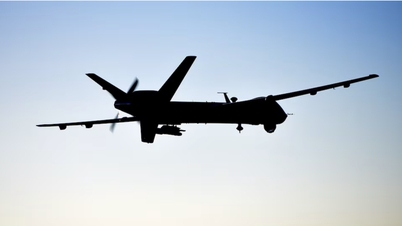
Kyiv has repeatedly demanded that Iran stop supplying Russia with Shahed drones, Moscow's main weapon in long-range attacks targeting Ukrainian cities, infrastructure, and other missile systems.
The Ukrainian Air Force said in December that Russia had launched a total of 3,700 Shahed drones during the conflict, which can fly hundreds of kilometers and explode on impact. Ukraine calls them “motorcycles” because of their distinctive engine noise, and its air defense systems shoot down dozens of these drones each week.
Iran had previously denied allegations that it supplied drones to Russia, but months later confirmed it had provided small quantities before Russia launched its special operations in 2022.
Iranian Foreign Ministry spokesman Nasser Kanaani, when asked on Monday about supplying drones to Russia, stated: “Those who accuse Iran of supplying weapons to one side in the war in Ukraine are doing so for political gain. We have not supplied drones for use in that war.”
Rob Lee, a senior fellow at the Foreign Policy Research Institute in Philadelphia, said that the Fateh-110 and Zolfaghar missiles from Iran would give Russia a significant advantage on the battlefield.
"They could be used to attack military targets within the operational area, and Ukraine's air defense systems would have more difficulty intercepting ballistic missiles."
Strengthening relations with Moscow
Iran's hardline religious leaders have consistently sought to strengthen ties with Russia and China, believing this will help Tehran resist U.S. sanctions and end its political isolation.
Defense cooperation between Iran and Russia has intensified since Russia deployed tens of thousands of troops to Ukraine in February 2022.
Russian Defense Minister Sergei Shoigu met with the leader of Iran's Revolutionary Guard Air Force in Tehran in September, where he witnessed Iranian drones, missiles, and air defense systems.
Last month, the Russian Foreign Ministry stated that it believed Russian President Vladimir Putin and Iranian President Ebrahim Raisi would soon sign a new comprehensive cooperation agreement, following discussions in Moscow in December.
“This military partnership with Russia has demonstrated Iran’s defense capabilities to the world. However, this does not mean that we are choosing Russia’s side in the conflict in Ukraine.”
Iran's religious leaders are facing significant risks following the outbreak of the Israel-Hamas war after the events of October 7th. They are also facing growing domestic opposition over economic disasters and social restrictions.
Although Tehran avoided a direct confrontation with Israel and drew the US in, allies in the Axis of Resistance – including Hezbollah in Lebanon and the Houthi in Yemen – attacked numerous Israeli and US targets.
A Western diplomat with knowledge of the matter confirmed the shipment of Iranian ballistic missiles to Russia in recent weeks but offered no further details.
He said that Western countries are concerned that Russia's reciprocal arms supply to Iran could also strengthen Iran's position in conflicts with the US and Israel.
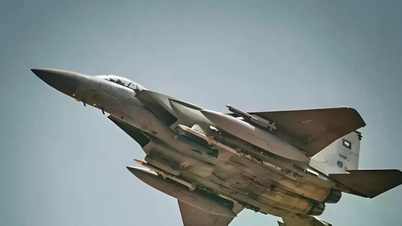
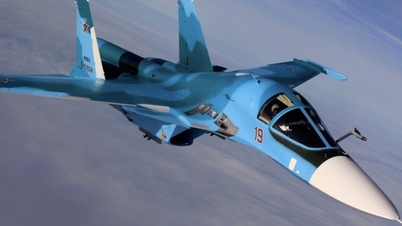
In November, Iran announced that it had finalized plans for Russia to supply the country with Su-35 fighter jets, Mi-28 helicopters, and Yak-130 training aircraft.
Gregory Brew, an analyst at the political risk advisory firm Eurasia Group, said Russia is a timely ally of Iran.
"The relationship between the two countries is based on exchange: in exchange for drones, Iran seeks security cooperation and advanced weaponry, particularly modern fighter jets."
Nguyen Quang Minh (according to Reuters)
Source





















































































Comment (0)