

Iran's permanent mission to the United Nations announced on April 14 that its military action against Israel was based on Article 51 of the UN Charter, in response to Tel Aviv's recent bloody attack on Iranian diplomatic facilities in Damascus, Syria.
In a statement quoted by the official IRNA news agency, Iran's permanent mission to the United Nations cited Article 51 of the UN Charter, which allows for legitimate self-defense, to defend its retaliatory drone strike against Israel on the night of April 13 (early morning of April 14 Vietnam time). The Iranian mission to the UN also argued that if the Security Council had condemned Israel's attack on the consular building within the Iranian embassy in Syria and subsequently prosecuted the perpetrators, Iran's retaliation against Israel might have been avoided.
The statement refers to the fact that the United States, the United Kingdom, and France, as well as their allies, not only failed to condemn Israel's attack on the Iranian consulate in Syria but also prevented the United Nations Security Council from issuing a statement on the attack.
According to the IRNA news agency, "Israel's most important air base in the Negev desert was the successful target of Kheibar missiles," adding that "images and data show the base suffered heavy damage."
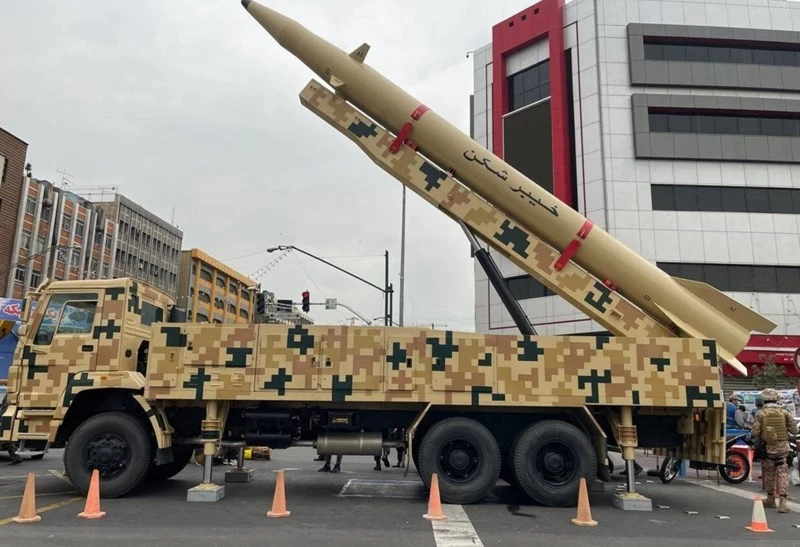
Meanwhile, Israeli Defense Forces (IDF) spokesman Daniel Hagari said that dozens of ballistic missiles were launched during the Iranian attack, some of which landed in Israel, causing "minor damage" to a military base in the south.
Mr. Hagari added that most of the Iranian missiles were intercepted by the Arrow long-range defense system and landed outside Israeli territory. In addition, Israeli fighter jets successfully intercepted dozens of Iranian cruise missiles and unmanned aerial vehicles (UAVs). According to Mr. Hagari, Iran launched a total of more than 200 projectiles towards Israel, but noted that the attack was not yet over.
Channel 12 reported that on April 14, Israel's War Cabinet was given the authority by the Security Cabinet to decide on responses to the Iranian attack. This means the War Cabinet – comprising three members: Prime Minister Benjamin Netanyahu, Defense Minister Yoav Gallant, and former Chief of Staff Benny Gantz – will no longer need to consult the Security Cabinet before taking retaliatory actions against Iran. Earlier, Israeli Defense Minister Yoav Gallant had a phone call with his American counterpart, Lloyd Austin, to "inform him of the upcoming responses to the Iranian attack."
Also on April 14, two regional security sources said that the Jordanian Air Force intercepted and shot down dozens of Iranian drones that violated Jordanian airspace while en route to Israel. The sources further confirmed that the Jordanian military was also on high alert and radar systems were monitoring all drone activity coming from Iraq and Syria.
Residents in several cities in northern Jordan near Syria, as well as in central and southern regions, heard loud explosions in the air. In areas south of the capital Amman, 60 km from Jerusalem, several drones were seen shot down. A security source previously stated that the Jordanian air force was increasing reconnaissance flights.
LAM DIEN
Source






































































































Comment (0)