

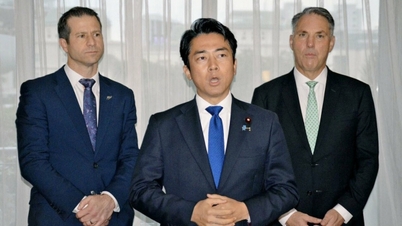
The U.S. War Department announced on May 30 that Israel and Lebanon had held security talks at the Pentagon, officially launching a military dialogue channel to support the ceasefire and peace negotiations between the two countries.
According to the US War Department, the Israeli and Lebanese delegations conducted constructive military exchanges, focusing on building practical mechanisms to enhance regional security and stability.
The results of these discussions will serve as the basis for the political negotiations hosted by the U.S. State Department, which are expected to resume next week.
The Pentagon affirmed that the United States values its partnerships with both the Israel Defense Forces (IDF) and the Lebanese Armed Forces (LAF), while reaffirming its stance in support of Lebanon's sovereignty and territorial integrity.
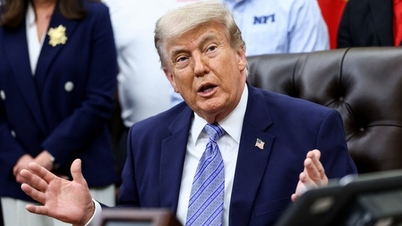
The U.S. War Department believes these are important steps toward realizing President Donald Trump's vision of lasting peace in the Middle East.
On the same day, US Secretary of State Marco Rubio spoke by phone with Lebanese President Joseph Aoun to discuss the progress of negotiations between Beirut and Israel. According to the US State Department, Rubio praised President Aoun's efforts to promote direct dialogue with Israel, while accusing Hezbollah of attempting to obstruct the process.
The US Secretary of State emphasized that Hezbollah is responsible for the current fighting and called on the group to cease its attacks to facilitate the de-escalation process. Rubio also affirmed Washington's continued support for the Lebanese government in its efforts toward peace and national reconstruction.
Meanwhile, the Lebanese President's office quoted Aoun as saying that the full implementation of the ceasefire with Israel is a prerequisite for resolving the outstanding issues between the two countries.
Observers believe that the first-ever direct military dialogue between Israel and Lebanon, under the auspices of the United States, is a positive sign for de-escalation efforts, although the situation on the ground remains challenging.
Also on May 30, Hezbollah launched rockets into several areas in northern Israel, including Karmiel, Safed, and Nahariya, marking the first time air raid sirens sounded in Karmiel and Safed since the ceasefire was announced in mid-April.
According to reports from local media, a correspondent of the Vietnam News Agency (VNA) in Israel noted that approximately 20 rockets were launched from Lebanese territory into Israel during the night of May 29 and the day of May 30 (local time).
Most of these were intercepted or fell into open areas. However, one rocket struck a shopping center in Kiryat Shmona overnight, while a drone crashed into a military area in Shomera. Israeli authorities have not reported any casualties, however.
Later that afternoon, air raid sirens sounded in Safed and surrounding communities. This was the first rocket alert the city had issued since April 11th. About 30 minutes later, sirens sounded again in Nahariya, the first time in three weeks.
The warning system was then reactivated at Kiryat Shmona and Karmiel. Videos published by Israeli media showed several shells falling into the sea off Nahariya, causing locals and beachgoers to quickly leave the beach after hearing explosions.
The Israeli military said that following a series of air raid sirens in Safed, one rocket launched from Lebanon was intercepted, while another landed in an open area. In Nahariya and the surrounding area, several rockets were also intercepted by air defenses, with the rest falling into uninhabited areas.
About an hour earlier, air raid sirens had sounded continuously for about 10 minutes in several areas of Western Galilee due to concerns about UAV intrusion.
Meanwhile, fighting in southern Lebanon continues to escalate. This comes after Israeli Prime Minister Benjamin Netanyahu announced on May 29 that his forces had crossed the Litani River.
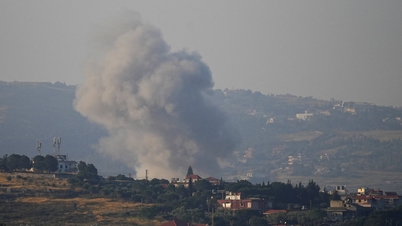
According to a senior Lebanese military source, Israeli forces have advanced on the villages of Zawtar al-Sharqiyah and Shqif Arnoun in the Beaufort region. Several Hezbollah sources confirmed that fighting between Israeli soldiers and Hezbollah fighters continues near the ancient fortress in southern Lebanon, while Israel has been conducting numerous airstrikes and concentrated artillery bombardments since May 29.
Recent developments indicate that the Israel-Lebanon front continues to harbor the potential for escalation, as Hezbollah expands its rocket attacks into deeper areas of northern Israel, while Israel expands its military operations within Lebanese territory.
Although neither side has reported any casualties in the latest attacks, the fact that many cities that were relatively quiet in the post-ceasefire period have activated air raid sirens demonstrates that the security situation in Israel's northern border region remains very fragile.
Source: https://www.vietnamplus.vn/israel-va-liban-khoi-dong-kenh-doi-thoai-quan-su-post1113626.vnp
![[Image] A brilliant symphony and explosive power in the skies of Da Nang.](https://vphoto.vietnam.vn/thumb/1200x675/vietnam/resource/IMAGE/2026/05/31/1780196945787_anh-man-hinh-2026-05-31-luc-10-08-51.png)

















![[Video] Sunset at Lap An Lagoon – Where the sun sets over the fishing nets](https://vphoto.vietnam.vn/thumb/340x192/vietnam/resource/IMAGE/2026/05/31/1780192137701_beach-landscape-sea-water-nature-grass-745871-pxhere-com.jpeg)











































































Comment (0)