

1. Common flavor profiles in whisky
In the world of spirits, whisky always stands out for its incredibly rich, multi-layered, and surprisingly sophisticated flavors. From intense smoky notes to sweet fruity flavors, each type of whisky is a symphony of tastes that leaves the connoisseur in awe. Specifically, some common flavor profiles in whisky include:
1.1. Incense smoke and peat
This is the most recognizable group of aromas in whisky. Smoky and peat notes often evoke a strong, wild, and classic feeling, and are typically categorized as follows:
- Fresh wood smoke scent: A pleasant, light smell of burning wood.
- Peat smoke aroma: Intense, earthy, and with a hint of strong cigar fragrance.
- Other smoky scents: Scent of burning wood, scent of dark roasted coffee.
Traditional whiskies from the Islay region (Scotland) are prominent representatives of this flavor profile, characterized by intense smoky notes and distinctive peat undertones. Additionally, some whiskies produced in Speyside may also exhibit smoky notes from charred oak barrels.
1.2. Fruity Flavor
Named after descriptions from wine enthusiasts, fruit flavors are one of the most beloved flavor groups, with many diverse classifications such as:
- Tropical fruit flavors: mango, banana, etc.
- Garden fruit flavors: apples, pears, etc.
- Citrus fruit flavors: grapefruit, orange, lemon, etc.
- Dried fruit flavors: raisins, dates, etc.
This group of aromas provides a refreshing sensation, making the whisky richer and easier to drink. Fruity flavors are considered a hallmark of high-quality whiskies from the Speyside region of Scotland.
1.3. Types of spicy flavors
Spicy flavors provide a warming sensation, stimulating the senses of smell and taste, giving whisky more depth and complexity. Spicy flavors are typically categorized as follows:
- Warm, sweet spices: cinnamon, cloves, nutmeg.
- Strong spices: ginger, pepper, dried chili.
You can look for unique flavor notes in Highland Whisky (Scotland) or American Rye Whisky.
1.4. Types of sweet flavors
The sweetness in whisky is incredibly diverse and rich, ranging from a delicate, sweet aroma to a sharp, intense flavor. It is one of the key flavors that defines whisky's unique character in the world of spirits. Sweetness often helps to harmonize other flavors and makes whisky more palatable.
Sweetness usually comes from:
- Sweetness in confectionery: honey, chocolate, and the taste of baked goods.
- Caramel flavor: caramel, fruit syrup, and candy notes.
- Vanilla Sweetness: Vanilla and marshmallow flavor.
Among them, the sweetness of honey is one of the signature flavors of the spirits produced at Speyside distilleries.
1.5. Woody and dark chocolate notes
Woody and dark chocolate notes provide a deep and mature sensation, often contributing to the long-lasting aftertaste in the palate of whisky connoisseurs. These flavor profiles also indicate the age and quality of the casks used in aging the whisky, including:
- Young wood aroma: Slightly harsh, with the scent of freshly cut tree resin, intensely fragrant.
- Old wood flavor: It has a dry, astringent tannic aroma that subtly permeates every drop of wine.
- Bitter dark chocolate flavor: Rich, with a slight bitterness, but a long-lasting and well-rounded aftertaste.
Speyside whiskies aged over 15 years, such as Chivas Regal 18, perfectly represent this flavor profile, with a blend of dark chocolate, aged wood notes intertwined with smooth sweetness and hints of familiar fruit and spices.

From intense smoky notes to sweet fruity flavors, each whisky is a unique symphony of tastes.
2. Factors that contribute to the flavor of whisky
The rich and distinctive flavor of whisky is the result of a complex combination of ingredients, production technology, and rigorous aging techniques. Specifically, the elements that contribute to the flavor of whisky include:
2.1. Production materials
Ingredients are the first foundation that shapes the identity of each type of whisky.
Cereal
Depending on the recipe, whisky can be distilled from one or more grains such as barley (malt), wheat, corn, or rye. Each grain contributes a distinct flavor profile:
- Barley and malt: The rich flavor of toffee.
- Corn: Provides a mild vanilla sweetness and a maple syrup-like sweetness.
- Wheat: Tastes like whole wheat bread with honey.
- Rye: A spicy, pungent flavor with a distinctive depth of taste.
Furthermore, the way the raw materials are processed, such as roasting and drying, also greatly affects the flavor of the whisky. Using peat as fuel when drying malt and grains can impart a smoky flavor to the ingredients and enhance the grain flavors. In addition:
- Islay malt whisky may have additional notes of seaweed, tar, and a hint of salt due to the peat deposits from marine vegetation and sea salt used.
- Whisky from the Orkney Islands often has a smoky, floral aroma due to the peat composed largely of heather plants.
- Peat from highland regions varies by location but contains more decaying vegetation, so it tends to impart a smoky, wood-fire-like aroma to whisky.
Water source
Although the water used to make whisky only affects about 2% of its flavor, its quality plays a crucial role in the fermentation and distillation process, particularly in relation to mineral content and pH – factors that greatly influence fermentation outcomes.
2.2. The Wine Aging Process
Aging whisky in oak barrels affects 75% of its final flavor. This sophisticated aging process is the reason why fine whiskies always possess the diverse flavors and depth that connoisseurs seek out.
Specifically, the factors influencing the flavor of whisky during the aging process include:
Oak wood
- American oak: High in vanillin content, often imparting vanilla and caramel flavors to whisky.
- European oak: Contains high levels of tannins, giving the whisky a prominent woody flavor and a strong, slightly bitter and spicy taste.
Incubation time
- Aging: Complex chemical reactions occur between the distilled product and various wood compounds, creating subtle woody and dark chocolate flavors.
- Aged for a short period: Whisky's aroma typically features notes of grains and sweetness, along with rich fruit and vanilla flavors.
How to handle a compost bin
- Toasting: Adds vanilla, caramel, and a hint of spiciness to the wine.
- Burning: Brings in a smoky aroma and sweeter flavors like caramel and honey.
Wine aging environment
- Wine aged near the sea: Thanks to the aroma of the sea that permeates it, the wine often has a very distinct salty flavor.
- Aging in warm weather: The wine tends to produce more esters, resulting in richer fruit flavors.
Type of composting bin
- First aging: Intense woody notes and spicy undertones.
- Barrels that previously held wine or other spirits: This removes strong woody flavors and bitter tannins, bringing out some of the flavor of the previously aged spirit.
2.3. Fermentation Process
Fermentation is the stage where sugar is converted into alcohol, but it is also where most of the unique flavor layers of whisky are created. The type of yeast used, the fermentation time, and the temperature play a crucial role in creating the final flavor of the whisky.
During this stage, yeast produces a series of volatile aromatic compounds (esters) responsible for the aroma notes:
- Fruity notes: apple, pear, banana, citrus, pineapple.
- Floral notes: lavender, violet, rose.
- Herbal and grain flavors: young grass, biscuit, malt.
Each yeast strain produces different flavor profiles. Combined with the production formula of each distillery, each whisky created will have a completely distinct flavor profile.
2.4. Distillation Process
Distillation is the stage of filtering and concentrating the spirit through the evaporation-condensation mechanism. This is also where whisky is selected and refined layered to produce the most exquisitely flavored spirit.
- The foreshots are usually discarded because they contain impurities.
- The heart is the essence, containing many fruity esters as well as grassy and grainy notes.
- The final parts (feints) can be partially retained to further develop the smoky flavor.
The material of the still, often made of copper, also plays a role in removing sulfur compounds, making the whisky smoother and easier to drink.
2.5. Influence of the mixing process
With blended whiskies, the blending process is the final step in balancing and creating the flavor. The blender selects whiskies aged with different characteristics (possibly from different casks, different years of aging, different ingredients, etc.) to blend in a way that results in a harmonious flavor combination that is characteristic of the brand.
Thanks to this blending technique, layers of aroma such as vanilla, burnt wood, baked goods, dried fruit, or subtle smoke can be interwoven, creating depth and subtle complexity that requires multiple sips to fully discover .
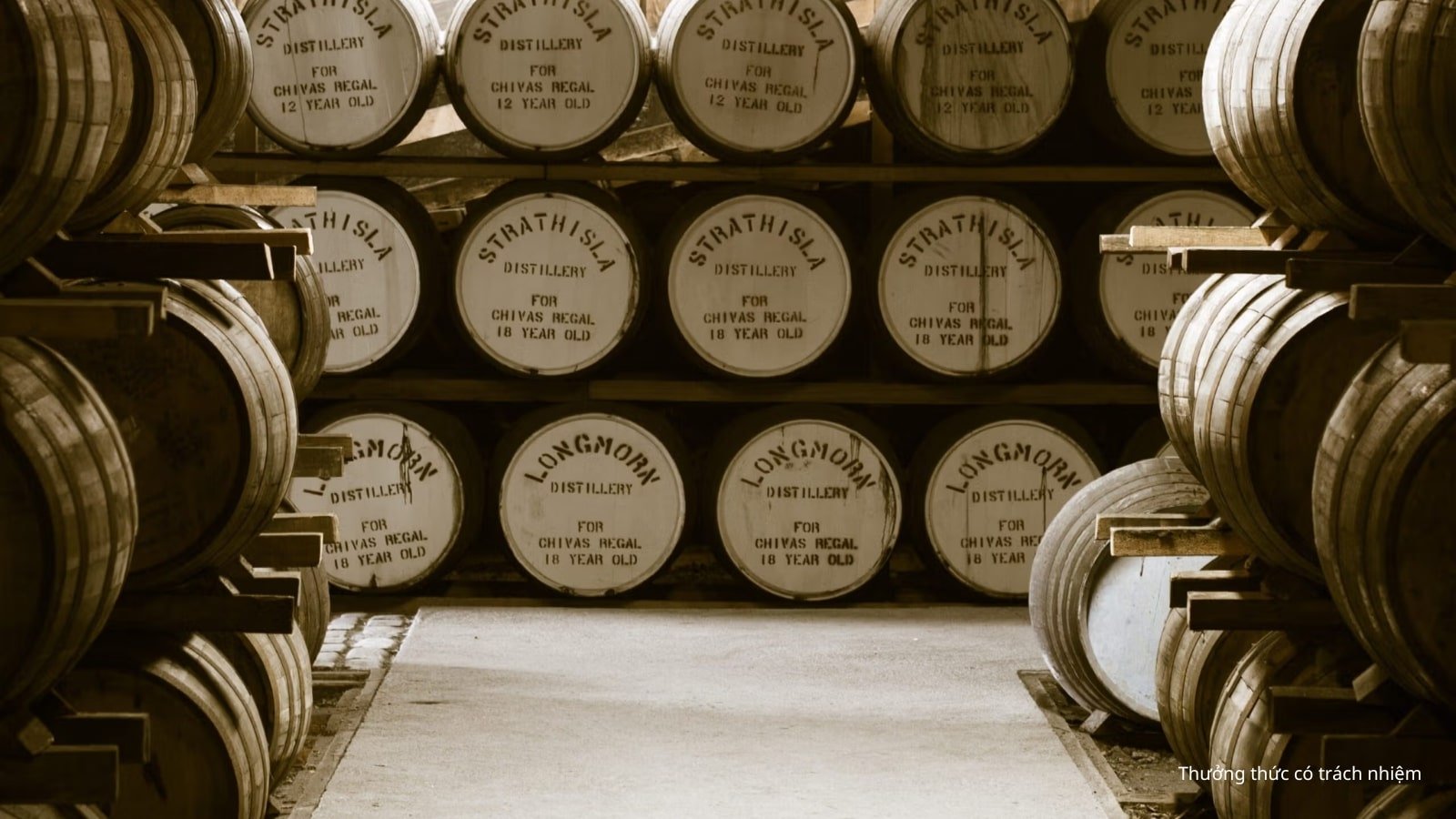
The flavor of whisky is the result of a complex combination of ingredients, production technology, and rigorous aging techniques.
3. Suggestions on how to enjoy and appreciate the flavors of whisky.
To fully appreciate the depth and complex layers of flavor in each drop of whisky, you can refer to the following tasting suggestions:
- Drink neat or add a few drops of water, do not mix with ice immediately to best appreciate the color, consistency, aroma, and distinctive flavor of each type of whisky.
- Choose the right type of glass to preserve the full aroma of the whisky, such as the Tulip glass or the Glencairn glass, with its wide base and narrow rim.
- When enjoying whisky, gently swirl the glass in one direction to allow the spirit to come into contact with the air, releasing its aroma molecules. Then, bring your nose close to the rim of the glass and inhale gently, allowing the aroma to gradually permeate your sense of smell.
- Savor each small sip, allowing the whisky to spread throughout your mouth, touching your taste buds from the tip of your tongue, up to the roof of your mouth, and down your throat. Hold the whisky in your mouth for a few seconds to appreciate its texture and viscosity. After swallowing, pay attention to the aftertaste. A quality whisky will leave a long-lasting, smooth, and lingering finish.

Whisky should be enjoyed slowly, sip by sip, to fully appreciate its complex layers of flavor.
Whisky is delicious, but it's only truly worth it when you know how to appreciate it properly. Hopefully, this article has helped you better understand the flavor profile of whisky, allowing you to elevate your experience and cherish every moment of enjoying the art of winemaking.
Enjoy responsibly. Do not share this content with anyone under 18.
With increasingly stringent legal regulations, handling dissolution procedures yourself can easily lead to wasted time and errors. MK Accounting offers a comprehensive business dissolution service , providing full support from document preparation to completion of the process. Contact us today for effective advice and support.
![[Photo] Prime Minister Pham Minh Chinh presides over a meeting on private sector economic development.](/_next/image?url=https%3A%2F%2Fvphoto.vietnam.vn%2Fthumb%2F1200x675%2Fvietnam%2Fresource%2FIMAGE%2F2025%2F12%2F20%2F1766237501876_thiet-ke-chua-co-ten-40-png.webp&w=3840&q=75)


![[Photo] Prime Minister Pham Minh Chinh presides over the conference announcing the establishment of the International Finance Centre in Vietnam.](/_next/image?url=https%3A%2F%2Fvphoto.vietnam.vn%2Fthumb%2F1200x675%2Fvietnam%2Fresource%2FIMAGE%2F2025%2F12%2F21%2F1766309817714_ndo_br_dsc-3400-jpg.webp&w=3840&q=75)















![[Q&A] Should you install an elevator in an old renovated house?](https://vphoto.vietnam.vn/thumb/402x226/vietnam/resource/IMAGE/2025/11/25/1764039191595_co-nen-lap-thang-may-cho-nha-cai-tao-cu-khong-04.jpeg)








































































Comment (0)