

The more highways you connect to, the further you get to the rest stop.
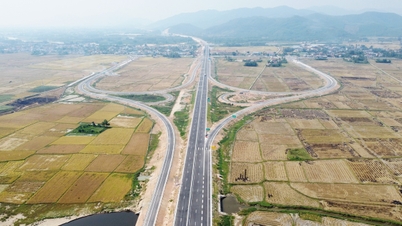
On December 24th, millions of people in the Mekong Delta and Ho Chi Minh City excitedly welcomed the biggest "Christmas gift" ever: the My Thuan 2 Bridge and the My Thuan - Can Tho Expressway. Officially opened, the My Thuan - Can Tho Expressway has connected the entire expressway network from Ho Chi Minh City to the Mekong Delta's agricultural hub, spanning approximately 135 km and reducing travel time to just 2 hours, compared to 4 hours previously. Notably, although this vital expressway to the Mekong Delta is now complete, all three sections still share a single rest stop on the Ho Chi Minh City - Trung Luong route, located at Km 28+200 (Thu Thua District, Long An Province). This rest stop also had to wait 7 years after the Ho Chi Minh City - Trung Luong expressway was inaugurated before it was put into operation, in 2016. During those 7 years, many drivers had to make unavoidable turns to exit at interchanges so passengers could attend to their personal needs, before turning back onto the expressway.
By April 2022, the Trung Luong - My Thuan expressway, over 51 km long and running through Tien Giang province, was put into operation, bringing with it the hope of establishing a new rest stop. However, this route lacks emergency lanes and rest stops because the project was implemented in phases, with Phase 1 not including these items. Recognizing the urgent need, Tien Giang province urged relevant units to find an investor to implement a rest stop project on the Trung Luong - My Thuan expressway with a scale of over 98,000 m² , including parking lots, rest areas, temporary rest rooms for drivers, restrooms, gas stations, and other services… with a total investment of 335 billion VND. However, due to funding issues for connecting roads to the expressway, this project remains stalled and unfinished. The lack of safe rest stops along more than 130 km of expressway to the Mekong Delta has caused considerable frustration among drivers.
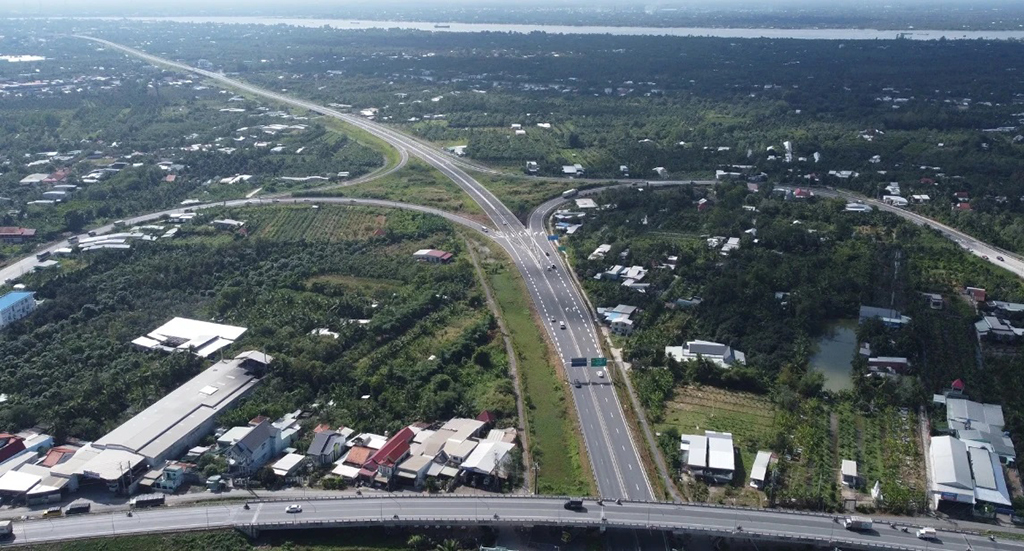
The newly inaugurated My Thuan - Can Tho expressway also lacks rest stops.
A similar situation occurred when the Phan Thiet - Dau Giay and Vinh Hao - Phan Thiet expressways were put into operation, but there were no rest stops, forcing passengers to "borrow" the rest stop on the Ho Chi Minh City - Long Thanh expressway. Previously, this rest stop mainly served passengers traveling from Ho Chi Minh City to Vung Tau and a small number to Phan Thiet, so it was quite comfortable and almost never experienced traffic congestion. However, since the Phan Thiet - Dau Giay and Vinh Hao - Phan Thiet expressways were put into operation, the number of passengers traveling to Binh Thuan, Da Lat, Nha Trang, etc., has increased significantly. With only one rest stop along the entire 250 km route from Ho Chi Minh City - Dau Giay - Phan Thiet - Vinh Hao, all vehicles tend to crowd there, causing serious congestion.
"If we don't stop on the Ho Chi Minh City - Long Thanh expressway, we have to drive nearly 300 km further to Vinh Hao to find a rest stop on the connecting road to the next section of the expressway. By then, we're almost at Nha Trang. Not to mention, if we go past the limit and want to turn back, we'll have to travel several tens of kilometers more. As a driver, I understand the fatigue, but in many cases, if the car has a problem or we're carrying family with young children and need to stop for a restroom break, this cramped and inconvenient route is very difficult and unsafe. Therefore, the longer the expressway, the further it is to find a rest stop," shared Minh Quang (a resident of Thu Duc City), who often drives back to his hometown in Nha Trang.
Opening on the same day as the My Thuan - Can Tho expressway, the Tuyen Quang - Phu Tho route also lacks rest stops and continuous emergency lanes. This project was eagerly awaited by people in the northeastern provinces because, upon completion, the travel time from Tuyen Quang City to Hanoi will be shortened from 3 hours to nearly 2 hours. The road also plays a crucial role as it connects with the Tuyen Quang - Ha Giang expressway, which is currently under construction. However, due to funding difficulties, the project had to be phased, and in the initial phase, it only had 4 lanes, with intermittent emergency lanes instead of emergency lanes.
Construction on a series of rest stops will begin this year.
Speaking to Thanh Nien newspaper , a representative from the Ministry of Transport said that the shortcomings of the highway system, lacking rest stops and emergency lanes, have been identified by the Ministry, and specific solutions are being implemented decisively. The principle is that for new projects being prepared for implementation, rest stops must be planned, constructed, and operated in conjunction with the highway section. With 9 rest stops belonging to the North-South East Expressway projects already completed or scheduled for completion in 2024, the Highway Department and project management boards under the Ministry of Transport are working diligently to finalize bidding procedures and select investors. Rest stops on newly operational highways will be prioritized for the fastest possible implementation, ensuring they are no slower than those on highway projects under preparation.
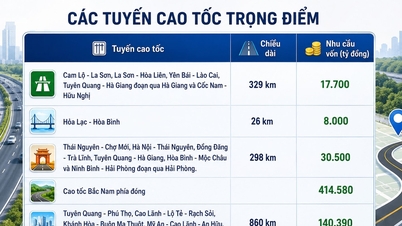
To meet the operational requirements of expressways, the needs of road users, and to ensure synchronous operation with existing and soon-to-be-operational expressways, the Ministry of Transport has approved a network of rest stops on the eastern North-South expressway from Lang Son to Ca Mau in Decision No. 938, totaling 36 stops. The Expressway Department has also approved the contents of the list of investment projects for the construction and operation of rest stops in 6 component projects of the eastern North-South expressway, with 7 pairs of rest stops belonging to the following component projects: Mai Son - National Highway 45; Nghi Son - Dien Chau; Nha Trang - Cam Lam; Cam Lam - Vinh Hao; Phan Thiet - Dau Giay (1 pair of rest stops each project) and Vinh Hao - Phan Thiet (2 pairs of rest stops).
"Currently, the relevant units have organized open bidding on the National Bidding Network System. After the closing of the bidding process, the units will evaluate the bids, announce the winning investors, and then proceed with implementation. It is expected that construction can begin in the second quarter. Due to the large scale of the stations, with some rest stops covering more than 10 hectares, the construction time may extend from 1 to 1.5 years," a representative from the Ministry of Transport added.
According to the list of investment proposals published by the Department of Roads, investors building 7 pairs of rest stops on the North-South expressway will have to construct 3 groups of facilities: A group of public services such as parking lots, temporary rest rooms for drivers, restrooms; information centers and traffic safety awareness campaigns; and rescue and first aid stations for traffic accidents. A group of service facilities including food and beverage areas; product display and sales areas; fuel stations; electric vehicle charging stations; vehicle maintenance and repair workshops; car washes; restaurants; entertainment and recreation areas for children; and other supporting facilities to meet the needs of the public. A group of supplementary facilities such as local product showrooms and community activity areas.
Source link



![[Photo] General Secretary and President To Lam presides over a working session with the Central Policy and Strategy Committee on the development of the materials industry.](https://vphoto.vietnam.vn/thumb/1200x675/vietnam/resource/IMAGE/2026/05/21/1779359935432_a3-bnd-3129-1412-jpg.webp)















































































Comment (0)