


New space - new opportunities
July 1, 2025 marks a significant milestone as Ninh Thuan and Khanh Hoa provinces officially merge to form the new Khanh Hoa province, opening up a vast, diverse, and potentially rich development space. This merger not only expands administrative boundaries but also creates a closely linked development structure between mountainous, lowland, and coastal areas, encompassing urban areas, industry, energy, tourism , and marine services.
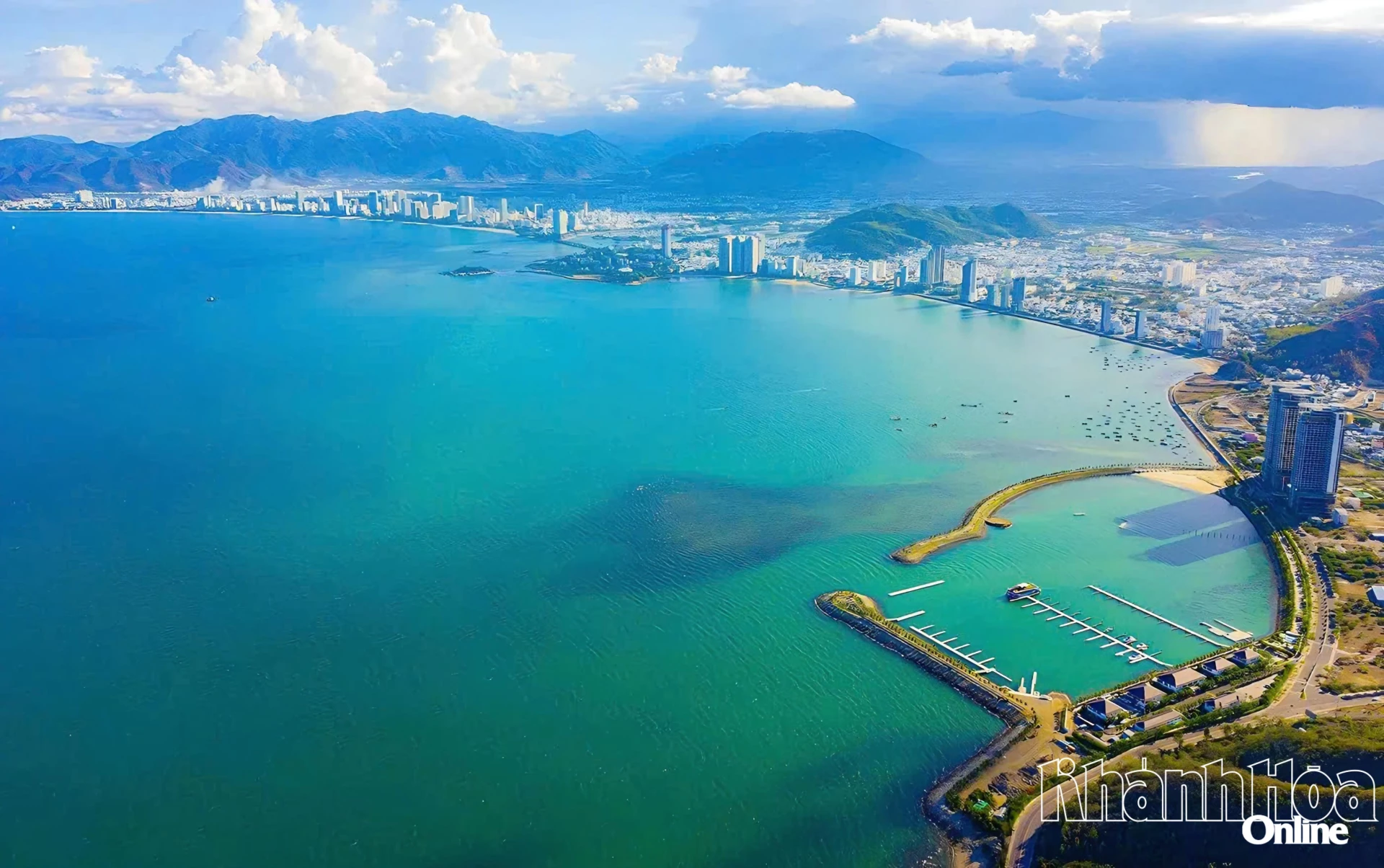 |
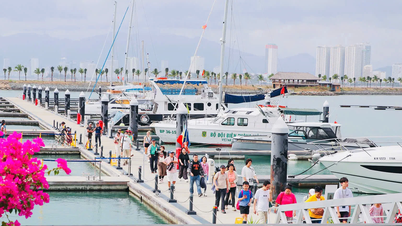
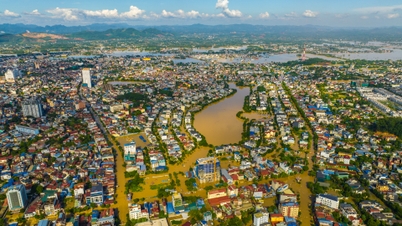
| A view of the northern area of Nha Trang. |
According to Mr. Le Minh Tien, Deputy Director of the Department of Construction, the expansion of urban space has created many key advantages to realize the goal of becoming a centrally-governed city: the strategically planned land fund has been expanded, the coastal space has been extended, creating conditions for the formation of new urban areas and specialized urban models. At the same time, the diversification of potential and resources allows for the formation of a multi-polar urban system, maximizing the unique advantages of resources and the economy of each region; reducing pressure on the existing central urban area; optimizing synchronized, inter-regional infrastructure, creating a foundation for planning major transportation arteries, energy systems, and larger-scale water supply and drainage systems to ensure interconnectedness and mutual support between dynamic regions. Based on this foundation, Khanh Hoa aims to build a modern, interconnected urban system that leverages the advantages of each region, creating overall momentum for the entire province.
According to the construction industry's assessment, in the coming period, many important criteria and standards for a Type I urban area will basically be met, such as: urbanization rate, urban population size, regional-level transportation infrastructure system, functional areas of national and international significance, and award-winning architectural works and urban areas. However, there are still criteria that require continued effort, such as: the rate of public passenger transport, per capita income, and GRDP growth rate… According to regulations, to be recognized as a Type I urban area, a province must meet at least 12 out of 15 standards. Therefore, building a "comprehensive picture" of the roadmap, tasks, and implementation progress with the synchronized participation of departments, sectors, and localities is an urgent requirement in the final stretch.
Striving to achieve the goal by 2027.
According to Mr. Tran Hoa Nam, Vice Chairman of the Provincial People's Committee, the province is focusing on developing a new master plan for Khanh Hoa urban area in an integrated and synchronized manner, consistent with the ability to mobilize investment resources. Simultaneously, they are developing a new urban development program for Khanh Hoa province, clearly defining development zones, urban hierarchy, urbanization corridors, land use structure, and development scenarios up to 2030, with a vision to 2045. This will serve as an important basis for comparing and verifying urban classification criteria and submitting a proposal for recognition as a Type I city – a centrally-governed city – by 2027.
 |
| The Cam Lam area has ample room for urban infrastructure development. |
Infrastructure continues to be identified as a crucial lever. It is estimated that the investment needed for transportation alone to meet the criteria of a Class I urban area will exceed 28,400 billion VND. In addition, to achieve Level 1 smart city maturity, more than 30,000 billion VND is required (prioritizing the mobilization of social resources for investment). To complete the new rural development program in the 2026-2027 period, approximately 3,300 billion VND will be needed.
The province also aims to build and modernize e-government through standardizing management software and digitizing stored information on land, planning, architecture, and infrastructure, ensuring centralized and unified management, operation, connection, and information sharing from the central to local levels to enhance the effectiveness and efficiency in managing and monitoring urban development...
Khanh Hoa is embarking on a new chapter with unwavering confidence: A modern, livable city of national stature is gradually taking shape, stemming from today's determination and a vision for many springs to come.
Minister of Construction Tran Hong Minh:
With strong political determination and close coordination between the central and local governments, Khanh Hoa province will soon realize its infrastructure, urban, and socio-economic development goals, making a positive contribution to the overall development of the region and the country. The province needs to focus on reviewing and perfecting criteria regarding population size, area, socio-economic development level, technical infrastructure, and social infrastructure, striving to make Khanh Hoa a centrally-governed city by 2027.
MANH HUNG
Source: https://baokhanhhoa.vn/xa-hoi/moi-truong-do-thi/202602/khat-vong-vuon-tam-do-thi-trung-uong-a512f61/









































































Comment (0)