

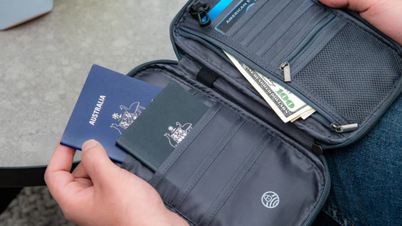
According to the ranking results, Vietnamese citizens can now travel to 48 destinations worldwide without needing a visa in advance, including various entry methods. Among these, 24 countries and territories offer visa-free entry, 21 issue visas on arrival, and 3 require electronic entry permits.
When travel becomes more convenient, the benefits are clear: Businesses can shorten preparation time and reduce administrative costs for business trips, market research, and trade connections. Young people have more opportunities to venture out into the world, access broader learning and working environments, thereby accumulating international experience and enhancing their competitiveness. When unnecessary barriers to travel are removed, the pace of collaboration can also be accelerated and made more flexible.
However, when considering this result in a regional context, the gap remains significant. Malaysia holds one of the strongest passports in the world, with over 180 visa-free destinations; Thailand has also reached around 80 visa-free destinations. Compared to its neighbors, Vietnam's passport has improved, but it is not yet at a satisfactory level. The journey to upgrade its passport ranking is still long, requiring sustained and continuous efforts.
In the context of globalization, passports are not just entry and exit documents; they are also indicators of a country's credibility. Each decision to ease visa requirements from a partner country signifies an increase in trust. This trust is built on governance, the safety and stability of the social environment, the ability to control migration, and the image of that country's citizens when present abroad.
From that perspective, the improved ranking of the Vietnamese passport is not the result of a single change but rather the accumulation of many factors. The implementation of chip-based passports, improved visa policies towards greater openness, and a proactive approach to integration have contributed to increased credibility in international control and cooperation. This is coupled with economic transformation and changes in how Vietnamese people learn, work, and communicate in a global environment.
It is also important to note that closing the gap with the leading group is not easy in the short term, especially as direct competitors are continuously raising governance standards and expanding foreign relations. This requires Vietnam to continuously improve, from policy to implementation. One of the decisive factors lies in the behavior of each citizen. National prestige is closely tied to how each Vietnamese person abides by the law, respects local regulations, and conducts themselves in the international environment.
Violations such as illegal residency or inappropriate behavior can erode trust, directly impacting the visa policies of various countries. As visa barriers are gradually removed, the opportunity costs of international cooperation decrease, and investment and connectivity plans become more flexible. More importantly, it represents a shift in mindset from cautious to proactive, from reserved to ready for integration.
Rank 84 is a positive milestone, but it also places pressure for improvement. In an increasingly competitive global environment, upgrading passport rankings is closely tied to policy reforms, expanding international relations, and building a better citizen image. When these factors move in the same direction, passports will not only be stronger in ranking but will also become part of national competitiveness, paving the way for deeper, more effective, and sustainable integration.
Source: https://www.sggp.org.vn/khi-niem-tin-thang-hang-post845502.html






























































































Comment (0)