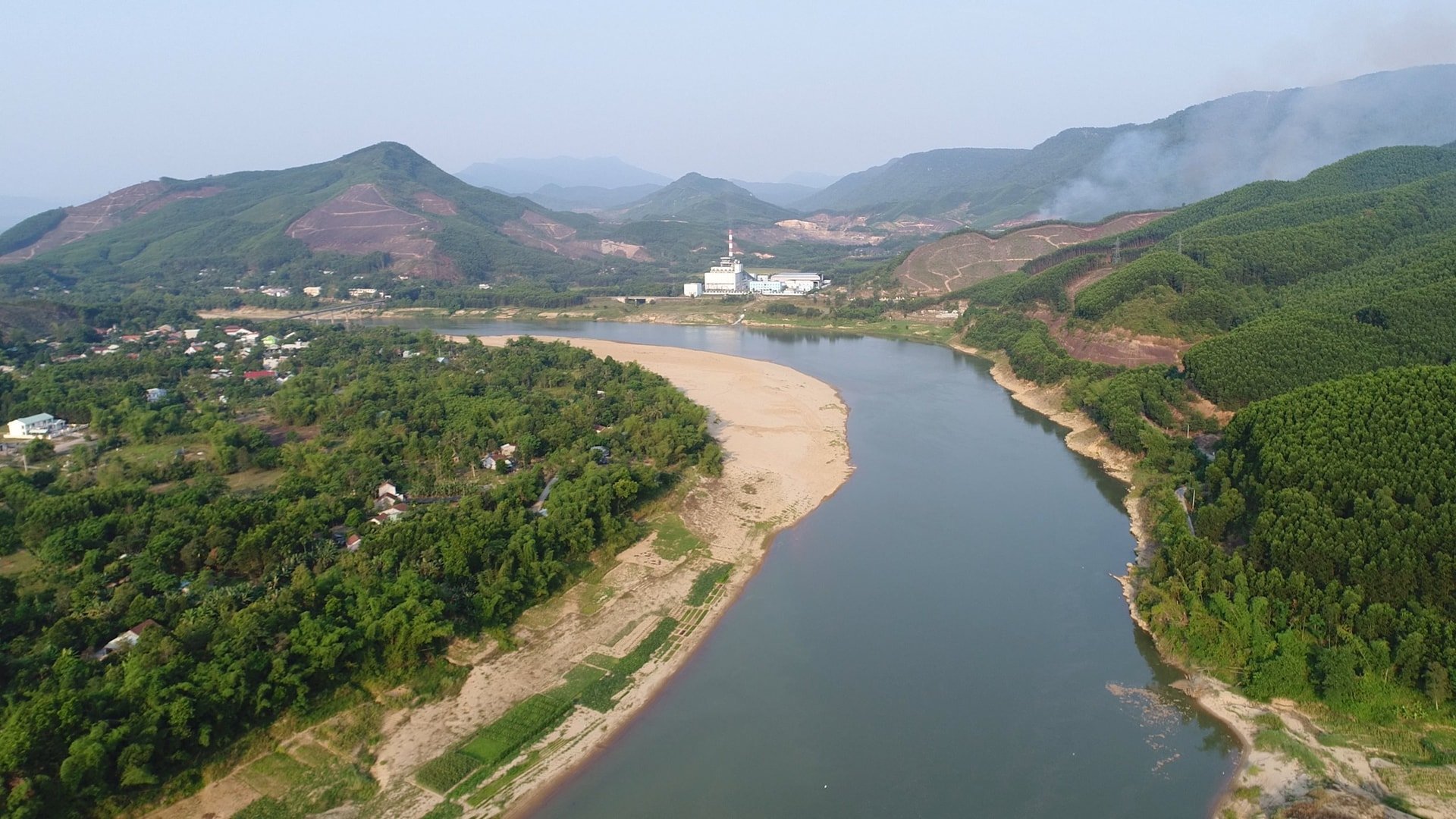
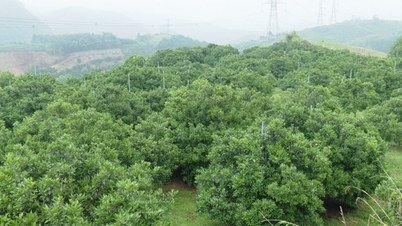
A view of Dai Binh village from Trung Phuoc. Photo: THU PHUONG
Severe damage caused by floods.
During the recent floods, Nong Son commune suffered heavy losses: more than 6 hectares of crops were completely destroyed, 17 hectares of perennial crops and 4 hectares of annual crops were partially damaged; 5 hectares of fruit trees were most severely affected, mainly concentrated in Dai Binh village.
Mr. Nguyen Thanh Tuyen, Head of Dai Binh village, said that Dai Binh has a unique topography and soil, favorable for the development of garden-based economy , farm economy, and services. Of the more than 350 households, over 80% live by farming, growing fruit trees.
Every household had a garden with all kinds of fruit trees: rambutan, green pomelo, hairy pomelo, guava, mangosteen, durian… But the flood at the end of October swept through, leaving unprecedented damage: more than 30 tons of tangerines fell off the trees, about 10 tons of pink oranges were damaged, and hundreds of old fruit trees died due to waterlogging.
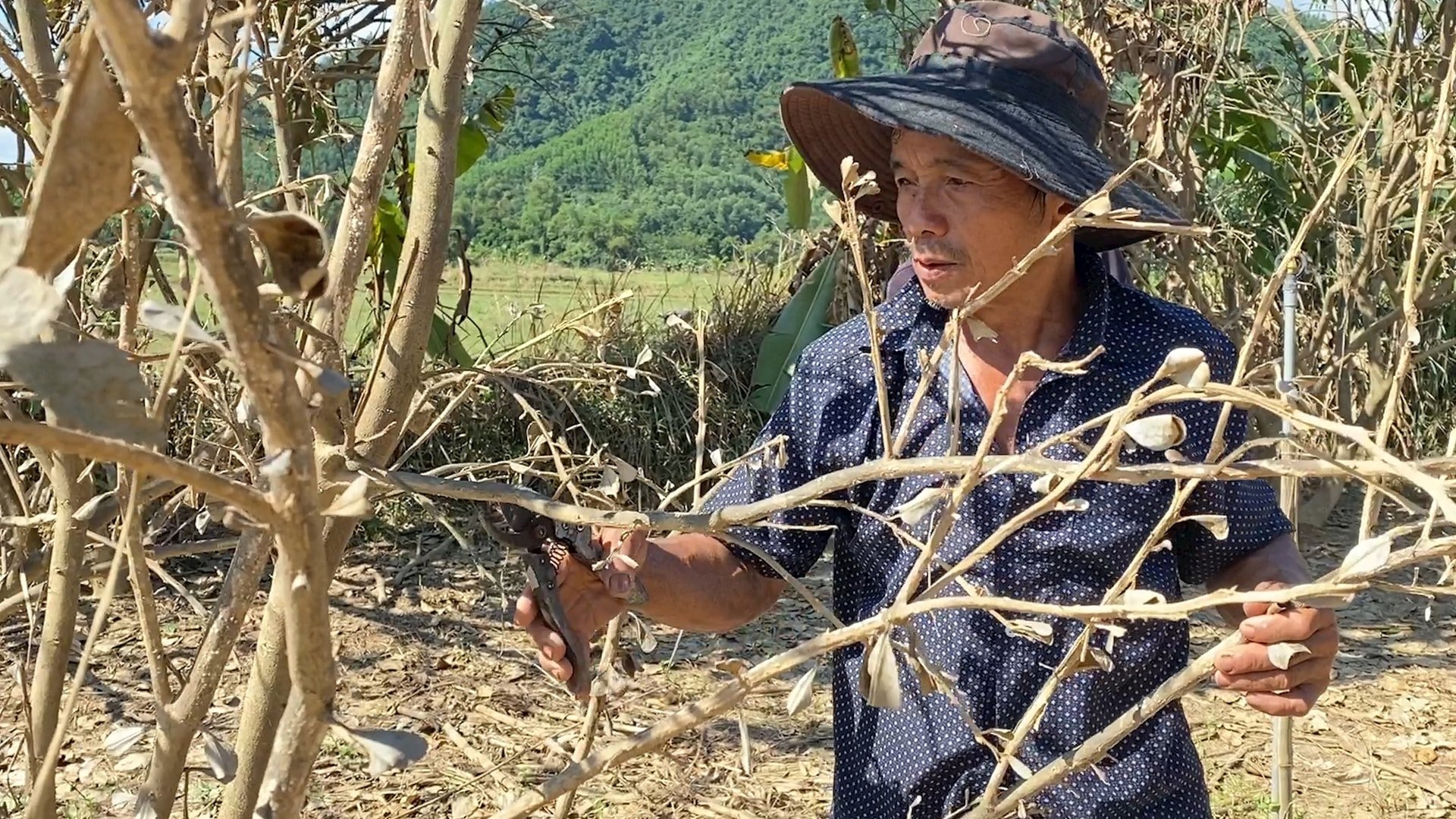
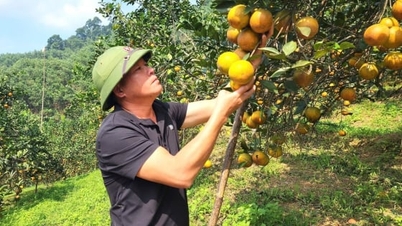
Mr. Le Khanh is pruning branches to save his pomelo orchard. Photo: THU PHUONG
In addition, more than 1,000 durian trees, 500 green pomelo trees, and 500 pomelo trees, which are the main crops of the area, were completely destroyed after being submerged in floodwaters for many days.
In his garden of over 5 acres, Mr. Le Khanh stood silently, gazing at the withered, seven-year-old orange, pomelo, and other citrus trees that had to be cut down one by one. He said, "The water rose too quickly; in some places, it flooded up to the top of the pomelo trees. In over ten years of building my business, I've never seen anything like this. The hardest thing now is finding the Dai Binh pomelo variety to replant and restore the brand."
Many other households shared the same fate. Mr. Le Tan Bon lost more than 3 sao (approximately 3,000 square meters) of tangerine trees; while Mr. Hua Ngoc Hung and Mr. Nguyen Quoc Khanh's households, nearly 1 hectare of green pomelo and durian trees, were severely flooded. For the people of Dai Binh, this is not only an economic loss but also a loss representing the entire process of building and cultivating their livelihoods.
Not only perennial crops, but also short-term vegetable crops were swept away by the flood. Mr. Nguyen Thanh Tuyen sighed and said, "The land in Dai Binh is fertile, with trees and fruits thriving all year round, free from pests and diseases, and without the use of pesticides, so the produce is guaranteed and popular. Now, looking at the state of the orchards, it's heartbreaking."
Efforts to overcome
As soon as the floodwaters receded, the people of Dai Binh immediately set about restoring their orchards: collecting garbage, clearing mud, unclogging drains, disinfecting tree roots, pruning branches, and tilling the soil.
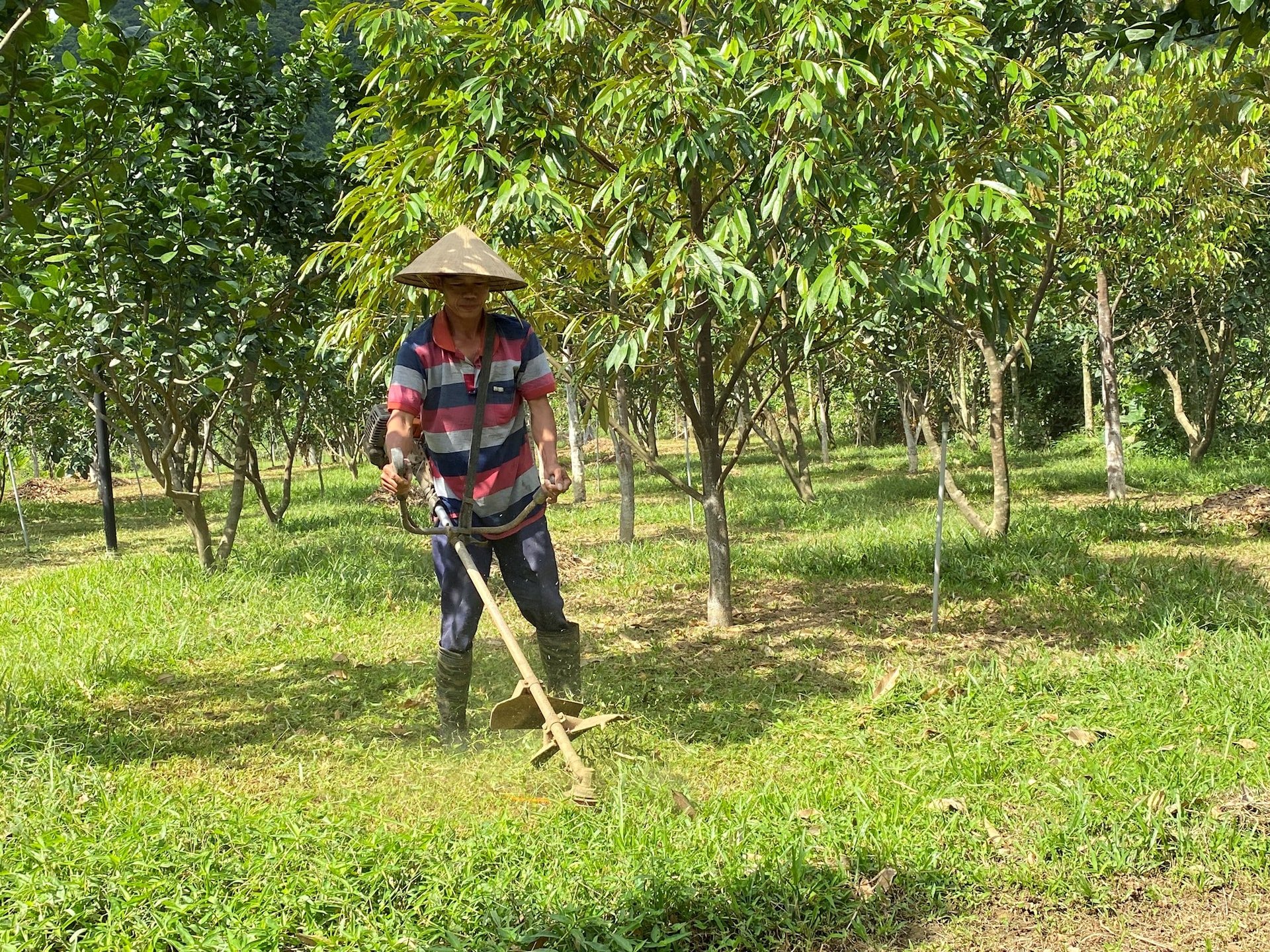
Mr. Nguyen Quang (Dai Binh village) is clearing his garden and replanting new trees. Photo: THU PHUONG
Mr. Nguyen Quang, who has been involved in gardening for nearly 20 years and owns over 100 durian trees, spends his days checking on each tree in his orchard. In his old pomelo orchard, he takes the opportunity to dry the soil, apply lime, reduce acidity, and then plant new trees.
Mr. Quang and many other households not only replanted but also boldly expanded the area of high-value crops. "The flood may sweep away the trees, but it cannot sweep away the will and love for the land of the people of Dai Binh; as long as the land remains, there is hope," Mr. Quang affirmed.
The Nong Son commune authorities mobilized police, militia, and youth union members to assist villagers in clearing their gardens; they also organized a survey team to provide technical guidance on soil restoration, post-flooding treatment, and pest control.
The commune also compiled a list of damages and proposed support in the form of seeds, fertilizers, and preferential loans to help people stabilize production as soon as possible. Mr. Ly Xuan Phong, Chairman of the People's Committee of Nong Son commune, said: "Restoring the garden economy is a key task after the flood. The commune is urging people not to leave land fallow, and at the same time encouraging the conversion of crop structures to suitable crops, prioritizing high-yield, high-quality varieties."
Amidst the sounds of tilling the soil, the clanging of chainsaws, and the chatter of people in the revitalized gardens, Dai Binh is gradually returning to a new rhythm of production.
Source: https://baodanang.vn/khoi-phuc-lang-cay-trai-dai-binh-3310378.html

































































Comment (0)