

The early days were difficult.
Having dedicated 25 years to his profession, Trang Ngoc Tap (born in 1980), a native of Khe De hamlet, Tong Doi village, Hanh Lam commune ( Nghe An province ), has built a renowned organic orange farming area.
Sharing his entrepreneurial journey, Mr. Tap confided: “The initial stages were very difficult and challenging. On the available land, my family initially planted tea, but the economic efficiency was low. Seeing that it was a waste of effort without any profit, in 2000 I decided to experiment with growing oranges. At that time, we were still basically cultivating using traditional methods, heavily dependent on inorganic fertilizers and chemical pesticides. The prolonged use of chemical fertilizers and pesticides caused the orange trees to degenerate quickly, and the soil gradually became barren and infertile.”
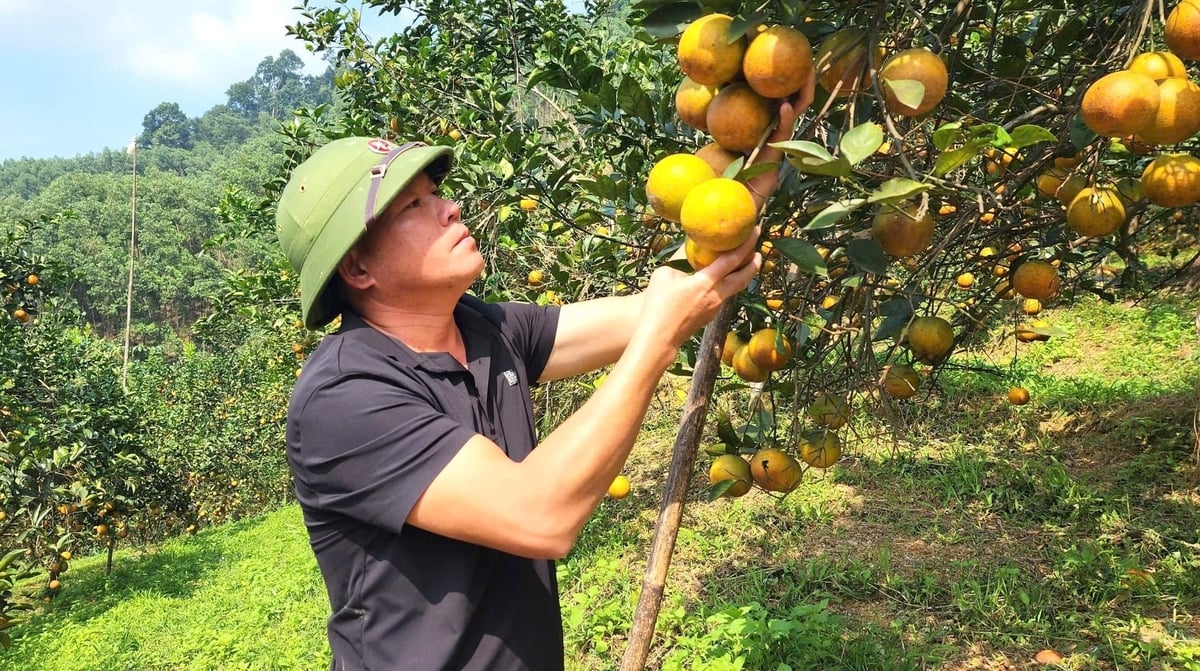
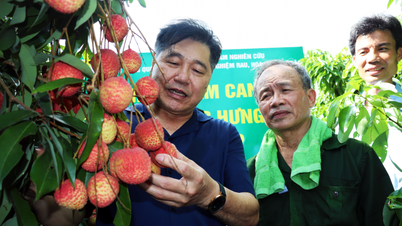
The Tap Lam organic orange brand is gaining increasing recognition. Photo: Viet Khanh.
After a considerable amount of time caring for and monitoring the trees, I realized that orange trees only thrive when they grow according to natural laws. The soil must be clean for the trees to live long. Applying this new method wasn't easy, but I didn't give up; the process required perseverance and patience, overcoming difficulties step by step.”
With that idea in mind, Mr. Tap began researching organic orange farming methods to minimize the use of pesticides and chemical fertilizers. Recognizing the advantages of the loose, fertile hillside soil in Tong Doi hamlet, in 2016, Mr. Tap decided to invest in and purchase 10 hectares of land to cultivate oranges as a specialized crop, focusing on disease-free and safe farming practices.
Mr. Tap affirmed that growing oranges organically is more difficult and laborious than traditional methods, but in return, it yields immeasurable and sustainable value. Applying organic farming processes requires meticulous attention to detail from seed selection and grafting, and especially, the care process must strictly adhere to the principles of organic farming, absolutely no use of chemical fertilizers or synthetic products. Instead, the orange trees are fertilized with well-rotted manure, microbial fertilizers, combined with soybean and fish emulsion. Fertilization is done three times a year, corresponding to three stages (flowering, fruiting, and ripening).
The bio-fertilizer used for the orange trees has a clear origin and is certified by specialized agencies as meeting standards. Weeds are cut manually using machinery; absolutely no herbicides are sprayed. Thanks to the correct application of organic farming procedures, the orange trees' resistance to disease has increased significantly, and the fruit ripens to a juicy, rich flavor.
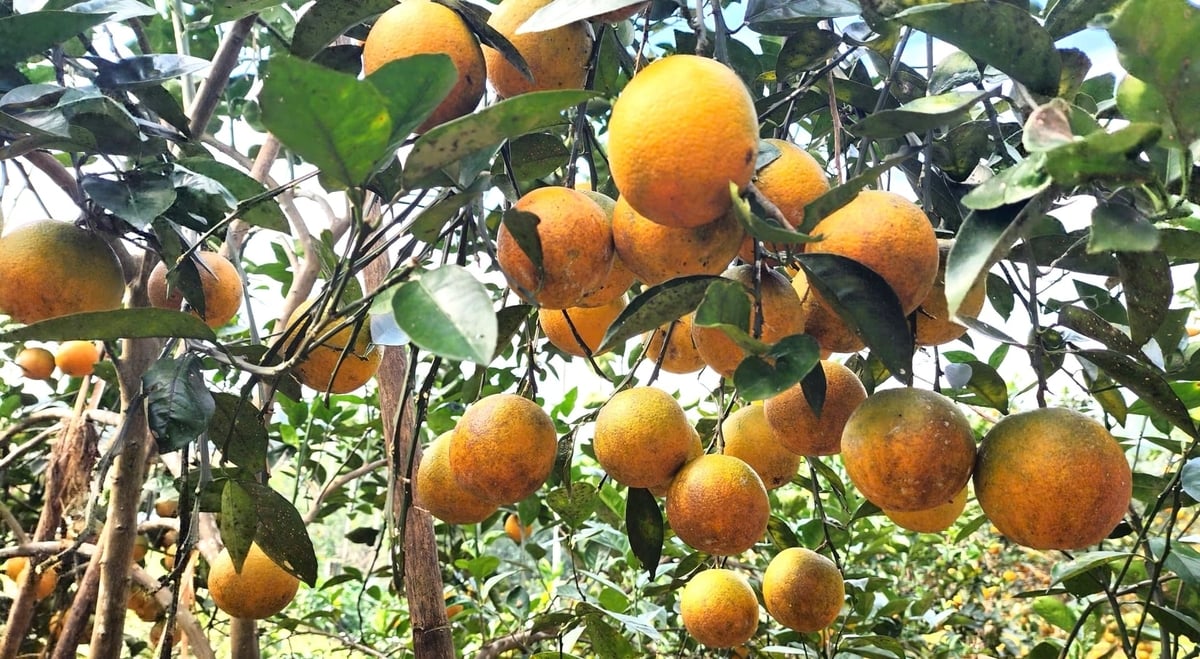
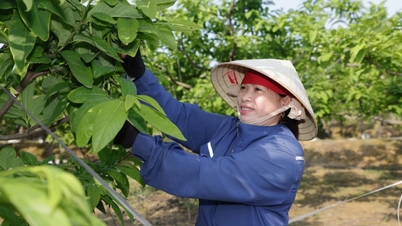
Applying organic farming practices has yielded sweet results. Photo: Viet Khanh.
Adhering to natural farming practices also puts orange trees at risk of common pests and diseases such as fungal infections and citrus greening. These are particularly dangerous diseases; once infected, there is no way to save the trees. Understanding this, when he detects a problem, Mr. Tap promptly cuts down the trees showing signs of disease to prevent it from spreading widely.
For common diseases, Mr. Tap prioritizes the use of biological control methods, including a fermented solution made from cinnamon essential oil to repel harmful insects and provide nutrients to the plants, ensuring environmental safety and the ecosystem of the orange orchard.
Pick the sweet fruit
After years of persistently pursuing the path of clean agriculture , it can now be affirmed that Mr. Trang Ngoc Tap has taken the right direction. After initial difficulties, his organic orange orchard, spanning thousands of trees, has yielded extremely sweet results with its two main varieties, Xa Doai and V2 oranges, boasting superior quality and flavor compared to the average.
According to Mr. Tap, if applied correctly, the lifespan of an orange tree can extend to over 10 years. After each harvesting cycle, the soil needs to "rest" for 3-5 years to regenerate, restore fertility, and rebalance the ecosystem. Thanks to organic farming, the lifespan of orange trees is extended, productivity does not decline year after year, and soil degradation is reduced.
Organic oranges may not be as visually appealing as conventionally grown oranges; their peels are thicker, rougher, and less glossy, but they have a distinctively sweet and refreshing taste. Currently, Mr. Tap's family's oranges are sorted and sold on the market at prices of 45,000 VND/kg for grade 1, 30,000 VND/kg for grade 2, and 20,000 VND/kg for grade 3. With an area of 10 hectares, the total annual orange production fluctuates around 100 tons, generating billions of VND in revenue.
The successful production and consumption of oranges has also contributed to creating stable jobs for local workers with relatively high incomes. Currently, the Tap Lam organic orange farm has 4 permanent workers, and this number increases many times during peak seasons. More importantly, the success of the model has opened up a sustainable direction for citrus fruit production, in line with the restructuring orientation of the agricultural sector.
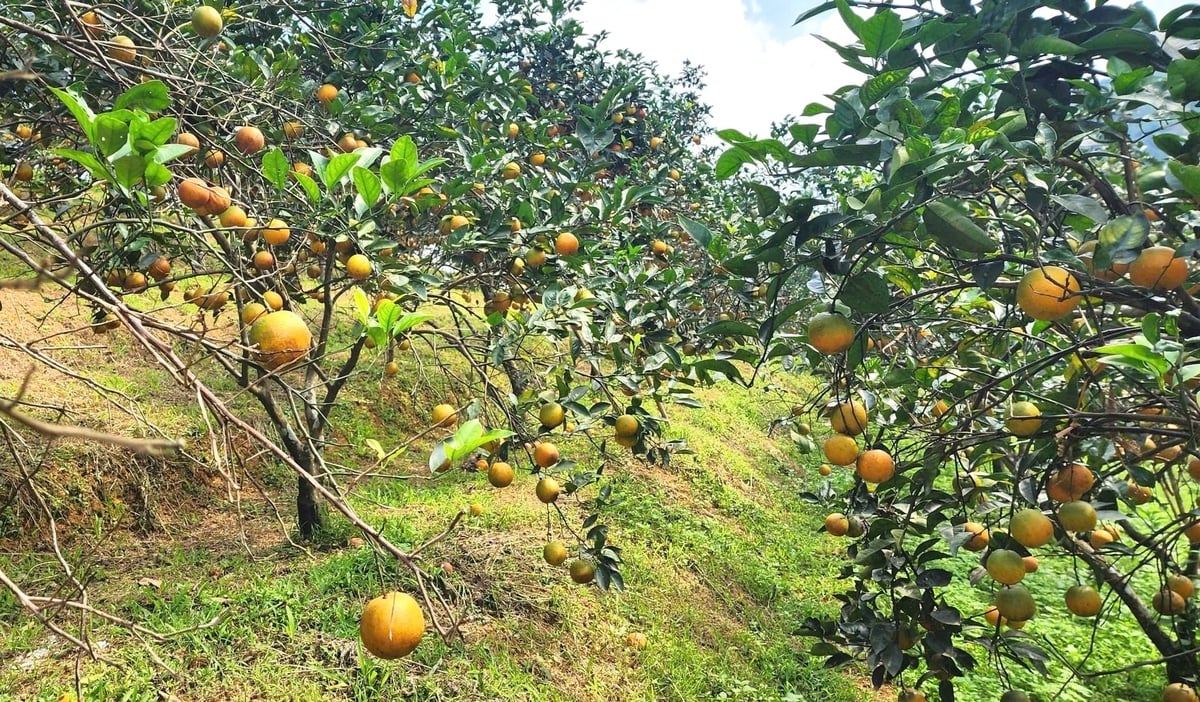
Growing oranges organically is a priority for Nghe An's agricultural sector in the coming period. Photo: Viet Khanh.
Ms. Nguyen Thi Nhung, a specialist from the Economic Department of Hanh Lam commune, informed: “The entire commune currently has 145 hectares of oranges, including 6 households cultivating organic oranges with a total area of 26 hectares. To enhance the value of the product and protect the safety of the existing orange growing area, in the coming time, the locality will continue to promote propaganda and mobilize people to expand the area of organic orange cultivation, gradually forming large-scale, concentrated organic production areas.”
Recognizing oranges as a key crop and a source of wealth for the locality, Hanh Lam commune is developing a plan for the development of organic oranges for the period 2025-2030, with the central goal being to expand the scale of safe and sustainable cultivation.
Nghe An currently has over 20,000 hectares of fruit trees, with a production of over 280,000 tons, an increase of nearly 8% compared to 2020. The province has focused on transforming the crop structure, importing many high-quality fruit varieties, and gradually forming specialized commodity farming areas with high economic efficiency.
To date, Nghe An has many famous fruit trees. Leading the way is the orange tree, with an area of over 2,000 hectares and a production of over 38,000 tons. The Vinh orange brand has been protected by geographical indication, and many orange brands have achieved OCOP product status, such as Dong Thanh oranges, Xa Doan oranges, Tan Ky oranges, and Tong Doi oranges…
Source: https://nongnghiepmoitruong.vn/nuc-tieng-cam-huu-co-tap-lam-d792021.html































































Comment (0)