

Bright colors
Facing an economic crisis, rising input costs, and a sluggish market demand, bank credit is becoming a crucial "lifeline" driving the development of Dak Lak's economy.
By the end of May 2026, the credit landscape in Dak Lak showed positive signs. Total outstanding credit in the province was estimated at over 278,300 billion VND, an increase of 6.8% compared to the end of 2025. This is an impressive growth rate, higher than the regional average, reflecting the strong capital absorption capacity of the agricultural processing, trade, logistics, and urban infrastructure investment sectors.
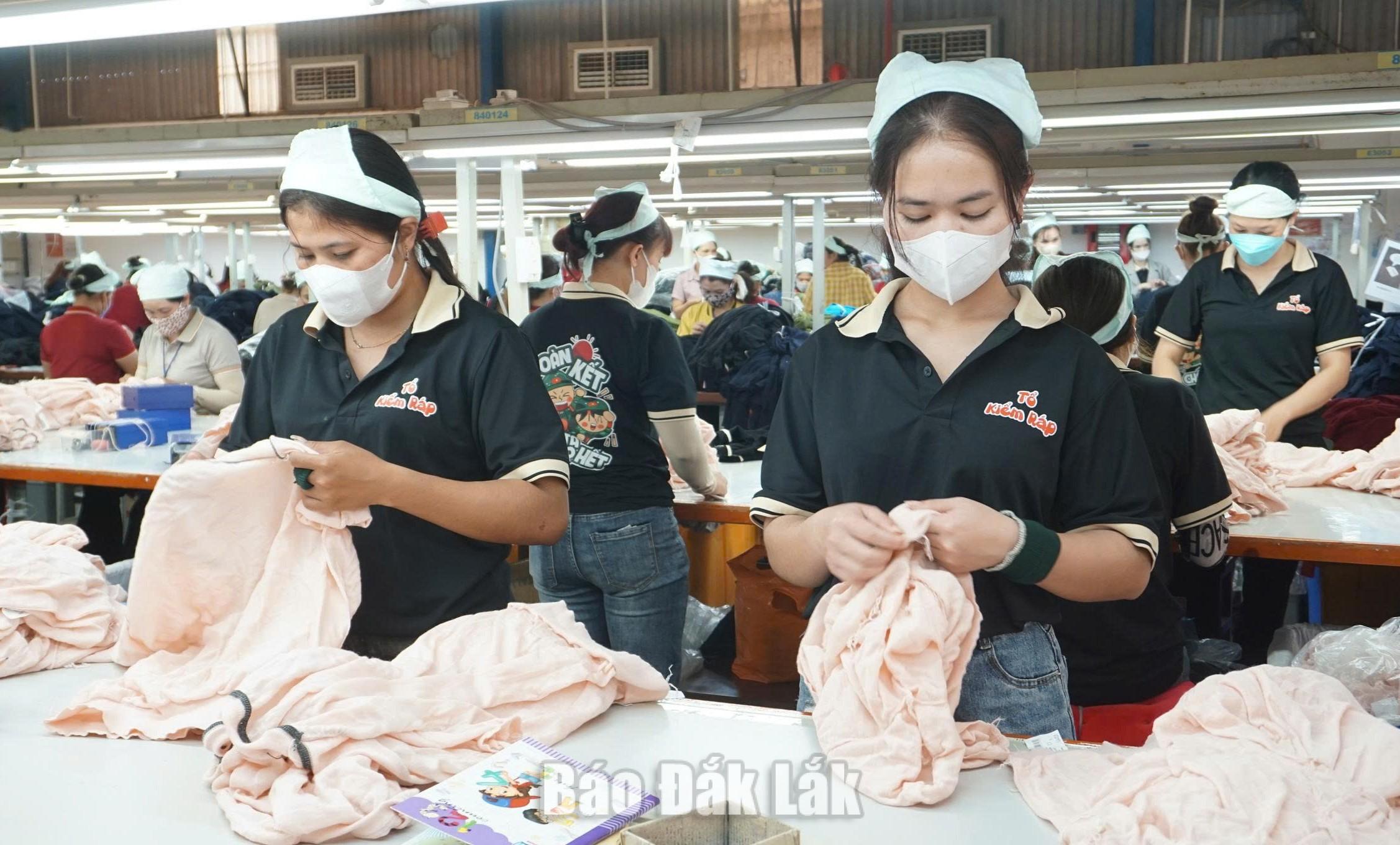 |
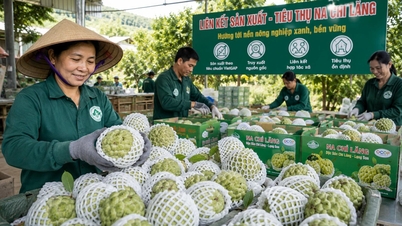
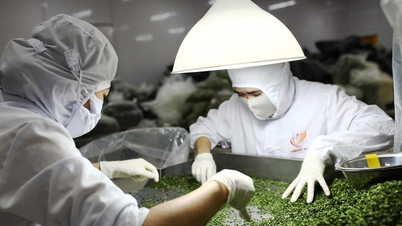
| Access to credit has enabled many businesses to expand their production and operations. |
Specifically, outstanding loans in the agriculture, forestry, and fisheries sectors reached nearly VND 70,200 billion, an increase of 6.8% compared to the end of 2025. If considering only credit for agricultural and rural development, the scale reached over VND 147,500 billion, an increase of 5.4% compared to the end of 2025. In particular, Agribank Dak Lak Branch clearly affirmed its leading role in investing in agriculture, forestry, and fisheries by maintaining the proportion of loans to agriculture and rural areas above 80% of the total outstanding loans.
Not only in the agricultural sector, but also in the commercial and service sectors, credit continues to account for a large proportion with over VND 177,400 billion in outstanding loans, an increase of 6.4% compared to the end of 2025. This reflects the increasingly important role of the service sector in economic growth, especially logistics, tourism, retail, and agricultural trade.
A notable point in this shift is the 11.8% increase in medium and long-term outstanding loans compared to the end of 2025, indicating that credit institutions are boldly supporting investment projects in production, expanding raw material areas, and deep processing. More significantly, capital flows in Vietnamese Dong account for an overwhelming proportion and increased by 7.1% compared to the end of 2025, helping to mitigate exchange rate risks for the business community.
In addition, banks have also been actively implementing credit programs directed by the Government, the Prime Minister, and the State Bank of Vietnam. For example, the credit program for the agriculture, forestry, and fisheries sector reached VND 15,210 billion, an increase of 90.3%; the loan program for social housing, worker housing, and apartment renovation and reconstruction projects under Resolution 33/NQ-CP reached VND 150 billion, an increase of 105.5%.
Alongside commercial credit, policy-based credit in Dak Lak continues to be an important social security "pillar". This source of capital has helped hundreds of thousands of households, especially in remote areas, access preferential loans to develop their economy and reduce the incidence of illegal lending.
Continue to facilitate the flow of capital.
Although credit flows are strong, many challenges remain to be overcome in order to truly transform this capital into a sustainable growth engine.
According to Vo Tien Nam, Deputy Director of Agribank's Dak Lak Branch, the biggest challenge currently lies in the legal status of assets on agricultural land, especially high-tech investment projects. In addition, the lending model based on the supply chain linking businesses, cooperatives, and farmers, despite high expectations, still faces difficulties due to a lack of commitment in product procurement and transparency in the management of some entities.
 |
| The banking sector is accelerating the digitalization of processes, integrating VNeID data and chip-embedded citizen identification cards to streamline procedures. |
The focus in the coming period is not only on expanding the scale of credit but, more importantly, on improving the quality and efficiency of capital utilization. Banks need to promote lending along the agricultural value chain, financing logistics, deep processing, and exports to increase the value of local products." Director of the State Bank of Vietnam, Branch 11, Nguyen Kim Cuong |
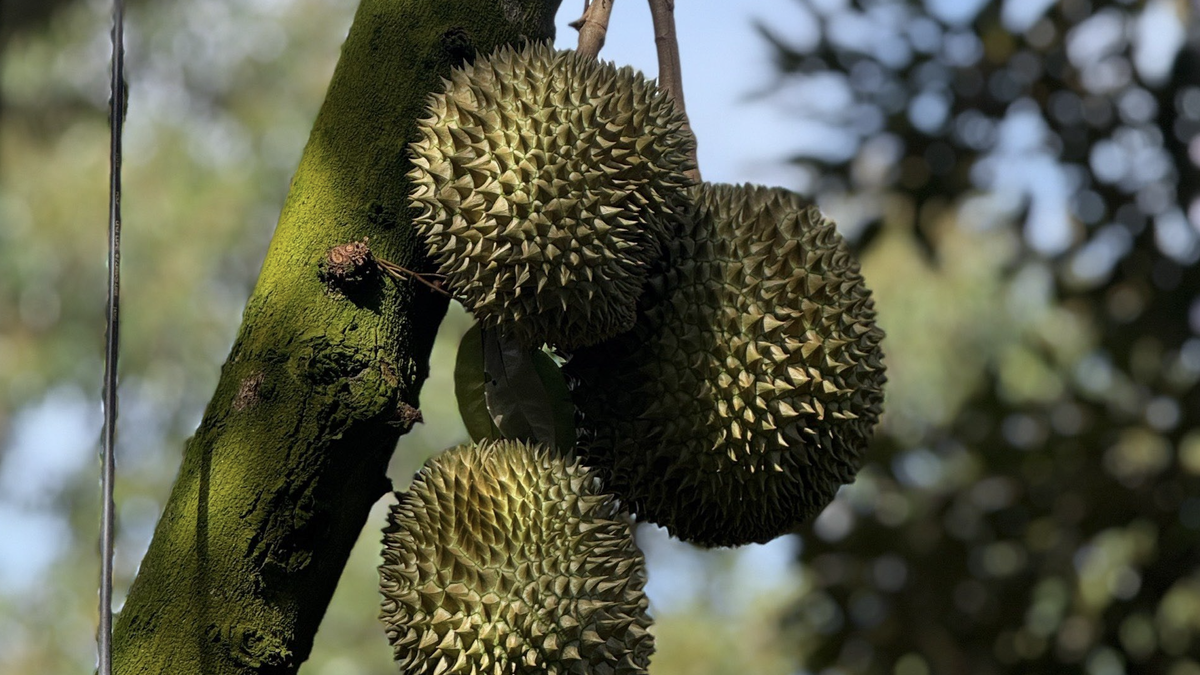
The banking sector in Dak Lak has been implementing many flexible solutions such as promoting process digitalization, integrating VNeID data and chip-embedded citizen identification cards to reduce procedures. Regarding green credit and the circular economy, although the number of eligible customers is still limited, banks have begun financing large, reputable businesses in the supply chain of key agricultural products such as coffee, durian, and pepper.
Many commercial banks in the province have also expanded lending based on supply chains, lending based on cash flow and production plans instead of relying entirely on collateral. This helps many businesses and cooperatives have easier access to capital.
However, to ensure that credit flows continue to be an effective "lever," Mr. Vo Tien Nam suggested that localities should promote the development of planting area codes and green certifications, considering these as "passports" for local agricultural products to reach international markets. At the same time, policies supporting agricultural insurance are needed to minimize the risks of natural disasters, helping banks confidently disburse large-scale credit packages to rural areas.
Looking at the growth figures in the first months of 2026, it is clear that credit in Dak Lak is not just about "injecting capital" but has become a tool for driving economic restructuring. Once the "bottlenecks" are removed, the province has every reason to expect a new development cycle – where high-tech agriculture and the green economy become the main drivers of growth, affirming its position as a modern agricultural center in the Central Highlands region.
Kha Le
Source: https://baodaklak.vn/kinh-te/202606/khoi-sac-tin-dung-nhung-thang-dau-nam-00f2271/

![[Photo] General Secretary and President To Lam presides over a meeting on preparations for the review of one year of operation of the three-tiered government system.](https://vphoto.vietnam.vn/thumb/1200x675/vietnam/resource/IMAGE/2026/06/02/1780391821195_a1-bnd-4595-9717-jpg.webp)







![[INFOGRAPHICS] Development goals for rural crafts and industries in the period 2026-2030](https://vphoto.vietnam.vn/thumb/402x226/vietnam/resource/IMAGE/2026/06/02/1780393054323_1780392879.webp)










































































Comment (0)