


In early May 2026, during a business trip to Cong Son commune, we had the opportunity to visit Coc Tranh village. After a night of heavy rain, the dirt road into the village was covered in mud, and many steep sections were slippery. Currently, the rate of concrete paving for inter-village roads in Coc Tranh is only about 30%, and for main village roads only about 20%. According to Mr. Hoang Phuc Quang, a villager, every time it rains, the roads become muddy, making transportation very difficult. Households at the end of the village face even greater difficulties when transporting agricultural products or taking young children to school.
Not only in Coc Tranh, but also in Khuoi Phieng village, Ba Son commune, many households still have to travel daily on steep, rocky roads. Mr. Trieu Chan Tinh, Party Secretary and Head of Khuoi Phieng village, shared: "The villagers all agreed to donate land to open the road, but the terrain is mainly rocky, making the construction costs too high. Many sections require breaking up rocks and leveling the ground to open the road, which exceeds the local people's ability to contribute."
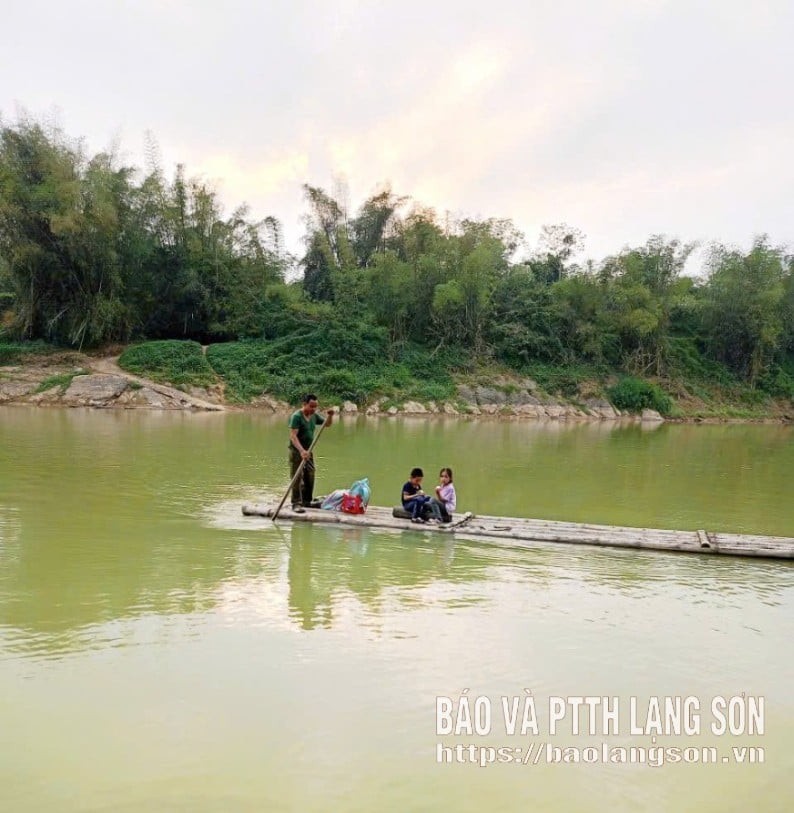
Besides the unpaved roads, many remote villages still lack pedestrian bridges for transportation and trade. During the rainy season, people in some areas such as Khang Chien, Nhat Hoa, Quy Hoa, Yen Binh, Thien Long… still frequently face isolation due to rising stream levels. In some places, people still have to cross streams using temporary bridges or makeshift rafts.
According to statistics from the Department of Construction, over 21% of commune-level roads, 30% of village-level roads, and 57% of rural roads in the province remain unpaved. The province also has 65 temporary wooden or bamboo bridges. Of the 1,646 villages in the province, 463 have less than 60% of their roads paved, and many villages lack roads altogether. The majority of these temporary roads and bridges are concentrated in disadvantaged areas.
In Thien Long commune, the rate of concrete paving of inter-village roads currently only reaches about 8%; some villages such as Khuoi Na and Khuoi Bong still lack concrete roads. According to the head of the Economic Department of Thien Long commune, the biggest difficulty at present is the limited investment resources, while the hilly terrain makes the cost of road construction much higher than in more favorable areas. Although the people all want roads for transportation and production development, their difficult living conditions make mobilizing contributions still face many obstacles.
The situation in Thien Long is also a common one in many disadvantaged areas today. Even though the people agree to donate land and contribute labor, the construction costs for roads requiring rock excavation, embankment construction, or long-distance material transportation still exceed the capabilities of the commune and its residents.
According to Mr. Duong Cong Vi, Director of the Department of Construction, most of the unpaved roads are located in difficult areas with complex terrain, resulting in very high construction costs. Meanwhile, the level of material support as in the previous phase is no longer adequate, causing difficulties for many localities in implementation. For the period 2026-2030, the authorities aim to pave more than 1,700 km of roads and build 120 new rural bridges, prioritizing inter-village roads, areas frequently cut off during the rainy season, and villages that are particularly disadvantaged and currently lack paved roads.
To achieve the set goals, the province will continue to promote the mobilization of social resources to invest in the construction of roads and bridges for local communities in disadvantaged areas. At the same time, the Party committees and local authorities will also intensify propaganda and mobilization efforts to encourage people to participate in building rural transportation infrastructure, proactively integrating local movements to mobilize additional resources for implementation.
In recent years, several businesses in the province have also participated in supporting the construction of rural bridges and roads in disadvantaged areas. According to Ms. Nguyen Thi My Huong, Deputy General Director of Huu Nghi Xuan Cuong Joint Stock Company, in the period 2022-2025, the company donated over 600 million VND to build three rural bridges in disadvantaged communes. In the future, the company will continue to survey and support the construction of rural bridges in areas frequently cut off during the rainy season; and at the same time provide additional funding and materials for some rural roads in disadvantaged areas. This will help people travel more conveniently and promote socio-economic development.
With the solutions that the province and its departments have been implementing, conditions will be created for the early construction of roads and bridges for the benefit of the people in disadvantaged areas, contributing to the completion of transportation infrastructure, expanding connectivity, and promoting socio-economic development.
Source: https://baolangson.vn/khoi-thong-giao-thong-vung-kho-5091945.html






















































































Comment (0)