

From historical buildings to public spaces, this new approach transforms heritage from a static element into a vibrant living experience. It's not just a story of preservation, but a journey to integrate culture into daily life, especially for the younger generation.
Heritage "comes alive again" in the digital space.
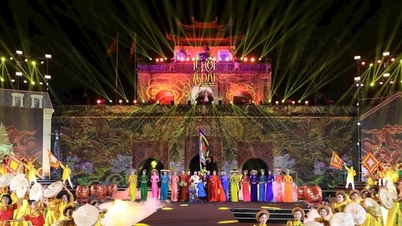
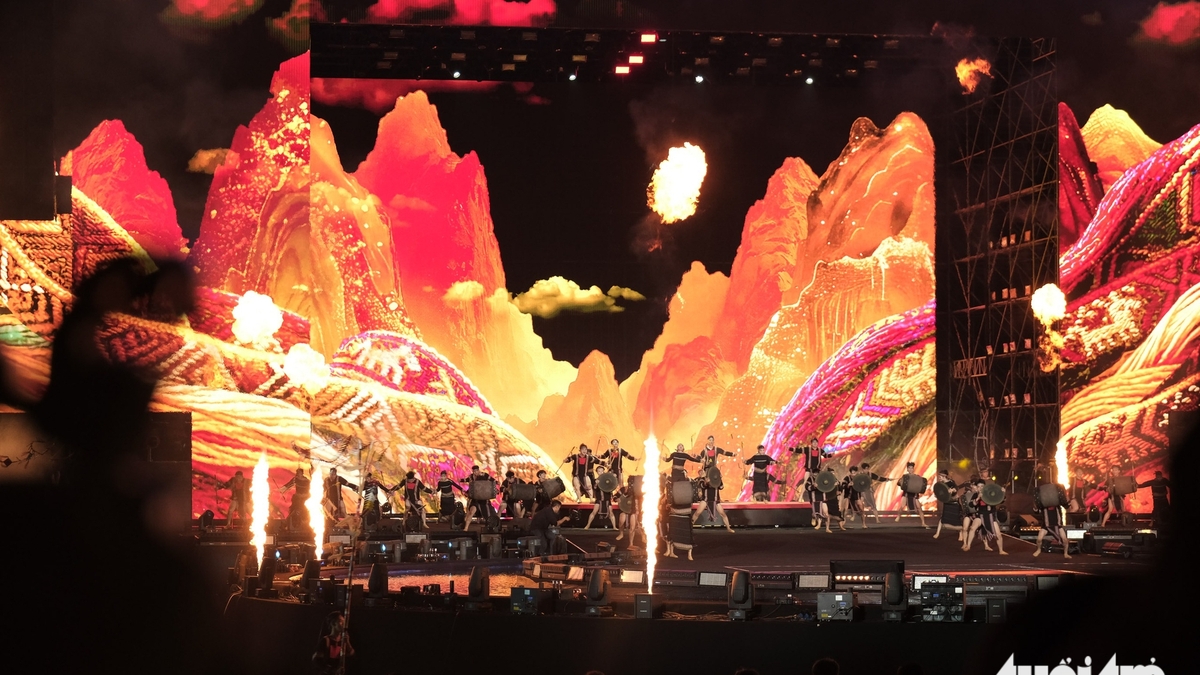
In the evening, the area around Hoan Kiem Lake glows with moving images projected onto the walls of the building at 47 Hang Dau Street. These old walls become "storytelling screens," recreating the history of Thang Long (Hanoi) through light, sound, and interactive technology, attracting large crowds of locals and tourists.
According to Mr. Pham Trung Hung, Director of CMYK Vietnam, these are no longer isolated experiments. Hanoi is using digital technology as a "new language" to tell the story of its heritage. Places that apply technology always attract large crowds, especially young people.
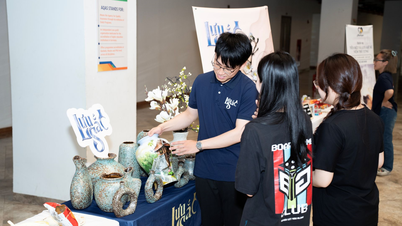
From creative design festivals to historical sites, technology is gradually changing the way we approach heritage. Techniques like 3D mapping and virtual reality help recreate details that have faded over time. Viewers are no longer just observers but can directly interact and experience the depth of history through multiple senses.
This shift means that heritage is no longer "confined" to museums. Instead, heritage becomes an integral part of urban life, more accessible and relatable. Historical stories are connected coherently and vividly, creating an experience that is both authentic and engaging.
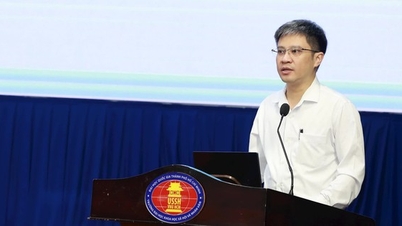
Meanwhile, artist Nguyen The Son (School of Interdisciplinary Sciences and Arts, Vietnam National University, Hanoi) believes that the crucial element when integrating art into heritage is the ability to engage in dialogue. "The artwork must be connected to the space, to the historical narrative, and to the architecture of the building itself," shared Mr. Nguyen The Son.
According to Mr. Nguyen The Son, the building at 47 Hang Dau Street has a special location near Ngoc Son Temple and the Pen Tower, creating a unique cultural "touchpoint." Bringing art here is not just about display, but a calculated process to harmonize tradition and modernity.
"We are not only using traditional art but also combining it with digital technology to create new experiences. This helps heritage become more vibrant and accessible to the public, especially young people," Mr. Nguyen The Son commented.
This reality shows that technology is opening up new avenues for Hanoi's heritage. Cultural spaces are becoming living entities, capable of telling stories and interacting with people. This is also the foundation for Hanoi to build new cultural products that are suitable for modern life.
To make heritage a living space for the community.
Referring to the role of public spaces in implementing Resolution No. 80-NQ/TW dated January 7, 2026, of the Politburo on the Development of Vietnamese Culture, Mr. Pham Tuan Long stated that Hanoi has many favorable conditions, possessing a diverse system of public spaces right in the urban core, from parks and gardens to heritage and industrial buildings.
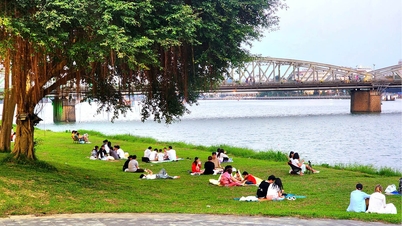
The city recognizes public spaces as a crucial link in cultural development, because when spaces are opened up, people have more opportunities to access and participate. In fact, the removal of park fences and the renovation of flower gardens in recent times have shown clear effectiveness, attracting a large number of people.
In addition, Hanoi is gradually implementing new models for exploiting heritage spaces such as the Hang Dau water tower and the Gia Lam railway factory in a creative way, organizing exhibitions and cultural events, thereby not only preserving historical values but also creating new values, allowing the public to directly experience and participate.
Associate Professor Bui Hoai Son, a full-time member of the National Assembly's Committee on Culture and Society, emphasized that the core element remains people, specifically the role of the community in participating in and benefiting from heritage values. If heritage is only preserved or exploited for tourism, it will be difficult to create lasting vitality. He argued that people need to "live" within their heritage, meaning not only visiting but also participating in the creative process, storytelling, contributing ideas, and directly benefiting.
At the same time, expanding the space is only the beginning; it's crucial to organize activities that are meaningful and experiential, because without this element, the space will only be "beautiful" but not truly "alive."
Mr. Bui Hoai Son further analyzed that today's youth have a high need for experiences, a desire for interaction and creativity, therefore heritage spaces need to be designed flexibly, capable of organizing many types of activities to meet these needs.
Mr. Pham Tuan Long emphasized that preservation needs to be linked with rational exploitation and effective organization of activities to foster people's participation. When cultural spaces are well-managed, each location can become not only a tourist attraction but also a familiar meeting place, where people frequently visit, become attached to, and actively participate in cultural activities. This is also the direction to gradually form a diverse network of destinations, connecting spaces within the city, and enhancing the experience for residents and tourists.
Associate Professor Bui Hoai Son believes that for these spaces to be sustainably effective, emphasis should be placed on connectivity and harmony between tradition and modernity. According to him, combining these two elements is not about replacement but rather a process of complementarity and enrichment, thereby making old values more relevant to contemporary life. At the same time, forming interconnected experiential routes instead of individual destinations will increase attractiveness, extend the duration of experiences, and enhance cultural and economic value.
Both experts agreed that heritage only truly "lives" when the community is involved. When people are placed at the center, cultural spaces will no longer be static displays, but will become a part of daily life, contributing to the sustainable vitality of the capital's culture.
From open spaces to the formation of urban cultural lifestyles.
Spaces are expanding, experiences are enhancing; the question is how to translate these into sustainable cultural behaviors?
Regarding this issue, according to Pham Tuan Long, Director of the Hanoi Department of Culture and Sports, Hanoi is gradually shifting from a propaganda-oriented approach to building genuine habits and behaviors within the community. Recent events have shown many positive changes in public behavior, especially among young people, reflecting the effectiveness of these solutions.
Mr. Pham Tuan Long also believes this is a positive sign, as the changes do not stem from mere propaganda but from the awareness and self-discipline of each individual. When people understand and appreciate cultural values, they will adjust their behavior accordingly.
Associate Professor Bui Hoai Son emphasized that cultural behavior cannot be formed without a suitable environment. When public spaces are well-organized and offer engaging activities, people will actively participate and gradually form habits. Cultural behavior cannot be imposed but needs to be nurtured through experience.
When people see themselves as part of that space, they will be more conscious of preserving it and behaving in a civilized manner. Based on the fact that many traditional cultural values of Hanoi are being embraced and practiced by the younger generation, he believes this is an important foundation for building a sustainable civilized way of life.
Furthermore, Mr. Pham Tuan Long stated that in the coming time, Hanoi will continue to expand and improve the quality of public spaces, while diversifying cultural activities to attract people's participation. The city will not only focus on creating spaces, but also aim to build an environment where people can practice culture in their daily lives; and it is hoped that with this approach, culture will increasingly permeate daily life, contributing to shaping the image of the capital city not only beautiful in its landscape but also in its conduct.
On a deeper level, Associate Professor Bui Hoai Son argues that to maintain and promote positive changes, continued investment in high-quality cultural spaces is necessary, because good spaces create good experiences, thereby fostering good behavior. This is a long-term process requiring perseverance and a systematic approach. Simultaneously, when spatial elements, activities, and people are closely interconnected, Hanoi can gradually form "cultural ecosystems," where culture is no longer a separate field but becomes the foundation of urban life.
From these specific developments, it is evident that cultural spaces in Hanoi are being reshaped towards openness, flexibility, and engagement with daily life. When heritage is "awakened," spaces are connected, and people are placed at the center, culture is not only preserved but also continues to spread, becoming a crucial driving force for the sustainable development of the capital city.
Source: https://hanoimoi.vn/khong-gian-van-hoa-tai-ha-noi-khi-di-san-hoa-vao-nhip-song-duong-dai-741970.html









































Comment (0)