

Decree No. 350/2025/ND-CP on encouraging the development of literature was issued by the Government and came into effect on February 15, 2026. For the first time, the field of literature is placed within a relatively comprehensive, synchronized, and long-term legal framework. With regulations that are relevant, specific, and closely related to creative life, this decree is expected to bring about innovations and positive changes to the literary and artistic life in the coming period.
 |
| Literary competitions and awards are now more clearly regulated and organized. |
Institutional shifts for literary development
Decree No. 350, which regulates the encouragement of literary development, comprises 7 chapters and 35 articles, covering key aspects of literary life: from creation to reception, from nurturing creative talent to bringing works to the public. Specifically, the content is presented in 5 chapters: Supporting activities to encourage literary development; organizing writing camps and literary creation workshops; writing competitions and literary creation contests; literary awards; and introducing, promoting, and disseminating literary works.
The decree clearly demonstrates the State's role in the development of literature, not only in terms of administrative management, but more importantly, in its responsibility to encourage, support, and invest. In particular, the decree creates conditions and encourages private organizations, businesses, and individuals, both domestic and foreign, to participate more actively in literary creation, accompanying and promoting literary development. The decree clearly outlines the funding for encouraging literary development, comprising two sources: from the state budget as stipulated and from voluntary, legitimate contributions from domestic and foreign organizations and individuals.
A notable highlight is that Decree No. 350 affirms the State's role in honoring authors and literary works of high value in terms of ideological content and artistry, while protecting copyright and related rights. In addition, the decree includes provisions on the National Literature Award in Clause 2, Article 25: “The Literature Award organized by the Ministry of Culture, Sports and Tourism is the National Literature Award. The National Literature Award is held every two years.”
The State also has very specific regulations to encourage the writing and creation of literary works on themes and topics that are supported by the State. Accordingly, the State prioritizes support for topics related to youth, teenagers, and children, in addition to topics promoting patriotic traditions, the Party, the Revolution, borders, islands, combating peaceful evolution, climate change and the environment, exemplary learning according to the thoughts, ethics, and style of President Ho Chi Minh; topics related to agriculture , rural areas, and prevention and control of domestic violence…
The decree stipulates that literary works should be introduced and promoted through exhibitions, book fairs, electronic publications, digital libraries, and the development and implementation of programs and projects both domestically and internationally, in accordance with the laws on publishing, libraries, and exhibition organization.
 |
| To encourage the development of literature and bring literary works closer to the public. |
With fairly clear regulations, this is a particularly important factor, both affirming the social status of writers and creating a solid legal foundation for the healthy and sustainable development of literature.
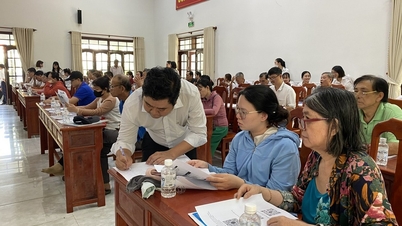
Connecting literary criticism theory with local creative practice.
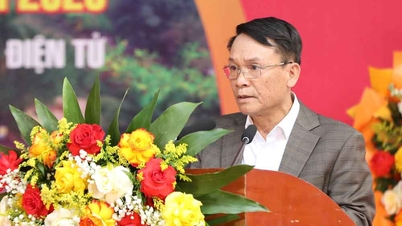
Poet An Thi, Head of the Vinh Long Literary Association, shared: “In literary life, creative writing and literary criticism can be seen as two wings of the same bird. A bird that wants to fly high and far cannot do without one wing. If each creative work is a boat on the flowing river of art, then literary criticism is the shore, the compass, the rudder to help that boat not lose its way in the artistic current. Looking at the reality of local literature in general and the province in particular, we must frankly admit: the field of literary criticism is currently a “low point,” lacking writers, weak in academic voice, and failing to create a social influence commensurate with its inherent role.”
According to poet An Thi, the difficulties that need to be identified are: a lack of successors, a reluctance to engage with challenges, and a lack of a truly academic space. Therefore, to improve and develop the field of literary criticism in the current period, building a strong force is necessary – this can be considered the root solution. In addition, creating a healthy academic dialogue environment requires fostering a critical spirit based on science, texts, and academic principles, avoiding generalizations, emotional biases, and personal attacks. The Association of Literature and Arts should periodically organize seminars and thematic discussions revolving around a specific work, author, or creative trend.
It is crucial that literary criticism is closely linked to reality and creative practice. Criticism should focus on the literary life of the province and the Mekong Delta region, from rural themes and urbanization to the human condition and cultural-ecological changes. Articles re-examining local works using new theories should be encouraged, but they must be written in clear Vietnamese, avoiding cumbersome terminology.
In outlining the province's literary and artistic development orientation, Ms. Nguyen Thi Quyen Thanh, Provincial Party Committee member and Vice Chairman of the Provincial People's Committee, emphasized: Literary and artistic activities must closely follow the realities of life, contributing to the building and development of culture and people in Vinh Long during the new development phase of the country and the province. The effectiveness of professional work must be improved, especially in the field of literary and artistic theory and criticism. The Provincial Association of Literature and Arts must take the lead in combating and refuting the distorted narratives of hostile forces. The systematization and digitization of works should be implemented, and literary and artistic works should be widely promoted to a large number of people inside and outside the province, especially on social media platforms and digital forums; seizing opportunities for the province's works to reach a wider audience and a more diverse range of readers.
With a relatively complete legal framework, the State affirms the position of Vietnamese literature, recognizing it as a field with an essential role in the spiritual life of society, requiring systematic investment, protection, and development. This includes applying scientific and technological achievements, developing creative spaces, and innovating thinking about literature to disseminate works of high value in terms of ideological and artistic content, which provide aesthetic guidance, shape character and morality, and contribute to building a comprehensively developed Vietnamese person.
Text and photos: PHUONG THU
Source: https://baovinhlong.com.vn/van-hoa-giai-tri/202602/khuyen-khich-thuc-day-van-hoc-phat-trien-2473bc2/










![[Photo] Prime Minister Pham Minh Chinh successfully concludes his official visit to the Russian Federation.](https://vphoto.vietnam.vn/thumb/1200x675/vietnam/resource/IMAGE/2026/03/26/1774482837673_vna-potal-thu-tuong-pham-minh-chinh-ket-thuc-tot-dep-chuyen-tham-chinh-thuc-lien-bang-nga-8663158-4245-jpg.webp)




































Comment (0)