Editor's Note: The 14th National Congress of the Party is still more than a year away, but the country is already clearly feeling the impending start of a new phase. In this context, coinciding with the 79th anniversary of Vietnam's National Day, Vietnam Weekly had a conversation with Dr. Nguyen Si Dung, who has many concerns about the current situation.
To begin the conversation, Mr. Nguyen Sy Dung shared some of his thoughts:
We are, perhaps, in one of the longest periods of peace for national development. The Communist Party of Vietnam will celebrate its 95th anniversary in just a few months, having a glorious revolutionary career, with great achievements including 80 years of the August Revolution, the establishment of the Democratic Republic of Vietnam, 50 years of national reunification, and nearly 40 years of the Doi Moi (Renovation) process…
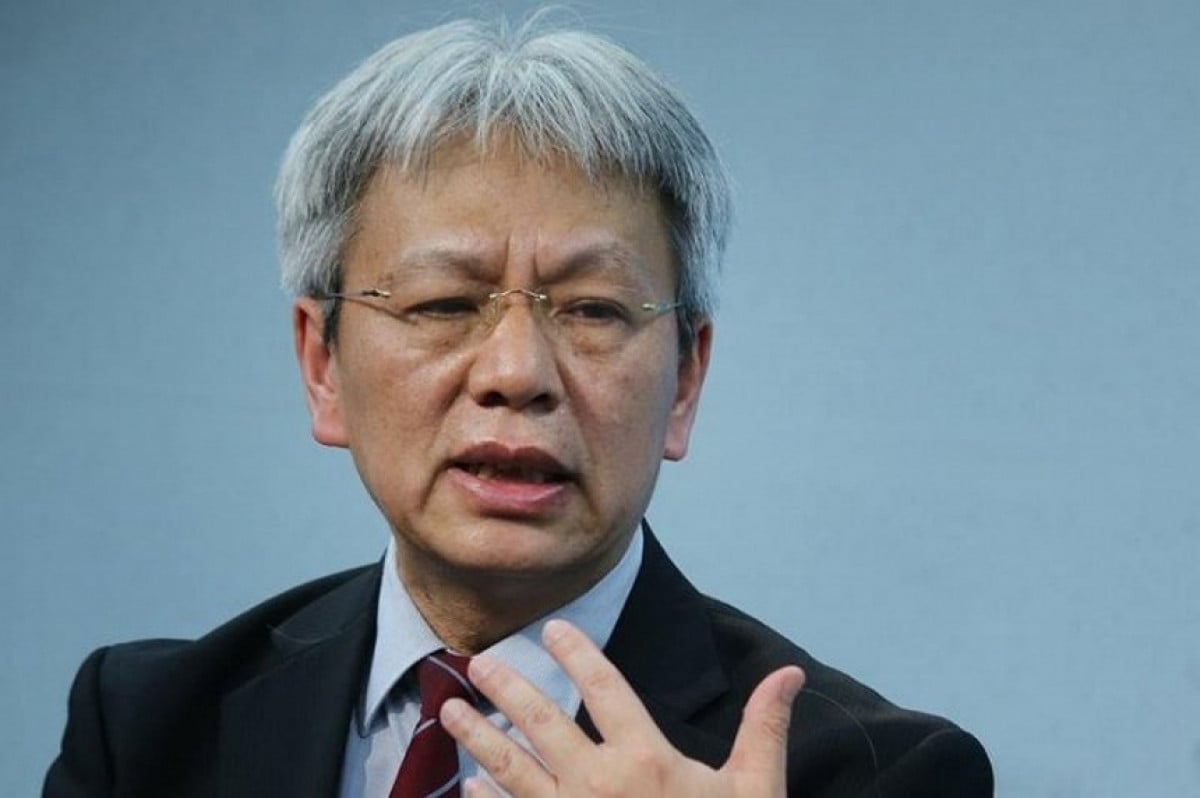
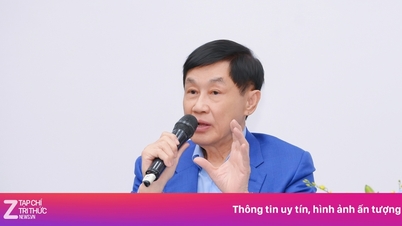
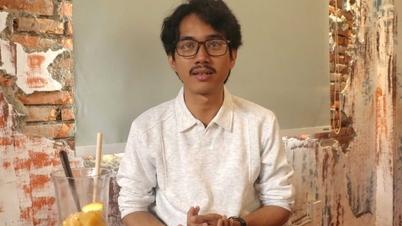
Dr. Nguyen Si Dung
The upheavals of the recent leadership transition have raised concerns about a potential disconnect, but also offer hope for a new decade with many opportunities for the country to achieve remarkable growth. Of course, this is contingent on the leaders being able to overcome the existing challenges, which we can all clearly perceive.
We believe that the new generation of leaders will become the driving force for a new phase of national development. In a single-party system, the succession and assurance of the Party's leadership continuity are essential. But these new leaders will add vision, energy, and ambition to help the country keep pace with the times.
A new era for the Nation and the People
How would you briefly describe the era he just spoke of?
Dr. Nguyen Si Dung : Opportunities and challenges are intertwined. The opportunities are immense, but the challenges are also enormous. The world is in the midst of fierce competition between major powers, with many geopolitical instabilities emerging in various places. The rise of protectionism is having a significant impact on countries with high economic openness like Vietnam.
Our country is situated in a geostrategic position amidst the US-China competition, and our Party, under the leadership of the late General Secretary Nguyen Phu Trong, has skillfully handled this complex relationship as best as possible. In such a complex context, Vietnam has still been able to conduct business and trade with all countries, and open up new markets. Maintaining such a strategic environment is an immense achievement.
But this is a dynamic equilibrium, requiring continuous processing of specific situations and events, rather than being established once and for all.
The impending artificial intelligence (AI) revolution has the potential to radically change every aspect of human society's economic, political, and cultural life. However, the strategic direction of our nation in this revolution remains unclear.
The consequences of the agricultural revolution thousands of years ago were that our nation suffered a thousand years of Chinese domination. The consequences of the industrial revolution hundreds of years ago were that our country suffered 100 years of colonial rule by imperialists. So, in the context of the 4.0 revolution and the AI revolution, what will become of our nation? This is a huge question, and hopefully, the newly elected leadership will find the answer.
We have created a favorable international environment, but whether our internal strengths—from institutions to businesses and people—are truly sufficient to exploit that favorable strategic environment for development is something we need to consider.
Optimistic and cautious
There has undoubtedly been much discussion about the changes that are happening and will be happening. What are your assessments?
Actually, I rarely have the opportunity to participate in such discussions. However, the general feeling is quite optimistic, although some are cautiously optimistic. Because things are happening so fast. The choices of history come very quickly, and more time is needed for the new leadership to introduce their vision, even their ideology.

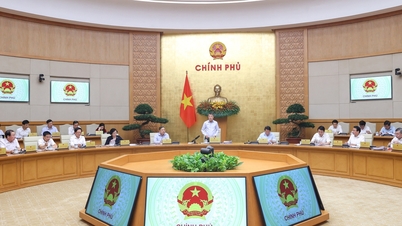
General Secretary and President To Lam chaired a Politburo meeting to discuss documents on August 30, 2024. Photo: VNA
Personally, I see our key leadership team and senior leaders as pragmatists who, through their time in office, have demonstrated a certain degree of technocratic ability and ambition.
Initial observations, based on his seniority, show that Prime Minister Pham Minh Chinh has already spent more than half his term as national leader. What has happened demonstrates his wholehearted commitment to promoting development. He is a leader with aspirations – aspirations for a strong and prosperous Vietnam.


From what I know and sense, General Secretary and President To Lam has undoubtedly been nurturing a vision for the era of the Fourth Industrial Revolution. His performance as Minister of Public Security, especially in advising on and implementing Project 06, with the decisive efforts of the entire police force in building a national population database in a short period, clearly demonstrates this.
The whole world is in the midst of the 4.0 revolution, the artificial intelligence revolution. This is an opportunity for countries like Vietnam to make breakthroughs. National leaders must have a vision for this era. It can be said that both General Secretary and President To Lam and Prime Minister Pham Minh Chinh have a vision for the major issues of this era.
Furthermore, we have a General Secretary and President who is quite proficient in English. He spent a year studying English in Australia, and I witnessed him using the language quite naturally with Americans.
English is a very good tool for understanding the world and modern national governance knowledge. Furthermore, the image of him driving a Vinfast electric car carrying the General Secretary and President of Laos on his first trip as President also shows that he belongs to the generation of modern leaders.
He was not only a technocratic leader but also a brilliant politician in promoting his work and making decisive decisions to realize his plans and ideas.
From reorganizing the entire police force, abandoning the model of General Departments to align with the principle of "a streamlined central ministry, strong provincial forces, comprehensive district-level units, and grassroots-based commune-level units," to mobilizing the entire sector to collect population data in the previous term, to promoting the inclusion of numerous bills related to security and order into the National Assembly's agenda, as well as his role in the Party building and rectification campaign initiated by the late General Secretary Nguyen Phu Trong… all clearly demonstrate those qualities.
Systemic stagnation and the hope for action for innovation.
Returning to the issue of the times, considering the current context of the country compared to the period before the Sixth Party Congress, what challenges do you see our leaders facing?
While the Sixth Party Congress took place amidst fundamental challenges facing the people's livelihoods, such as food security, currently we are grappling with the stagnation of the system.
At the beginning of the term, in 2021, the Politburo issued Conclusion 14, and then the Government institutionalized it with Decree No. 73/2023/ND-CP on encouraging and protecting dynamic, creative officials who dare to think, dare to act, and dare to take responsibility for the common good, but it can be said that even now, wherever you look, you still see stagnation…
We are in the era of the 4.0 revolution, where it's no longer a matter of "the big fish swallowing the small fish," but rather "the fast fish swallowing the slow fish." Yet, we are witnessing very slow decision-making at all levels and sectors, with a mentality of shirking responsibility and avoiding accountability.
So how should our leaders respond to that challenge, sir?
There is a lot of work to be done, both in the short term and in the long term.
Regarding General Secretary and President To Lam, I see new signals from his perspective when he chaired the first meeting of the Central Steering Committee on Anti-Corruption and Negative Phenomena two weeks ago. Of the three points he emphasized, the first is that the fight against corruption and negative phenomena must serve socio-economic development, and should not hinder development in the pursuit of this cause.
I believe this is a very sound strategic direction! We must have concrete solutions to ensure legal security for civil servants at all levels.
Prime Minister Pham Minh Chinh is decisively directing a review and resolution of inadequacies and overlaps in the legal system. National Assembly Chairman Tran Thanh Man is also actively involved in working in harmony with the Government to address this issue.
However, along with addressing such specific shortcomings, we must continue to improve the law-making process, with high priority given to the policy-making stage. We need to prepare thoroughly in terms of policy before starting to make or amend laws. Otherwise, overlapping and inadequacies in the legal system will reappear and repeat themselves. In addition, issues related to legislative techniques and the drafting of legal documents also need to be addressed.

We need to value and emphasize the role of institutional operating bodies, especially in the areas of bidding, investment, and land. Photo: Hoang Ha
Furthermore, I believe that the bottlenecks and inefficiencies of the system are not solely due to the laws themselves, but largely stem from shortcomings in the organization and implementation of laws, as well as in inspection, investigation, prosecution, and adjudication.
We need to value and emphasize the role of institutional operating agencies, especially in the areas of bidding, investment, land, etc. When localities and ministries need guidance to implement work, these agencies must provide guidance immediately and their opinions must be considered the most authoritative in terms of expertise. These opinions cannot be challenged by inspections or audits, but can only be rejected through legal proceedings.
As things stand now, this inertia also stems from the fact that people don't know what is right to do and what is wrong to avoid.



The nation yearns for a banner to lead the Renewal process.
The spirit of reform had been kindled since the 5th Party Congress, but it was only when General Secretary Truong Chinh took office and decided to rewrite the political report presented to the 6th Party Congress in the spirit of facing the truth that we entered the period of reform. So what are your expectations for this stage, when the important subcommittees preparing for the 14th Party Congress are undoubtedly very busy?
We don't yet know the exact form of the draft document for the 14th Party Congress. But in our country, the strategic issues for the next five years, even the ten-year vision and beyond, are contained in this document.

Dr. Nguyen Si Dung: “I believe that by facing the truth, speaking the truth clearly, and being determined to innovate, we will understand the current situation.” Photo: Hoang Ha
In terms of progress, unlike the 12th Congress, the preparation of the draft documents for the 14th Congress was accelerated by the 13th Central Committee. In the 12th Congress, the outlines of the reports were only discussed at the 10th Central Committee meeting, while in the 13th Congress, they were already discussed at the 9th Central Committee meeting.
Being able to get things started so early will be very advantageous for General Secretary To Lam, in his capacity as Head of the Document Drafting Subcommittee, to review all preparatory work as well as mobilize additional personnel and experts to provide further advice on the approach and solutions to the issues that the current situation is posing.
I believe that by facing the truth squarely, speaking the truth clearly, and resolutely pursuing reform, we will understand the current situation, identify the problems we are facing, and find solutions to overcome them.
The aspiration of the Sixth Congress was to overcome the crisis. The aspiration of the Thirteenth Congress, clearly expressed in its theme of "awakening the aspiration for national development," and I think it remains true for the upcoming Fourteenth Congress: the aspiration for a strong and prosperous Vietnam.
Vietnamnet.vn
Source: https://vietnamnet.vn/ts-nguyen-si-dung-ky-vong-hanh-dong-cho-cong-cuoc-doi-moi-2317794.html