

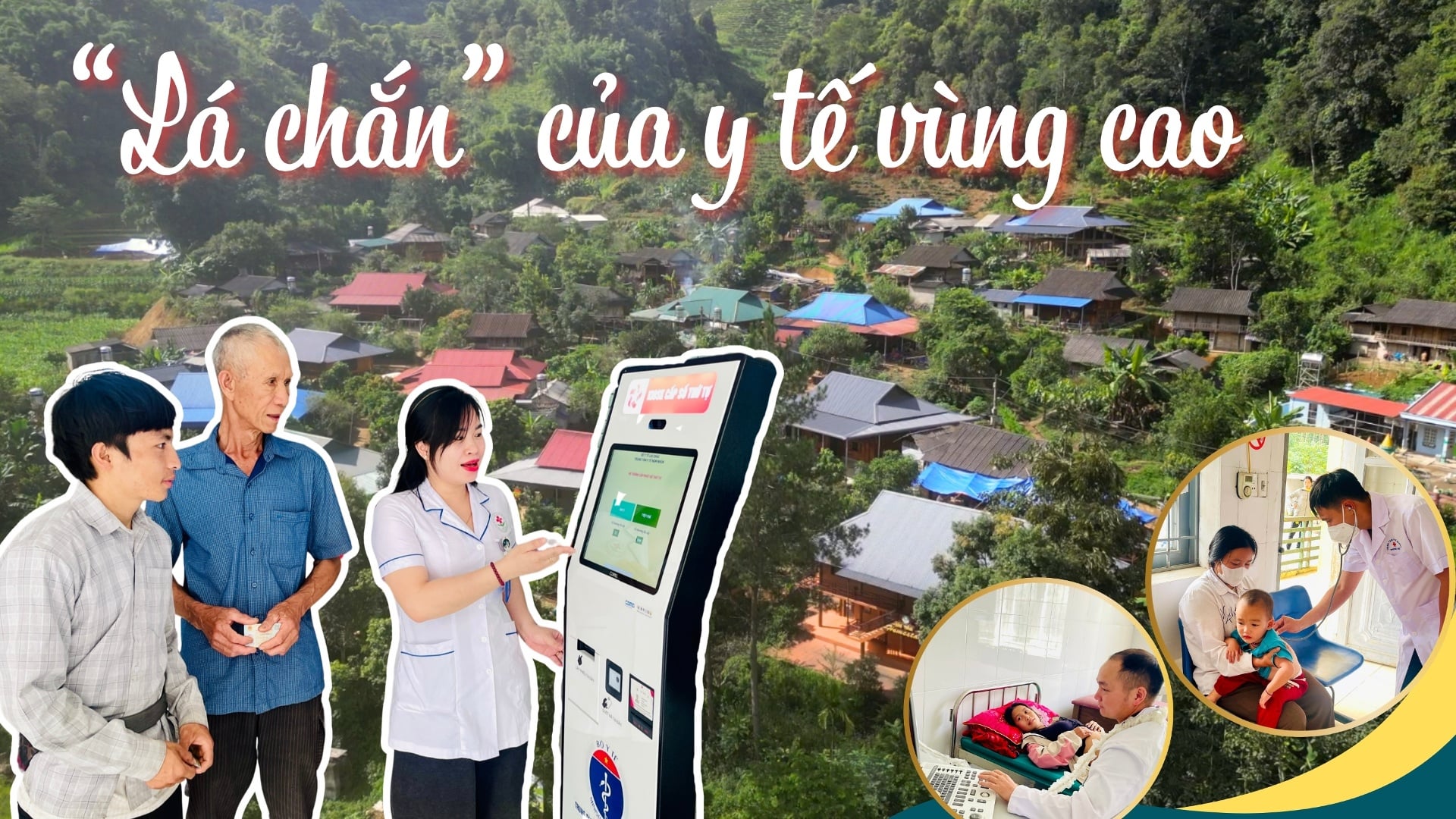

After the commune health stations were transferred to the management of the commune/ward People's Committees, they had to simultaneously undertake many functions, from initial medical examination and treatment, immunization, preventive medicine, chronic disease management, reproductive health care, population management, disease prevention and control, to managing electronic health records. Meanwhile, they lacked the most basic human resources, facilities, and equipment to support their professional work.
Lack of manpower, equipment, and minimum requirements.
Located right in the center of the commune, the Hua Bum Commune Health Station stands out with its newly built, spacious two-story building. However, human resources, equipment, and operating conditions still do not meet the requirements.

Hua Bum is not alone; the Ta Leng Commune Health Station also lacks an accountant, has insufficient office space, and does not meet the requirements for establishing departments and wards according to the new regulations. The medical staff simultaneously conducts examinations, provides emergency care, carries out community health work, administers vaccinations, and manages health insurance data. Dr. Do Thanh Hung, Director of the Commune Health Station, stated: Currently, there are no specific guidelines on job positions, staffing quotas, and job title standards, making organizational restructuring difficult. The station lacks administrative, financial, and accounting personnel, placing significant pressure on the existing staff.

The province currently has 38 health stations and 68 health station branches. Although 100% of the health stations have doctors on staff, there is still a shortage of high-quality personnel. Many stations were built a long time ago, have cramped spaces, lack functional rooms, and do not meet the requirements of the new model.

Upholding the medical ethics of doctors.

For example, Tủa Sín Chải commune has 31 villages, of which 5 only have local roads, requiring walking during the rainy season. Many places are up to 50km from the commune center, making healthcare for the people difficult. Dr. Mùa Thị Sùng, Deputy Director of the Tủa Sín Chải Commune Health Station, recalled: "I have encountered many difficult cases, but the emergency case of a traffic accident victim in Phi Én village in early 2025 remains an unforgettable memory. This is one of the most remote and isolated villages in the commune. Upon receiving a report that a man had been in a motorbike accident, fallen into a ravine by the roadside, suffered serious injuries, and lost a lot of blood, I and the medical staff immediately rushed over the mountain road to reach the victim. We quickly stopped the bleeding, stabilized the wounds, and encouraged the patient to stay conscious before safely transferring him to a higher-level facility. The patient survived the critical condition after many hours of fighting for his life."
In the border commune of Sin Suoi Ho, many villages are more than 40km away from the health station. In some places, during the rainy season, even motorbikes cannot reach the station, and patients must be transported on stretchers. Many patients receive first aid at the station, but because there are no ambulances, they have to hire vehicles from outside. Health workers have to follow on motorbikes to provide support if the patient's condition worsens en route. Similarly, due to difficult circumstances, many families in Pa U commune cannot afford to hire vehicles to take sick people to the hospital for emergency treatment. Family members have to transport them themselves on motorbikes along slippery and dangerous roads.


(To be continued)
Source: https://baolaichau.vn/xa-hoi/la-chan-cua-y-te-vung-cao-1380605
![[Photo] General Secretary and President To Lam presides over a working session with the Central Policy and Strategy Committee on the development of the materials industry.](https://vphoto.vietnam.vn/thumb/1200x675/vietnam/resource/IMAGE/2026/05/21/1779359935432_a3-bnd-3129-1412-jpg.webp)
![[Photo] National Assembly Chairman Tran Thanh Man working with the Standing Committee of the Law and Justice Committee](https://vphoto.vietnam.vn/thumb/1200x675/vietnam/resource/IMAGE/2026/05/21/1779378929214_ndo_br_1-4610-jpg.webp)




























































Comment (0)