

 |
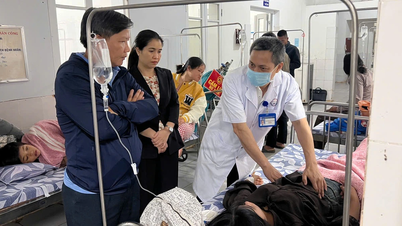
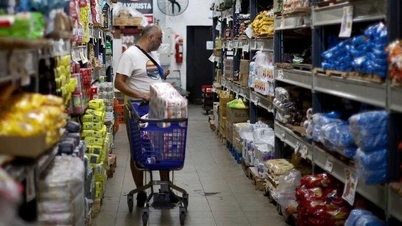
| Deputy Head of Food Safety Department (Department of Health ) Nguyen Dinh Viet inspects canned products at a convenience store in Tri An commune. Photo: Hanh Dung |
This serves as a warning to the public to be extremely cautious when consuming foods that are at high risk of being contaminated with toxins.
Extremely potent toxin
Botulinum poisoning is caused by the toxin produced by the bacterium Clostridium botulinum. This is an anaerobic bacterium (it only grows in an oxygen-free environment). When conditions are favorable, it produces toxins and enters the human body, most commonly through food (eating food containing toxins produced by the bacteria during processing or improper storage); through open wounds on the skin; and through excessive use of botox in cosmetic procedures (rare). Botulinum toxin is considered the most potent toxin ever discovered by humans.
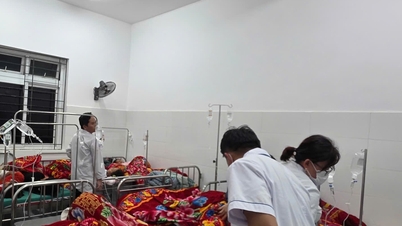
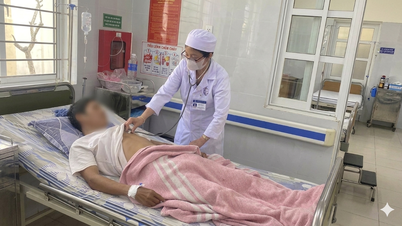
Nearly six years ago, Dong Nai General Hospital successfully treated three young female patients who suffered botulinum poisoning after eating canned pate. Dr. Nguyen Dinh Quang, Head of the Neurology Department at Dong Nai General Hospital, recalled: "The three patients were admitted at different times, making initial identification difficult. Because we had never treated a botulinum poisoning case before, the doctors initially couldn't diagnose the disease. The symptoms of the three patients – difficulty swallowing, weakness in the limbs, weak breathing, and drooping eyelids – were easily mistaken for other neurological conditions such as myasthenia gravis or polyneuropathy. Only after considering epidemiological factors did the doctors suspect botulinum poisoning."
According to Dr. Nguyen Dinh Quang, one of the key lessons in treating botulinum poisoning is not to wait for definitive test results before treatment. Doctors need to make an early diagnosis based on clinical and epidemiological data. From there, they can promptly treat the patient as soon as possible.
Dr. Dinh Quang stated: Botulinum antidote is a key factor in treating this disease, but it is extremely scarce globally. At the time cases appeared in Dong Nai, the medication had to be coordinated from international sources through the World Health Organization, taking many days to arrive at the hospital. By the time the medication was administered, most patients were already in an advanced stage, with the toxin having bound to the nervous system, thus limiting its effectiveness.
Therefore, the treatment for the three patients primarily involved resuscitation and comprehensive care. Doctors, nurses, and medical staff from the Intensive Care and Toxicology, ENT, Neurology, and Rehabilitation departments persistently monitored, treated, and retrained the patients over a long period.
Ms. Nguyen Thi Ngoc Tram (from Long Hai commune, Ho Chi Minh City, one of the three patients) shared: “All three of us had to be on ventilators for more than two months. That was the most terrifying time of our lives. We were paralyzed but still conscious. Lying in the intensive care unit, hearing the constant beeping of the ventilator was very frightening, and at times we panicked. Fortunately, thanks to the doctors and nurses at Dong Nai General Hospital, we gradually recovered and are now healthy and able to work and live normally.”
Preventing botulinum poisoning
Botulinum antitoxin is not widely produced because it is a rare disease (only a few hundred to 1,000 cases are recorded worldwide each year), resulting in low demand. Furthermore, the drug's production process is complex, storage is difficult, and it has a short shelf life. Therefore, it is not readily available in hospitals and is primarily supplied by international organizations such as the World Health Organization in emergency situations, as part of a strategic reserve.
Experts warn that foods at high risk of contamination with Clostridium botulinum toxins include: canned foods, processed foods, pâté, canned meat, canned fish, fermented and pickled foods, foods improperly stored at the wrong temperature, and handcrafted products that have not undergone quality control.
To prevent botulinum poisoning, Dr. Nguyen Dinh Quang advises: People should eat cooked food and drink boiled water. Absolutely do not use canned food with bulging or deformed packaging, or food with strange smells or altered colors. People should store food at standard cold temperatures. Absolutely do not give honey to children under 1 year old (especially those under 6 months old) as it may contain bacterial spores. Prioritize choosing food from reputable establishments with quality control, avoiding artisanal products with unclear production processes. When undergoing Botox injections for cosmetic purposes, choose reputable medical facilities with clearly qualified doctors.
Botulinum poisoning typically progresses through two stages. In the first stage, patients experience symptoms such as abdominal pain, vomiting, and diarrhea. These symptoms are easily mistaken for common food poisoning. In the severe stage, patients exhibit symptoms such as drooping eyelids, double vision, dry mouth, difficulty swallowing, difficulty speaking, generalized muscle weakness, and respiratory muscle paralysis. If these unusual signs appear, people should promptly seek medical attention for examination and treatment.
Hanh Dung
Source: https://baodongnai.com.vn/xa-hoi/y-te/202603/lai-nong-van-de-ngo-doc-botulinum-e87061a/



![[Photo] General Secretary and President To Lam presides over a working session with the Central Policy and Strategy Committee on the development of the materials industry.](https://vphoto.vietnam.vn/thumb/1200x675/vietnam/resource/IMAGE/2026/05/21/1779359935432_a3-bnd-3129-1412-jpg.webp)


















































































Comment (0)