

White-collar farmer billionaires
In Thuong Tan commune, Ho Chi Minh City, citrus fruit farming is a traditional livelihood for many families. Lam Thi My Tien (born in 1998) took a long journey, graduating from Amsterdam University (Netherlands) but then returning to… growing oranges and tangerines because it was her grandfather's profession, supporting three generations of her family. Tien often jokes, "It's the oranges and tangerines that have taken me all over the world." Since the 10th grade, her grandfather had suggested she pursue agriculture, but she refused. He said that after high school, he would plant trees, and she could open a fertilizer and agricultural supplies agency. But his granddaughter had higher dreams, dreams not related to the land. "Honestly, at that time, I never even considered dedicating my life to fruit trees," Tien confessed.

While interning at a company and gaining the opportunity to learn about becoming a flight attendant, Tien unexpectedly returned to Ho Chi Minh City at the end of 2019, having just graduated with a degree in Business Administration, to continue her family's business. Many were surprised, as the common belief was that studying abroad meant flying, achieving something significant, and that someone must have a problem to return to their hometown to farm... But Tien didn't care, because she wouldn't be farming like her ancestors. Instead, she would conduct in-depth market research and proactively connect with foreign agricultural businesses to participate in trade promotion…
Tien embarked on her journey as a technology-driven farmer, selling oranges and tangerines through e-commerce. She created a TikTok channel called "Tien Tangerines" to showcase her journey in producing agricultural products, highlighting the hard work and dedication of farmers. Many large orders and contracts poured in. The image of the young woman passionately talking about oranges and tangerines, the harvesting process, and how to choose the best fruit helped customers understand more about the produce. Revenue from previously unstable income has now reached billions of dong annually, and it has also helped farming households in Thuong Tan promote their local specialty products.
Mr. Ho Hoang Kha (Tan Thanh Ward, Ho Chi Minh City) is also a genuine white-collar farmer, having received formal education but dedicating his life to fruit farming. Kha, or Tien, represents a generation of farmers who don't toil, solving problems with technology and selling their produce far and wide. Just in mid-2025, 32-year-old Kha was elected Director of the Song Xoai Green Pomelo Cooperative, leading a profession traditionally dominated by experienced veteran farmers. Meeting at the end of the year, Kha was busy with Tet (Lunar New Year) orders for the cooperative, excitedly boasting: "This year's harvest was bountiful thanks to stable weather in the South and good care techniques, resulting in a high yield of pomelos, with nearly 80% of the total harvest being Grade 1."

Kha shared that nearly 15 years ago, he started growing green pomelos using high-tech methods on his family's land. He boldly installed an automatic irrigation system, cultivated grass to create organic humus under the trees, reduced labor, and improved the soil environment. Adopting new techniques, he applied a method of inducing staggered flowering, allowing the trees to bear fruit up to three times a year. From 2021 to the present, Kha decided to completely switch from traditional farming to organic green pomelo cultivation to forge a new path forward.
“We need a new approach to bring green pomelos to the international market to make them competitive, increase their value, and conquer demanding markets,” Kha shared. Instead of using pesticides and chemical fertilizers, he uses well-rotted manure and microbial fertilizers. Thanks to this, the product has a higher competitive advantage in demanding markets. Kha currently cultivates 32 hectares, owning 10 hectares and leasing the rest to expand production. His annual profit from pomelos reaches several billion dong. And Kha not only enriches himself but also shares his techniques with other households in the cooperative, helping them move forward together. After 12 years of establishment, the Song Xoai Green Pomelo Cooperative has 120 members with 200 hectares of pomelo orchards, achieving OCOP 4-star certification and successfully exporting its first container to the US (in 2024). In 2025, the cooperative will continue to make its mark by successfully producing fermented pomelo juice, pomelo essential oil, pomelo tea, and pomelo incense – a series of value-added products derived from the pomelo fruit of its homeland.
A green dream by Dau Tieng Lake
Crossing the lush green rubber forests of the heroic Dau Tieng region, the road led us to the farm of Mr. Tong Van Huong, bathed in sunshine and wind. His farm appeared as a verdant expanse, built over three decades of persistent effort by a farmer who dared to think and act.

Mr. Huong recounted that in 1990, he left the North and moved to Song Be to start his life with nothing but his bare hands. "If you're poor, you work; if it's difficult, you persevere. If you don't move forward, how will you find the way?" he said with a smile, his eyes shining with the pride of someone who had gradually built a prosperous life from a barren piece of land.
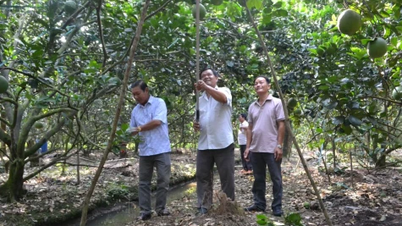
After twenty years of working the land and building the economy, in 2015 he decided to invest in a high-tech agricultural model, building a comprehensive farm including cold-storage livestock farming and citrus fruit cultivation. Three years later, he and the members established the Minh Hoa Phat Cooperative (Minh Thanh commune), where he serves as Chairman of the Board of Directors and Director of the Cooperative. What impressed us was not only the 45 hectares of land, including 25 hectares of pomelo, orange, and tangerine trees cared for with a modern automatic irrigation system, but also the aspiration he shared: "Farming now is not just about making a living. We do it because we want to inspire, to show farmers that farming can still make us rich and happy."
He is nurturing the idea of combining his farm with ecotourism , transforming this land into a place where visitors and children can experience green agriculture. This simple dream suddenly takes on a vibrant quality as, amidst the orchards, he lovingly caresses each grapefruit, talking about applying technology, about learning experiences in other countries, and about sleepless nights during prolonged droughts. In the spring breeze, beside a warm cup of tea, his endless stories take on new colors, and the vitality of his belief flows freely.
Leaving the pomelo orchard near Dau Tieng Lake, we arrived at… the land of sweet honey. In Hoa Cuong hamlet, Minh Thanh commune, few people are unaware of the Thao Trinh Honey Bee Cooperative of Ms. Pham Thi Thao, as it is one of the exemplary models. Ms. Thao and her husband were teachers, quietly working with blackboards and chalk until one day a relative came to visit with a gift: a bee colony.
Starting with just a few beehives as a hobby, the couple realized that the honey they harvested was not only clean but also economically viable. They shifted their lives, expanding their farm, learning new techniques, producing their own artificial pollen, and then establishing the Thao Trinh Honey Cooperative. Currently, their cooperative has over 600 beehives, harvesting more than 20,000 boxes of honeycomb honey each season, which they export to South Korea, Taiwan (China), and the United States, generating approximately 45 billion VND in revenue annually. While providing economic benefits to its members and themselves, the cooperative also creates jobs for dozens of local workers.
The golden drops of honey have built their livelihood; the sweetness of honey is the sweetness of dedication. Ms. Thao confided: "I am a beekeeper but also a consumer of agricultural products, so I understand that we must produce products that are truly clean, high-quality, and good for consumers' health." The happiness of farmers like Ms. Thao lies in the fact that consumers can use their products with peace of mind because the production process meets OCOP standards, ensuring cleanliness and safety.
Touching technology and the spring of the earth.
We visited Mr. Nguyen Hong Quyet's cantaloupe garden in Phu Giao commune on a sunny afternoon, when the automatic drip irrigation system was in operation, each clear drop of water falling onto the melon roots in a precisely programmed rhythm.
Mr. Quyet is a keen and inquisitive person. Wherever he goes, he researches, takes notes, and learns melon cultivation techniques from successful models. Starting with over 1,000 square meters, he applied high technology, investing in a system of humidity and temperature sensors, and controlling irrigation and fertilization via a smartphone app. As a result, his melon yield averages 10 tons per year, meeting VietGAP standards. This high efficiency encouraged him to expand, establishing the Kim Long High-Tech Agricultural Cooperative with over 20 hectares, creating stable employment for 25 workers. Interestingly, the entire process from planting to harvesting is recorded on the Face Farm app, and the QR code affixed to each melon is also printed from this app. Customers simply scan the QR code with their phones to learn about the origin and the entire production process. Talking to "high-tech farmers" like Mr. Quyet, we sensed a new spring emerging – the spring of smart agriculture.
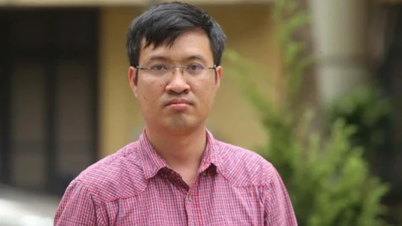
Mr. Do Ngoc Huy, Permanent Vice Chairman of the Ho Chi Minh City Farmers' Association, noted that in recent times, some farmers in Ho Chi Minh City have experienced a period of "flourishing" in their businesses, thanks to initiatives and well-timed calculations. Collective economic models such as cooperatives and cooperative groups are the inevitable direction for farmers in the city. The Ho Chi Minh City Farmers' Association continues to coordinate with many organizations to mobilize and guide farmers to participate in this linkage chain, focusing on raising awareness, attracting members to participate in the development of the collective economy, and improving the operational efficiency of agricultural cooperatives and cooperative groups. The Association also expands the scope of participation, encouraging skilled farmers to be the core in building production linkage models along the value chain, applying high technology, developing green and organic agriculture, and transferring scientific and technical knowledge to members. When agricultural cooperatives develop in the right direction, farmers have jobs, agricultural products have outlets, and income increases. This is a fundamental approach to building sustainable new rural areas. |
Just like when mentioning Kim Long Cooperative, people in the industry still remember the amusing story from the fruit festival held in Ho Chi Minh City in mid-2025. Assuming low sales, Mr. Quyet only brought about 500kg of cantaloupe to sell "for fun." But after just a few hours, crowds flocked in, trying a piece and praising its deliciousness. After two pieces, they decided to buy immediately. Over the four days of the festival, 4 tons of cantaloupe were sold out, bringing clean agricultural products to consumers' tables – a journey of belief in a sustainable agriculture not far off.
Leaving the farms in the twilight of the day, we realized something simple yet profound: spring is not only found in warm breezes and newly sprouted buds, but also in the eyes of the farmers as they speak of their dreams of getting rich from the land. They have overcome difficult times, including the Covid-19 pandemic, to continue standing strong and nurturing their belief in clean and sustainable agriculture. A new spring is coming to every piece of land in Ho Chi Minh City, and these "billionaire farmers" are still diligently planting, innovating, and constantly connecting.
The success of each farmer is linked together to form a Billionaire Farmers' Association. From its initial launch in Binh Duong in mid-2021, it has now grown into a Billionaire Farmers' Association with 68 members in its new home – Ho Chi Minh City.
According to Mr. Tong Van Huong, Chairman of the Ho Chi Minh City Billionaire Farmers Association, the association has established two specialized departments: the Business Department (market connection, trade promotion) and the Plant Doctor Team (technical consulting, technology transfer). This is not a place where members compete for success, but rather a place where knowledge, experience, and a desire to contribute converge. Here, each farmer shares techniques, supports digital transformation, connects with consumers, builds brands, and together forms a value chain of safe, high-quality agricultural products, reaching out to the global market.
These farmers, with their calloused hands, have become green billionaires—billionaires of perseverance and love for the land. They spread a spirit of daring to think and act to many young generations, contributing to bringing Vietnamese agriculture into a new era: modern, smart, green, and sustainable. They are not just "farming to live," but are continuing the story of Agriculture 4.0, an agriculture that knows how to apply technology, expand markets, develop sustainably, and share love.
According to sggp.org.vn
Source: https://baodongthap.vn/lam-giau-tu-dat-a237070.html
![[Photo] The General Secretary, President and his wife meet with Vietnamese-Chinese friendship leaders.](https://vphoto.vietnam.vn/thumb/1200x675/vietnam/resource/IMAGE/2026/04/15/1776264829725_vna-potal-tong-bi-thu-chu-tich-nuoc-to-lam-gap-mat-nhan-sy-huu-nghi-viet-nam-trung-quoc-8703641-3130-jpg.webp)
![[Photo] National Assembly Chairman Tran Thanh Man arrives in Türkiye to attend IPU-152](https://vphoto.vietnam.vn/thumb/1200x675/vietnam/resource/IMAGE/2026/04/15/1776261003665_tnk10-jpg.webp)
![[Photo] Mrs. Ngo Phuong Ly meets and exchanges views with Mrs. Peng Li Yuan](https://vphoto.vietnam.vn/thumb/1200x675/vietnam/resource/IMAGE/2026/04/16/1776277858080_phu-nhan-1-jpg.webp)
![[Photo] National Assembly Chairman Tran Thanh Man attends the opening session of IPU-152](https://vphoto.vietnam.vn/thumb/1200x675/vietnam/resource/IMAGE/2026/04/16/1776277863731_ctqh5-jpg.webp)
![[Photo] My Son at night: A thousand-year-old heritage site amidst the Milky Way](https://vphoto.vietnam.vn/thumb/1200x675/vietnam/resource/IMAGE/2026/04/15/1776261039184_ndo_br_chon6-jpg.webp)












































Comment (0)