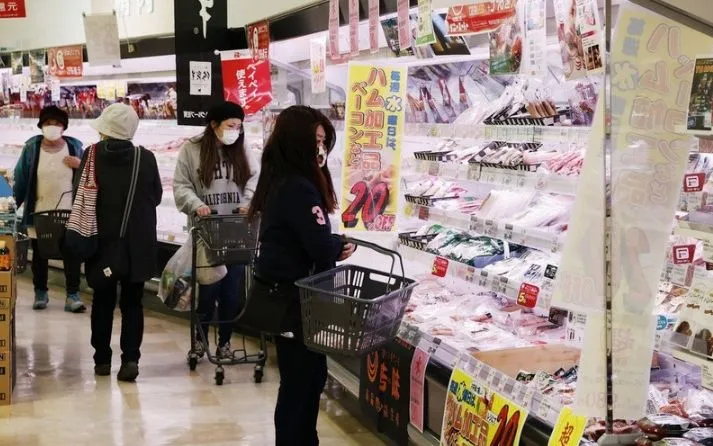
Consumers shop at a supermarket in Tokyo, Japan. (Photo: Kyodo/VNA)

 Đài truyền hình Việt Nam•25/03/2026
Consumers shop at a supermarket in Tokyo, Japan. (Photo: Kyodo/VNA)
Japan's consumer price index (CPI) for February rose below 2% for the first time in nearly four years, indicating the effectiveness of the country's inflation control policies. However, the current surge in crude oil prices could undermine the government 's price control efforts this March.
According to an announcement by the Ministry of Home Affairs and Communications yesterday (March 24), the general index for February, excluding volatile fresh food prices, increased by 1.6% compared to the same period last year.
Energy prices fell by 9.1%, primarily due to the temporary removal of tariffs on gasoline at the end of last year and government subsidies for electricity and gas. Specifically, electricity prices fell by 8.0%; municipal gas prices fell by 8.2%; and gasoline prices fell by 14.9%.
Food prices, excluding fresh produce, rose 5.7%, marking the seventh consecutive month of increases, albeit at a slower pace, but still at high levels, with rice prices rising over 17% and chocolate prices increasing by nearly 27%.
The gains made from government subsidies to lower energy prices could be wiped out by sharply rising gasoline prices. Economists at UBS Securities believe the period during which the core CPI remains below 2% may be quite short, perhaps until around the second quarter of this year, despite previous forecasts of it lasting until the end of the year.
However, the February CPI figures also had a positive impact on the stock market, improving investor sentiment amid rising inflationary pressures.
The effectiveness of Prime Minister Takaichi's government's policy to curb rising prices is attracting considerable public attention in Japan; it also directly impacts investors who are placing their hopes in Prime Minister Takaichi's policies.
Source: https://vtv.vn/lam-phat-nhat-ban-ha-nhiet-100260325144609352.htm















![[Photo] General Secretary and President To Lam receives Amazon's Senior Vice President David Zapolsky](https://vphoto.vietnam.vn/thumb/1200x675/vietnam/resource/IMAGE/2026/05/22/1779466547770_a1-bnd-3513-6601-jpg.webp)

















































































Comment (0)