

No vote of confidence will be held for those on leave for treatment of serious illnesses.
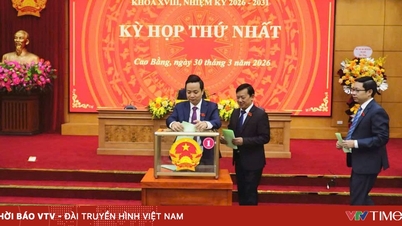
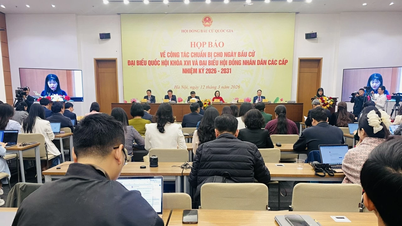
On the afternoon of June 9th, continuing the program of the 5th session, the National Assembly discussed the draft Resolution on taking votes of confidence and no-confidence votes for those holding positions elected or approved by the National Assembly and People's Councils (amended).
Participating in the discussion, delegate Tran Cong Phan (Binh Duong delegation) basically agreed with the draft Resolution, and added that delegates were concerned about the consequences of the vote of confidence.
According to the delegate, if the confidence rating is very low, then the person should be dismissed from their position elected by the National Assembly or the People's Council. "But how do we assess the qualifications of National Assembly delegates and People's Council delegates?" the delegate questioned.
Therefore, the delegates suggested that in this case, the person should also be removed from their position as a National Assembly or People's Council delegate. However, the method of doing so needs to be regulated.
"If a representative receives low approval ratings and is dismissed from their position, should they still be a representative in the National Assembly or the People's Council?", the representative continued to express his concern.
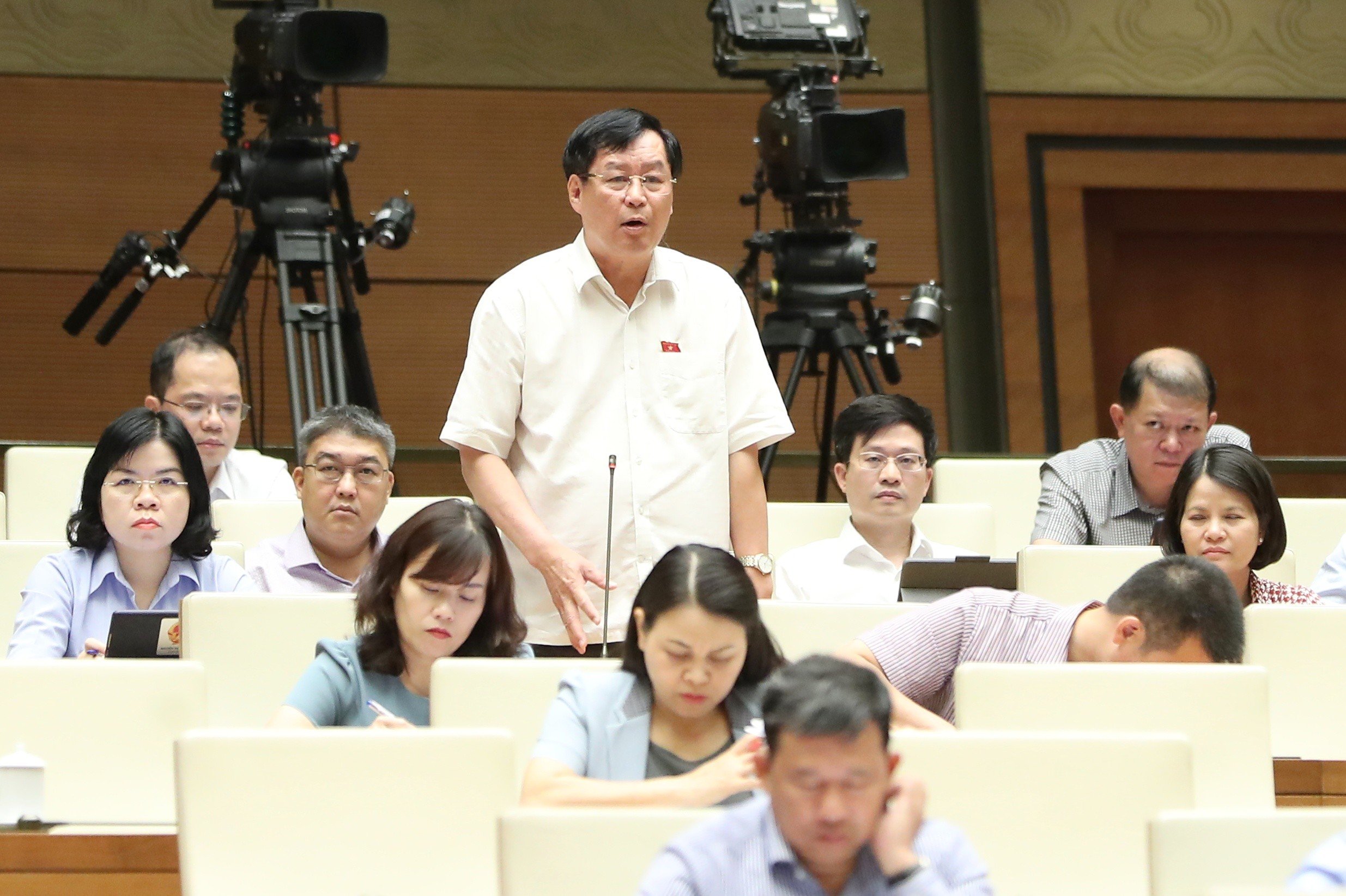
National Assembly Deputy Tran Cong Phan delivered a speech during the discussion.
Commenting on the draft Resolution, delegate Nguyen Hai Anh (Dong Thap delegation) agreed with the regulation that no confidence vote should be taken for those holding positions who are "on leave for treatment of a serious illness with confirmation from a medical facility and have not been in charge of work for 6 months or more, as decided by a competent agency or individual up to the time of the opening of the confidence vote session".
Regarding the criteria for assessing the level of trust in individuals subject to confidence votes, delegate Hai Anh proposed adding "practicing thrift and combating waste" to the draft Resolution to ensure consistency in implementation and evaluation.
According to the British delegate, "practicing thrift and combating waste" is a consistent policy stipulated in the Constitution and regulated in many resolutions and conclusions of the Central Committee, and institutionalized into the Law on Practicing Thrift and Combating Waste.
Therefore, adding "the results of leadership and guidance in implementing the Party and State's policies on practicing thrift and combating waste" to the criteria for assessing the level of confidence in the person being subjected to the confidence vote is appropriate, ensuring a comprehensive and objective assessment of the person being subjected to the confidence vote.
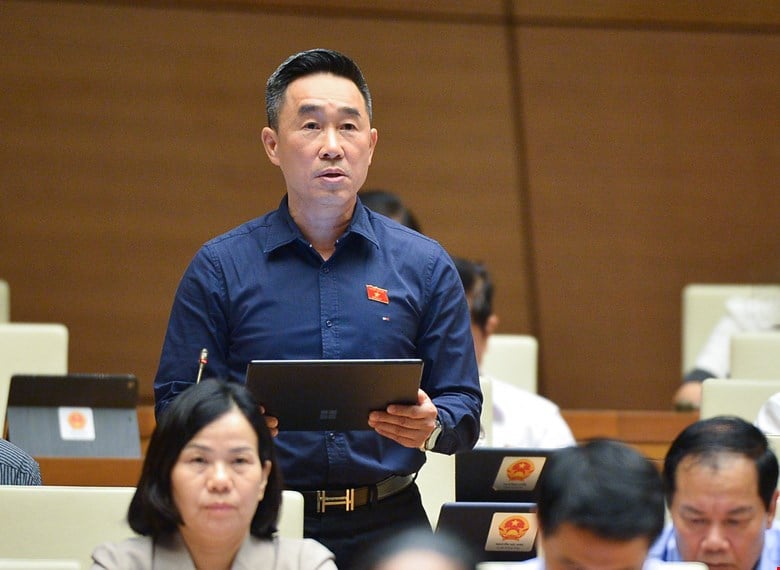
National Assembly Deputy Nguyen Hai Anh participated in contributing his opinions.
While agreeing with the addition of specific regulations prohibiting certain behaviors to ensure the confidence vote process is conducted objectively, transparently, and in accordance with the law, the delegates requested that the drafting committee clarify further the behaviors of lobbying, coercion, and bribery, including promises of higher positions or jobs.
At the same time, it is suggested that the phrase "impacting National Assembly deputies and People's Council deputies" be amended to "directly or indirectly impacting National Assembly deputies and People's Council deputies," because in reality, these actions are often very cleverly concealed. Therefore, regulations are needed to address actions that do not directly impact, but can significantly affect, the deputies.
The process of conducting votes of confidence for positions elected or approved by the National Assembly and People's Councils is extremely important, having significant political implications and impacts, and attracting attention from both domestic and international public opinion.
Therefore, Representative Hai Anh also proposed adding regulations on leading and directing the effective organization of information dissemination, ensuring a proactive, timely, objective, and impartial approach in a constructive spirit so that voters, the people, friends, public opinion, and international media understand, agree with, and support this work, ensuring the comprehensive success of the confidence vote.
The criteria for exemplary behavior need to be clarified.
Contributing her opinion, delegate Nguyen Thi Viet Nga (from Hai Duong province) stated that the implementation of confidence votes and no-confidence votes for those holding positions elected or approved by the National Assembly and People's Councils is one of the innovations in the activities of the National Assembly and People's Councils from the previous term, which has been particularly noticed, monitored, acknowledged, and highly appreciated by voters and the people nationwide.
Comments on the criteria for assessing the level of trust in individuals subject to confidence votes and no-confidence votes were also a topic of interest for the delegates.

National Assembly Deputy Nguyen Thi Viet Nga.
Delegate Nguyen Thi Viet Nga (from Hai Duong province) stated that the draft Resolution adds the criterion of "the exemplary conduct of oneself and one's spouse and children in complying with the State's policies and laws."
The female delegate suggested that it is necessary to review and clarify the group of individuals who have family or close relationships with the person being subjected to the confidence vote.
"In the Vietnamese legal system, determining parent-child relationships involves cases such as biological children, adopted children, children born before marriage but acknowledged, minors, and children over 18 years old. These cases all have different legal consequences under specific regulations," Ms. Nga said.
Delegates suggested clarifying the criteria for evaluating the exemplary conduct of spouses and children in complying with policies and laws, which should be linked to the assigned duties and responsibilities of those being considered for confidence votes. This is to prevent the exploitation of personal violations by relatives to undermine their credibility in holding their assigned positions.
Delegate Mai Thi Phuong Hoa (from Nam Dinh province) also pointed out that Regulation No. 96-QD/TW, when addressing the use of confidence vote results, shows that the results are not only used to handle officials with a high number of low confidence votes, but also to evaluate officials, serving as a basis for planning, transferring, appointing, nominating candidates, and implementing policies for officials.
Furthermore, according to Party Regulation 96, another noteworthy point is the importance of training, nurturing, and assigning highly trustworthy cadres.
Therefore, delegates suggested that the method and purpose for which to use the results of those who receive a high number of votes of confidence should also be clearly stated in this revised Resolution .
Source



















![[Video] Sunset at Lap An Lagoon – Where the sun sets over the fishing nets](https://vphoto.vietnam.vn/thumb/340x192/vietnam/resource/IMAGE/2026/05/31/1780192137701_beach-landscape-sea-water-nature-grass-745871-pxhere-com.jpeg)







![[Image] A brilliant symphony and explosive power in the skies of Da Nang.](https://vphoto.vietnam.vn/thumb/1200x675/vietnam/resource/IMAGE/2026/05/31/1780196945787_anh-man-hinh-2026-05-31-luc-10-08-51.png)































































Comment (0)