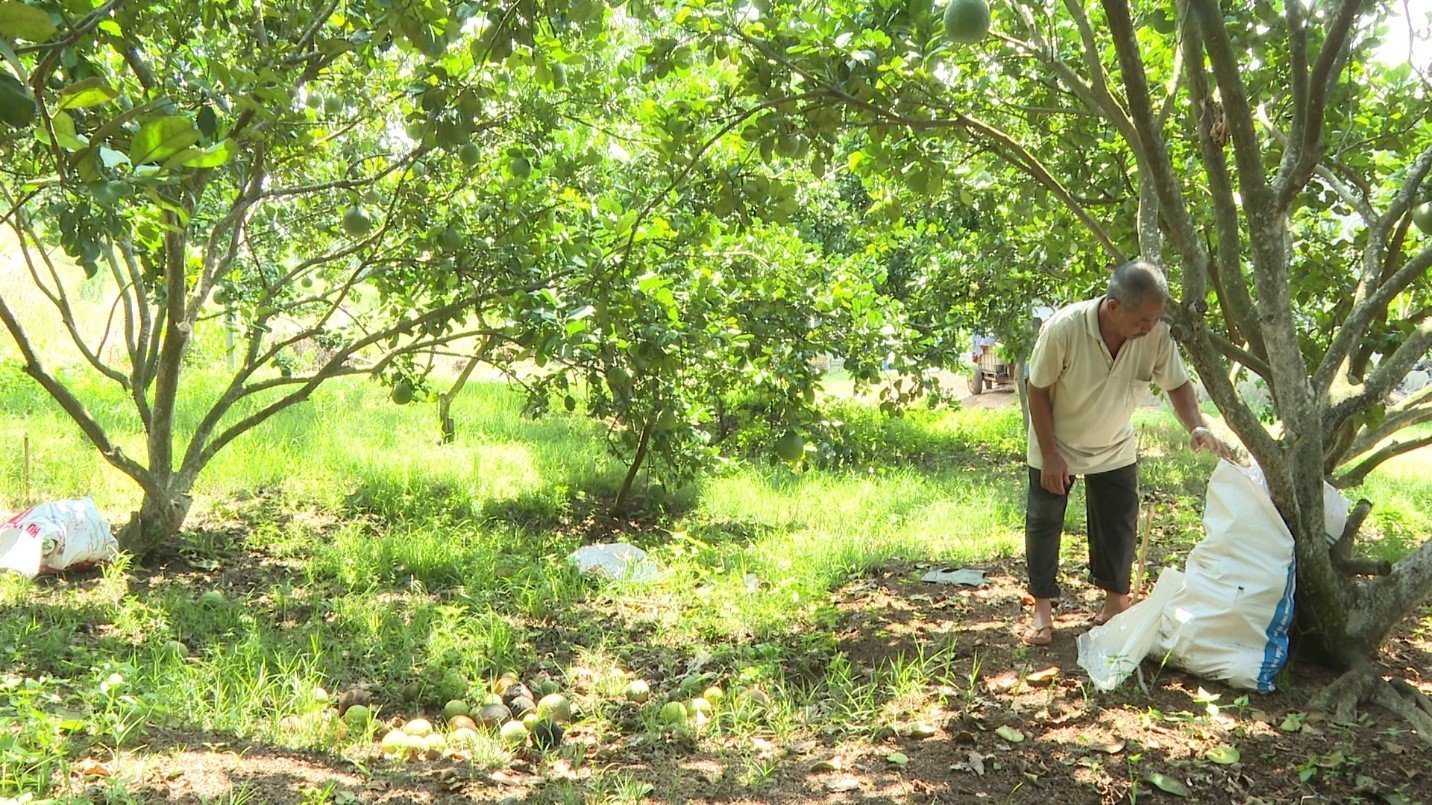
Mr. Nguyen Van Xuyen's family, residing in Hamlet 5, Thanh Hoa Commune, Bu Dop District, cultivates 18 hectares of pomelo trees, yielding an average of over 300 tons annually. However, to produce high-quality pomelos for the market, he has to prune and discard over 60 tons of unripe and rejected fruit each year, which is both wasteful and environmentally polluting. He acknowledges the loss but cannot prevent it, as the fruit would be of poor quality and unsaleable.
To make these agricultural by -products useful and increase his family's income, Mr. Xuyen once invested in machinery to produce grapefruit essential oil. He utilized the peels of unripe grapefruits to make essential oil, and the pulp as an ingredient for making grapefruit tea and freeze-drying, but this was ineffective due to a lack of buyers. "Before, my family used unripe grapefruits to make grapefruit tea and extract essential oil, but it wasn't profitable. Now, if someone buys them, that would be fantastic. Even if someone buys them for just 1,000 VND/kg, it would be a great deal for the farmers," Mr. Xuyen said.
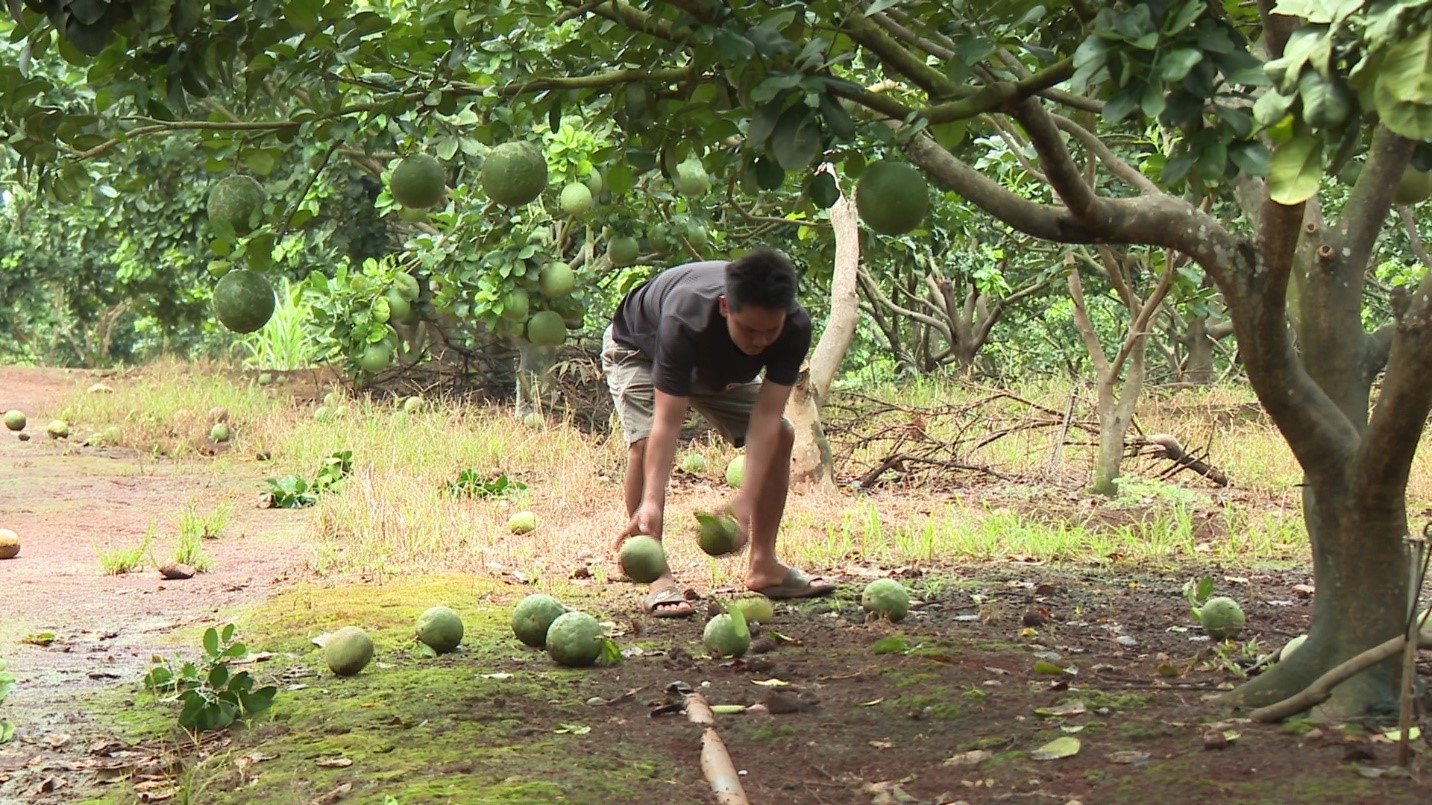
Mr. Nguyen Duy Khang's family in Binh Tien village, Nghia Binh commune, Bu Dang district, cultivates 3 hectares of pomelo trees. For several years now, his pomelo orchard has been continuously damaged by red spider mites, which eat away the outer layer of the fruit, leaving it mottled and unsightly. This has forced him to prune away many unripe fruits before they have fully formed segments. Mr. Khang said that in recent years, the red spider mite infestation has become increasingly severe, especially during prolonged periods of hot weather, severely impacting his orchard. "I've tried many methods, such as using pesticides as directed and combining them with manual methods like pruning and regular orchard cleaning, but the results haven't been very effective. In some seasons, I've had to discard more than 40% of the fruit because the skin is discolored and doesn't meet market standards. Many days, standing in the orchard and seeing baskets of unripe pomelos that I have to pick and throw away, it breaks my heart," he said.
According to Mr. Khang, if not treated early, red spider mites can spread very quickly, damaging the entire orchard in just a few weeks. Proactively cutting off infected fruits is the only way to save the rest, meaning a complete loss of a portion of the yield, not to mention the costs of fertilizers, pesticides, and labor that are also "lost along with the discarded grapefruit." Given this situation, Mr. Khang hopes that the local agricultural sector will pay attention and support people in finding sustainable biological solutions that are safe for crops and consumer health.



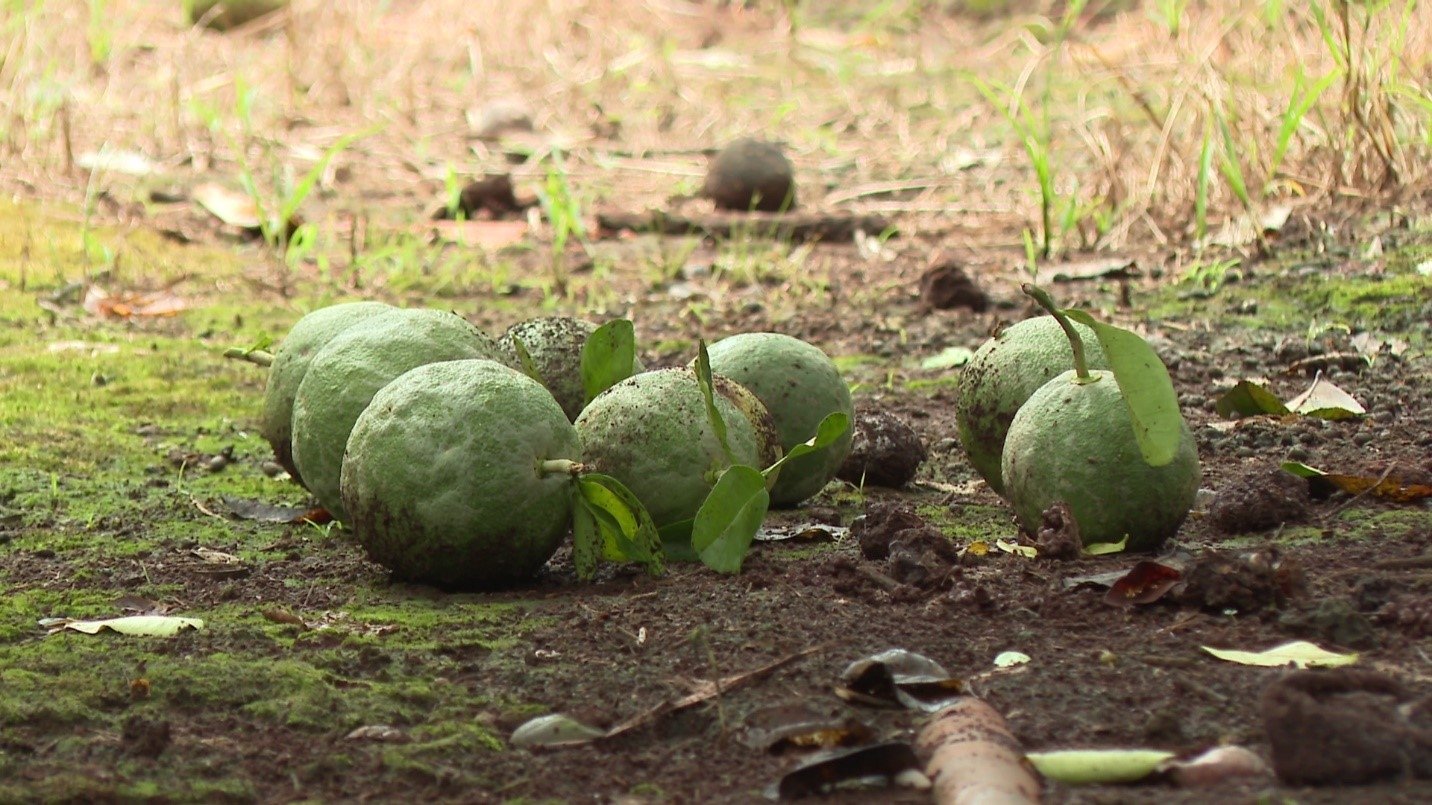
Ms. Nguyen Thi Ngoan, from Hamlet 5, Thanh Hoa Commune, Bu Dop District, said that each season, in order for the trees to concentrate nutrients on growing fruits that meet the standards for sale, gardeners have to prune away young and bad fruits. Most of these fruits are collected to be used as organic fertilizer or simply discarded. "It would be great if there were a company that collected the unripe pomelo fruits to make shampoo or refine them into pomelo oil," Ms. Ngoan shared.
Although unripe pomelos are not typically eaten fresh, research shows that they contain high levels of essential oils and antioxidants, making them valuable in traditional medicine, cosmetics, and functional foods. If properly collected, processed, and invested in, unripe pomelos could become a valuable export commodity. This represents a potential direction for farmers to increase their income and avoid waste. However, paradoxically, these pomelos in Binh Phuoc currently face almost no market due to a lack of purchasing businesses, and especially a lack of linkage between farmers, scientists , and businesses.
According to traditional Chinese medicine and folk remedies, grapefruit peel and pulp contain many beneficial components such as flavonoids, essential oils, and pectin, which support the treatment of overweight, obesity, fatty liver disease, and have antioxidant properties. Young grapefruits, in particular, have a high proportion of pulp, resulting in a higher concentration of active ingredients. However, in reality, people have not yet fully utilized this byproduct.
“The issue is that we need a different perspective on agricultural by-products. Just as rice bran, once considered a waste product, is now a valuable ingredient in cosmetics and functional foods, young pomelos can absolutely become a new source of profit if properly invested in. The government and scientists need to get involved more strongly, from researching the value chain of young pomelos, supporting processing techniques, to connecting markets and encouraging startups in this field,” expressed Ms. Dinh Thi Trang, Chairwoman of the Farmers' Association of Nghia Binh commune, Bu Dang district.
Mr. Tran Quoc Cong, Chairman of the Farmers' Association of Thanh Hoa commune, Bu Dop district, shared: “Those unripe pomelos, if utilized to make essential oils, herbal teas, jams, or medicinal ingredients, could become a significant source of income for farmers. However, currently, most are still considered 'waste' in the cultivation process. This is not only a waste of resources but also a neglect of a potential direction in the development of deep-processed agriculture. With the involvement of businesses, scientists, and local authorities, those unripe pomelos could be 'revived,' becoming valuable products – instead of silently decomposing in the fields.”


Wasting unripe pomelos is not just a loss of a product, but also a waste of effort, land, irrigation water, and natural resources. Solving this problem is a necessary step to improve agricultural production efficiency, develop the rural economy , and demonstrate a spirit of frugality and respect for the value of labor.
Source: https://baobinhphuoc.com.vn/news/4/174606/lang-phi-trai-buoi-non