


Accordingly, the Ministry of Construction proposed shortening the time for issuing construction permits by 50%, while expanding the scope of permit exemptions and strongly shifting to online processing to reduce procedures for citizens and businesses. Administrative procedure reform is considered one of the key priorities to promote investment, remove bottlenecks for the real estate market and construction activities; focusing on eliminating overlapping in construction permit issuance.
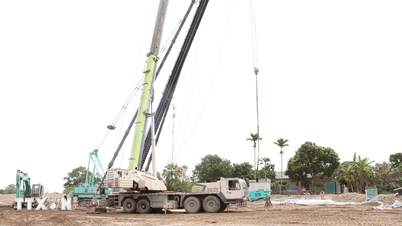
Only a few construction projects still require permits.
For many years, the construction permit process has been considered a time-consuming, paperwork-intensive, and overlapping process among regulatory agencies. The goal of this reform is not only to reduce administrative procedures but also to change the management approach towards greater transparency, digitalization, and convenience for construction investment activities.
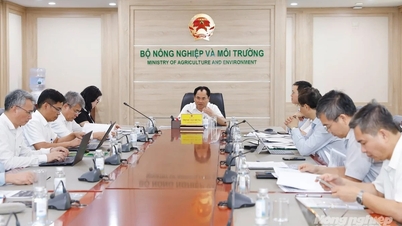
Presiding over a recent meeting on the implementation of new draft laws, Minister of Construction Tran Hong Minh emphasized that law amendments must address practical difficulties, avoid overlaps, and promote decentralization and delegation of power. Accordingly, the laws should focus on issues such as green development, the application of information technology, promoting digital transformation, and human resource development. Drafting agencies must carefully study the obstacles arising during practical implementation to resolve them in the new laws, avoid overlapping in management, and ensure compatibility with the two-tiered government model.
According to the Ministry of Construction, the current licensing system is implemented based on the 2025 Construction Law, the amended 2014 Construction Law, and Government Decree No. 175/2024/ND-CP detailing some provisions and measures for implementing the Construction Law on construction management. Compared to the previous period, the scope of projects requiring permits has narrowed significantly. The principle currently applied is "each project undergoes only one administrative procedure before commencement."
For projects whose feasibility studies have been assessed by specialized agencies, construction permits are exempt. Conversely, projects that do not require assessment must go through the permit application process. This means that the group of projects still requiring permits mainly consists of individual houses or small-scale projects of等级 III and IV.
However, for individual houses, current regulations only require permits in certain areas with planning and architectural management requirements or urban development zones. Meanwhile, many constructions in rural areas, areas without detailed planning, or areas not subject to architectural management regulations have been exempted from permits. It is clear that the 2025 Construction Law has significantly expanded the cases exempt from construction permits compared to before.
In addition to state secret projects, emergency projects, or inter-provincial projects as before, the new law adds a series of categories that are exempt from permits, such as defense and security projects, airport projects, flight operation assurance projects, projects under special investment projects, or projects that have been appraised by specialized agencies.
In particular, the new regulations remove the requirement that construction projects must be located in areas with detailed 1/500 scale planning to be exempt from permits after assessment. According to the Ministry of Construction, this change greatly expands the number of projects exempt from permits, while also implementing the principle of "one-time inspection" before construction begins.
Another notable change is the more specific regulation for detached houses in rural areas. Under the new law, houses with fewer than 7 floors, a total floor area of less than 500 m2, and not located in urban development areas or areas with architectural management regulations will be exempt from building permits.
Experts commented that, compared to the 2014 Construction Law, the new regulations are clearer, helping to reduce the situation where each locality interprets and applies them differently.
Switch to full online

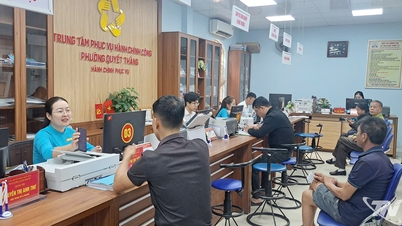
Besides expanding the scope of permit exemptions, the Ministry of Construction also proposed significant changes to the way procedures are handled. Currently, the submission of applications is integrated into the National Public Service Portal, but in reality, many places still process both paper and electronic applications simultaneously. People still have to submit two sets of paper documents when applying for a construction permit.
In the draft Decree detailing certain provisions of the Construction Law on construction management, which the Ministry submitted to the Government on May 6, 2026, the Ministry of Construction proposed that all eligible cases be processed entirely online. If this process is implemented, citizens would only need to submit one electronic set of documents instead of two paper sets as is currently the case.
At the same time, the licensing authority will independently access data from national databases instead of requiring citizens to resubmit existing documents such as land use rights information. This is considered one of the biggest changes to construction permit procedures in recent years, as land records are currently the type of document that often requires citizens to make multiple trips to obtain copies, confirmations, or additional information.
The Ministry of Construction also stated that the delineation of licensing authority will be more specifically defined to avoid overlapping between agencies. According to the new proposal, the People's Committee at the commune level will issue permits for Class III and Class IV constructions and individual houses. Management boards of industrial parks, export processing zones, high-tech zones, and economic zones will issue permits within their management scope. The Department of Construction will be responsible for all other constructions.
Previously, there was overlapping licensing authority between the district level, the Department of Construction, and management boards in some localities, causing businesses to have to inquire at multiple places or spend extra time identifying the competent authority.
The most notable aspect of this reform is the proposal to halve the processing time for procedures. Under current regulations, the time for issuing building permits for individual houses is 15 days, while for other projects it's a maximum of 20 days. The Ministry of Construction proposes reducing this to 7 working days for individual houses and 10 days for other projects.
This content has been included in the draft resolution on reducing, decentralizing, and simplifying administrative procedures, compiled by the Ministry of Justice and submitted to the Government. If approved, this would be the most significant reduction in construction permit procedures in many years.
According to the Ministry of Construction's assessment, shortening processing times is feasible because many processes have now been digitized, and the number of projects requiring permits has significantly decreased after expanding the scope of permit exemptions. Reducing processing times will contribute to lowering compliance costs for citizens and businesses, especially in the context of a real estate and construction market that needs further impetus for recovery.
In reality, many real estate businesses have complained that lengthy licensing procedures cause project delays, resulting in increased interest costs, management fees, and higher product prices. Many projects, even after completing investment preparation steps, still have to wait months for construction permits due to overlapping processes between design review, fire safety review, and licensing.
With this new direction, the Ministry of Construction stated that it will continue to review and standardize relevant regulations to reduce duplication of documents between the appraisal and licensing stages.
Shifting from "pre-inspection" to construction order management

Many experts agree that the current reform trend shows that regulatory agencies are gradually shifting from a "pre-approval" model to a "post-approval" model for managing construction order. Instead of requiring most construction projects to obtain permits before commencement, regulatory agencies will focus on controlling planning, technical standards, and handling violations during the construction process.
This approach is considered consistent with the trend of administrative procedure reform and digital transformation, especially as planning, land, and construction data are gradually being interconnected.
According to Mr. Bui Van Duong, Deputy Director of the Department of Economic and Investment Management of Construction, the issuance of construction permits will follow the principle that from the preparation phase to the commencement of construction, the state management agency for construction will only inspect each project and construction work once. Projects and construction works whose feasibility studies have been appraised by specialized construction agencies will be exempt from construction permits. For the remaining projects, the entire process will be conducted online, simplifying the application process and permit requirements, and minimizing the time for issuing construction permits.
However, some opinions also suggest that the implementation process needs to be accompanied by an effective monitoring mechanism to prevent illegal construction or exploitation of relaxed procedures. In particular, strong decentralization to the commune level in construction permit issuance will require improved capacity of officials and a better shared data system.
Furthermore, the implementation of the entire process online also heavily depends on the ability to interconnect land, planning, and population data between ministries, departments, and localities. Nevertheless, with the proposed changes, the construction permit issuance procedure is expected to continue to significantly reduce the time and cost for citizens and businesses in the future.
Source: https://baotintuc.vn/bat-dong-san/loai-bo-chong-cheo-trong-cap-phep-xay-dung-20260516121713998.htm







































































































Comment (0)