

 |
| The traditional rattan and bamboo weaving craft of the Dao ethnic group - a tourism product that attracts the attention of tourists (photo taken in Khuon Tat hamlet, Phu Dinh commune). |
A picturesque landscape painting
The winding roads, like silk ribbons draped over the mountains, entice visitors to the mountain villages and highlands of Thai Nguyen province. There, nature and people blend together, creating a picturesque landscape, with mountains piled upon each other and wisps of clouds drifting lazily towards the distant horizon.
Popular tourist destinations include the Phu Thong Fort National Historical Site (Phu Thong commune); the land shaped like a turtle in Phieng An tea village (Bach Thong commune); and the Lung Trang plateau (Phuc Loc commune), located at an altitude of 1,500m above sea level. There, you'll find primeval forests, terraced rice fields on the mountainside, and a Dao ethnic village that always welcomes visitors.
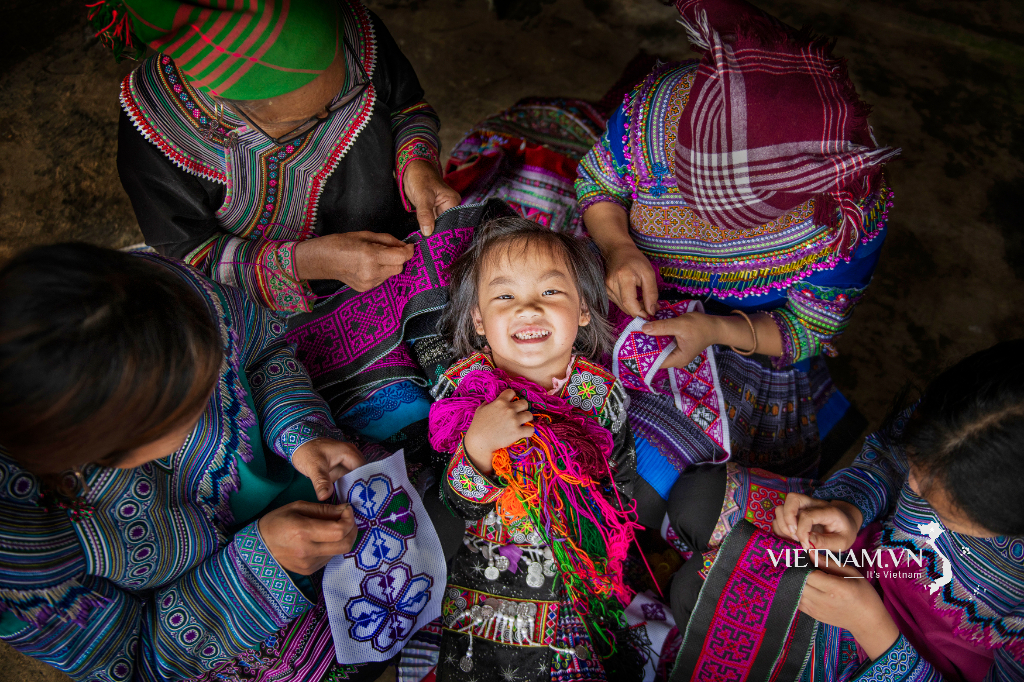
Destinations such as Ban Quyen village (Phu Dinh commune) and the villages of Pac Ngoi, Bo Lu, Coc Toc (Ba Be commune); Con Poong village (Nam Cuong commune); and Ban Cuon village, Cho Don commune, all possess their own unique beauty, with traditional stilt houses nestled on the mountainside, creating a warm and friendly atmosphere. Many villages of ethnic minorities still have age-old traditions of cotton weaving and indigo dyeing, full of charm.
The landscape of the highlands possesses a unique beauty, majestic and full of poetry. A vast space opens up for a journey of exploration and experience. It begins with an exciting "cloud hunting" adventure, followed by a vibrant highland market filled with colorful brocade fabrics. When your feet are tired, sit on the porch of a stilt house and listen to the locals tell stories about the "heavenly realm, the earthly realm."
It is these unique experiences that create a distinct appeal compared to mass tourism. Proof of this is that in areas with large ethnic minority populations, community-based tourism models have been developing their inherent potential and strengths: traditional cultural values; stilt house architecture; cuisine; festivals and cultural rituals are emerging into everyday life, becoming unique, distinctive, and attractive tourism products for visitors.
"Breathing life" into heritage
Currently, the province boasts nearly 1,200 historical and cultural relics and scenic spots; 336 festivals; and 709 intangible cultural heritage sites. This enormous "treasure trove" provides a solid foundation for the development of the tourism industry. It also serves as a bridge connecting the past with the present; and between the local community and tourists.
 |
| Bo Lu village (Ba Be commune) is a popular destination attracting many domestic and international tourists. |
The reality proves that through activities such as introductions, performances, and experiences, cultural heritage is "given life," becoming more accessible and vibrant. While previously the cultural heritage of ethnic minorities was "confined" to the indigenous people, in recent years it has spread widely throughout society. Tourists take these stories back home and share them with their loved ones.
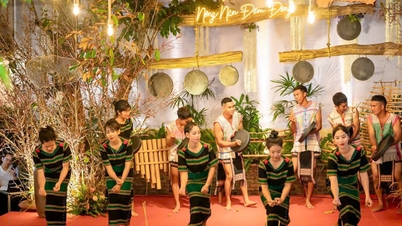
Within the treasure trove of intangible cultural heritage, many traditional art forms of the ethnic groups in Thai Nguyen province are preserved, passed down, and their values promoted, such as: Tham Roc puppetry of the Tay people; the Cau Mua festival of the San Chi people; Soong Co singing of the San Diu people; Tac Xinh dance of the San Chay people; Gau Tao festival and the sound of the khene flute of the Mong people...
Along with its rich cultural and spiritual heritage, the mountainous and highland areas of Thai Nguyen province also boast destinations that attract the attention of many tourists. While Thach Long Pagoda in Tan Ky commune exudes a sacred beauty amidst the mountains and forests of Northern Vietnam, the Yen Duong bamboo forest in Thuong Minh commune offers a cool, green space, fresh air, and the peaceful atmosphere of the Dao ethnic minority villages.
Then, in Lung Phac village, Cao Minh commune, where the Mong ethnic group lives, tourists are known for the Mu La festival. Unique to the mountainous and highland regions is the cattle market in Nghien Loan commune, held on the 3rd and 8th days of the lunar month. And then there's the Xuan Duong love market, a unique festival of the Nung ethnic group in Xuan Duong commune – a festival honoring faithful marital love.
The development of tourism has created favorable conditions for the investment, preservation, and promotion of cultural heritage. Every year, Thai Nguyen province allocates significant resources to the preservation, restoration, and reconstruction of historical relics and intangible cultural heritage. As a result, many cultural heritages have been restored, preserved, and disseminated in daily life. Thanks to government support, many community-based tourism models have been formed and developed.
Typical examples in recent years include Na Tuong village (Na Ri commune) and Khau Dang village (Bang Thanh commune). The ethnic minority people have invested in repairing stilt houses, reviving traditional crafts, and establishing cultural clubs to perform for tourists.
By properly promoting the value of cultural heritage, the mountainous and highland regions of Thai Nguyen are "stirring up" through tourism development. Thanks to the additional income from tourism, the appearance of many villages is changing rapidly. Domestic and international tourists brave the mountain passes to experience life with the ethnic minorities, visit attractions, and enjoy bitter bamboo shoots and wild vegetables. When they leave, they are left with lingering feelings, accompanied by the melodies of the highlands, and a promise to return with loved ones.
Source: https://baothainguyen.vn/van-hoa/du-lich-thai-nguyen/202605/loi-moi-tu-reo-cao-00b6137/
![[Photo] National Assembly Chairman Tran Thanh Man working with the Standing Committee of the National Assembly's Ethnic Council](https://vphoto.vietnam.vn/thumb/1200x675/vietnam/resource/IMAGE/2026/05/21/1779337435930_ndo_br_1-jpg.webp)
![[Image] "Journey of Hope" promotes the organ and tissue donation movement in Vietnam.](https://vphoto.vietnam.vn/thumb/1200x675/vietnam/resource/IMAGE/2026/05/20/1779294400833_1-8910-jpg.webp)























































Comment (0)