

Minister of Natural Resources and Environment Dang Quoc Khanh informed that there have been 12,107,457 comments on the draft amended Land Law.
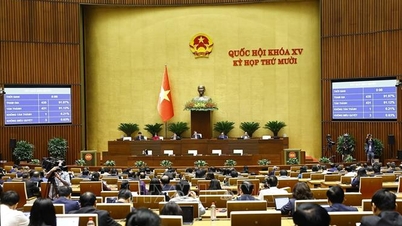
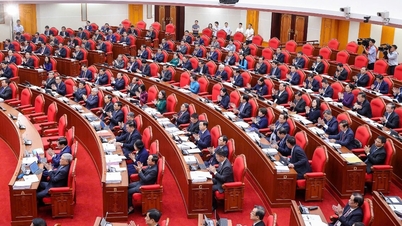
Continuing the agenda of the fifth session of the 15th National Assembly , on the morning of June 9th, the National Assembly convened in the assembly hall to hear presentations on the report explaining, receiving feedback, revising, and reviewing the draft Law on Land (amended); and the results of public consultations on the draft Law on Land (amended).
General Secretary Nguyen Phu Trong and Prime Minister Pham Minh Chinh attended the session. National Assembly Chairman Vuong Dinh Hue presided over the session.
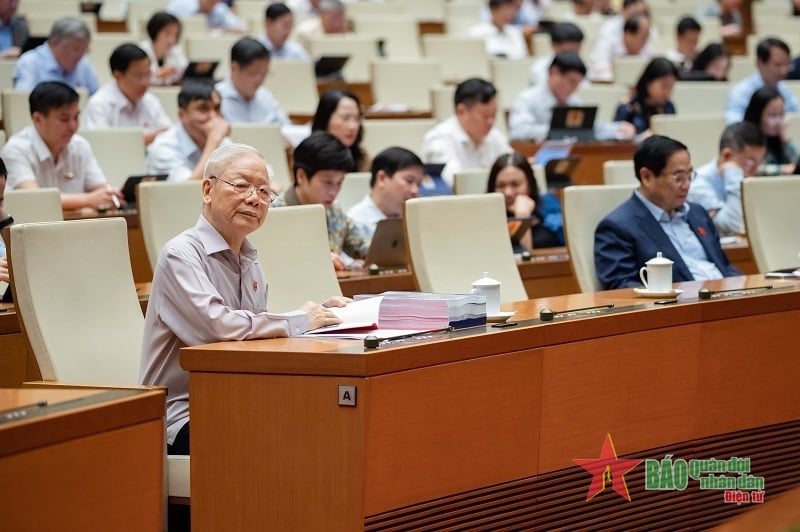 |
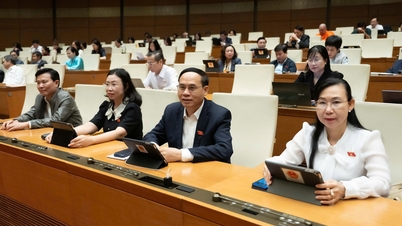
| General Secretary Nguyen Phu Trong, Prime Minister Pham Minh Chinh, and National Assembly delegates attend the session. Photo: Tuan Huy |
Over 12 million comments were received on the draft amended Land Law.
Presenting the explanatory report, Minister of Natural Resources and Environment Dang Quoc Khanh informed that the public consultation process was conducted from January 3, 2023 to March 15, 2023. The Ministry of Natural Resources and Environment posted the draft amended Land Law and related documents on its website for public consultation. All 63 provinces and centrally-administered cities issued plans for organizing public consultations. Many ministries and sectors also issued plans for public consultations to implement within their respective ministries and sectors.
There have been 12,107,457 comments and suggestions on the draft amended Land Law. The issues of greatest public concern and concern focused on: compensation, support, and resettlement; land allocation, land leasing, and land use conversion; land finance and land prices; and land use planning and plans.
After the public consultation period ended, the Government continued to receive feedback from full-time National Assembly deputies, the second round of social critique from the Central Committee of the Vietnam Fatherland Front, the review opinions of the Economic Committee, the National Ethnic Council and other National Assembly Committees, and the opinions of the National Assembly Standing Committee on the draft amended Land Law.
The Government has been incorporating and addressing public opinions to refine the draft Law since the consultation process began. The Government sincerely thanks the National Assembly for its proactive support and early, even remote, assistance in summarizing and drafting the Law, as well as in incorporating public opinions. The Government has seriously studied and incorporated these opinions to finalize the draft Law on Land (amended) for submission to the National Assembly.
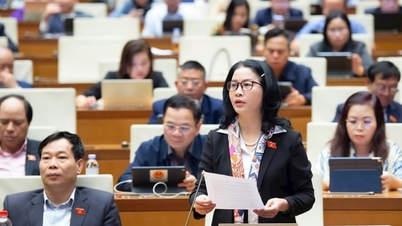
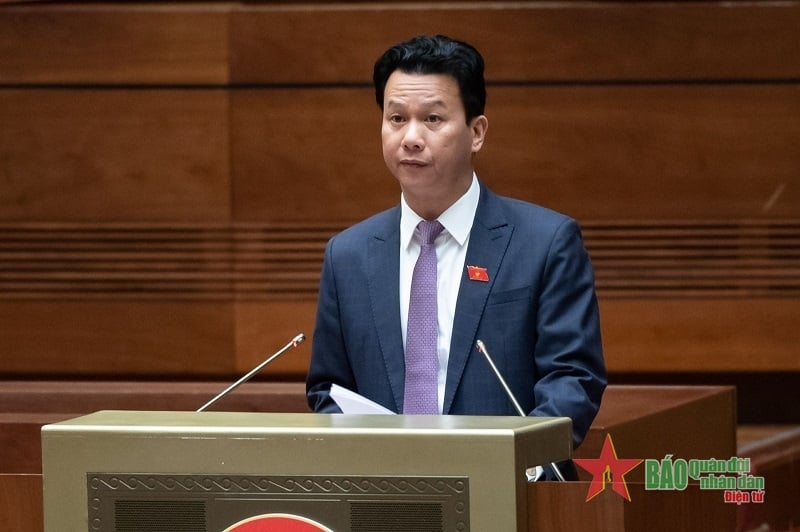 |
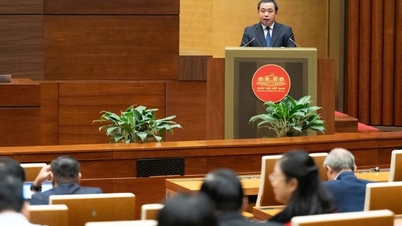
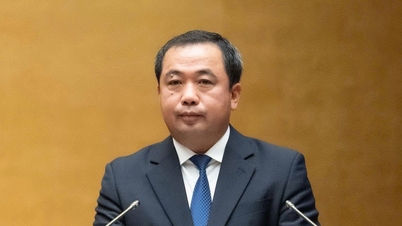
Minister of Natural Resources and Environment Dang Quoc Khanh: There have been 12,107,457 comments and suggestions on the draft amended Land Law. Photo: Tuan Huy |
Added a lot of new content.
Minister of Natural Resources and Environment Dang Quoc Khanh stated that the finalized draft Land Law comprises 16 chapters and 263 articles, including an increase of 5 sections, the addition of 40 new articles, and the removal of 13 articles compared to the draft submitted for public consultation. In response to public feedback, several chapters, sections, and articles have been fundamentally revised and changed in terms of structure and content.
Notably, the draft law has amended Article 17 to stipulate that the Prime Minister shall issue a policy framework on land support for ethnic minorities. Based on this framework, the provincial People's Committee shall submit to the provincial People's Council for promulgation specific policies appropriate to the local conditions, while clarifying the areas where the policy applies.
In addition, the draft law also amends the provisions in Article 20 to ensure the supervisory role of the Vietnam Fatherland Front. It adds provisions in Article 23 to strengthen the responsibility of the People's Committees at the commune level (the grassroots government directly managing land, closest to the people, and most aware of the aspirations and needs of land users) in the following tasks: managing unused land; confirming the rights of land users; participating in the process of preparing, adjusting, publishing, disclosing, and managing land use plans; participating in the process of preparing and implementing compensation, support, and resettlement plans; participating as a member of the specific land valuation council; detecting and preventing violations of land law; participating in mediating land disputes, etc.
The draft law also adds to Article 32 a provision that land users currently leasing land from the State with a one-time payment for the entire lease period may choose to switch to annual land lease payments, and the land lease payments already made will be deducted from the annual land lease payments due. It also adds a provision that public service units to which the State has allocated land without collecting land use fees, and which need to use part or all of the allocated area for production, business, or service provision, may choose to switch to the form of annual land lease payments from the State for that area.
The draft law also reviews the conditions for transferring land use rights for investment projects in urban areas, housing areas, and infrastructure construction for transfer or lease as stipulated in Article 46, in order to prevent the exploitation of policies to raise capital exceeding the project value, creating risks, affecting the safety of the credit system and other social consequences; ensuring consistency and uniformity with the Housing Law, the Real Estate Business Law, etc.
Specifically, the draft law has been revised to exclude provisions related to national land use planning, defense land use planning, and security land use planning from Chapter V. Instead, these provisions are amended and supplemented in the Planning Law, and several articles of the Planning Law are proposed in Article 249. The provision assigns the authority to approve the national land use plan to the Government, creating greater autonomy and flexibility in the Government's management in accordance with the plan decided by the National Assembly.
Regarding land use plans for national defense and security, these are integrated into the content of national defense land use planning and national security land use planning. Provincial-level land use plans are integrated into the content of provincial-level land use planning and are prepared, appraised, and approved simultaneously...
Minister of Natural Resources and Environment Dang Quoc Khanh also stated that during the public consultation process, several major issues arose that were raised by the people, managers, and scientists, or emerged from practical experience but were not addressed in Resolution No. 18-NQ/TW. The Government reported to the National Assembly, requesting permission to continue research, assess the impact, and clarify the political, legal, and practical basis. Based on this, the Government's Party Committee, in coordination with the National Assembly's Party Caucus, will report to the Politburo and the Central Committee before including them in the draft amended Land Law. |
GRASSLAND
Source










































































Comment (0)