


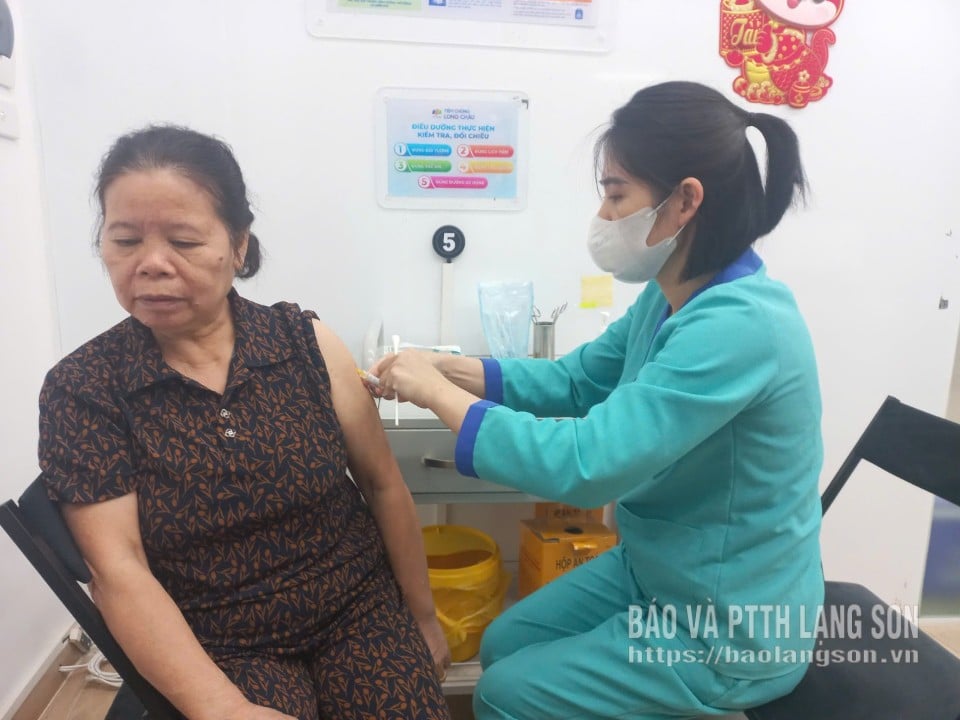
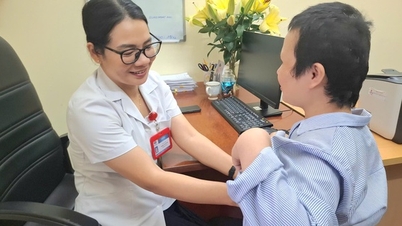
One morning in early December 2025, Ms. Hoang Thi Thuy, from Block 14, Ky Lua Ward, came to Truong Sinh Multi-Specialty Clinic for treatment of her bone and joint problems. The quick procedures, short waiting times, and thorough consultation from the doctor were the reasons she chose this private medical facility instead of going to a higher-level hospital.
Ms. Thuy shared: "Because of my age and difficulty walking, if the illness isn't too severe, I usually choose a private clinic near my home. The doctors examine me thoroughly, give clear instructions, and advise me to go to a hospital if necessary, so I feel very reassured. I have knee pain, and I go to the clinic every day for massage and acupuncture. After only 3 days, my leg pain has significantly decreased."
Along with Truong Sinh General Clinic, private medical facilities in the area have also been established with modern machinery and equipment, meeting the increasing demand for medical examination and treatment from the people. Dr. Nguyen Thi Bach, from Quyet Bach Diagnostic Imaging Center, located at 293 Ba Trieu Street, Ky Lua Ward, informed: "The clinic was newly established in November 2025. We are fully equipped with machinery and equipment as regulated by the Ministry of Health . The clinic has one specialist doctor to serve the needs of examination and diagnostic imaging for the people. During the examination, if any abnormalities are detected, we advise and guide people to appropriate medical facilities for treatment."
In reality, alongside the public healthcare system, private healthcare is increasingly better meeting the diverse medical needs of the people, especially in outpatient examinations, chronic disease monitoring, and on-demand medical services, giving people more choices that suit their economic conditions, time, and healthcare needs.
Mr. Hoang Xuan Truong, Deputy Director of the Department of Health, stated: Developing private healthcare is a major policy of the Party and the State. The provincial health sector identifies private healthcare as an inseparable part of the healthcare system, operating in parallel with public healthcare. Therefore, the Department of Health both creates favorable conditions for private facilities to invest and expand services, while strengthening management to ensure professional quality, rights, and safety of patients. Non-public healthcare facilities are regularly inspected and guided to strictly comply with regulations on practice conditions, personnel, equipment, and service prices, aiming for patient satisfaction.
To enable private healthcare to truly play its role as a driving force within the healthcare system, the provincial health sector has implemented a comprehensive set of specific measures, focusing on administrative procedure reform, support for professional practice, and enhanced public-private cooperation. Accordingly, 100% of eligible administrative procedures in the field of medical examination and treatment are now fully and partially available as online public services. In 2025, the Department of Health received and processed over 2,600 applications related to licensing and operational adjustments of non-public healthcare facilities, ensuring compliance with regulations and preventing backlogs.
In addition, the health sector has strengthened guidance, assessment, and inspection of private medical and pharmaceutical practice conditions, focusing on improving professional quality. The province currently has 305 non-public medical practice facilities and over 510 pharmaceutical businesses under strict management. In 2025 alone, over 40 certificates of eligibility for practice were newly issued, reissued, or adjusted, while 7 licenses that did not meet professional requirements were revoked.
A key highlight is the expansion of health insurance coverage at private healthcare facilities. By 2025, non-public facilities had provided medical examinations and treatment to over 318,000 people, of which over 284,000 were covered by health insurance cards, accounting for nearly 90%, significantly reducing the pressure on provincial-level public hospitals.
In 2025, the provincial health sector coordinated and organized numerous inspections and post-inspection checks of private medical and pharmaceutical establishments; promptly rectified and handled emerging violations, and publicly disclosed the list of qualified establishments on the electronic information portal so that people could easily search and choose suitable medical services.
In implementing Resolution 68, the provincial health sector will continue to encourage private healthcare investment in high-tech fields and specialized services; strengthen public-private cooperation in medical examination, treatment, referral, and resource sharing. This aims to build a comprehensive and modern healthcare system, ensuring that all citizens have access to timely, quality, and equitable healthcare services.
Source: https://baolangson.vn/luc-day-cua-he-thong-y-te-5073102.html


























































































Comment (0)