

German Chancellor Olaf Sholz's visit to Uzbekistan and Kazakhstan, the first in decades, attracted significant public attention due to its connection to a strategically important region: Central Asia.
Central Asia, comprising five countries (Kazakhstan, Kyrgyzstan, Tajikistan, Turkmenistan, and Uzbekistan), covers an area of approximately 5.6 million square kilometers. It is a region rich in natural resources: oil, natural gas, and coal (found in most countries), rare earth elements such as lithium and uranium (with the world's largest reserves), abundant hydroelectric potential, and numerous iron, copper, gold, and salt deposits. With a population of nearly 80 million, Central Asia is emerging as a region of significant geopolitical importance, characterized by its rich history, diverse cultural heritage, and strategic location at the crossroads of Asia and Europe.
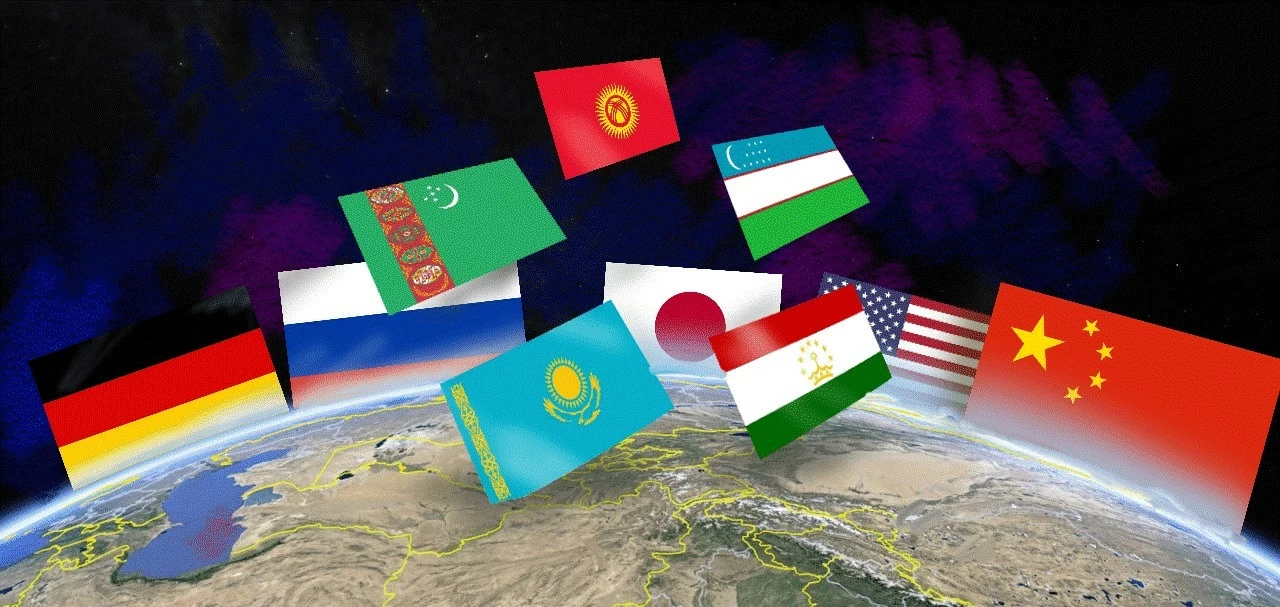 |
Central Asia is a region with many strategic advantages for major powers. (Source: TCA) |
Opportunities in conflict
The conflict in Ukraine has had negative impacts across Europe, with severe devastation in Ukraine and a stalled Russian economy . However, one region has benefited greatly from this conflict: Central Asia. Five countries in the region have not only avoided the devastating consequences of the war but have also increased trade and investment, thereby boosting economic development. Global financial institutions have published positive assessments of Central Asia's economic growth in 2023. According to the IMF and World Bank, the region's GDP is projected to grow by 4.6% in 2023 and is expected to increase by 4.2% in 2024.
Since the West imposed sanctions on Russia for launching a military campaign in Ukraine, Central Asian countries have maintained a flexible, multi-faceted foreign policy, skillfully employing a "multi-dimensional balancing act" in their relations with major powers such as the United States, China, and Russia.
Despite pressure from both Russia and the West, Kazakhstan and other Central Asian countries continue to maintain trade with Russia while developing relationships with Western partners, quickly seizing opportunities to fill gaps in the supply chain. Kyrgyzstan, Uzbekistan, and Kazakhstan have become intermediaries for Russia, as goods banned from direct import from Europe are diverted through Central Asia. This has helped these countries significantly increase their trade with Russia, China, and Europe. In 2022, bilateral trade between Kazakhstan and the BRICS countries, primarily Russia and China, reached $45 billion.
Kyrgyzstan, a small nation, has seen a significant increase in budget revenue, doubling in 2023. The proceeds from trade and foreign investment are being reinvested in development projects, particularly in the hydropower sector. A prime example is the Kambarata-1 hydropower plant, under construction to halve the country's electricity capacity. This not only helps Kyrgyzstan secure energy for its booming economy but also creates opportunities to export electricity to neighboring countries facing energy shortages.
Besides Kyrgyzstan, Kazakhstan is also one of the countries that has benefited greatly from the conflict. Exports from the EU to Kazakhstan have increased sharply, particularly in items such as machinery and electronics. Kazakhstan's technology sector has developed significantly, with technology exports to Russia increasing almost sevenfold from 2021 to 2023. This demonstrates a shift in international supply chains and facilitates the expansion of Central Asian countries' role in the global economy.
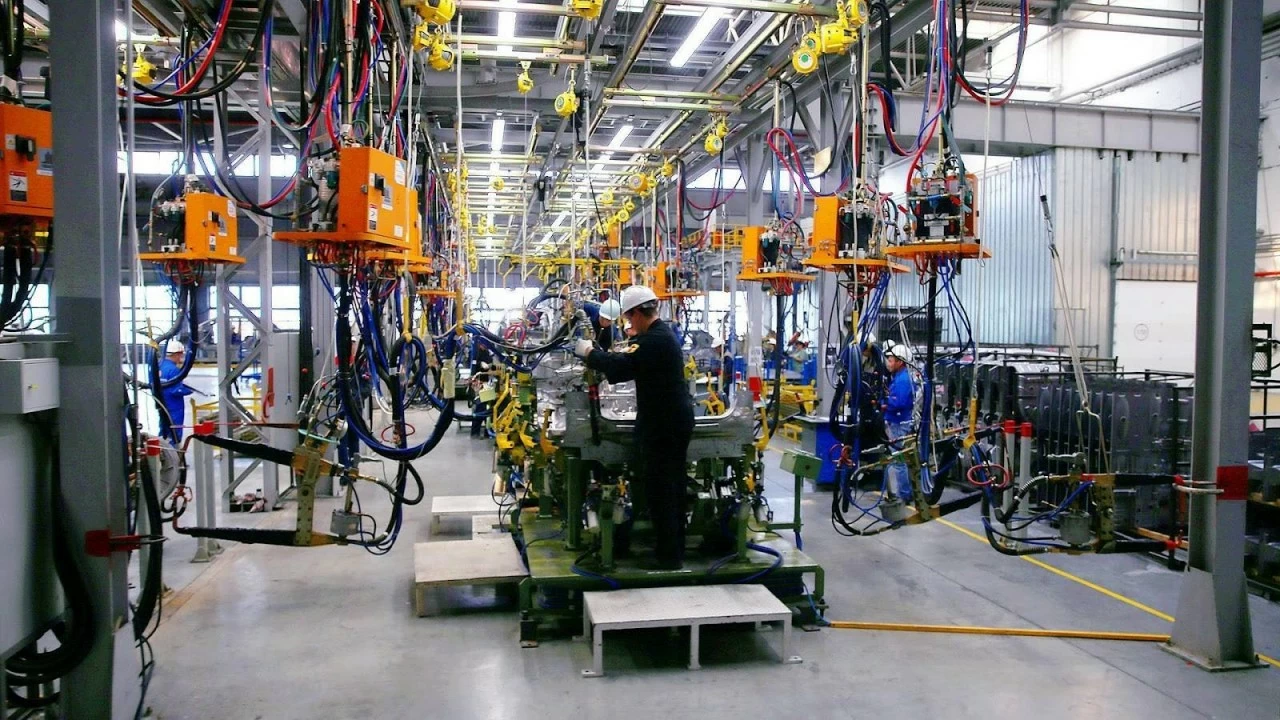 |
| Mechanical engineering is one of the main sectors of the Kazakh economy. (Source: Office of the Prime Minister of Kazakhstan) |
Adjusting policies
In the current complex geopolitical landscape, the US is making more pragmatic shifts in its policy toward Central Asia, moving from viewing the region merely as a supplier of raw materials and strategic shipping lanes to expanding strategic partnerships with Kazakhstan and Uzbekistan, particularly in the areas of clean energy development, climate change mitigation, and mining, and considering Central Asia as a global infrastructure and investment partner.
EU countries are also making significant efforts to strengthen relations with Central Asian countries with the aim of finding alternative sources of oil and gas to Russia, meeting the continent's energy needs, including nuclear energy (Kazakhstan holds 40% of the world's uranium reserves, producing 22 million tons in 2023), while also seeking to influence regional leaders to change their views on Russia. However, due to over-reliance on the US, these efforts are largely superficial.
Recently, Modern Diplomacy noted that Central Asia's abundant oil and gas reserves provide Western countries with another important option for ensuring energy security. This region, rich in natural resources and mineral reserves, also offers attractive opportunities for Western economies to expand their supply chains.
For a long time, companies from Kazakhstan – the largest country in Central Asia – have been a major supplier of titanium, beryllium, tantalum, niobium, and other minerals to the economies of European Union (EU) member states. At the end of 2023, French President Emmanuel Macron's visit to Kazakhstan resulted in significant agreements, enabling Paris to purchase these crucial minerals and metals for industrial production. Trade turnover between Kazakhstan and Germany increased by 41% in 2023, reaching $3.9 billion, and exceeded $2.3 billion in the first seven months of 2024. Since 2005, Germany has invested nearly $6.7 billion in Kazakhstan.
Promoting intra-regional cooperation
The conflict in Ukraine has not only increased trade but also stimulated intra-regional cooperation in Central Asia. Previously, these countries often clashed over economic and political interests, but now they are consciously united to take advantage of development opportunities, with numerous projects being built and implemented to strengthen intra-regional economic links.
Through fostering closer economic and diplomatic ties with its neighbors, Central Asia is seeking to unlock its potential as a hub for trade, investment, and cultural exchange, promoting sustainable growth and prosperity, and addressing common issues such as energy shortages and border management. Trade, investment, and tourism among countries in the region are surging, driving economic and social development.
Furthermore, the development of transportation and logistics infrastructure in the region is also being driven by investment from international partners. These investment projects not only improve freight transport conditions but also facilitate the development of other industries, from agriculture to technology. In particular, since the outbreak of the Russia-Ukraine conflict, the emergence of the Trans-Caspian Transport Corridor (TITR), a transport network spanning Central Asia, the Caspian Sea, and the Caucasus region, has emerged as an alternative to transport routes controlled by Russia.
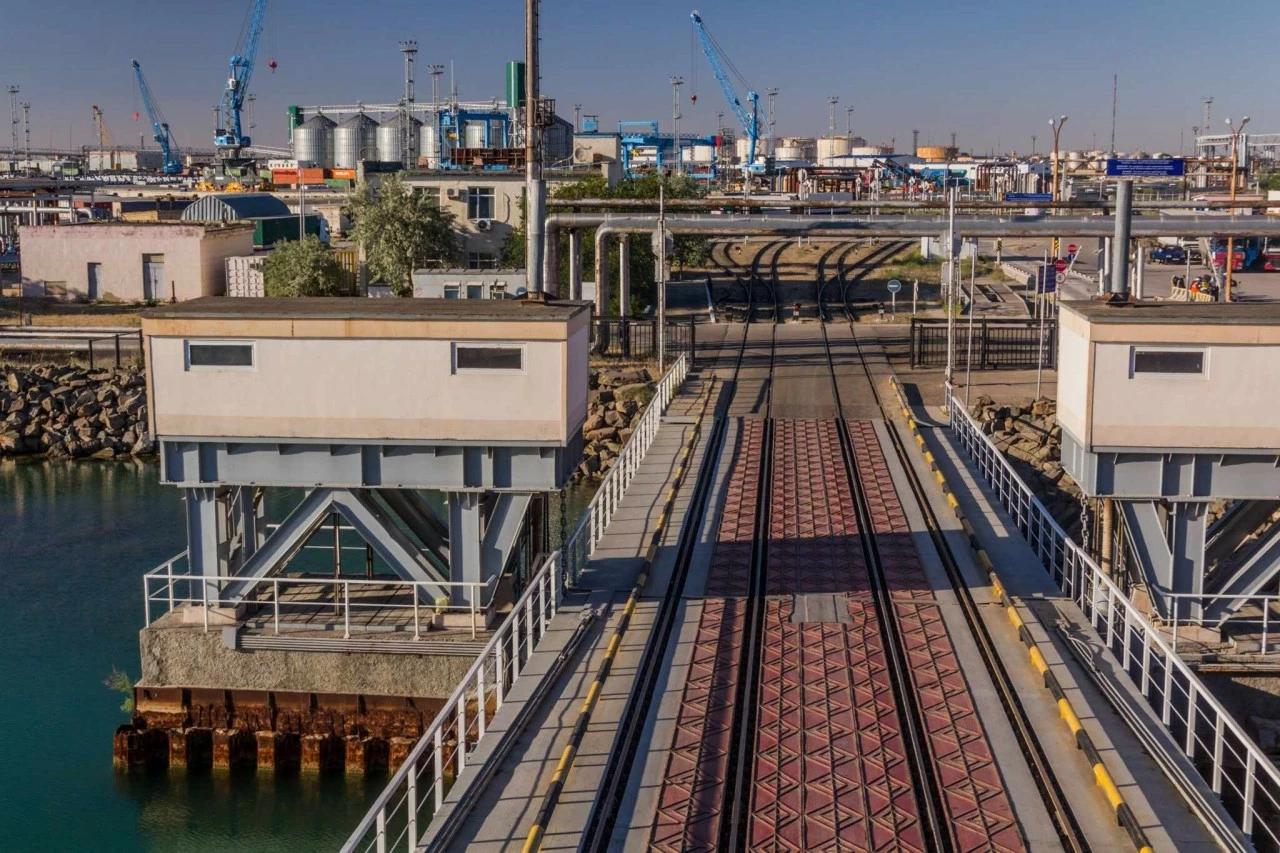 |
| The Trans-Caspian Transport Corridor (TITR) has emerged as an alternative to transport routes controlled by Russia. (Source: Dreamstime) |
Over the past 30 years, this transport route has seen a significant increase in traffic volume, especially since February 2022. According to Gaidar Abdikerimov, Secretary General of the TITR Association, there are currently 25 transport companies from 11 countries participating in TITR. In the first 10 months of 2023 alone, more than 2.256 million tons of goods were transported through this corridor. In early 2024, European and international financial institutions announced a commitment of $10.8 billion to develop TITR, aiming to reduce dependence on Russia's Northern Transit System (NSR).
With increasing instability on the Red Sea due to Houthi attacks and Western sanctions against Moscow, traditional shipping routes have become less secure. Rerouting shipping around the Suez Canal also significantly increases costs and transit times. In this context, TITR has emerged as a groundbreaking solution, benefiting global supply chains and ensuring uninterrupted trade links between Asia and Europe.
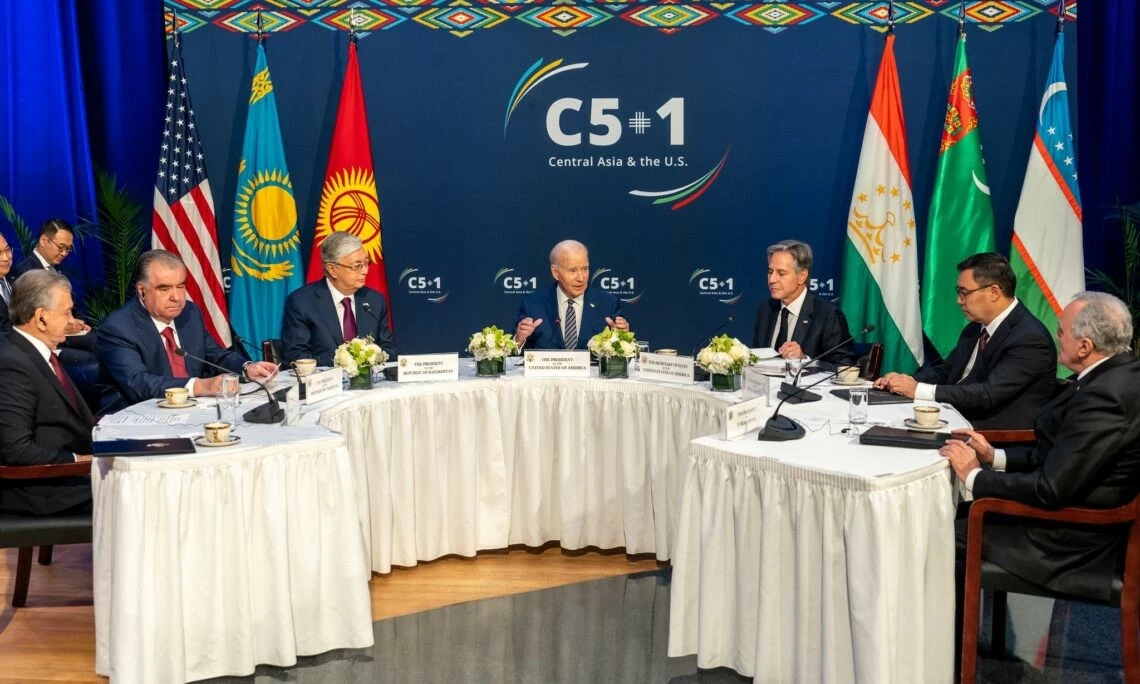
A notable point is that the Central Asian countries have linked up to form the so-called C5 format, creating a unified bloc in international negotiations. This cooperation not only strengthens the region's position on the international stage but also helps these countries better capitalize on opportunities from both "East and West". Last September, U.S. President Joe Biden hosted Central Asian leaders for the C5+1 Summit (a cooperation mechanism involving the U.S. and five Central Asian countries) in New York – a historic event marking the first time a U.S. President attended a C5+1 summit. Washington and its partners discussed a range of topics such as regional security, economic cooperation, and sustainable development, highlighting America's growing interest and contribution to the region. In late 2023, French President Emmanuel Macron's visit to Kazakhstan resulted in significant agreements that enabled Paris to acquire crucial minerals and metals for industrial production. Visits by international leaders such as Russian President Vladimir Putin, Chinese President Xi Jinping, French President Emmanuel Macron, and German Chancellor Olaf Scholz have demonstrated the growing importance of Central Asia in the global geopolitical landscape. |
Is Germany having a bumper crop?
Chancellor Olaf Scholz became the first German Chancellor to visit Central Asia in decades. According to experts, during this trip, Scholz sought closer ties with Central Asian countries, particularly focusing on energy and economic sectors, and exploiting Central Asia's abundant oil and gas resources to replace supplies from Russia.
In 2023, Kazakhstan exported 8.5 million tonnes of oil to Germany, accounting for 11.7% of Germany's total oil imports and up from around 6.5 million tonnes before the Russia-Ukraine conflict. This increase made Kazakhstan Germany's third-largest supplier after Norway and the United States, according to data from the German Federal Statistical Office. Meanwhile, German investments in Kazakhstan increased by 64% in 2023 compared to 2022.
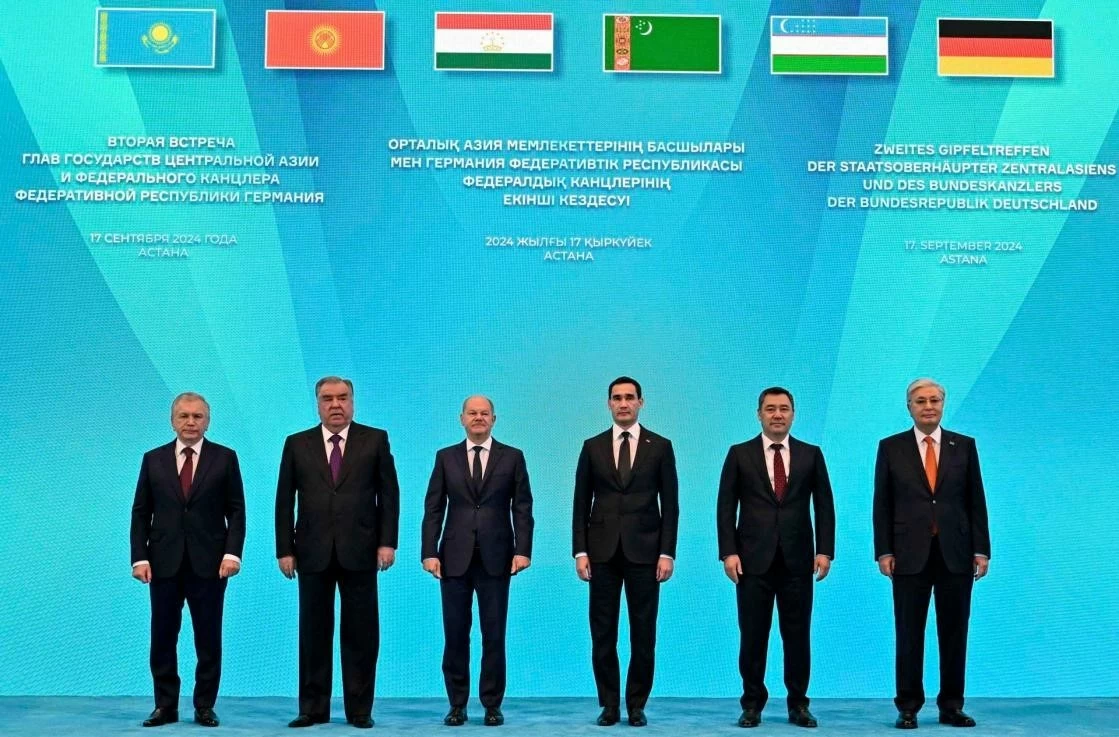 |
| German Chancellor Olaf Scholz and heads of state from Central Asian countries in Astana, Kazakhstan on September 17. (Source: EFE) |
A crucial task for Olaf Scholz involved geopolitical issues. The German Chancellor wanted to hear from the leaders of his Central Asian partners about developments in Russia and the issue of compliance with Western sanctions against Russia in Central Asia. However, Olaf Scholz was met with a cold response from Kazakh President Tokayev, who asserted that Russia was militarily "invincible." He argued that an escalation of the conflict in Ukraine would lead to irreparable consequences for all of humanity, primarily for all countries directly involved in the Russia-Ukraine conflict.
The Kazakh leader's statement will certainly force the German Chancellor to reconsider her policy of escalating confrontation with Russia in Ukraine, amidst growing domestic opposition to the German government's support for Kyiv.
However, the German Chancellor did not leave Astana empty-handed. His trip to Central Asia contributed to strengthening Germany's relations with leading countries in the region, namely Kazakhstan and Uzbekistan.
With Uzbekistan, Germany reached a migration agreement with Tashkent, aiming to recruit highly skilled workers in Germany. In Kazakhstan, the two sides agreed to continue cooperation on 66 investment projects totaling $55 billion, particularly in the fields of energy, construction, oxygen production, airport construction, and the extraction of potassium salt and boric acid.
Central Asian countries and Germany are committed to strengthening their strategic partnership in areas such as economics, trade, energy, mineral extraction, combating climate change, illegal migration, terrorism, and extremism.
Source: https://baoquocte.vn/luc-hut-mang-ten-trung-a-286803.html


![[Image] Close-up view of the interchange connecting the two expressways and Long Thanh Airport.](https://vphoto.vietnam.vn/thumb/1200x675/vietnam/resource/IMAGE/2026/05/25/1779703378210_ndo_br_z7863716673926-224453a31600126cce10622af6290afd-4549-jpg.webp)
![[Image] Hanoi's urban life under the challenge of a "scorching hot" environment](https://vphoto.vietnam.vn/thumb/1200x675/vietnam/resource/IMAGE/2026/05/25/1779706979265_nang-nong-t5-2026-minh-duy-7-4636-jpg.webp)












































































Comment (0)