

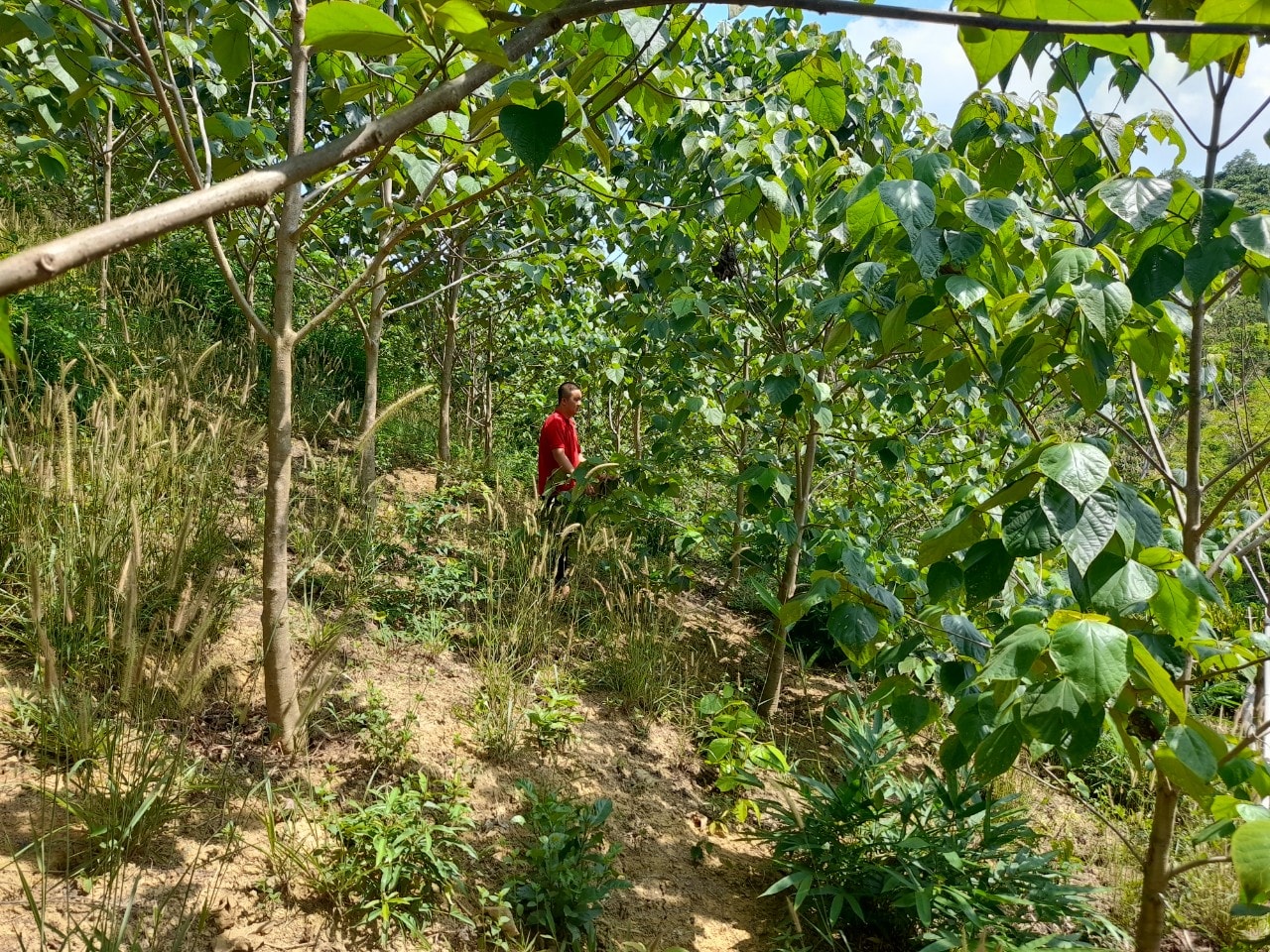
In Quang Phu commune, over the years, the agricultural, forestry, and fisheries economic structure has remained dominant, accounting for nearly 70% of the total value. Alongside agriculture and fisheries, forestry has been a focus of development. Forest management, protection, and development have been prioritized and have seen significant progress. Over the past five years, the locality has developed over 957 hectares of forest, achieving 129% of the planned target. This includes over 735 hectares of concentrated forest planting, including large timber plantations; 54 hectares of agroforestry; and the remainder being forest regeneration through enclosure and cultivation.
According to the commune's People's Committee leaders, in recent years, along with small timber, the locality has guided, encouraged, and supported organizations and individuals to participate in planting large timber forests, resulting in a significant increase in this area. The locality recognizes that there is still room for developing large timber forest planting, so it will strongly promote solutions in the coming time, especially regarding the formation of commercial planting areas.
In Nâm Nung commune, alongside forest management and protection, forest development is given priority by the local Party committee, government, functional forces, departments, and mass organizations. The leading solution is to promote and encourage people to participate in forest planting. During the period 2020-2025, local people developed 101 hectares of forest, mostly large timber forests, achieving 106.32% of the resolution target. Many households have shown interest in planting large timber forests through both pure planting and intercropping in an agroforestry model. This has contributed to increasing forest cover in the commune to 46.7%, exceeding the target by nearly 7%. The locality continues to promote sustainable forest development, including the planting of large timber forests for commercial purposes, in order to improve livelihoods for farming households and protect resources and the environment.
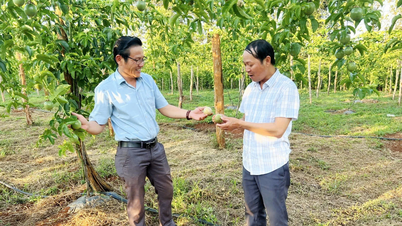
According to Mr. Nguyen Ngoc Quan from Thanh Thai village, Nam Nung commune, his family has developed nearly 10 hectares of large timber forests using the "pig skin" tree (a type of hardwood). Small timber forests have a harvesting cycle of 5-7 years, mainly consisting of acacia and melaleuca trees, used for making timber, with a relatively low value of about 50-80 million VND/hectare. Large timber forests have a harvesting cycle of 10 years or more, mainly consisting of native trees, with timber value double or even triple… It is known that the authorities are planning to develop Nam Nung and some neighboring areas into a large timber raw material zone, which will create favorable conditions for people to confidently expand their forest planting area.
Promoting the planting of large timber forests is essential; therefore, relevant authorities are actively creating favorable conditions for businesses and individuals to develop models of linkage and guaranteed purchase of large timber products. However, the biggest challenge in planting large timber forests currently remains the high investment capital and the long waiting time for harvesting. Therefore, businesses and households gradually developing large timber forests should link it with the construction of integrated agriculture and forestry models to balance revenue sources.
It is known that during the period 2026-2030, the Provincial People's Committee aims to develop concentrated plantation forests, large timber forests to provide raw materials for processing, research, and selection of suitable forestry tree species and multi-purpose trees for the ecological conditions of each region; develop forest planting and large timber forests in accordance with international standards to serve the domestic and export markets, thereby increasing the value of forests and preventing and mitigating natural disasters. The province also aims to develop wood and forest product processing industrial zones and clusters associated with infrastructure investment to increase the added value of the forestry sector.
Many types of large timber trees are commonly grown in the Central Highlands, including the western localities of Lam Dong province, such as: golden teak, star anise, ca chit, doi, and loi tho (pig skin). With the advantages of forest land, some communes in the western part of Lam Dong province are suitable for developing large timber forests.
Source: https://baolamdong.vn/mo-loi-phat-trien-rung-go-lon-419943.html




![[Photo] General Secretary and President To Lam and the President of the Philippines hold talks.](https://vphoto.vietnam.vn/thumb/1200x675/vietnam/resource/IMAGE/2026/06/01/1780286997787_anh-man-hinh-2026-06-01-luc-11-09-43.png)










































































Comment (0)