

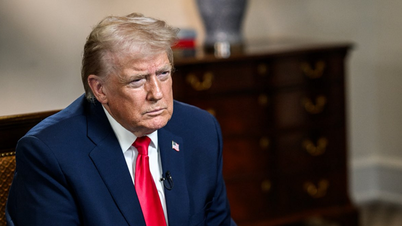
US President Donald Trump signed three executive orders yesterday morning (February 2nd, Vietnam time) imposing a 25% import tariff on all goods from Mexico and most goods from Canada. Meanwhile, the tariff on Canadian oil is 10%, and Chinese goods also face a 10% tariff when passing through US customs, according to Reuters and AFP.
Activate a national state of emergency.
With this action, the new White House occupant reversed the free trade agreement he also signed during his first term, the United States-Mexico-Canada Agreement (USMCA), which officially came into effect on July 1, 2020, and replaced the North American Free Trade Agreement (NAFTA) from the 1990s.
Wall Street is worried that Trump will start a trade war; what do experts say?
To overcome the USMCA, President Trump, in an executive order, declared a national economic emergency, activating the International Emergency Economic Powers Act (IEEPA), according to CNN. This act grants the US president the authority to unilaterally manage import activities during a national emergency. Import tariffs will officially take effect at midnight on February 4th (Washington time) without exemptions, and will eliminate the "tariff threshold" that previously allowed shipments valued at $800 or less to enter the US duty-free.
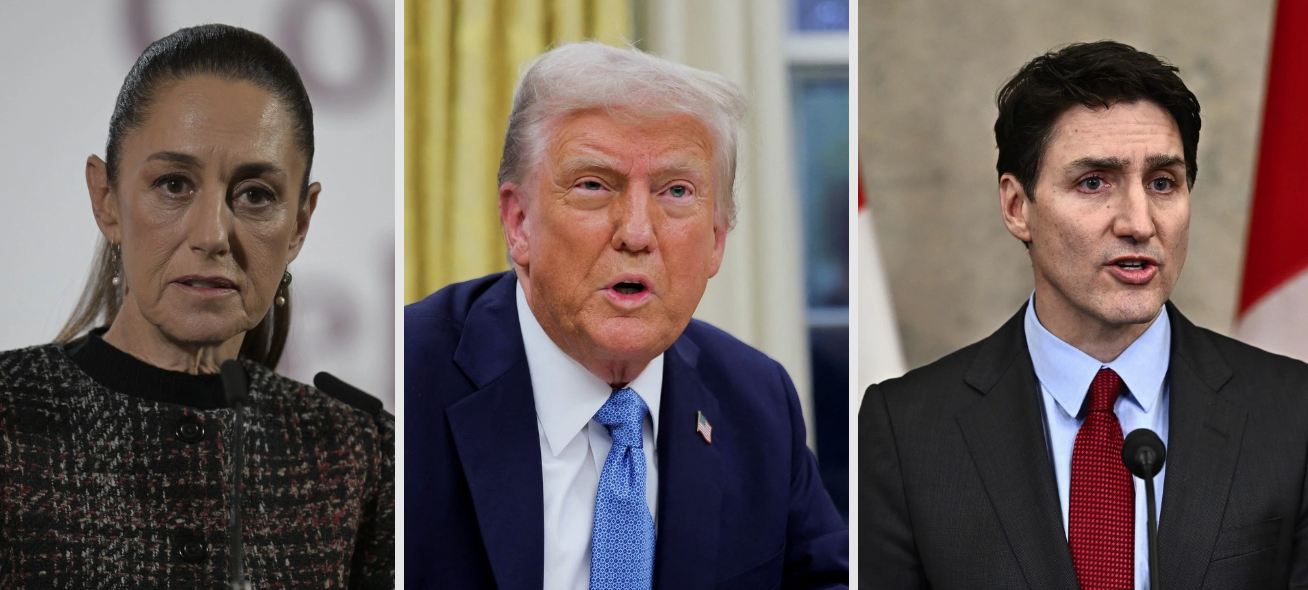
From left to right: Mexican President Claudia Sheinbaum, US President Donald Trump, Canadian Prime Minister Justin Trudeau
PHOTOS: REUTERS - AFP - AP
The tariffs that the US has imposed on its three major trading partners are expected to increase the prices of goods and services in the domestic market. AP quoted Trump as acknowledging this risk. However, the US President assured that the country's economy would be stronger after the new tariffs are implemented.
Furthermore, although US authorities say the tariffs are designed to prevent the drug fentanyl and illegal immigration into the US, the Trump administration has yet to provide specific criteria for lifting the imposed import tariffs.
Canada, Mexico, and China retaliate.
In a conference call with journalists on February 1st, a Washington administration official warned that any retaliation from Canada, Mexico, or China could lead to increased tariffs on those countries. Despite this warning, hours after receiving information from Washington, Canadian Prime Minister Justin Trudeau announced sweeping tariffs, covering everyday items, on $155 billion worth of US goods.
To begin, on February 4th, Canada will impose a 25% tariff on CAD 30 billion worth of imports from the United States, and after 21 days, it will tax the remaining CAD 125 billion to allow Canadian companies and supply chains to seek alternatives. According to Mr. Trudeau, the items subject to the tariff include alcoholic beverages, manufactured goods, clothing, footwear, household appliances, furniture, materials such as wood, and many others. Mr. Trudeau also urged Canadians to shift towards consuming domestic goods and services, reducing their dependence on American goods and services.
At the same time, Mexican President Claudia Sheinbaum announced that the country would impose retaliatory tariffs. "I have instructed the Minister of Economy to implement Plan B, which includes tariff and non-tariff measures to protect Mexico's interests," AFP quoted Sheinbaum as saying. It remains unclear what measures Mexico might take.
In addition, China's Ministry of Commerce stated that the US action "seriously violates" the rules of the World Trade Organization (WTO). "China will file a complaint with the WTO and will implement corresponding countermeasures to resolutely protect its rights," Xinhua quoted the Ministry of Commerce as saying, but it is unclear what measures Beijing will implement.
America's allies are concerned.
Yesterday, Fuji TV quoted Japanese Finance Minister Katsunobu Kato as expressing "deep concern" about the potential impact on global trade from the trade war between the US and its largest trading partners, Canada, Mexico, and China.
According to Yonhap, South Korean Acting President Choi Sang-mok instructed government agencies to closely monitor any impact on domestic companies and the South Korean economy following the US move. In addition, the US Chamber of Commerce predicted that US tariffs on its largest trading partners would drive up consumer prices in the US. A new report from the Peterson Institute for International Economics (based in Washington, D.C.) warned that President Donald Trump's tariff strategy could force Americans to pay more when shopping, whether for shoes, toys, or food.
Source: https://thanhnien.vn/mo-man-thuong-chien-giua-my-va-nhieu-nuoc-185250202213802327.htm
































































Comment (0)