

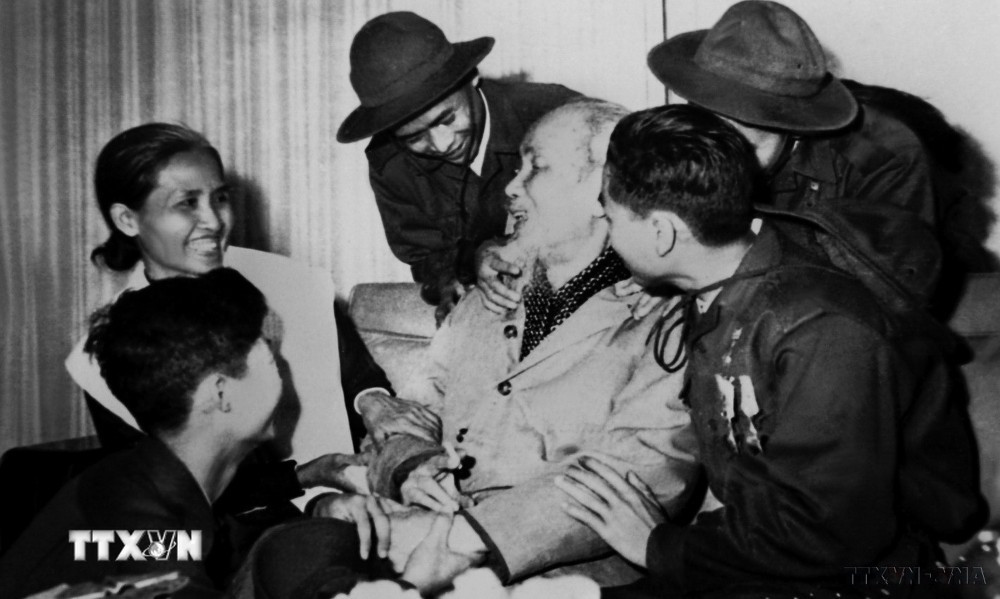
Prime Minister Pham Van Dong wrote: "Ho Chi Minh was lofty yet not distant, new yet not strange, great yet not ostentatious, brilliant yet not overwhelming, and upon first meeting him, one felt a long-standing familiarity." It can be said that the simplicity and approachability of President Ho Chi Minh were rarely found in any other leader in the world .
Uncle Ho's simplicity was completely natural, not surreal, but right in the hearts of the people, in the lives of the people, so everyone can learn from and follow it.
Simple in daily life
During his lifetime, President Ho Chi Minh lived a simple and frugal life, from his food and housing to the means he used for his daily work. His humility and simplicity were praised by the poet To Huu with creative and unique imagery in his poem " Oh, Uncle Ho ".
" Uncle, please leave your love for us."
A life of integrity, without gold or splendor.
Fragile cloth garment, yet a soul of immense stature.
More than bronze statues exposed along the paths .
The more he loved the people and the more he aspired to bring them independence, freedom, and happiness, the simpler and more frugal he became in his daily life.
Whether he was Văn Ba, the kitchen assistant on the Admiral Latouche Tréville, the revolutionary Nguyễn Ái Quốc during his years in Paris, France, or later as a head of state living and working at the Presidential Palace in Hanoi , Ho Chi Minh remained a remarkably simple and hardworking man.
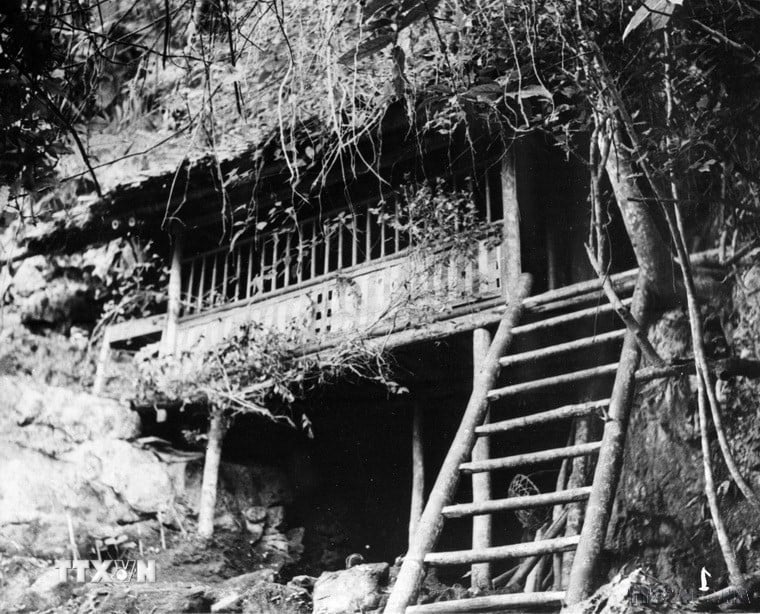
After 30 years of wandering abroad in search of a way to save the country and its people, upon returning to the homeland to directly lead the revolutionary movement, he lived in Pac Bo cave (Cao Bang) under difficult and deprived conditions, but with a revolutionary optimism, as he himself wrote:
" In the morning, we go to the stream; in the evening, we return to the cave."
Corn porridge with bamboo shoots and vegetables is still available.
A precarious stone table for translating the history of the Party.
"The revolutionary life is truly glorious ."
(Impromptu poem about Pac Bo)
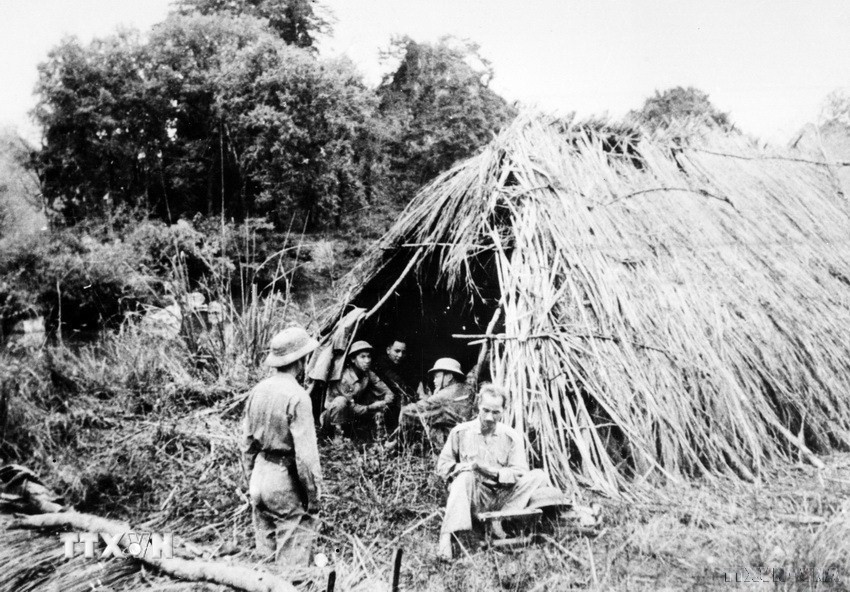
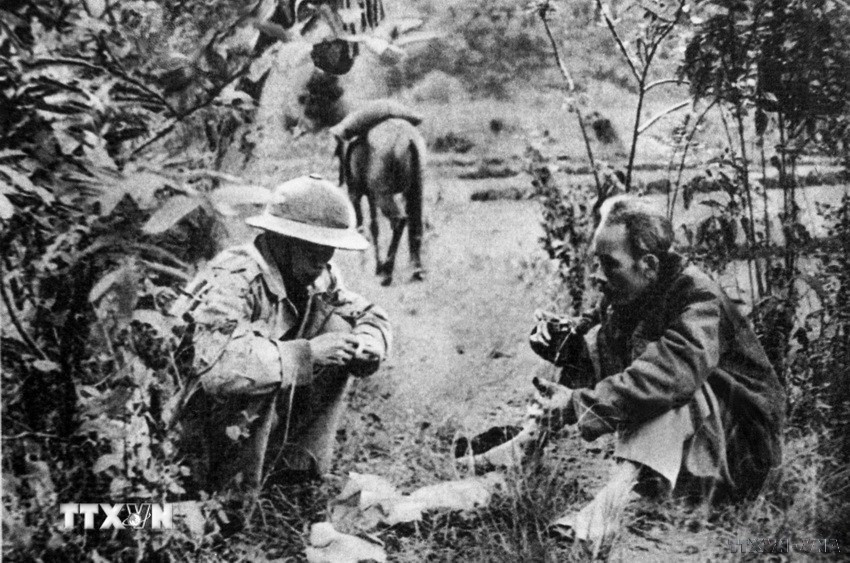
During the resistance war against French colonial invasion (1945-1954), Uncle Ho and the Central Committee of the Party moved to Viet Bac to lead the resistance and national reconstruction. Uncle Ho's residence was just a small, simple stilt house with a thatched roof.
Where else on earth could there be a leader in a brown robe and cloth trousers climbing mountains and crossing streams to go on military campaigns; washing his own clothes, holding a stick to dry them while walking; a leader who typed his own documents, rode horses on campaigns, exercised in the forests of Viet Bac, and taught martial arts to cadres…?
Perhaps for all time to come, it will be difficult to find images that can move the human heart as much as these.
After the victory of the resistance war and his return to the capital Hanoi, President Ho Chi Minh did not live in the former governor-general's house because he told himself that as the president of a poor country, he did not yet have the right to enjoy luxury. He decided to choose for himself the house of an electrician.
In 1958, the Central Committee decided to build a house for Uncle Ho, but he suggested that only a small stilt house should be built, in the style of the ethnic minority houses in Viet Bac, similar to the house he had lived in during the years of resistance.
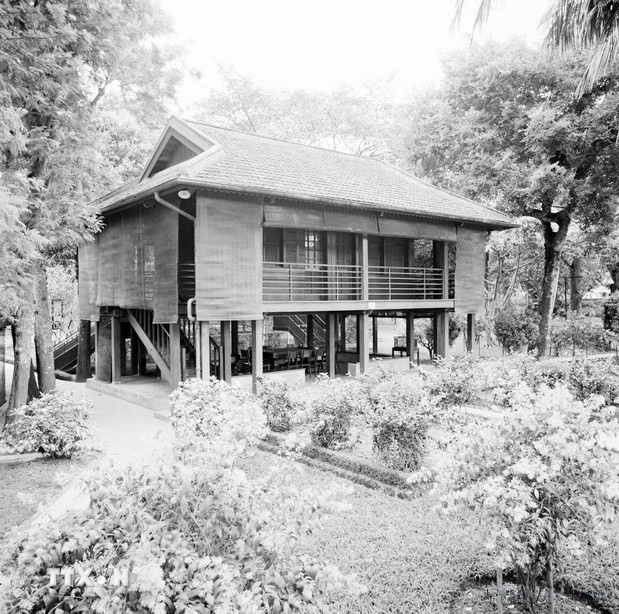
Regarding the stilt house, Prime Minister Pham Van Dong once wrote: "Uncle Ho's simple stilt house had only a few rooms, but while his soul was swept by the winds of the times, that small house was always filled with wind and light, subtly scented with garden flowers. What a pure and elegant life such was!"
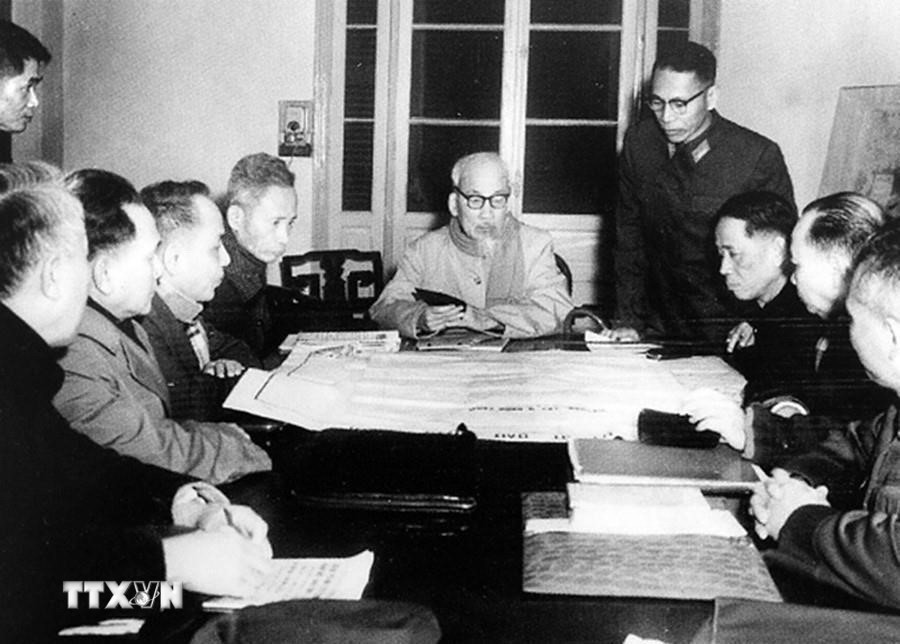
The stilt house has two floors with three small rooms. The study on the first floor was where Uncle Ho often worked with the Politburo, met with leading officials who came to report on their work, and where he cordially received a number of domestic and foreign delegations.
The upper floor had two small rooms, which served as Uncle Ho's workspace and resting place. Each room was about 10 square meters, just enough space for a bed, a table, a chair, a wardrobe, and a bookshelf; with very simple and modest furnishings: a single blanket, a straw mat, a palm-leaf fan, and a typewriter.
After work, Uncle Ho often tended to the plants in the garden and the fish in the pond. Harmoniously integrated with the natural landscape, Uncle Ho's stilt house at the Presidential Palace became extremely familiar and close to all Vietnamese people.
Today, the stilt house located within the Ho Chi Minh Presidential Palace Historical Site has become a "red address," a place where the sentiments of the Vietnamese people and peace-loving people around the world converge.
No one who visits Uncle Ho's residence can fail to be overwhelmed with feelings of reverence and admiration for a great cultural figure who became a legend in his everyday life.
" A simple two-story house, a corner of the garden"
Wood is usually rustic and doesn't smell of paint.
A bed made of rattan and straw, with a single blanket and pillow.
The wardrobe is small, just big enough to hang a few worn-out shirts.
( Visiting Uncle Ho's former abode - To Huu )
Throughout his daily life, from the most difficult times to when he was President, Uncle Ho's meals consisted only of tomato sauce and pickled vegetables...
After meals, he would personally arrange the dishes neatly on the table to ease the burden on the serving staff; after eating, the bowls were always clean and any leftover food was neatly placed.
He said: "In life, everyone likes to eat well and dress well, but if that enjoyment comes at the cost of others' hardship and trouble, then it shouldn't be done."
"Everyone in life likes to eat well and dress well, but if that enjoyment comes at the cost of others' hardship and trouble, then it shouldn't be done."
President Ho Chi Minh
Furthermore, Uncle Ho always thought of others; he never ate delicious food alone. He would share it with others, and only then would he take his own portion, which was usually the smallest.
Economical and extremely simple, the President, when working at home, usually wore a brown traditional Vietnamese outfit and wooden clogs. When receiving guests or traveling on official business, he typically wore a khaki suit and rubber sandals.
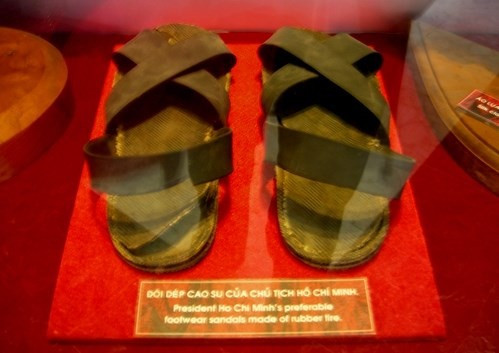
There was a time when Uncle Ho's shirt was torn and had to be mended repeatedly, even the collar had to be replaced. Yet, when people asked him to change into a new set of clothes, he said, "I'm dressed like this because it suits the circumstances of the people and the country; there's no need to change," and "The country is still poor, the people's lives are still difficult. I already have two sets of khaki clothes, though old, they are still in good condition. Don't make me any more; it would be a waste."
Speaking of President Ho Chi Minh's humility and genuine simplicity, the late Chilean President Salvador Allende stated: "Behind his gentle exterior was a resilient, courageous, and indomitable spirit… At first, Westerners only laughed at his clothes, but then many realized that his distinctive attire showed that wherever he was, among the elite or among the masses, he never forgot that he was one of the people of his beloved Vietnam… If anyone wants to find a word that can summarize the entire life of President Ho Chi Minh, it is his utmost simplicity and utmost humility."
Simple in speech, writing, and work.
President Ho Chi Minh's humility and simplicity were not only reflected in his lifestyle, but also in his way of speaking, writing, and working.
Despite his profound intellect, fluency in multiple languages, brilliant political figure, astute diplomat, and great writer and poet of the nation, when discussing, explaining, or addressing political issues, he always presented them simply, without philosophical rambling, clichés, or academic jargon, transforming complex matters into easily understandable and accessible texts. Therefore, truths like "Nothing is more precious than independence and freedom," and "Vietnam is one nation..." gradually permeated and became part of the people's lives.
Despite being the supreme leader, when interacting with the people, his gestures and words were extremely simple and down-to-earth. Even when standing on the platform reading the Declaration of Independence at Ba Dinh Square, he paused and asked, "Can you hear me clearly, my fellow countrymen?" The entire crowd that day shouted "clearly!" There was no longer any distance between the leader and the people through that gesture of his.
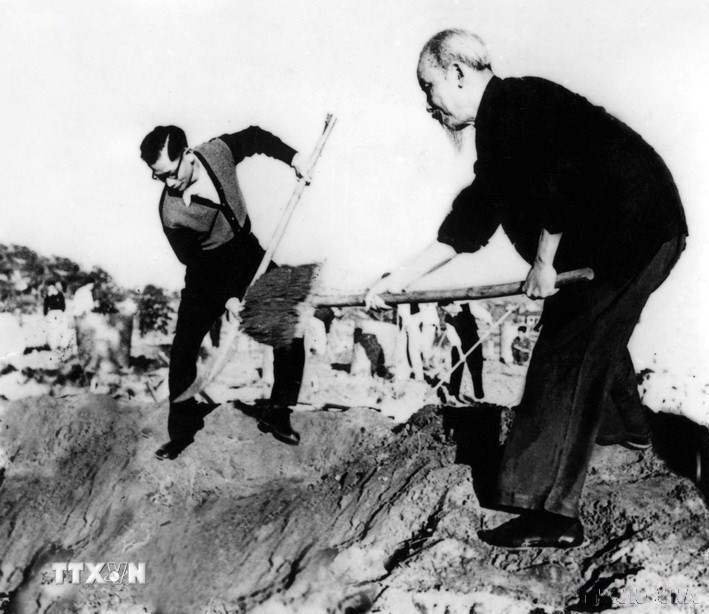
Uncle Ho visited soldiers on the front lines, marching alongside them; he visited the living quarters, kitchens, and toilets of families and collectives; he personally went down to the fields to work, guiding people on pests and diseases, and on irrigation; he visited agencies, factories, enterprises, and schools; he wrote letters to inquire about the well-being of the elderly and children... He always proactively contacted and understood the thoughts and aspirations of the people, thereby winning their hearts with his kind and empathetic heart.
Wherever he went, Uncle Ho was simple and unassuming, disliking extravagant receptions and large entourages. Instead, he blended directly with the people, engaging in direct and intimate dialogue to grasp the real situation and empathize with their thoughts and aspirations. Few leaders have left such a close and humble image in the minds of the people. The entire Vietnamese nation, from the elderly to the children, from generation to generation, affectionately called him: Uncle Ho.
Uncle Ho's simple and noble lifestyle is a beautiful cultural trait, reflecting his cultural character and serving as a shining example for all people to follow.
Prime Minister Pham Van Dong wrote: “Do not misunderstand that Uncle Ho lived an austere life like a monk, or a refined life like a reclusive philosopher... A simple material life harmonizes with a rich spiritual life, with the most beautiful thoughts, feelings, and spiritual values. That is the truly civilized life that Uncle Ho exemplified in the world today.”
Throughout his life, he disregarded fame and fortune, pursuing only one noble goal: "I have only one desire, an overwhelming desire, to see our country completely independent, our people completely free, and all our compatriots having enough food and clothing, and access to education."
That elegance is the essence of an East Asian sage, deeply rooted in Vietnamese identity and also sparkling with the wisdom of Ho Chi Minh. As a great friend of the peoples of all nations, Ho Chi Minh brought sincerity and humility, along with subtle humanistic qualities and compassion, to strengthen friendships, bring the world to Vietnam, and present the image of Vietnam to international friends.
Polish researcher Hélène Tourmaire, in her work "How to Become Uncle Ho?", wrote: “In Ho Chi Minh, everyone sees the embodiment of the noblest, most humble, and most beloved figure in their family… The image of Ho Chi Minh is complete with the combination of Buddhist wisdom, Christian compassion, Marxist philosophy, Leninist revolutionary genius, and the sentiments of a family patriarch, all enveloped in a very natural demeanor.”
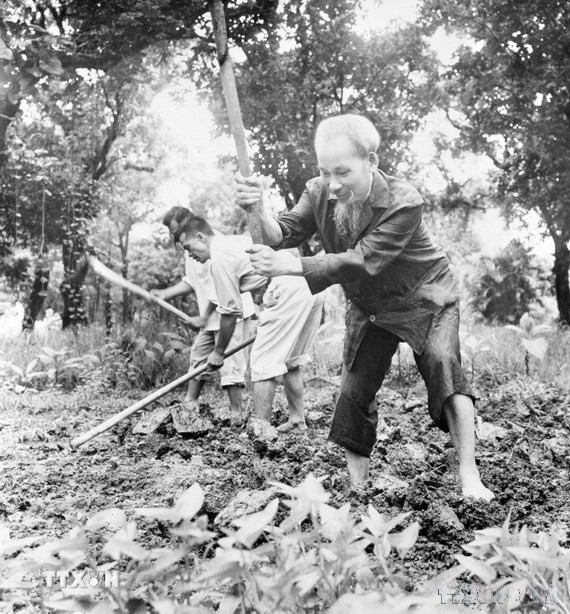
Are there any leaders or great figures in the world who lived and went about their daily lives like our Uncle Ho? Countless people from all over the country and from all corners of the world have visited where Uncle Ho lived to understand his life and appreciate his brilliant legacy - Ho Chi Minh.
So many people wept, from young children to adults, from ordinary citizens to scholars, politicians, and generals from all over the world – tears of respect and gratitude, of admiration and pride for Ho Chi Minh – a man who dedicated himself to the struggle for his nation and humanity, sacrificing himself to the point of becoming one with the people.
When he breathed his last, there were no medals on his chest, because Ho Chi Minh was unfamiliar with high status and power, because he cared little for fame and fortune, and also because he was a perfect and pure example of humility, compassion, and selflessness.
Therefore, for every Vietnamese person, studying and following Ho Chi Minh's ideology, ethics, and style is both a source of pride and a heartfelt aspiration.
TN (according to VNA)Source













































Comment (0)