

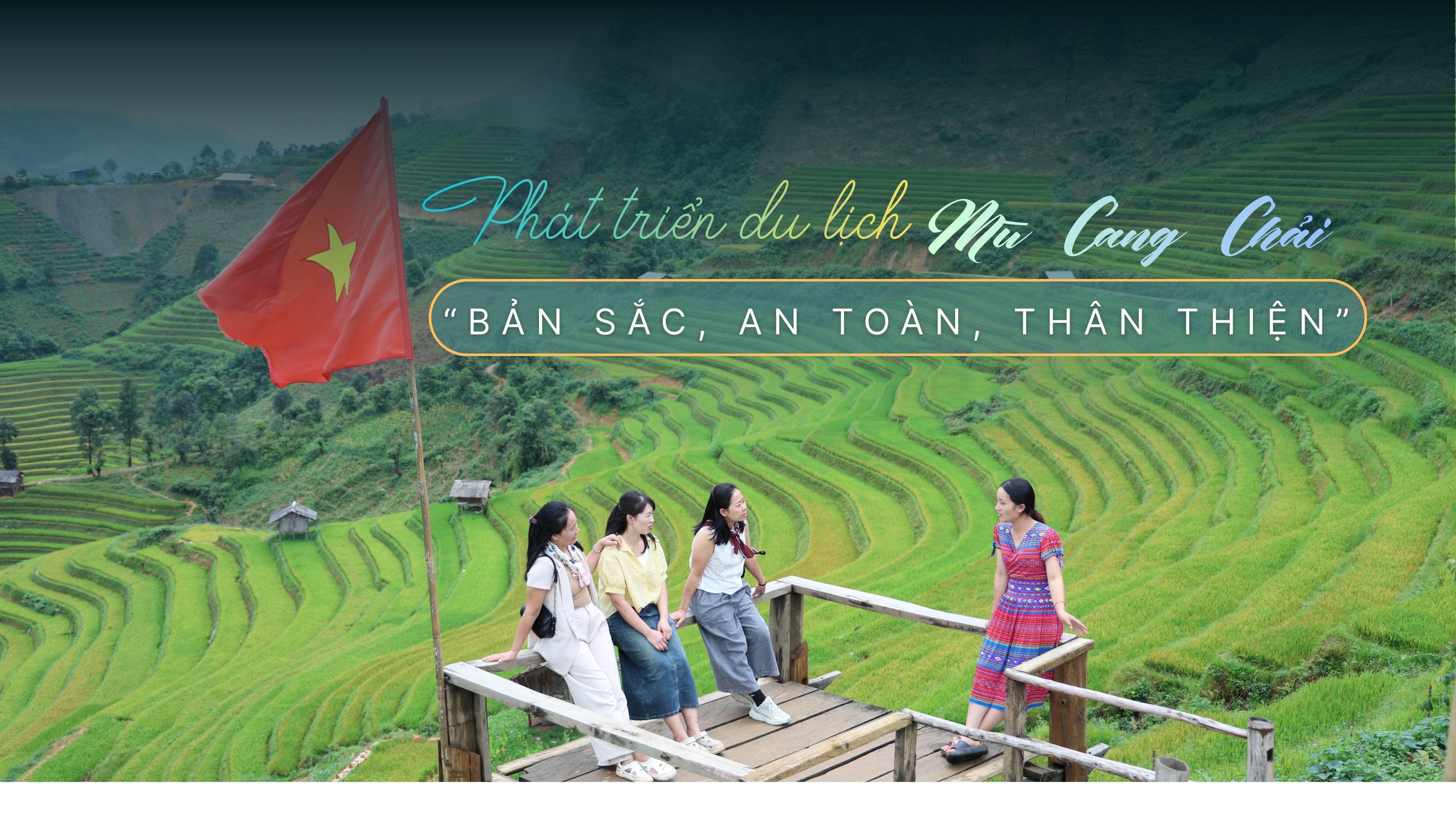
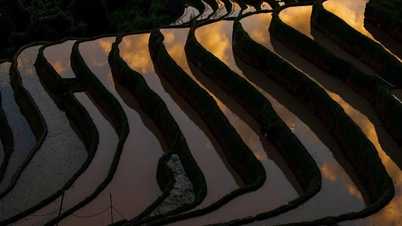
We arrived in Mu Cang Chai during the rice harvest season. As soon as we reached this "dry, woody land," we could smell the sweet fragrance of early-season rice in the autumn mist; waves of rice stalks stretched endlessly from the valleys to the horizon, creating a vast and poetic landscape. Sitting behind the wheel of Mr. Giang A Tang, Vice Chairman of the Mu Cang Chai Commune People's Committee, the motorbike struggled up the hill, occasionally shrouded in mist, making the road seem like a dreamlike paradise. We were traveling above the clouds to reach Hang Dang De, where terraced rice fields meander and stretch across the mountain slopes.
Along the way, there are several viewpoints set up by locals to serve tourists. We stopped at one such spot belonging to Ms. Sung Thi Chanh in Dao Xa village. Ms. Chanh said that she only charges 10,000 VND per visitor for taking photos, and her main income comes from renting costumes and providing food and drinks.
“The busiest time for tourists is during the rice harvest season – that is, autumn. Although the income is still low, having work and additional income to support our children's education is a joy. Our people have started to earn income from our fields and local agricultural products. I hope the government will provide more support with seeds and fertilizers so that people can focus on labor, production, and rice cultivation... creating beautiful landscapes and contributing to tourism development,” Ms. Chanh expressed.
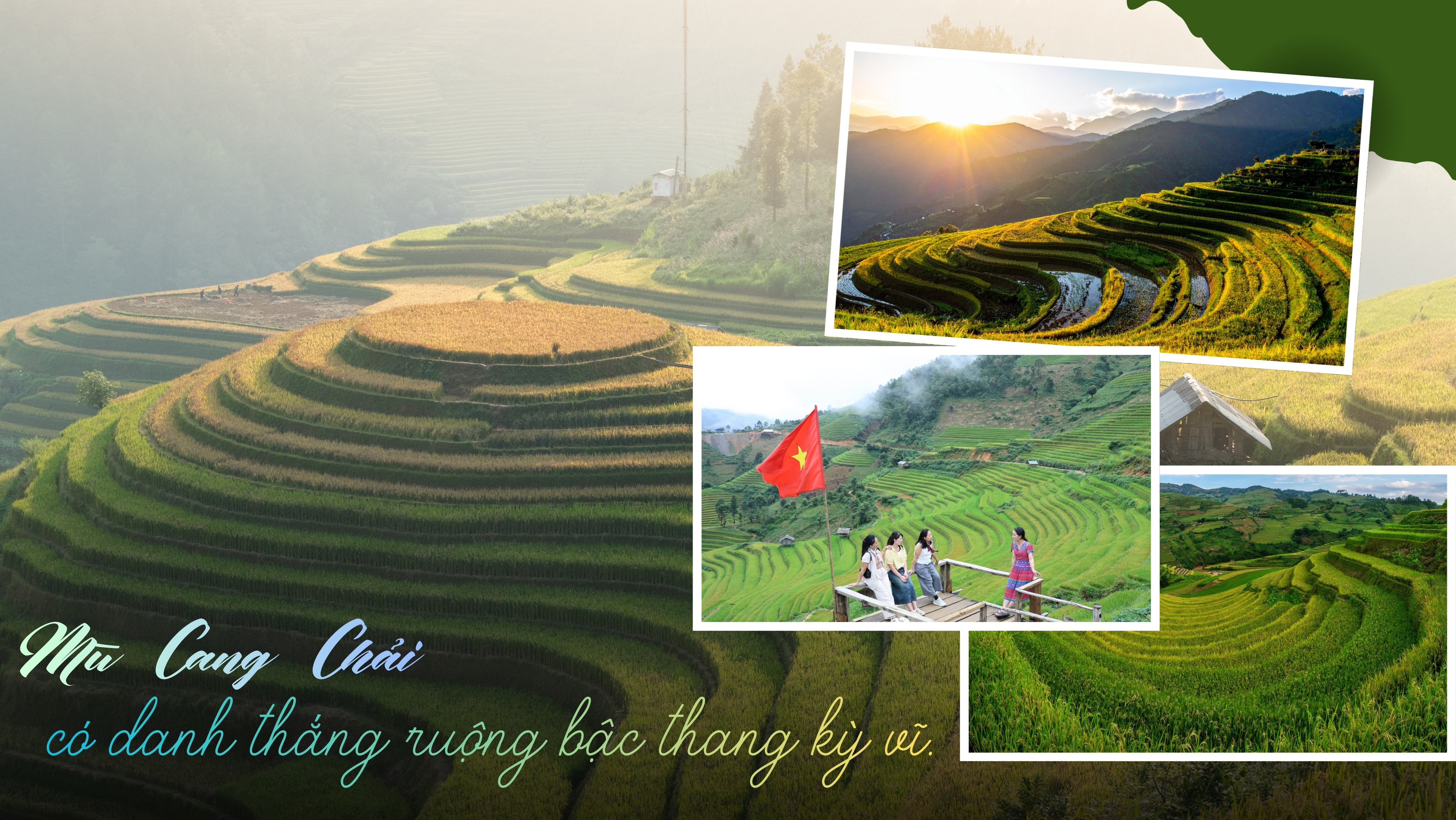
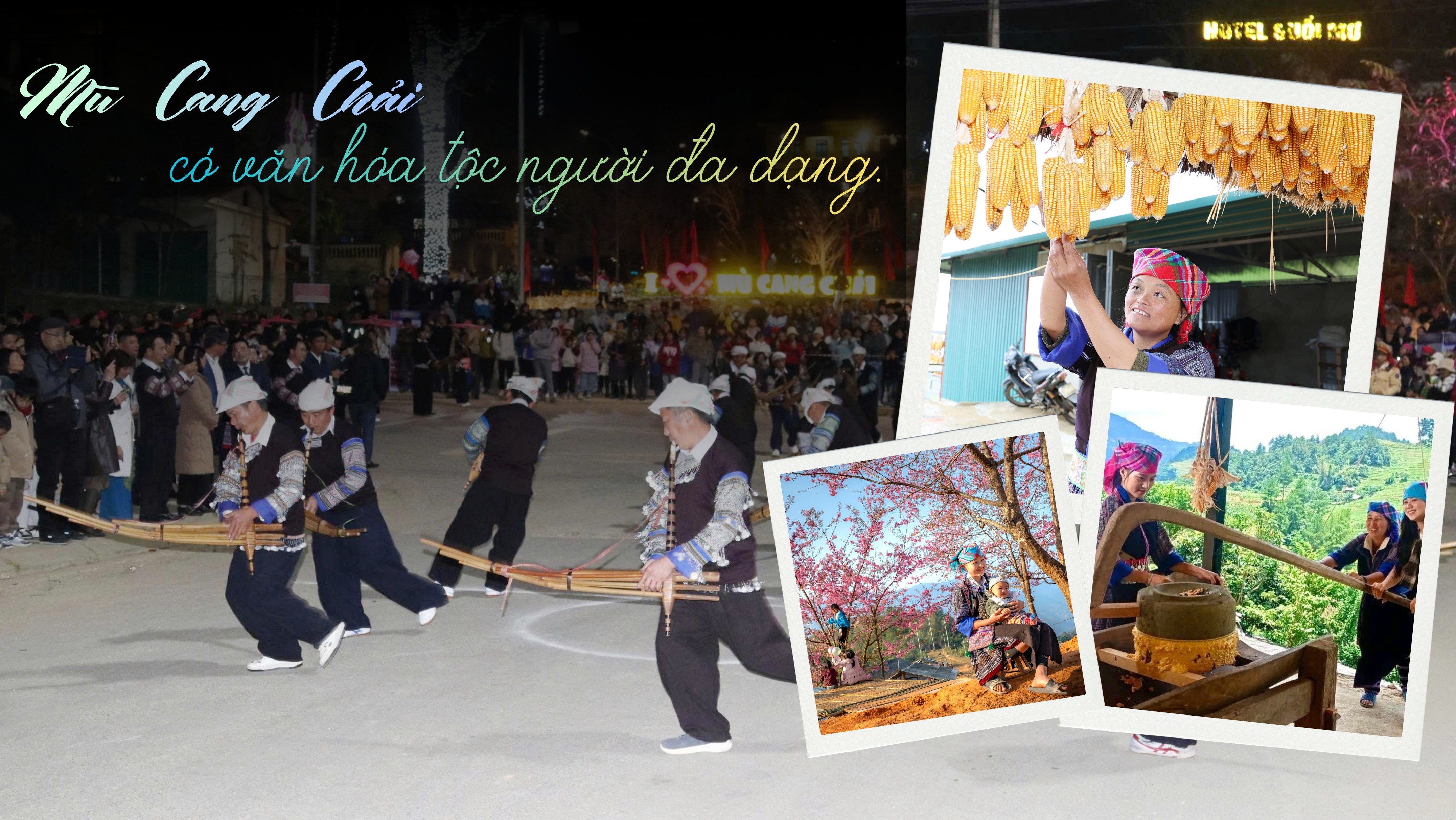
Mu Cang Chai commune is not only blessed with a temperate microclimate, cool year-round, but also boasts magnificent terraced rice fields, diverse ethnic cultures, and beautiful villages along the streams—all of which are outstanding comparative advantages for the local area to develop tourism . Recognizing this and anticipating the trend of tourists, many households in Hamlet 5 (Thai village) have successfully developed a village tourism model.
This small village, nestled along the Nam Kim stream, is home to the Thai ethnic minority. Community-based tourism (homestay) began to emerge many years ago, and today, approximately 90% of households in the village earn an income, and some even live comfortably, thanks to this model.
For example, the family of Ms. Dinh Thu Huong (Luong Huong homestay) started community tourism in 2009. After many years of experience and fluency in foreign languages, in recent years, her homestay has mainly welcomed foreign tourists. Peak seasons are March, April, July, August, September, and October. Annual revenue reaches 150-200 million VND.
On the way up to the rice paddies, admiring the magnificent terraced rice fields, I asked the Vice Chairman of the People's Committee of Giang A Tang commune: What would happen if the people didn't agree to let the rice ripen to create a beautiful landscape and instead harvested it earlier? He said that there was nothing they could do, because currently there is no binding mechanism, and the local Party committee and government are only focusing on raising awareness to encourage people to preserve the rice, creating a beautiful landscape for tourists to experience.
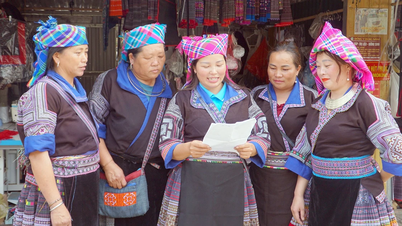
What can be done to ensure that the people can earn income from the heritage created by their ancestors, a legacy passed down from generation to generation among the Hmong people? Through their farming practices, the people have created and continue to preserve this special national monument; therefore, they rightfully deserve to benefit from it. Or is sustainable development only possible when the heritage becomes an asset? This is a concern that the Party Committee and the government of Mu Cang Chai commune are seeking to address.
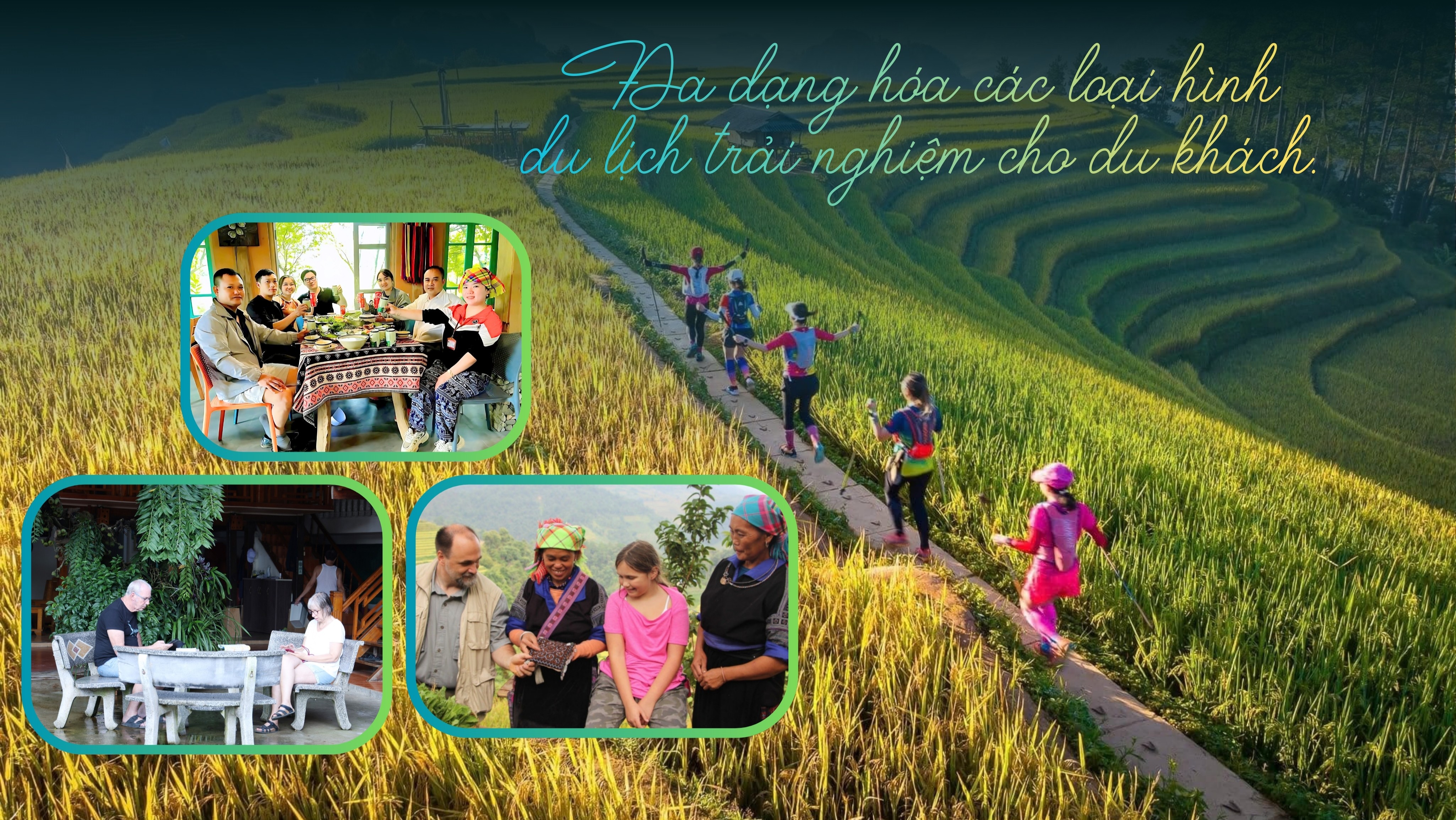
Regarding the terraced rice fields, the commune also hopes for policies to support people with rice seeds and fertilizers, not only to maintain production on the terraced fields but also to contribute to creating a scenic landscape for tourism development; at the same time, it hopes that people will build viewpoints in accordance with the planning, helping to improve the lives of the people.
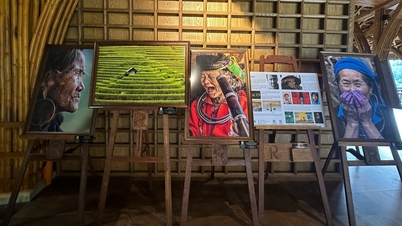
In the long term, the commune will continue to focus on planning, investing in transportation infrastructure, digitizing tourism, promoting communication and advertising activities, and encouraging people to develop tourism service businesses; researching the idea of establishing a group of Mong households to build an ethnic cultural space to display and preserve Mong culture, creating a breakthrough for local tourism development. It is hoped that if the idea succeeds and attracts more tourists, the people will have more opportunities to do business in services and sell local agricultural products.
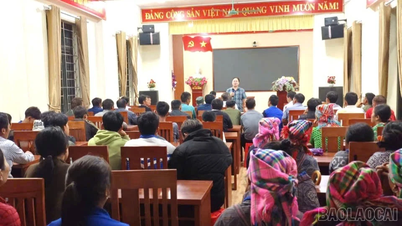
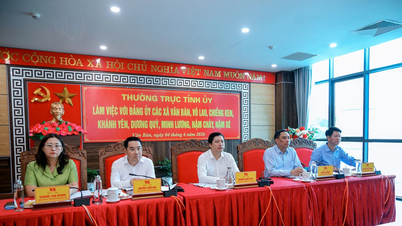
To concretize these ideas and aspirations for development, the Party Committee of Mu Cang Chai commune has issued a specialized resolution on the development of tourism in Mu Cang Chai commune for the period 2025 - 2030, setting the goal of striving to make Mu Cang Chai commune a key tourist destination of Lao Cai province by 2030, a destination that is "unique, safe, and friendly".
To achieve this goal, the commune's Party Committee has identified the need to create a breakthrough in thinking about developing tourism as the top priority; attract investment in the trade and service sectors in the commune's central cluster; build eco-tourism, community-based tourism, resort tourism, and unique cultural tourism destinations and products; implement tourism digitalization, and develop sustainable tourism (four-season tourism).
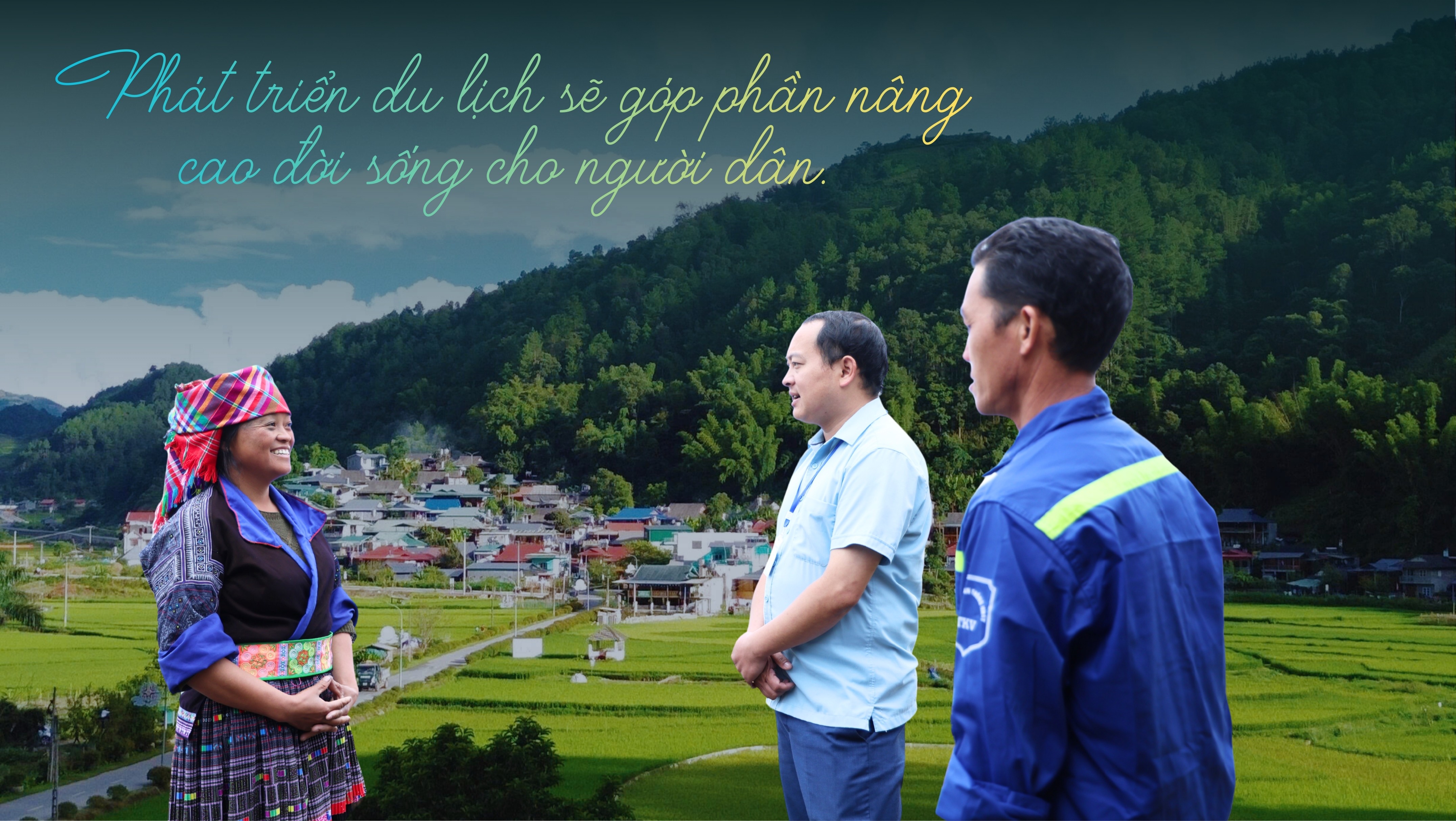
Speaking with us, the Party Secretary of Mu Cang Chai commune, Giang A Cau, said: "The locality has beautiful scenery, a cool climate, rich resources, and a rich culture, which are favorable conditions for tourism development."
Currently, the locality also has conceptual plans and specific development orientations for each area. Importantly, Mu Cang Chai cannot develop on its own; we are well aware of that. Therefore, we will have to strengthen efforts to attract investors to partner with us, build infrastructure, and create new tourism products, such as: building a cable car to view the terraced rice fields; building resorts, for example… But Mu Cang Chai will have to be very cautious, learning from the experiences of other localities as we go, ensuring that tourism development does not disrupt the unique landscape.”
Another weakness of Mu Cang Chai affecting tourism development is its accommodation infrastructure. Currently, the capacity only accommodates about 3,500 guests per day and night. During events and festivals, when the number of tourists increases, there is a shortage of food and lodging. The commune has already planned to prioritize the development of surplus land into commercial and service areas. They are calling for investors to build proper accommodation infrastructure to meet the target of welcoming 500,000 tourists by 2030.
The ideas concretized in the thematic resolution of the Mu Cang Chai Commune Party Committee demonstrate a spirit of innovation, daring to think, daring to act, and daring to take responsibility in preserving and promoting the value of heritage. Only when heritage is truly transformed into assets, when the people benefit from their own culture, can Mu Cang Chai steadily move forward, becoming a destination that is "distinctive, safe, and friendly," contributing to the continuation of the prosperity story in this sun-drenched, windy "land of dry wood."
Presented by: Huu Huynh
Source: https://baolaocai.vn/mu-cang-chai-and-the-aspiration-to-become-a-tourist-destination-post891993.html




































![[Video] Sunset at Lap An Lagoon – Where the sun sets over the fishing nets](https://vphoto.vietnam.vn/thumb/1200x675/vietnam/resource/IMAGE/2026/05/31/1780192137701_beach-landscape-sea-water-nature-grass-745871-pxhere-com.jpeg)




















Comment (0)