I remember that trip; everyone on the boat was seasick, suffering for hours, but when we got to the island, everyone was cheerful and energetic. Everyone wanted to hug the soldiers, wanted to visit many places, lingering for a long time on each high point, each sandy beach, each rocky outcrop… places that have become legendary in the golden history of our homeland and in the sacred emotions of each of our people…
After that trip, I returned to Con Co Island more than a dozen times, still in the role of a reporter, witnessing many events and turning points in the civilianization process that transformed the once "invincible battleship" into a "jewel" at the cross-Asian gateway of my island homeland.
This time, on my trip to Con Co Island, I was an elderly tourist boarding the ship with nearly a hundred other people from various parts of the country. I had previously traveled on tourist boats from companies like Con Dao Express and Super Dong, from Vung Tau to Con Dao, from Ha Tien to Phu Quoc, and even to Hai Tac in the Southwest Sea, but the high-speed ferry from Cua Viet to Con Co Island gave me indescribable feelings. Perhaps the modernity of the vessel, the professionalism in the tourism approach, and the presence of tourists speaking all the accents of the North, Central, and South of Vietnam right here in my homeland made me nostalgic for my first trip to the island on that 33-horsepower wooden boat all those years ago…
 |
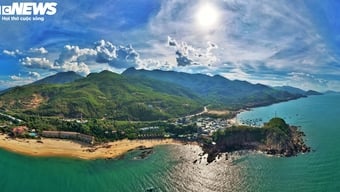
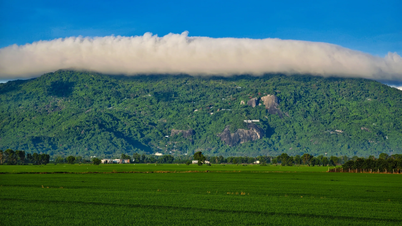
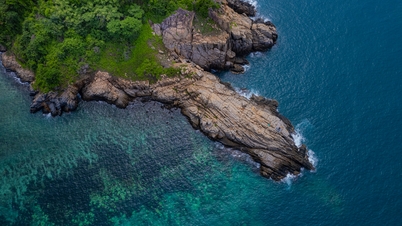
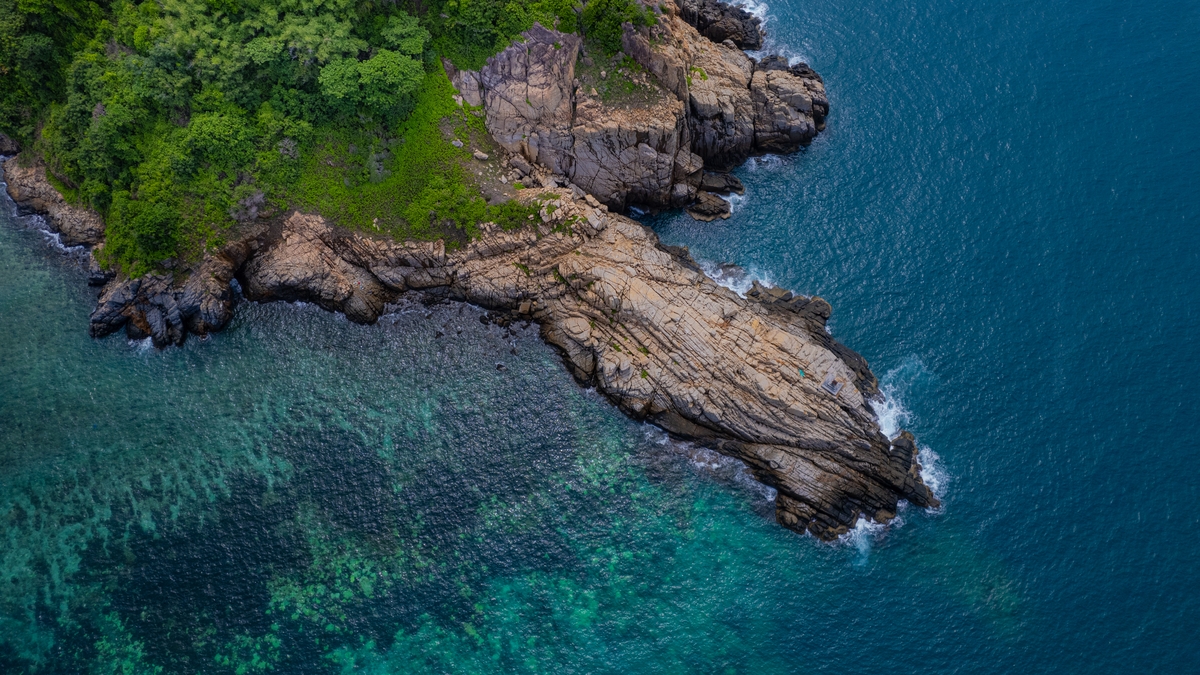
| A view of Con Co Island - Photo: D.NH |
By chance, I met Nam again, a true soldier from Con Co Island. He enlisted in 1992, stationed on Con Co Island, and rose through the ranks, from sailor to captain, from wooden ships to iron ships, specializing in supplying and transporting officials to the island for work. Con Co Island is so deeply ingrained in this soldier's blood and flesh that when the government called for the opening of a tourist route to Con Co Island, many investors came, operated for a while, and then gave up. Yet Nam still insisted on getting his family involved. Initially, they formed a partnership, but later the partners became discouraged and withdrew, but Nam still found ways to persevere.
And the Chín Nghĩa Quảng Trị boat, owned by his family company, has a capacity of over 150 people and is currently the most modern vessel on the Cồn Cỏ tourist route. Nam is passionate about Cồn Cỏ and understands every rock formation, every tree species, and every story about Cồn Cỏ, from the wartime period to research on the island's ecosystem. Having diligently traveled to and from Cồn Cỏ for nearly 35 years, if there were a poll, Nam would undoubtedly hold the record for the most trips to and from Cồn Cỏ in the entire country.
Con Co Island doesn't have hotels, but there are many official guesthouses run by government agencies and private homestays that can accommodate several hundred people. I chose a homestay far from the center, right by the sea, run by Tuan and Giang, a young couple who have been on the island for almost 10 years. Tuan is a diver, and Giang runs a variety of businesses, from homestay services and cooking for guests to processing and selling seafood and forest products from Con Co Island.
Here, experiencing the slow pace of life on Con Co Island for the first time, I realized I was admiring the island not in the uniform of a frontline soldier, but in the image of a handsome young man. Instead of taking the electric tram tour with the group of tourists, I rented a motorbike. At dawn, I climbed the lighthouse to watch the sunrise. At noon, I ventured into the forest to see the trees. In the cool afternoon, I rode around the island. In the evening, I sat on the rocky shore watching the waves. And at night, I joined the host couple and some of the islanders in building a campfire to grill large flying fish and all kinds of large and small snails. Then, while leisurely listening to stories about Con Co Island, I watched the fishing boats with their bright lights chasing schools of anchovies a few dozen meters from the shore…


Sadly, after driving for hours across Con Co Island during the day, I still don't know if I've visited all the once-famous landmarks. In the past, amidst the bombing and shelling, Con Co Island became known by names like: " Hanoi Battlefield," "Hai Phong Hill," "Ha Nam Area," "Ha Tay Area," "Huong Giang Beach," "Hi Ron Beach," and countless others yet to be mentioned. Each name of this homeland represents an incredibly fierce battlefield, but for the soldiers of Con Co, the entire nation seemed to have come together to support them in achieving victory!
It would be wonderful if the island's tour map clearly indicated the landmarks or included signposts with a brief introduction to the battleground, making it easier for tourists to learn about the glorious history of the "battleship" Con Co Island.
It's no coincidence that the ancients called Con Co Island "Thao Phu" (meaning "Pleasant Grass"). Once stripped bare by bombs and bullets, not a single tree remained, yet the fertile basalt soil miraculously regenerated the vegetation. The forest acts like a miraculous "nourishing cream," erasing the countless unsightly bomb scars on Con Co Island's face. Cycling into the forest, amidst the dense, multi-layered foliage, you'll encounter many ancient trees with trunks branching into numerous majestic, luxuriant branches, their gnarled roots bearing the marks of bombs and bullets. These "old timers" are the veteran soldiers of Con Co Island, who once bravely faced countless storms from the open sea, enduring the rain of bombs and bullets, bearing numerous wounds. Some were uprooted by artillery fire, others were blown up by bombs, their roots exposed to the summer sun. But each tree—a soldier of Con Co Island—still silently oozes sap, clinging tightly to the earth, and when the bombing ceases, new shoots sprout, growing into ancient trees, serving as an example for the young forest life of the island today. It is said that Con Co Island has no groundwater, only surface water reservoirs thanks to the forest cover, so losing the forest means losing the water.
I remember once going to Con Co Island during the dry season. In the morning, the soldiers had to line up in front of a cistern to receive their water ration for washing their faces, each person only receiving one military-grade bucket. This water was mainly collected during rain or supplied from the mainland. Back then, near the current boat dock entrance, there was an old L-shaped well, which the Con Co soldiers called "L-shaped well." In the summer, the water trickled down, slightly sweet, but it was a treasure for the soldiers during the hot days. At one time, the "L-shaped well" was as famous as the stone crab on Con Co Island: "Con Co has the L-shaped well / Many young soldiers sit waiting for the water to come out."
Well L no longer exists, but it has become an indelible memory for the people of Con Co who once made sacrifices. Nowadays, with modern technology, drinking water can be filtered from seawater, but for the land and forests of Con Co, the only sustainable solution is to preserve natural reservoirs within the island. Perhaps the people of Con Co are aware of this, which is why, upon arriving on the island, visitors can see the words "Con Co Green" right at the harbor entrance.
 |
| Tourists check in on Con Co Island - Photo: D.NH |
The young people on Con Co Island are intimately familiar with the process of civilian development on the island, recognizing the three key areas of growth: the marine economy, encompassing tourism and fisheries logistics; the ecosystem, including pristine vegetation, rare coral reefs, and marine biodiversity; and its strategic importance as a forward outpost for national defense and security. They also understand that while these advantages are immense, exploiting them is extremely difficult!
I remember that 20 years ago, a leading Cuban expert on coastal tourism planning visited Con Co Island. With 30 years of experience in dozens of tropical coastal countries, Mr. Abelardo proposed minimizing pressure from people and building density to preserve the island's pristine nature, thus ensuring true ecotourism. However, the estimated investment would be at least $30 million. It was indeed a daunting challenge for a poor province…
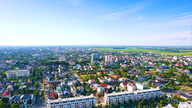
It is said that Con Co Island's advantage over many other islands lies in its pristine nature – the foundation for developing a unique ecotourism model that competes not on the number of visitors, but on the value of distinct experiences. However, upon setting foot on Con Co, I still felt a sense of hesitation and regret. This was because I witnessed many wide, modern paved roads, including dual-lane roads with solid median dividers, accommodating multiple cars and trucks, much like those in the center of a bustling city on the mainland. The story of small houses nestled under trees or perched precariously on rocky shores, along with stone and gravel paths for bicycles and horse-drawn carts, harmoniously blending with nature – a vision that the Cuban urban planning expert envisioned for me back then – will probably remain just an idea…
Goodbye, Con Co Island. I'll always remember the flowerbed shaped like two hands cupping and tenderly tending to a cluster of vibrant red flowers along the path leading to the harbor. I also gazed intently at a group of little girls in colorful dresses, happily cycling around the central lake of the island as if strolling through a park, a strangely peaceful feeling. They reminded me of a time I went to the island to write an article titled "Birthplace: Con Co Island," to tell the story of the first baby born there, a symbol of civilianization on this frontier island, which years ago was only covered in military uniforms, known as a "battleship" or a "fortress." Then, vaguely, I thought, maybe one of those little girls in the cycling group called my subject back then "Mom" too!
Hoa An
Source: https://baoquangtri.vn/du-lich/202606/mua-di-con-co-89a210c/
![[Photo] Opening Ceremony of the 13th National Congress of the Ho Chi Minh Communist Youth Union](https://vphoto.vietnam.vn/thumb/1200x675/vietnam/resource/IMAGE/2026/06/24/1782286753905_ndo_br_1-8510-jpg.webp)
![[Photo] General Secretary and President To Lam attends the Central Public Security Party Committee Conference](https://vphoto.vietnam.vn/thumb/1200x675/vietnam/resource/IMAGE/2026/06/24/1782302063612_a1-bnd-9302-9166-jpg.webp)
![[Photo] The 13th National Congress of the Youth Union conducts personnel work.](https://vphoto.vietnam.vn/thumb/1200x675/vietnam/resource/IMAGE/2026/06/24/1782299943080_ndo_br_1-6868-jpg.webp)