

In recent years, Thac Ba Lake has become increasingly vibrant with experiential tourism tours and boats traveling back and forth carrying goods and passengers. Joining this bustling activity, the people living along the lake have found their own way of cultivating the muddy land that has emerged after months submerged. As the water recedes, they plant crops, and rows of watermelons, cantaloupes, and honeydews gradually cover the alluvial plains, signaling a bountiful harvest.
Every year, from January to June, when the water level of Thac Ba Lake recedes, the alluvial plains along the lake gradually become exposed. This loose, humus-rich, and sufficiently moist soil is ideal for watermelons, cantaloupes, and honeydews – the kind of soil that watermelons, honeydews, and other similar crops thrive better than any other. The Dao and Tay ethnic groups in Yen Thanh, Bao Ai, and Cam Nhan communes recognized this early on. For the past 5-7 years, instead of leaving the land fallow or cultivating corn, peanuts, or beans as before, they have switched to growing melons – a short-term crop well-suited to the soil and offering significantly higher economic value.
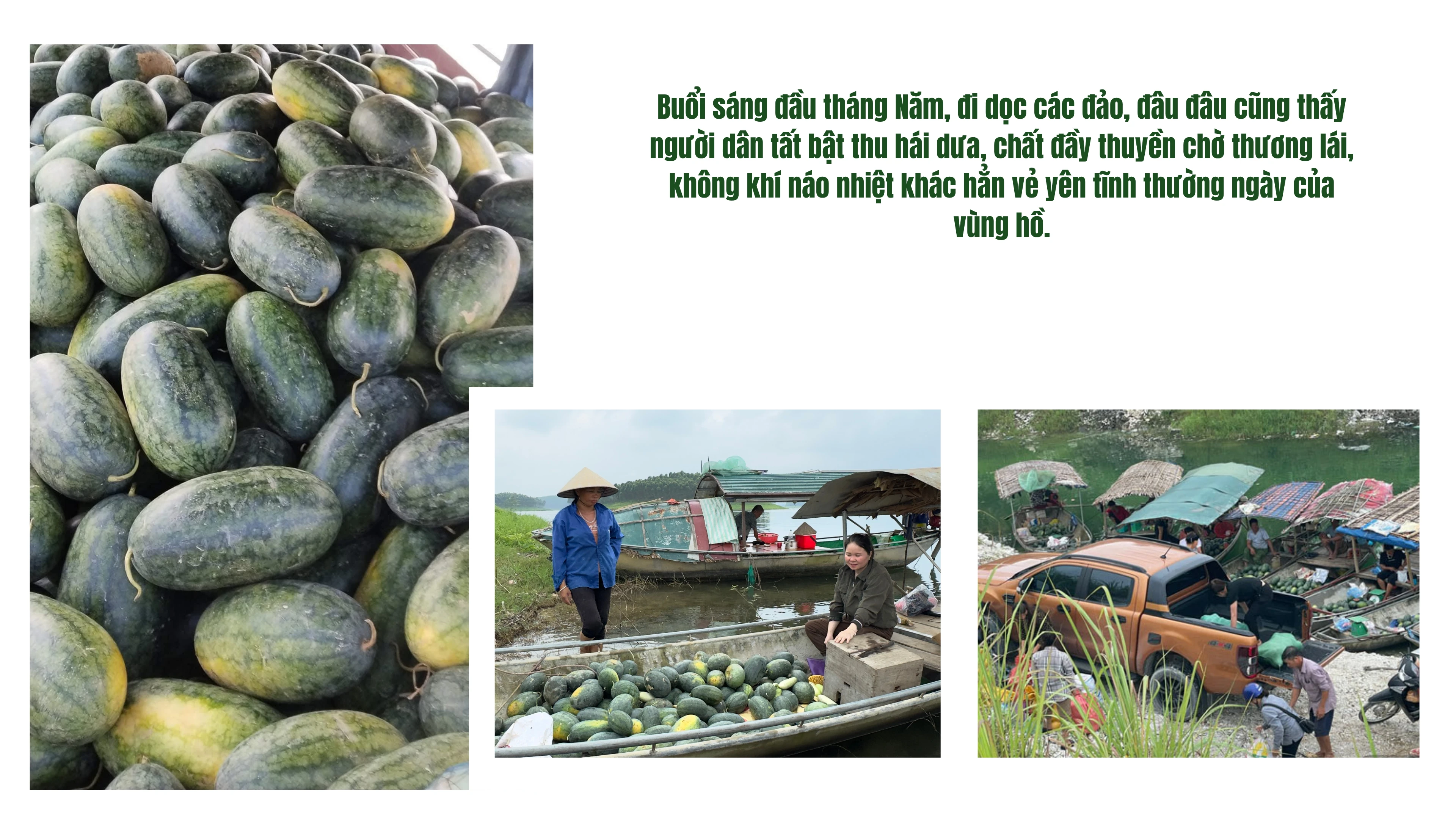
In Bao Ai commune, Ms. Ha Thi Hoan stands amidst her family's 3-acre watermelon field, gently turning each plump, round watermelon, her eyes filled with anticipation. In less than 20 days, the first harvest of watermelons will be ready. This field is the result of a long journey: in 2023, she and her husband tried planting 100 plants on a semi-flooded plot of land, and seeing that the watermelons grew well and produced consistent fruit, they decided to expand to 3 acres this year. Without formal guidance, Ms. Hoan learned from watermelon farmers in neighboring communes through trial and error, and then she and her husband worked together.
Growing melons in semi-flooded land requires more care and meticulous attention. From the beginning of the season, careful seed selection is essential, including germination, and preparing seedlings in pots. After 3-4 days, when the seedlings sprout, planting holes are dug. When the plants flower, manual pollination is necessary, leaving two fruits per vine; a well-cared-for plant can yield 4-5 fruits.
Ms. Hoan shared: “There are days when my husband and I go to the fields from early morning until late at night. Some households even build makeshift shelters to sleep by the lake to conveniently watch over the melons. This seemingly simple job requires just as much dedication and patience as rice farming.”
In Yen Thanh commune, home to the largest melon-growing area in the region, the low, interconnected hills appear as long stretches of green during peak season. Mr. Mai Van Hien is one of the long-time melon farmers here, having witnessed and contributed to the transformation of the entire area.
This year, his family only planted the melons a little over a month ago, but many of them are already plump and ready for harvest in about 20 days. He said that previously, his family only dared to plant about 100 plants to see if the soil was suitable, and seeing the positive results, they boldly expanded to 3 acres this year.
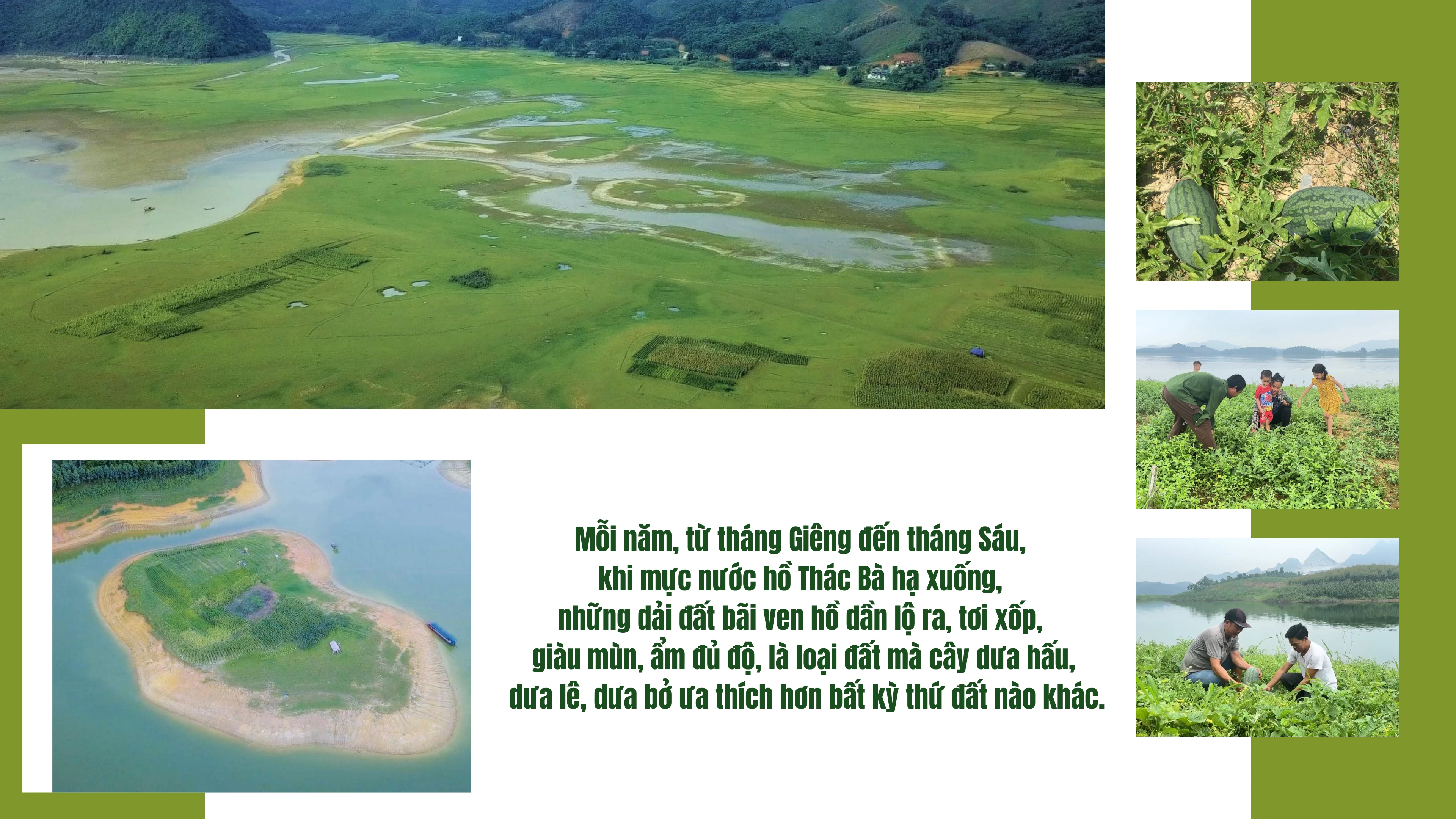
Also in Yen Thanh commune, members of the Hoang Long Cooperative are actively caring for and evaluating the melons this season, with plump, round melons lined up in long rows, waiting for harvest day.
Along with traditional watermelon cultivation as the main crop, the cooperative has also boldly experimented with seedless watermelons on a portion of its land – the fruits are round and uniform, weighing an average of 3-4 kg, with thin rinds, deep red flesh, and a sweet, refreshing taste. The selling price ranges from 50,000 to 60,000 VND/kg, four to five times higher than regular watermelons. If successfully replicated, this promises to further increase the production value for people living along the lake in subsequent seasons.
Mr. Nong Quoc Toan, Director of Hoang Long Cooperative, said: “The seedless watermelon variety has proven to be about three times more economically efficient than traditional watermelons, and is favored by the market for its sweet and refreshing taste. The cooperative has proactively linked production and consumption, signing guaranteed purchase contracts with partners to give people peace of mind to invest.”
In reality, selling melons from the lake region was not easy in the early days. Because the melon fields were scattered across islands and alluvial plains in the middle of the lake, each harvest required transporting the melons by boat to shore before transferring them to trucks for distribution. Since ripe melons didn't wait, they had to be harvested and transported immediately. Many households had to row their boats to the Mong Son and Yen Thanh docks to sell retail, accepting low prices due to the lack of timely distribution channels. Therefore, the emergence of the Hoang Long Cooperative, acting as a link and purchasing agent, helped people invest with peace of mind, without worrying about being forced to accept low prices.
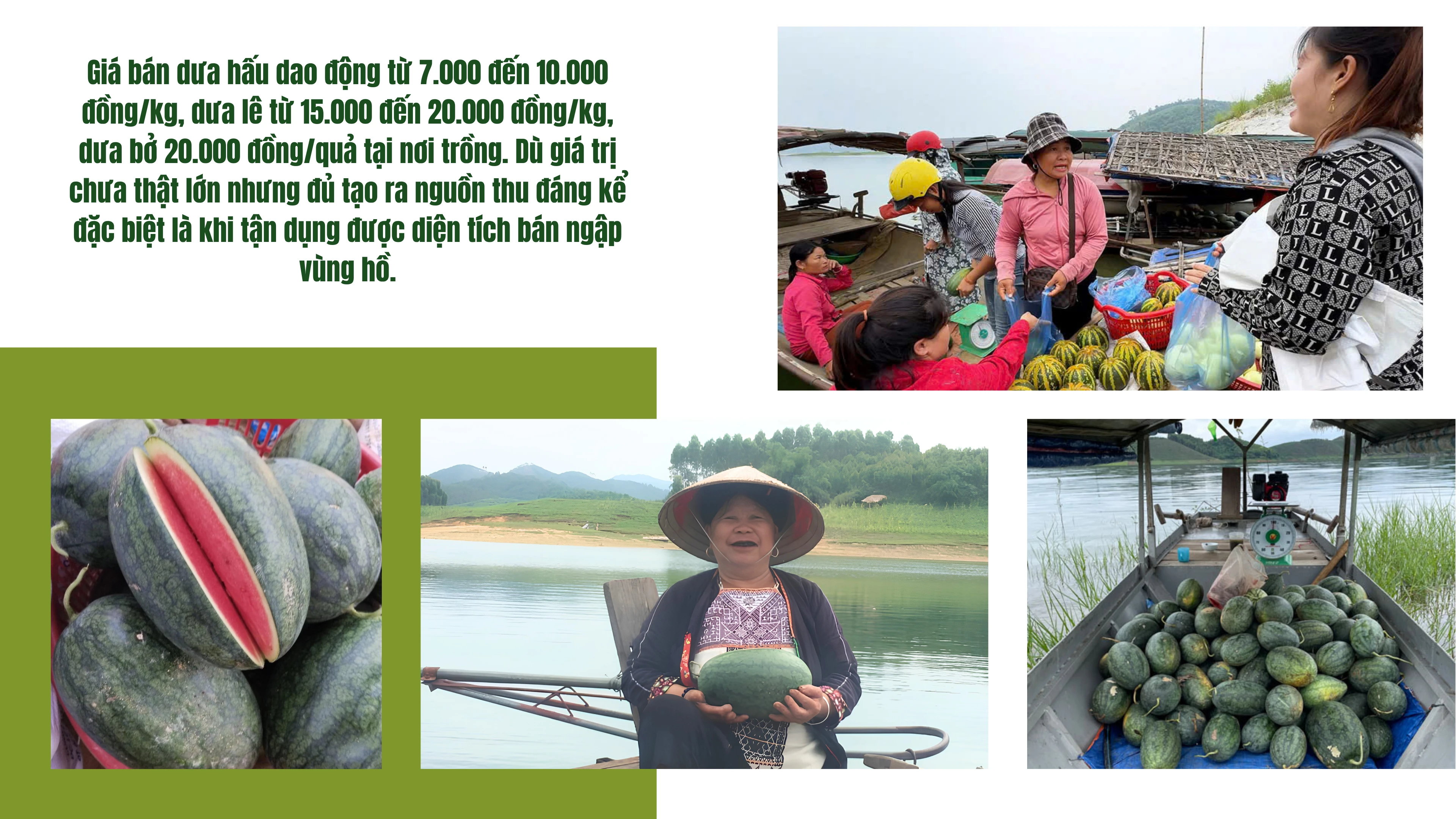
From the initial isolated models, the area of melon cultivation on semi-submerged land around Thac Ba Lake has now stabilized at nearly 100 hectares, concentrated in Bao Ai, Thac Ba, Yen Thanh, and Cam Nhan communes; the estimated yield is about 30 tons/ha.
More importantly, knowledge about melon cultivation is spreading and accumulating season by season. From experiences learned from neighboring communes, from anxious trials with a few hundred plants, people in the lake region have gradually mastered the techniques of cultivating this special type of soil and begun to expand to neighboring inland areas. Local authorities are also actively involved, promoting crop diversification, coordinating with specialized agencies to organize technical training, so that melon cultivation, which was initially spontaneous, is gradually becoming more systematically oriented, aiming towards the formation of large-scale commercial production areas.
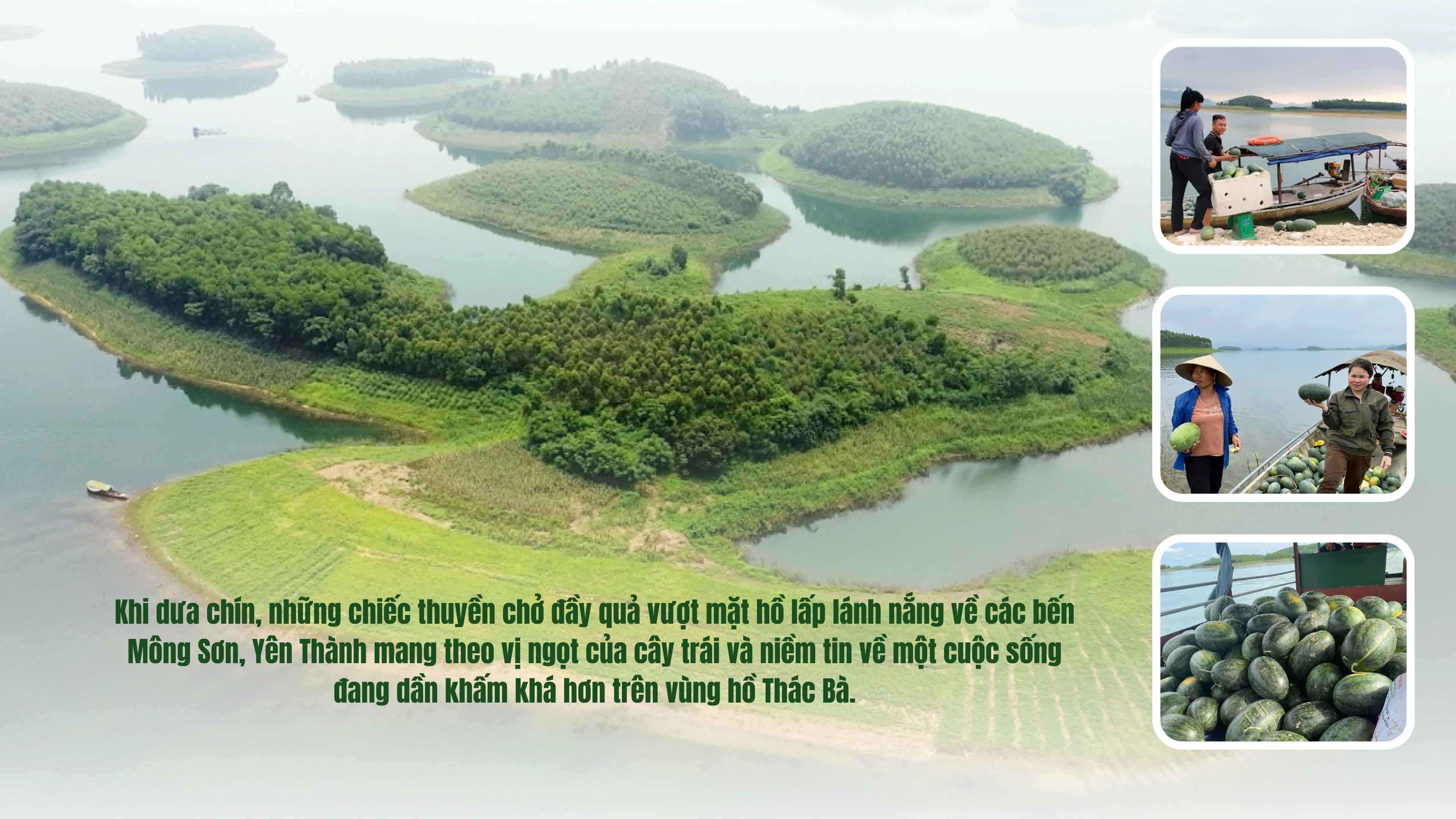
Each time the water recedes on Thac Ba Lake, the semi-submerged land, ablaze with red silt, quickly transforms into lush green melon fields. The Dao and Tay ethnic people here have adapted to nature, tamed the soil, and mastered the rhythm of the lake's rising and falling water levels to create their own cultivation cycle; some build shelters to sleep by the lake while tending their melons, while others row boats out to check on their gardens from morning till night, diligently and patiently working amidst the vast expanse of water.
When the melons ripen, boats laden with fruit glide across the sun-drenched lake to the Mong Son and Yen Thanh docks, carrying with them the sweetness of the fruit and the hope for a gradually improving life in the Thac Ba lake region.
Presented by: Thuy Thanh
Source: https://baolaocai.vn/mua-dua-tren-vung-ho-thac-ba-post899253.html

![[Photo] National Assembly Chairman Tran Thanh Man working with the Standing Committee of the Law and Justice Committee](https://vphoto.vietnam.vn/thumb/1200x675/vietnam/resource/IMAGE/2026/05/21/1779378929214_ndo_br_1-4610-jpg.webp)
![[Photo] General Secretary and President To Lam presides over a working session with the Central Policy and Strategy Committee on the development of the materials industry.](https://vphoto.vietnam.vn/thumb/1200x675/vietnam/resource/IMAGE/2026/05/21/1779359935432_a3-bnd-3129-1412-jpg.webp)













































































Comment (0)