Children in the countryside happily play together. Photo: THUY TIEN
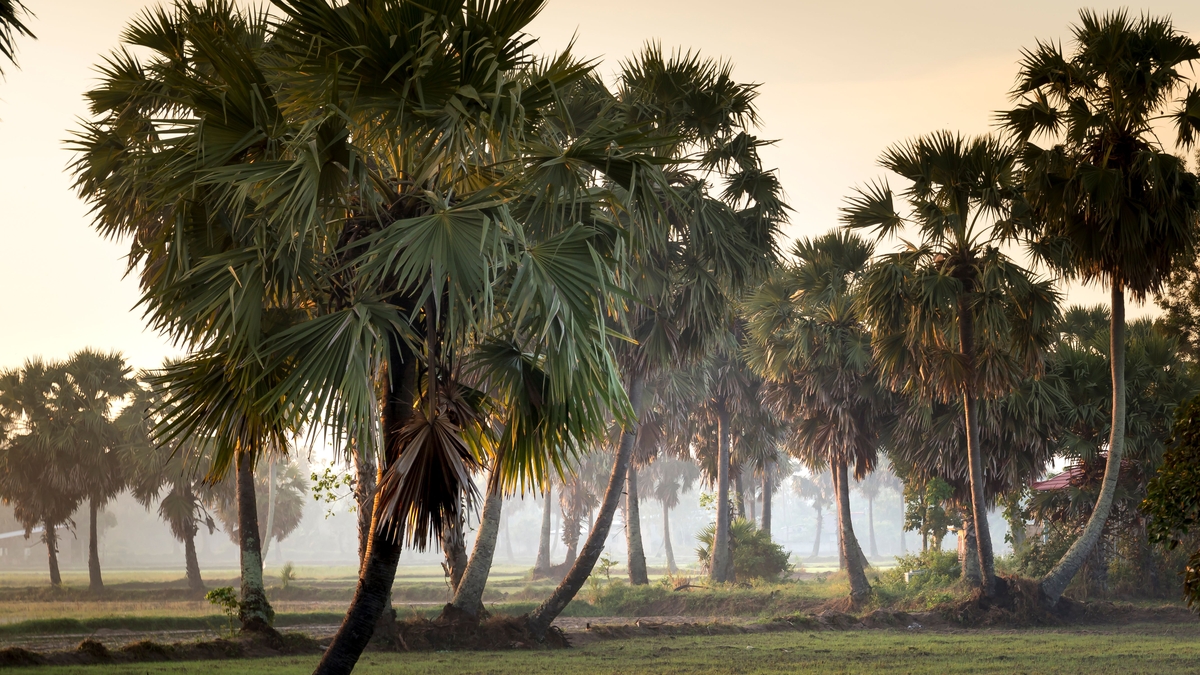
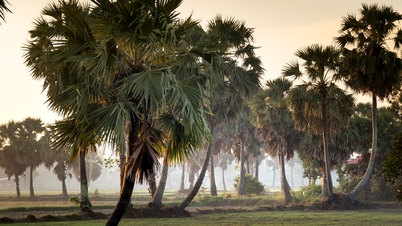
Around 3-4 PM, when the sun is gentle, many rural areas become lively with the cheerful calls of children. Expensive toys or luxurious spaces are unnecessary; a spacious yard, an open field, and a few bricks or pieces of wood to draw squares on the ground are all it takes for childhood games to begin. In many rural areas, the image of squares drawn on cement or dirt yards for the hopscotch game is familiar, especially during summer vacation. Each child skillfully hops across the squares on one leg amidst the cheers and encouragement of their friends.
Vo Huynh Bao Chau, a resident of Vinh Tuy commune, said that during the first few days of summer vacation, she stayed home watching TV. She was invited by older children in the neighborhood to play hopscotch, and she joined them every afternoon. “At first, I threw the hopscotch sticks wide or fell, but now I know how to balance and jump to the last square. Playing with my older siblings is much more fun than staying at home,” Bao Chau said.

The game of "u" (a traditional Vietnamese children's game) also attracts many children. The shouts, the quick runs to protect teammates or to outrun opponents make the village courtyard lively every afternoon. According to Danh Duc Anh, a resident of Vinh Phong commune, this game is not only entertaining but also helps him develop a competitive spirit with his older siblings and friends. "During summer vacation, I get bored staying home and watching my phone too much. Every afternoon, I arrange to meet my friends and older siblings to play 'u' in the yard. This game is very fun because we get to run, jump, and meet friends. I'm very sad if it rains and we can't play," Duc Anh confided.
According to many parents, the most noticeable aspect of folk games is the bonding they foster among children. Each game has its own rules, requiring participants to agree on how to play, wait their turn, cooperate with friends, and accept the outcome of winning or losing. During playtime, minor disagreements may arise, but they are usually quickly resolved through compromise and the children's infectious laughter. Through folk games, children gradually develop communication skills, a sense of teamwork, and appropriate behavior towards their friends.
Besides being entertaining, these physical games also contribute to improving health. Running, jumping, balancing, and quick reflexes in each game help children develop physically in a natural way. This is also a time for children to step away from phone and TV screens and immerse themselves in nature. Thus, the summer vacation becomes a meaningful time for children to have fun, improve their physical fitness, and gain experiences connected to rural life.
For adults, watching children play evokes childhood memories. “After a year of studying, summer vacation is a time for children to play and socialize with friends instead of just staying indoors and studying. My family always encourages and creates opportunities for our children to go outside to play with friends and explore nature. Seeing them happy, healthy, and more active makes the family very happy,” said Ms. Thai Hong Nhung, a resident of Vinh Phong commune.
A child's summer doesn't necessarily have to involve long trips or modern amusement parks. Sometimes, all it takes is a yard, a few friends, and familiar games for them to have a fun and meaningful summer .



Source: https://baoangiang.com.vn/mua-he-cua-tre-vung-nong-thon-a490961.html
![[Image] National conference summarizing one year of operation of the overall organizational model of the political system, the three-tiered government model.](https://vphoto.vietnam.vn/thumb/1200x675/vietnam/resource/IMAGE/2026/07/01/1782882811691_ndo_br_1-jpg.webp)