

In Nghe An province , during July and August, people in Ky Son district go into the forest to pick wild-growing bo bo fruit or harvest cultivated plants, selling them for 5,000-7,000 VND/kg for medicinal purposes.
On an afternoon in early August, 43-year-old Moong Thi Van, residing in Huoi Tu commune, Ky Son district, along with her two daughters, carried baskets, sacks, and machetes into the forest 2 km from their home to harvest bo bo (a type of wild vegetable). This is a seasonal job for her family every autumn.
In the tens of hectares of forest in Huoi Tu commune, there are many bo bo trees growing under the canopy of timber trees. The trees are about 2 meters tall, with leaves 10-40 cm long. When harvesting, people have to use a stick or a knife with an anchor to hook onto the branch and pull it down, cutting off the section with the fruit. The bo bo fruit is round, 2-3 cm in diameter. People usually separate the fruit immediately and put it in a bamboo basket to carry home.
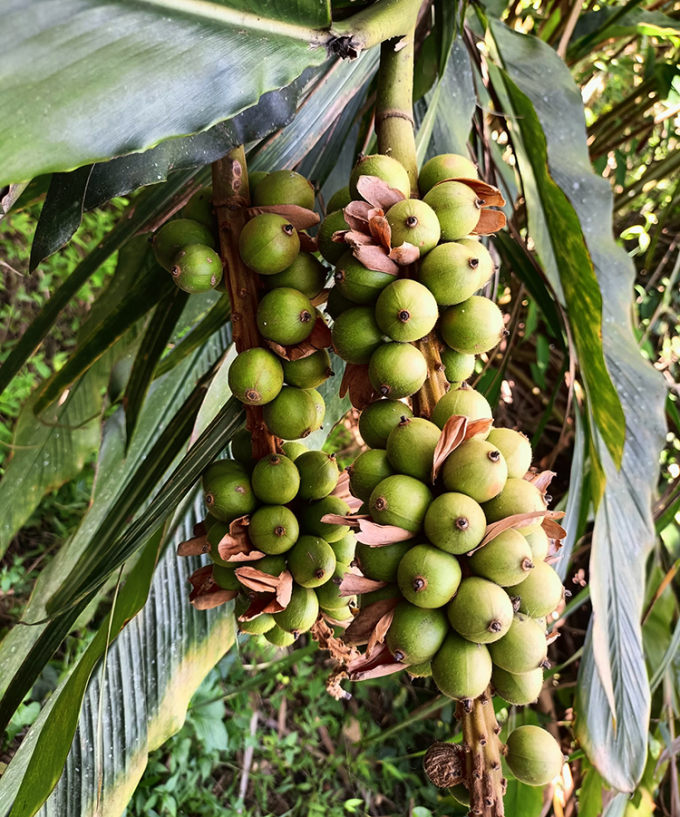
The bo bo plant grows abundantly in the natural forests of Ky Son district. Photo: Hung Le
For the past two weeks, every time she went into the forest, Ms. Vân always brought rice and food. At noon, she spread out a sack and sat down with her two children in the middle of the forest to eat and rest for a few dozen minutes, then continued working. With the broad-leaved, fruit-laden bo bo plants, the three of them worked together to harvest. On average, each person harvested 20-30 kg of bo bo per day.
"Picking sorghum from the trees is simple, but carrying it home is quite strenuous because the mountain roads are steep, and we have to cross rivers and streams, so we need to concentrate and maintain balance. If we slip and fall, it's easy to get injured, and all the sorghum will be spilled," said Ms. Vân.
In the mountainous region of Nghe An, people only grow rice once a year. During the off-season, they often work as laborers, such as construction workers or porters, while some go to the South to make a living. Van and her mother go to the forest to harvest sorghum to supplement their income.
Mr. Mua Ba Chu, 52 years old, residing in Tay Son commune, said that in addition to harvesting fruit from natural forests, people also utilize barren hillsides to plant 1-3 hectares of sorghum per household. From planting seedlings to bearing fruit takes about 2-3 years. After the harvest season, the old plants dry out and new shoots develop, with a life cycle of 6-7 years.
"My family cultivates 5 hectares of sorghum. This year is a good harvest, with one hectare yielding 30 quintals of fresh fruit, expected to bring in an income of about 20 million VND," Mr. Chu said.
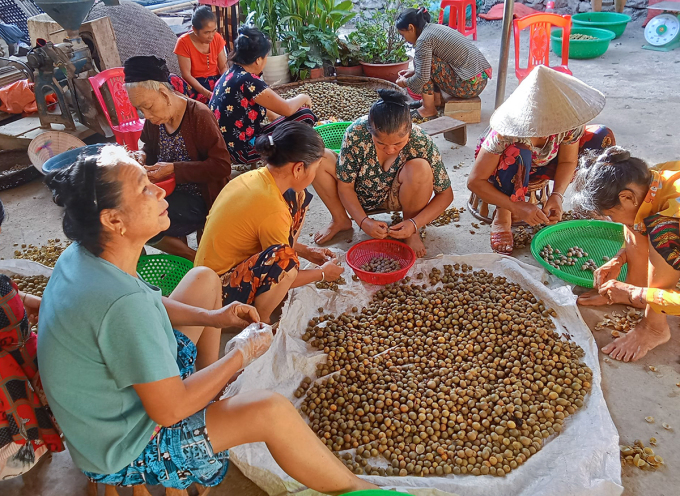
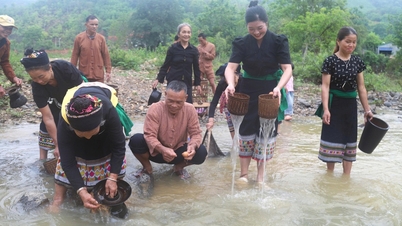
People in the mountainous region of Nghe An province shelled sorghum seeds in early August. Photo: Hung Le
After harvesting, the locals wash the seeds, put them in a special pot, boil them for 15-20 minutes, then take them out to cool, peel off the shells, and extract the seeds. In addition to family members, some households also hire people, paying them nearly 200,000 VND per day.
After shelling, the Job's tears seeds are dried in the sun for 3-4 days. During rainy or cloudy weather, people often dry them over a wood-fired stove. For every 10 kg of fresh Job's tears pods, after shelling and drying, 3-4 kg of seeds are obtained.
Every day, traders drive motorbikes into villages in Ky Son district to buy Job's tears. A kilogram of fresh pods costs 5,000-7,000 VND, while dried seeds cost 40,000-50,000 VND. "Every day I buy about 500 kg of dried Job's tears. The goods are brought back to Que Phong district for collection according to orders from partners," said Lo Thi Thanh, 32, a trader in Huoi Tu commune. Job's tears are then transported to the North for partners to use as medicinal herbs.
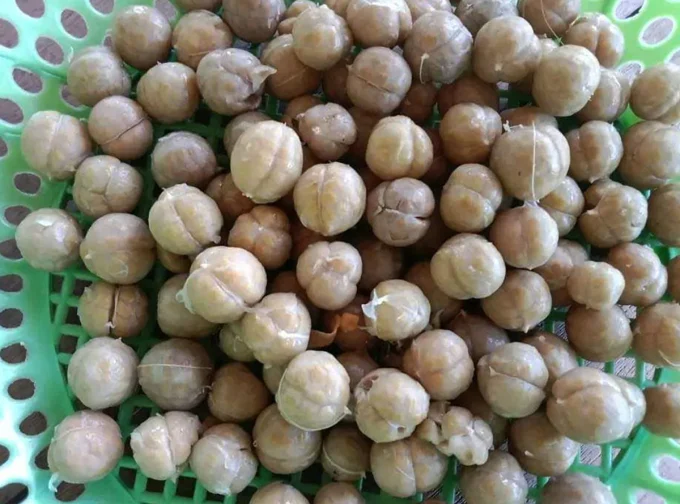
Job's tears after being shelled. Photo: Hung Le
The entire Ky Son district has over 1,000 hectares of sorghum, of which 672 hectares are protected and cultivated, and over 250 hectares are cultivated by local people, concentrated in communes such as Huoi Tu, Tay Son, Na Ngoi, Nam Can, Nam Can... In 2022, the total sorghum grain production of the district reached 722 tons, bringing considerable income to many families.
Besides Ky Son, bo bo also grows naturally and is widely cultivated in Tuong Duong, Que Phong, and Quy Chau districts. In 2015, authorities launched a project to plant, cultivate, and conserve this plant in these districts, covering hundreds of hectares. It is considered a crop that helps alleviate poverty for people in the mountainous areas of Nghe An province.
Job's tears, also known as coix seeds, Job's tears kernel, Job's tears rice, and in some regions as pearl rice, is a plant with a mildly sweet taste. It is used to clear heat, nourish the lungs, and is commonly used to treat gastrointestinal inflammation, diarrhea, appendicitis, and other digestive disorders.
This medicinal sorghum grain is different from the sorghum grain – also known as millet or sorghum – that people commonly used as food decades ago.
Source link




![[Photo] General Secretary and President To Lam receives Amazon's Senior Vice President David Zapolsky](https://vphoto.vietnam.vn/thumb/1200x675/vietnam/resource/IMAGE/2026/05/22/1779466547770_a1-bnd-3513-6601-jpg.webp)













































































Comment (0)