

 |
She smiled, her deep eyes filled with a sky full of longing. This village, once swept away in the flood years ago, now resounds with the gentle murmur of reading every morning. For Lien, that reading was the call of spring, the call of life.
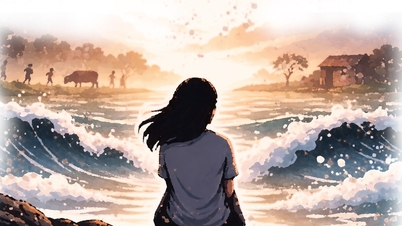
That day, when the flood came down, the whole village was submerged in a sea of mud. The mountains roared, the streams screamed, and the earth seemed to collapse. She only had time to hug her younger brother and rush towards the door, but the thick, viscous mud swept everything away. Her mother let out a cry, then disappeared into the muddy sea. Lien would never forget that cry.
When rescued, Lien was lying amidst a pile of mud. Before her eyes was a scene of devastation; houses had vanished, leaving only the bare stumps of ancient trees. She called out to her mother and younger sibling until her voice was hoarse. The only response was the muddy stream and the howling wind on the mountainside.
Two days later, the bodies of her mother and younger sibling were found. Her father, Mr. Pao, had just returned from a trip to the forest. Looking at the two newly filled graves, his eyes clouded with tears. He didn't cry; he just sat there, silently, as if turned to stone.
*
The old village was gone. The survivors were taken to another land. Soldiers, police officers, and volunteer youth came to help the villagers rebuild new stilt houses, distribute rice, and give out clothes. That winter, the hills were covered in white mist, but the pain still burned in people's hearts.
One night, Lien heard her father sigh by the fireplace:
- Your mother is gone, but this village cannot be lost. Mountains may crumble, but people must still build houses and continue living, my child.
Lien looked at the firelight reflecting on her father's face, his deep eyes seemingly containing the entire mountain range. She pushed more firewood into the fire and whispered:
"I want to teach the children to read and write, Father. So they can learn to read and write. So they can know the name of their village, the name of their mountain."
Mr. Pao pondered:
- No one in our village knows how to teach yet...
- I asked the border guards, and I'm going down to the lowlands to learn to read and write. I'll probably leave the village for a while.
She worried about her father having no one to care for him in the coming years. Mr. Pao remained silent for a long time, then nodded and sighed: "If your mother knew, she would surely be happy!"
With the help of the local authorities, Lien was able to get an education. After many years of perseverance, she studied while also helping to cook meals for a volunteer group. Time passed quickly, and she was able to return to her village.
Upon returning to the village, Lien requested a blackboard and several boxes of books and notebooks from the volunteer group. She went to the border guard station for help, and the political commissar agreed to immediately assign Comrade Manh, a newly transferred border guard, to work alongside her in helping build the classroom. Manh was from the lowlands, and since coming to work here, he had grown to love the village, the peace, and the children. The two of them mobilized the villagers to work together to build the first classroom near the stream for the children in the village. The class grew larger as Lien and Manh went from house to house, persuading each family to send their children to school.
One day, the two of them went to promote literacy, and by sunset, they were exhausted as they returned to the stream near the classroom. Looking together at the new house built with the hard work of so many people, the sounds of forest birds and the babbling stream were truly peaceful. Lien softly asked Mạnh...
- How do you find the lives of the people here? Will you be staying in this place for the long term?
"Yes, of course!" he answered decisively. "The people here have such a hard life. This village is in a strategically important area near the border with our neighboring country. It's a place with complex security issues, and the people are only connected to the forest and their fields. They're not even fluent in Vietnamese. I just hope to contribute in some way to building up this land."
Lien looked at him, her eyes like stars, filled with hope for her future.
On the first day, Lien wrote the Vietnamese name of the village on the blackboard.
She said, "This is the name of our village." Then the children all chimed in. Their voices echoed through the valley, joyful and bright.
*
But life wasn't easy. When winter came, the makeshift classroom was drafty. Notebooks got wet, chalk damp. Some days, the rain poured down, and the children had to walk across the stream to get to school. Some fell and got soaked, still clutching their notebooks tightly to their chests.
One day, Pá, the oldest student, tremblingly raised his hand and asked:
Teacher, after I learn to read and write, will I be taught the same way you are?
Lien patted its head and smiled:
- If you're not afraid of the rain, not afraid of the wind, and you don't give up... then it's okay.
She smiled sweetly, her eyes crinkling: "I'll study hard so I can teach my younger sibling."
Those words left Lien speechless. Suddenly, a small flame ignited within her.
But then, the following year's flood season arrived. A sudden, heavy rain lasted for three days. That night, the water rose, and the stream in front of the village roared violently. Lien rushed to the classroom to check if anything had been blown away by the wind. Her father called out to stop her, but Mr. Pao couldn't. Lien grabbed her lamp and braved the rain. The road was slippery, the wind lashed, and lightning flashed. When she arrived, she saw that a corner of the thatched roof had been blown off by the wind, and rainwater had soaked the blackboard.
"Lien, get out of the way!" Mạnh's voice rang out from afar. Mạnh, on night duty, was anxious about the classroom. He had hastily requested permission from his unit's leadership to go check the situation during the storm. He arrived just in time, rushing forward and pushing her to the ground as a tree fell right behind them. Rain lashed, mud splashed, and the lights dimmed. Both were soaked, lying sprawled in the mud. After a while, Lien opened her eyes and saw Mạnh lying beside her, breathing heavily.
"Mr. Mạnh! Are you alright?" She turned pale with worry.
- It's okay…! Is the class still open?
Lien looked around and saw that the blackboard was still intact, only wet, and the tree had fallen, destroying a corner of the classroom. She burst into tears.
- Yes, it's still there! The classroom is still standing, but a whole section next to it has collapsed!
He forced a smile: "It's good that you're okay!"
The next morning, the rain stopped. The villagers helped each other put back the rafters that had been crushed by the tree, repair the roofs, dry the books, and air out the tables and chairs. Lien stood in the courtyard, tears streaming down her face. Her father whispered:
- You see? Anything built with human kindness is not easily lost.
After those months, the classroom was given a new corrugated iron roof. Electricity was brought to the village, and life gradually changed. Everyone in the village contributed their labor and rice. Lien continued to teach regularly. She taught the children how to write their names and how to read poems about their homeland.
*
Years passed, and the village transformed... it now had roads and a modern school. On the day of the new classroom's inauguration, the villagers flocked in like a festival. Mạnh stepped onto the platform, his voice becoming serious.
Thanks to Ms. Lien and all those kind-hearted people, our village now has the sound of reading and laughter. Mountains may crumble, but words will never be washed away by floods!
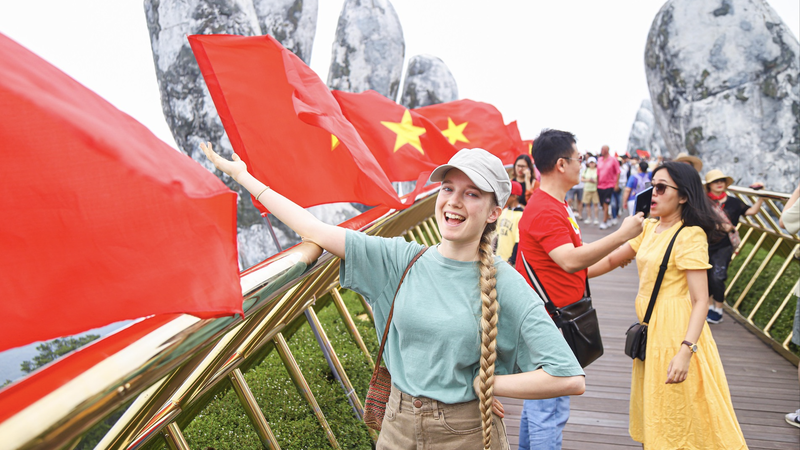
Applause echoed throughout the valley. The children cheered and ran around the classroom. The red flag with a yellow star fluttered in the early morning sun.
Lien looked up and saw that the mountaintop had turned green again, with young trees sprouting densely on the old ground. A bird flew by, singing a clear, melodious song.
That year, the village held a grand Tet festival. The sounds of flutes, drums, and laughter echoed throughout the mountains. Children wore new clothes, the elderly drank corn wine, and young people danced with flutes around the bonfire.
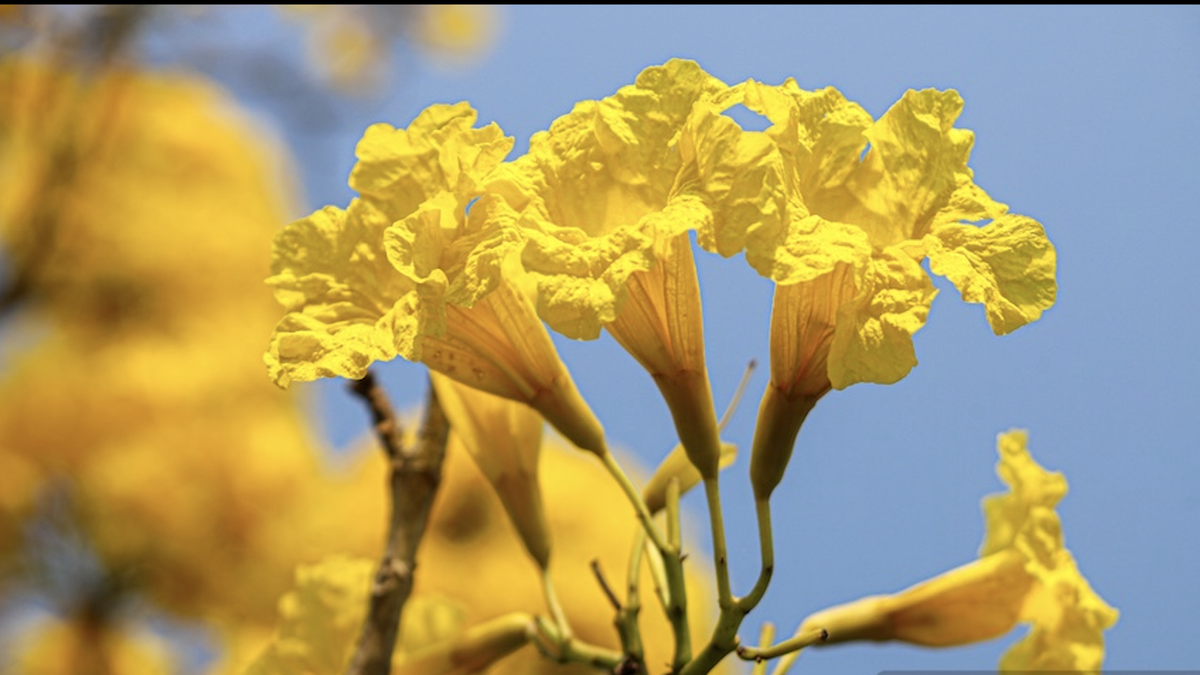
Lien wore the brocade dress her mother had left her, with peach blossoms in her hair, and walked amidst the dancing crowd. The lively sound of the festival drums blended with the sound of the flute calling for lovers. On the faces of the villagers, smiles shone brightly like the yellow mustard flowers in front of their houses.
And from those mountains and forests, amidst the Tet holiday, the call of spring resounds, warm, resilient, and breathtakingly beautiful.
Source: https://huengaynay.vn/van-hoa-nghe-thuat/tac-gia-tac-pham/mua-xuan-ve-tren-ban-moi-161324.html
![[Photo] Prime Minister Pham Minh Chinh receives the Chinese Ambassador to Vietnam](https://vphoto.vietnam.vn/thumb/1200x675/vietnam/resource/IMAGE/2026/04/05/1775397481797_ndo_br_dsc-5512-jpg.webp)































































Comment (0)