

In the past, Vietnamese people celebrated Tet (Lunar New Year) for an extended period, but the most important days were the first three days of the year, in the following order: The first day was for expressing gratitude to the father and paternal relatives; the second day was for the mother and maternal relatives; and the third day was for those who had taught and guided them.
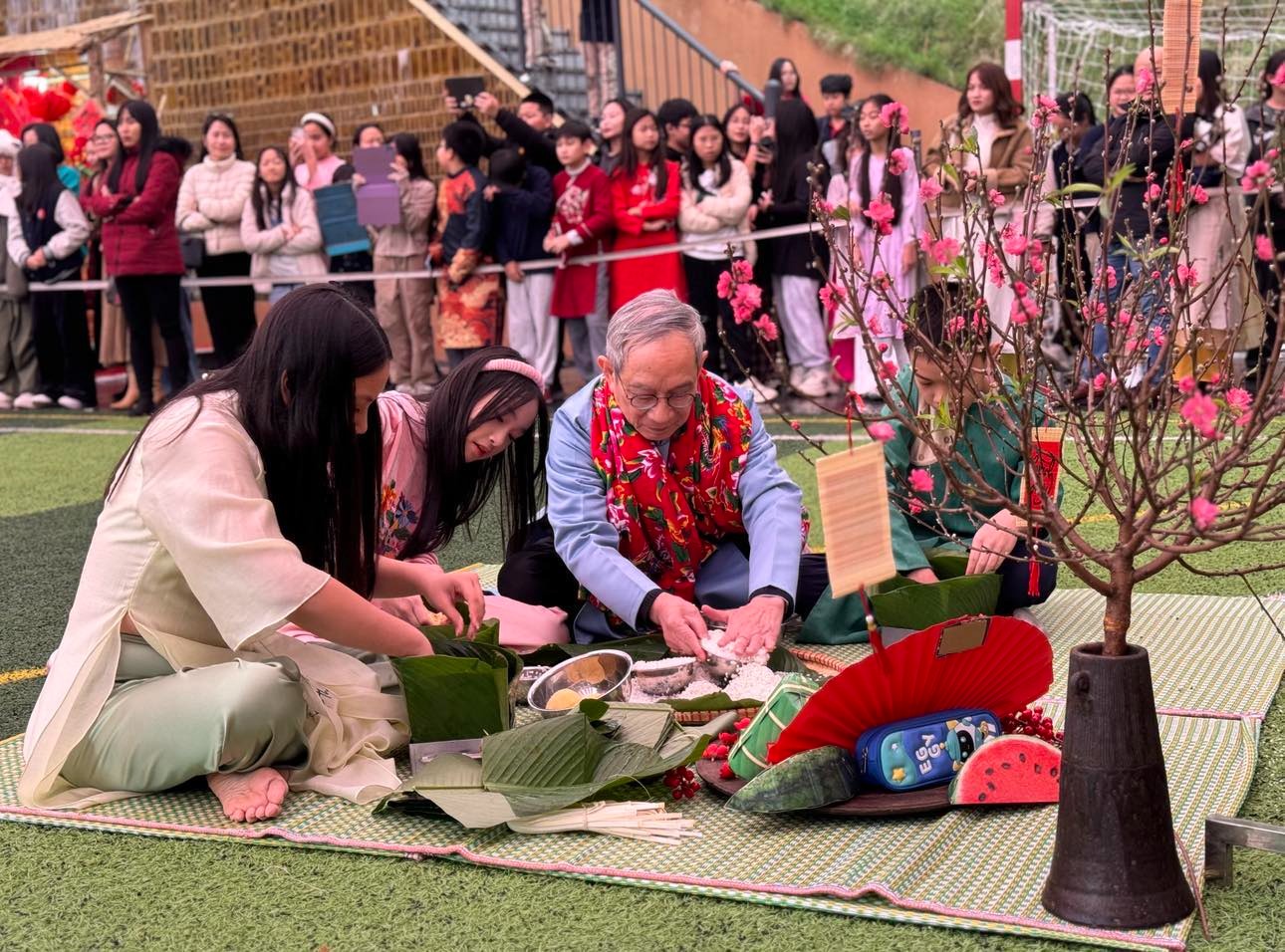
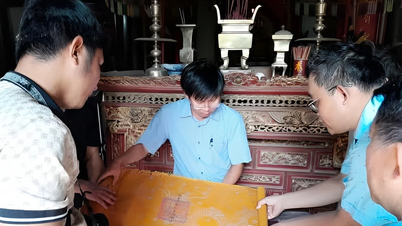
The joyful days of Tet (Lunar New Year) still hold images of teachers in the minds of the students. In the photo: Mr. Nguyen Xuan Khang, Principal of Marie Curie School ( Hanoi ), participates in making banh chung (traditional Vietnamese rice cakes) with his students.
Due to the characteristics of wet rice cultivation, the people of Southeast Asia have a tradition of valuing women. The folk verse "A father's merit is like Mount Tai/A mother's love is like the water flowing from a spring/With one heart, honor your mother and respect your father/To fulfill filial piety is the true duty of a child" clearly demonstrates this tradition of valuing women. Although the father is mentioned first, he is considered the "merit" and compared to a "mountain." The mother, though mentioned later, is considered the "love" and compared to "water." Merit can be repaid, and a mountain will gradually erode over time. Love cannot be repaid, and water will only grow fuller with time. The third part shows a clear difference: the mother is "worshipped," while the father is only "respected."
Regarding the order of priority between one's parents and one's teachers, celebrating Teacher's Day on Tuesday is reasonable. Many say this custom is influenced by Confucian education , but that's not entirely true. According to the hierarchical order of Confucian society, teachers are second only to the emperor and above parents (Emperor - Teacher - Father), not third.
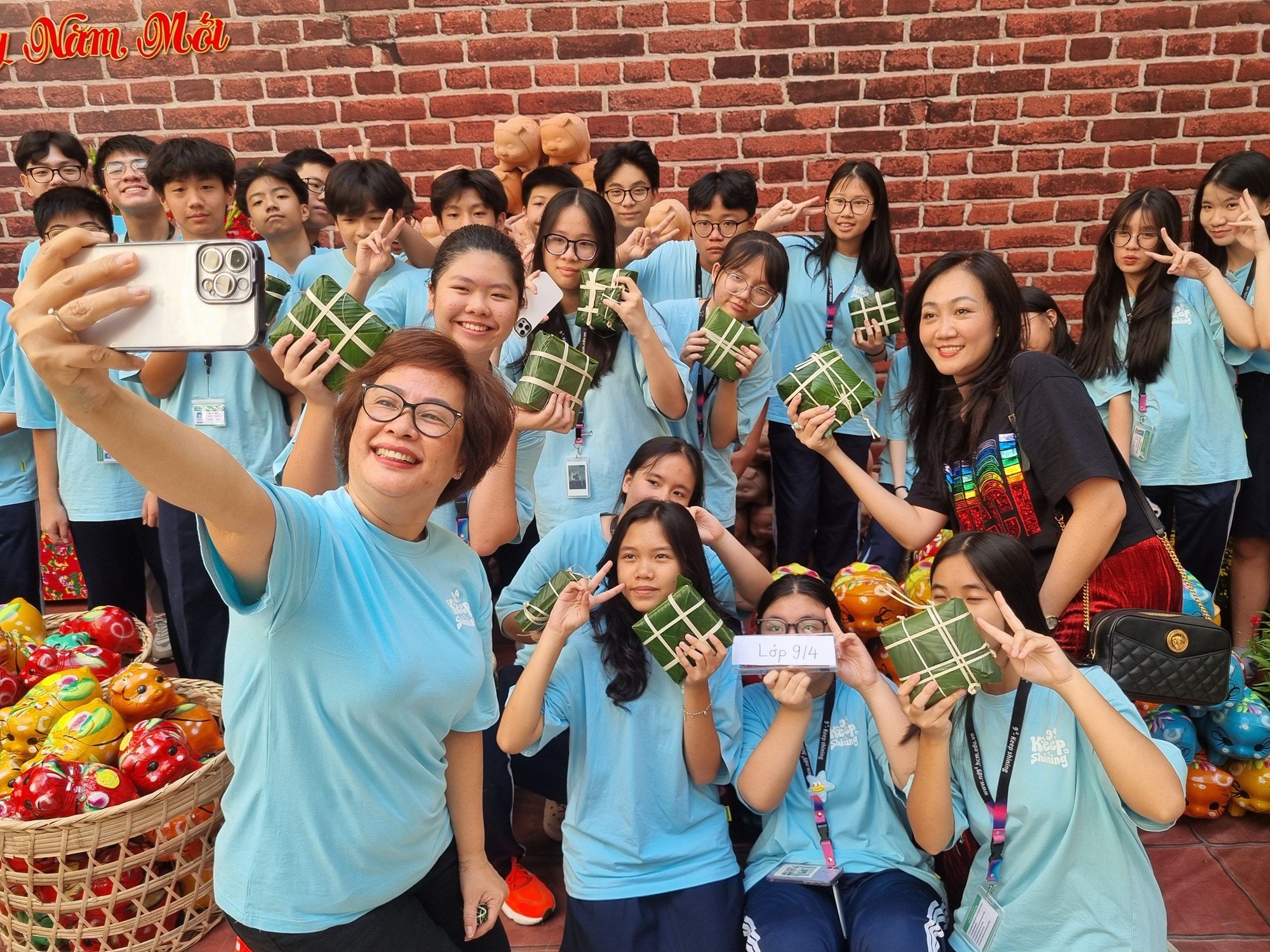
While the form may change, the teacher-student relationship has been preserved and developed by generations to suit the times.
PHOTO: DAO NGOC THACH
EXAMPLES OF RESPECTING TEACHERS AND MORAL RULES
In Vietnam, the scholar Chu Van An during the Tran Dynasty was a very strict teacher, with a resolute and straightforward personality. Any student who did something wrong was severely reprimanded by him, sometimes even denied entry. Many high-ranking officials, such as Pham Su Manh and Le Quat, had to stand with their arms folded when visiting him. In the democratic, village-based culture of Vietnam, such behavior might be considered overly rigid. However, the Chinese have a saying, "Without rules, nothing can be perfect." Because his straightforward submission of the "Seven Executions Memorial" was not accepted by the emperor, he resigned from his official position and returned home to teach. Thanks to his strict teaching, he trained many talented individuals for the country. Later generations regarded him as an exemplary teacher, the leading figure in Confucianism; he is the only Vietnamese person to be enshrined in the Temple of Literature.
During the Le-Mac dynasty, Trạng Trình Nguyễn Bỉnh Khiêm trained many famous students such as Phùng Khắc Khoan, Lương Hữu Khánh, Nguyễn Dữ… Even though they achieved great success and held high official positions, they still frequently visited Bạch Vân Hermitage to see their teacher. Upon hearing of the death of his teacher, Lương Đắc Bằng, he himself traveled from Hải Dương to Thanh Hóa to pay his respects and mourn for three years.
Master Dinh Van Nhung of Binh Dinh was the martial arts teacher of the three Tay Son brothers and even donated a herd of horses and much rice to the rebel army. However, when Nguyen Nhac became king, he returned to his hometown and begged his teacher to accept the title. The master resolutely refused, saying half-jokingly, half-seriously: "You are the king of the whole world, but to me, you are still just a descendant. It would not be right for a descendant to bestow a title upon their father."
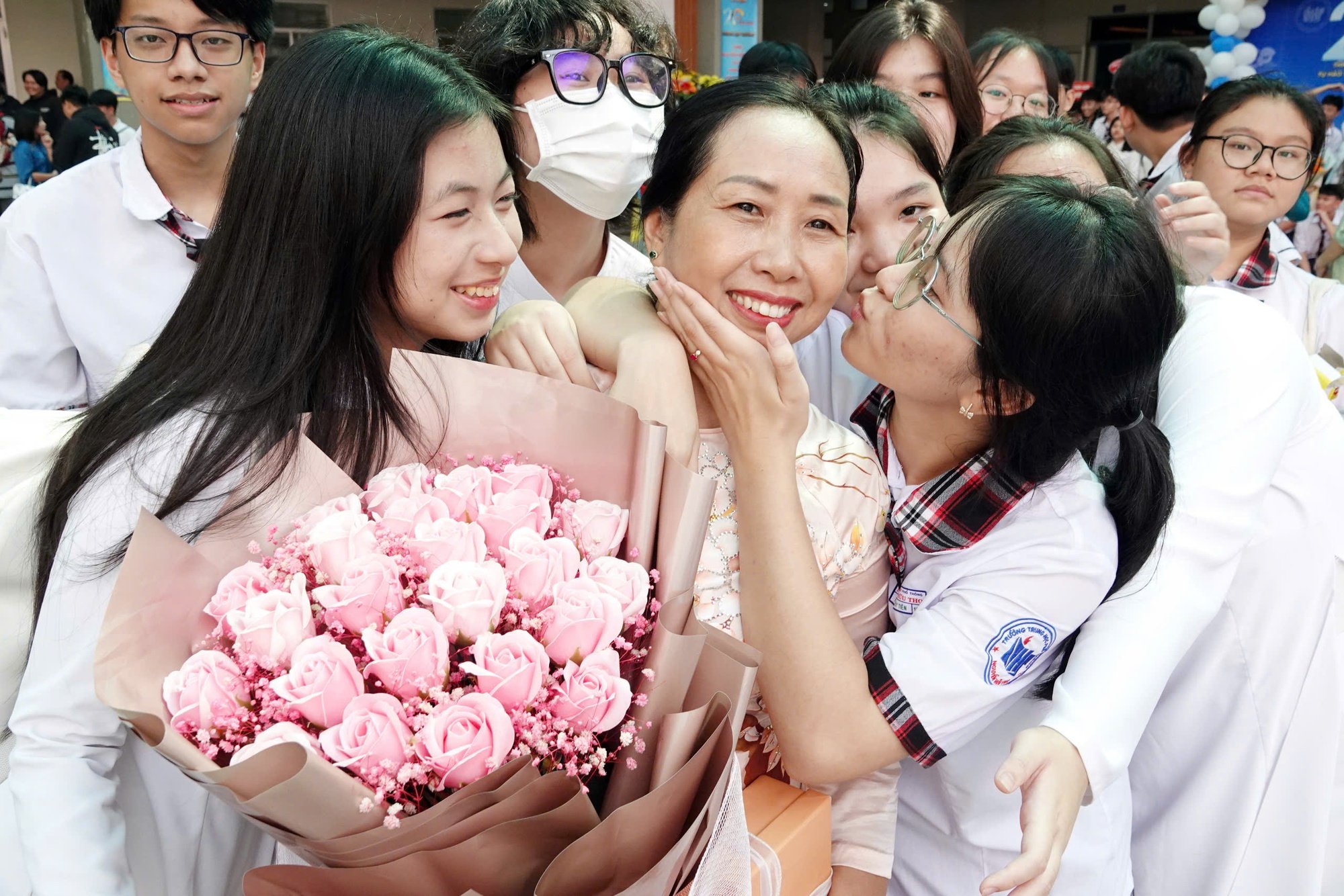
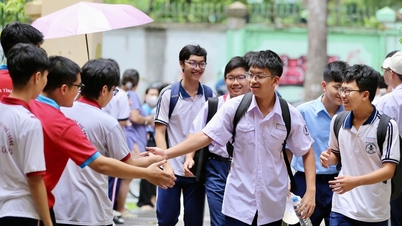
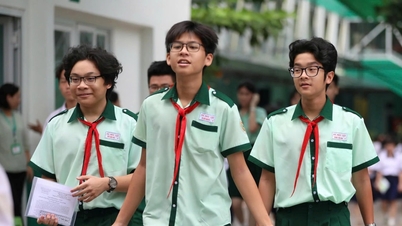
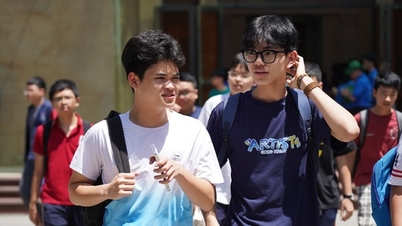
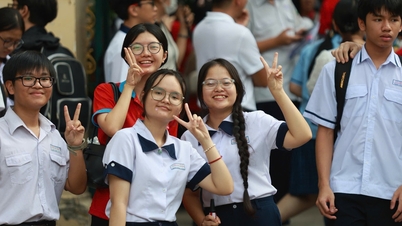
The tradition of respecting and honoring teachers is being continuously preserved by successive generations of students.
PHOTO: DAO NGOC THACH
During the Nguyen Dynasty, Phan Thanh Gian was a high-ranking official, yet whenever he traveled near his former teacher's hometown, he always visited him. Even when his palanquin was still far from his teacher's house, he would dismount and walk. King Ham Nghi, the leader of the Can Vuong movement, when captured by the French, steadfastly refused to acknowledge himself as king. However, upon seeing his teacher's figure in the crowd by the roadside, the king respectfully bowed, choosing to reveal his true identity rather than be disrespectful to his teacher.
THE TEACHER'S DAY CELEBRATION IS ABOUT THE HEART, A BEAUTIFUL TRADITION.
In the story "The First Teacher" (excerpts included in the Grade 7 Literature textbook series "Connecting Knowledge" and the Grade 8 Literature textbook series "Wings of the Kite"), Kyrgyz writer Chinghiz Aitmatov recounts the touching story of Duysen, a wounded soldier with limited literacy, who resolutely returns to his village to open a school. With all his heart, dedication, and love for the children, Teacher Duysen completely transforms Antunai's life, turning her from an unfortunate orphan into a female academician of philosophy.
The story also shows how the teacher had to bravely overcome countless challenges and difficulties, both material and spiritual, enduring ridicule and contempt from others to successfully teach without expecting anything in return. To show gratitude and contribute to spreading the teacher's dedication and effectiveness in education, and to help less educated people understand the value of education, the student also needs to have the courage to overcome their own limitations.
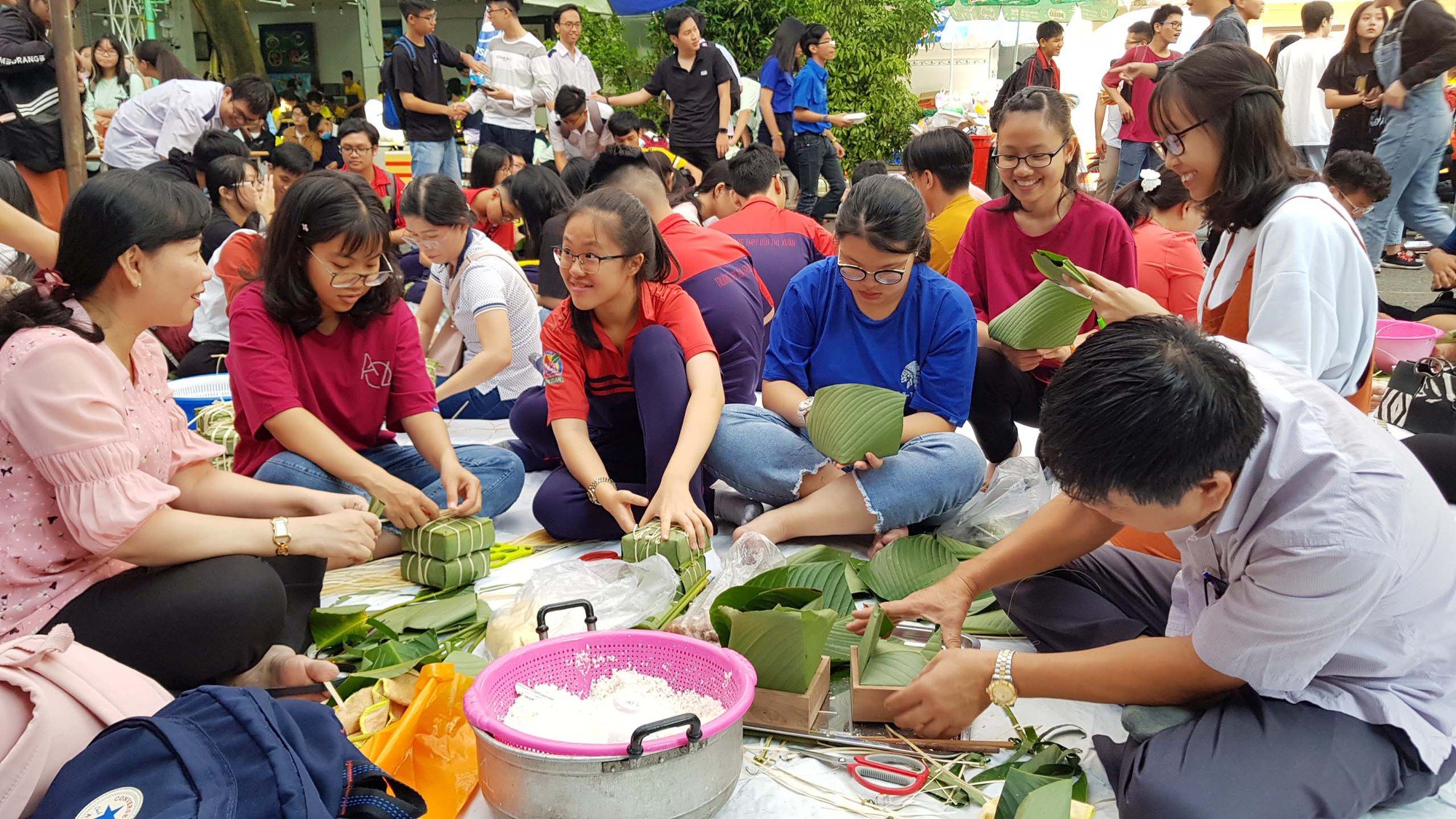
Making banh chung (traditional Vietnamese rice cakes), a springtime activity in schools, helps students better understand traditional Tet customs and strengthens the bond between teachers and students.
PHOTO: DAO NGOC THACH
In the past, there was no Teachers' Day on November 20th, and teachers and students mostly lived in the same village. Therefore, the "third day of Tet" (the Lunar New Year) was a very convenient, almost unique, occasion for teachers, students, and friends to easily meet and chat in a warm, festive atmosphere, free from work or time constraints. Nowadays, except for high school students in rural areas who may still maintain the custom of "the third day of Tet," university and higher education students in urban areas, with their extensive social networks and limited time, tend to visit their teachers about a week before Tet, so they can return home to visit their parents and grandparents during the holiday. During Tet, they will flexibly send messages and make phone calls to inquire about and wish their teachers a happy new year. Thus, the joyful days of Tet remain in the minds of the students, still containing the image of their teachers.
The essence of Teacher's Day lies in sincerity and respect; the beauty of the custom of "paying respects to teachers on the third day of Tet" in various forms continues to be preserved by successive generations.
Source: https://thanhnien.vn/mung-ba-tet-thay-va-dao-thay-tro-185250106171146134.htm

















![[Photo] Reception to welcome General Secretary and President To Lam and his wife on their State visit to the Philippines](https://vphoto.vietnam.vn/thumb/1200x675/vietnam/resource/IMAGE/2026/06/01/1780295488620_vna-potal-chieu-dai-chao-mung-tong-bi-thu-chu-tich-nuoc-to-lam-va-phu-nhan-tham-cap-nha-nuoc-toi-philippines-8798060-7855-jpg.webp)

















































Comment (0)