

Over the weekend, the US launched a series of airstrikes that Washington described as "defensive" actions against Iran, amid escalating regional tensions. This move came after President Donald Trump rejected amendments to a proposed agreement aimed at extending the current ceasefire and restoring traffic through the Strait of Hormuz.
Meanwhile, Iran's Islamic Revolutionary Guard Corps (IRGC) claimed responsibility for an attack on an air base used by the U.S. to launch an operation targeting a telecommunications tower on Iran's Sirik Island. The statement did not specify which air base was attacked, but it came after Kuwait reported repelling the attack with drones and missiles.
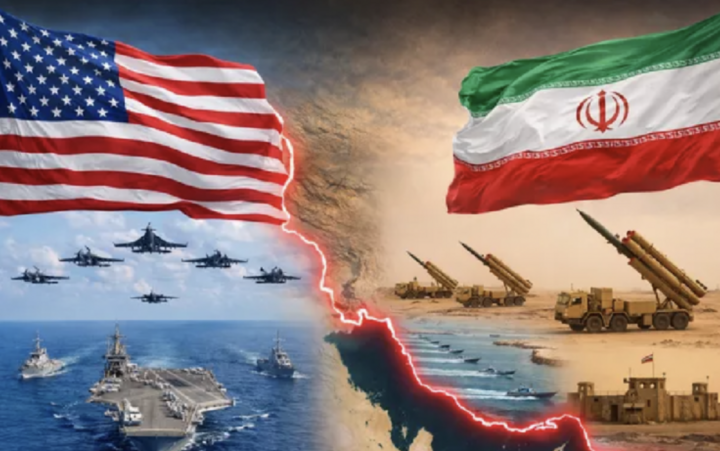
The US and Iran are still locked in a stalemate on all fronts. (Photo: NCCL)
From ally to enemy
The US-Iran relationship is not a recent development; tensions have been simmering for over 50 years. Under Shah Mohammad Reza Pahlavi (1919-1980, the last emperor of Iran), the US supported Tehran to contain Soviet influence. However, after the 1979 Islamic Revolution, this relationship reversed completely, turning into a confrontation that lasted for more than four decades.
From hostage crises to nuclear sanctions, from indirect support in the Iran-Iraq War to direct airstrikes in 2025-2026, the two sides have gone from cooperation to bitter enmity.
However, conflict also escalated during the Iran-Iraq War (1980-1988). Under President Saddam Hussein, Iraq attacked Iran on September 22, 1980, hoping to exploit the chaos following the revolution.
This action led the US to fear that Iran was exporting the Islamic revolution and controlling the Strait of Hormuz, providing Iraq with intelligence, economic , and weapons support (though not directly overtly). Therefore, the US provided satellite imagery and intelligence signals to the Iraqi government, while also easing export controls for Baghdad.
In 1988, tensions directly escalated. The U.S. and Iranian navies clashed in Operation Praying Mantis—the largest U.S. attack on a naval force since World War II. The U.S. destroyed half of Iran's combat force after Iran laid mines in the Persian Gulf.
Until after the Cold War, Iran's nuclear program became a focal point of conflict. In 2002, former President George W. Bush designated Iran as part of the "axis of evil," accusing it of pursuing weapons of mass destruction and supporting terrorism. At that time, Iran was secretly enriching uranium at Natanz and Fordow.
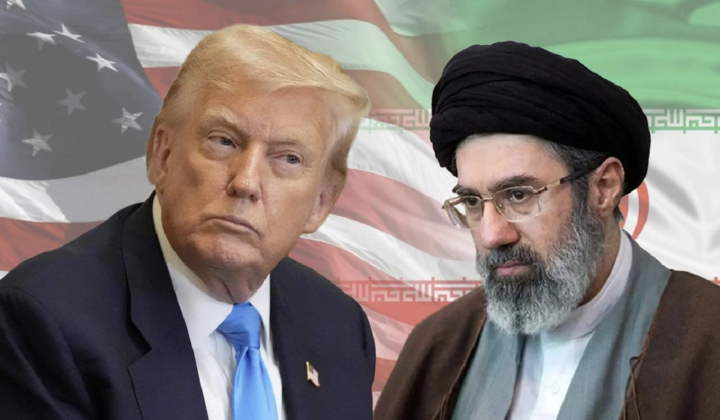
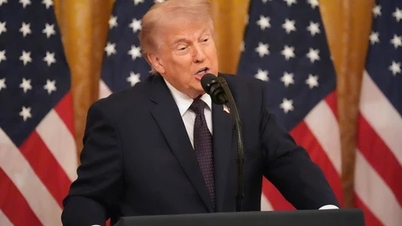
US President Donald Trump and Iran's new Supreme Leader Mojtaba Khamenei. (Photo: Reuters)
US and EU sanctions have crippled the Iranian economy: inflation has soared, the rial has depreciated, and unemployment has spread. Tehran has responded by ramping up uranium enrichment beyond the limit, while also supporting groups like Hezbollah and Hamas.
However, President Trump was the first White House leader to directly target senior Iranian military leaders and then authorize military operations inside Iranian territory. This culminated in the preemptive strike on February 28th, which sent shockwaves throughout the Middle East and continues to this day.
Justification for conflict
President Donald Trump has repeatedly cited Iran's missile arsenal as the reason for starting the war, with the primary goal being its destruction. In a March post on Truth Social, Trump listed "completely disabling Iran's missile capabilities, launchers, and everything related" as one of the five "goals" of the conflict.
Iran's underground missile base system began construction more than 20 years ago, providing significant protection for its missiles and launchers. Some of these structures lie hundreds of meters beneath the rock, limiting attack options for the US and Israeli militaries.
Therefore, in the early weeks of the conflict, the U.S. military shifted to attacking enemy entry points, combined with efforts to locate and destroy launch sites, resulting in a significant limitation of Iran's missile firepower. These attacks inflicted heavy damage on the bases, burying most tunnel entrances under massive piles of rubble and destroying access routes to these locations.
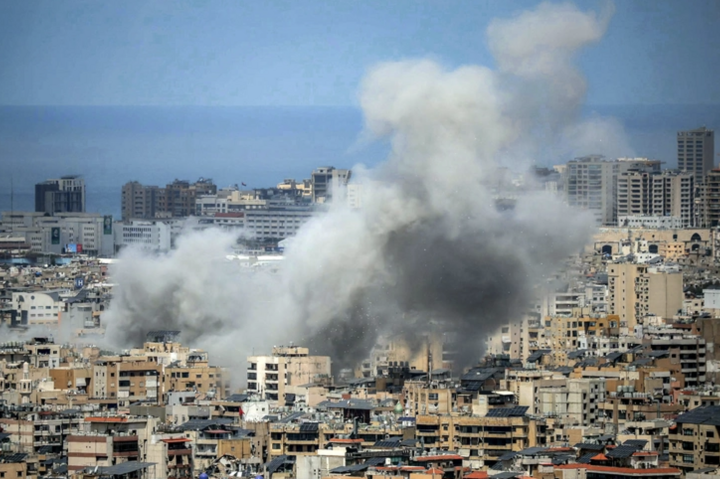
The US and Israeli attack on Iran has sent waves of unrest into the Middle East. (Photo: Getty)
The US and Israel are also working to disrupt Iran's missile supply chain, from small electronics component factories to sites producing rocket propellant and missile bodies.
Following the ceasefire agreement between the US and Iran on April 8, US Secretary of War Pete Hegseth praised the efforts and stated that Iran would "excavate remaining launch platforms and missiles that it is unable to replace." Many experts believe Iran still has around 1,000 missiles stored in underground bunkers.
According to experts, Iran's nuclear stockpiles are located deep underground and are unlikely to be significantly damaged by attacks that primarily take place on the surface, especially since the Israeli military attacked the tunnel entrances in a similar manner during last year's 12-year operation.
“They have been preparing for this type of conflict for 20 years. They have prepared very thoroughly,” said Timur Kadyshev, a senior researcher at the Institute for Peace and Security Policy Studies at the University of Hamburg.
Although the US and Iran are no longer engaging in direct attacks and full-scale fighting like they did in the early weeks of the conflict, the US naval blockade of Iranian ports remains in effect.
What is the way out of the US-Iran conflict?
On May 28, US officials said a preliminary agreement had been reached in talks between Tehran and Washington, but even as negotiators reported progress, the military confrontation showed no sign of ending. The US launched a second round of attacks on Iran within just days this week, while clashes continued in the Strait of Hormuz.
Many Iranian officials have used negotiations to express confidence that they still hold significant military options should diplomacy fail. According to the IRGC, a renewed conflict would spread "beyond the region," threatening "heavy blows" and "total destruction" in places the adversary "cannot even imagine."
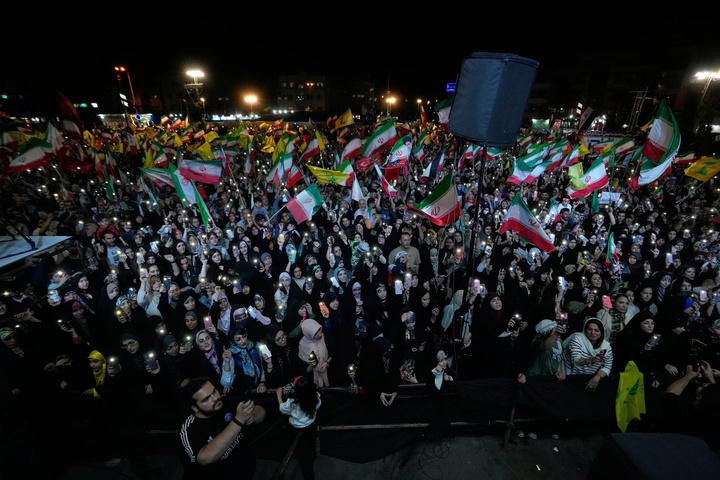
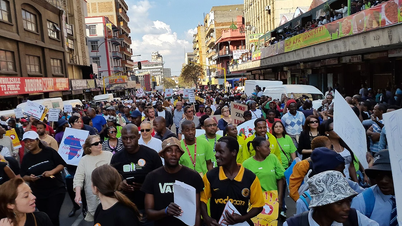
Protesters at Enghelab Square in Tehran, Iran. (Photo: AP)
According to the semi-official Tasnim news agency, Iranian Parliament Speaker Mohammad Bagher Ghalibaf declared that no agreement would be reached with the United States until Tehran's "interests" were guaranteed.
Even amidst rumors of an impending agreement, Iran's Supreme Leader Mojtaba Khamenei remains steadfast in pursuing the goal set by his late predecessor and father, Ali Khamenei, of "removing the United States from the Middle East and wiping out the state of Israel."
Unlike previous periods of tension, the conflict between the US and Iran is no longer limited to political statements or isolated sanctions, but is simultaneously encompassing multiple layers of conflict, from military and economic issues to proxy wars. Most worryingly, both Washington and Tehran are pursuing a strategy of "controlled escalation."
The US wants to maintain sufficient pressure to force Iran to make concessions but does not want to be drawn into a large-scale war. Meanwhile, Iran is also proactively using asymmetric tools such as UAVs, missiles, and proxy forces to inflict damage on its adversaries while avoiding crossing the "red line" that would lead to a full-scale war.
Therefore, the Middle East currently faces a risky paradox: although all parties claim to want to prevent a large-scale war, they continue to use military means to consolidate their position in negotiations.
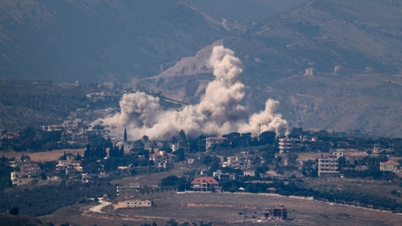
The escalating tension and confrontation are gradually bringing the US and Iran closer to the risk of a new crisis erupting, with potential impacts extending far beyond the region. Even more noteworthy is Iran's latest move to suspend talks with the US in protest against Israel's military activities in Lebanon.
Source: https://vtcnews.vn/my-iran-xung-dot-khong-hoi-ket-ar1021286.html



![[Photo] General Secretary and President To Lam presides over a meeting on preparations for the review of one year of operation of the three-tiered government system.](https://vphoto.vietnam.vn/thumb/1200x675/vietnam/resource/IMAGE/2026/06/02/1780391821195_a1-bnd-4595-9717-jpg.webp)













































































Comment (0)