

The US government continues to restrict exports of chips and artificial intelligence technology, fragmenting the market to maintain advanced technology within the United States and among allies, while seeking various ways to prevent China's access.
Limit the number of AI chips exported.
New US regulations will limit the number of AI chips exported to most countries and allow the United States' closest allies unlimited access to US AI technology, while maintaining export restrictions to China, Russia, Iran, and North Korea.
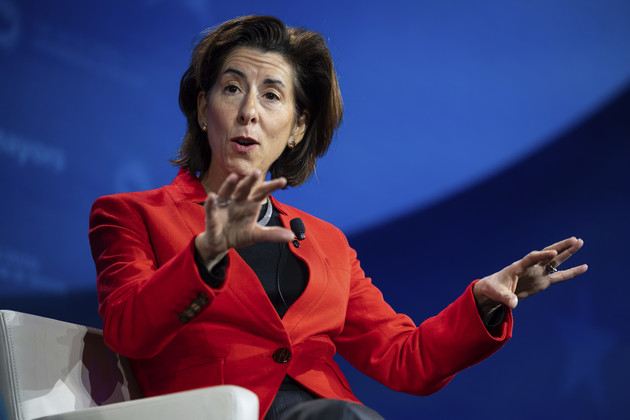
U.S. Commerce Secretary Gina Raimondo.
Announced in the final days of President Joe Biden's outgoing administration, the new rules extend beyond China and aim to help the United States maintain its dominance in the AI field by controlling it globally .
"The U.S. is currently leading in AI – both in AI development and AI chip design – and it's crucial that we maintain that," said U.S. Commerce Secretary Gina Raimondo.
These regulations would restrict China's access to advanced chips, which could enhance its military capabilities and maintain U.S. leadership in AI by closing loopholes and adding new barriers to controlling the flow of chips and the global development of AI.
Although it remains unclear how the incoming administration of President-elect Donald Trump will enforce the new rules, both administrations share a common view on the competitive threat posed by China. The regulations will take effect 120 days after their announcement, giving the Trump administration time to consider them.
The new limits will apply to advanced graphics processing units (GPUs), which are used to power the data centers needed to train AI models. Most are manufactured by Nvidia, based in Santa Clara, California, while Advanced Micro Devices also sells AI chips.
Major cloud service providers such as Microsoft, Google, and Amazon may seek global authorization to build data centers. Once approved, these cloud providers would no longer need to apply for export licenses for AI chips, allowing them to build data centers in countries unable to import enough chips due to quotas.
To obtain the seal of approval, authorized companies must comply with strict conditions and restrictions, including confidentiality requirements, reporting requirements, and a plan or track record.
To date, the Biden administration has imposed comprehensive restrictions on China's access to advanced chips and the equipment to manufacture them, updating the controls annually to tighten restrictions and sanction countries that do not comply.
The order to control AI chips risks handing the market to competitors.
Yesterday (January 13), tech giant Nvidia described the rules as "excessive" and said the White House would tighten controls on "technology already present in mainstream gaming PCs and consumer hardware." Data center provider Oracle argued earlier this month that the rules would hand "a large portion of the global AI and GPU market to competitors from China."
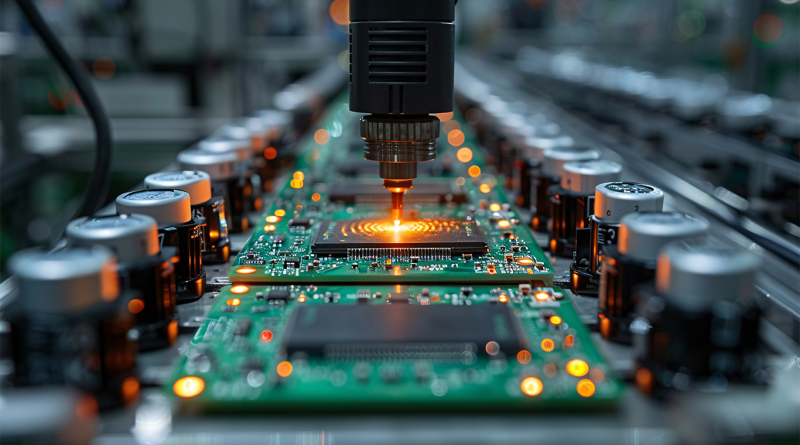
The US is tightening controls on AI chips globally.
The rules impose licensing requirements worldwide on advanced chips, with some exceptions, and also place controls on what is known as the "weighting model" of the most advanced AI models. The weighting model helps determine decision-making in machine learning and is often the most valuable element of an AI model.
This regulation divides the world into three tiers. Around 18 countries, including Japan, the UK, South Korea, and the Netherlands, will be essentially exempt from the rules. Approximately 120 other countries, including Singapore, Israel, Saudi Arabia, and the United Arab Emirates, will face national restrictions. Meanwhile, countries subject to arms embargoes, such as Russia, China, and Iran, will be completely prohibited from acquiring this technology.
Additionally, US-based vendors capable of obtaining global authorizations such as Amazon Web Services and Microsoft will only be permitted to deploy 50% of their total AI computing capacity outside the US, no more than 25% outside Group 1 countries, and no more than 7% in a non-Group 1 country.
The Chinese Ministry of Commerce said that in response to the new regulations, the country will take necessary measures to protect its "legitimate rights and interests."
AI has the potential to enhance access to healthcare, education, and food, among other benefits, but it could also aid in the development of biological and other weapons, support cyberattacks, and support surveillance and other human rights abuses.
"The United States must prepare for a rapid increase in AI capabilities in the coming years, which could have a transformative impact on our economy and national security," said U.S. National Security Advisor Jake Sullivan.
Source: https://www.baogiaothong.vn/my-siet-chat-kiem-soat-chip-ai-tren-toan-cau-192250114113232991.htm


![[Photo] Prime Minister Pham Minh Chinh presides over the conference announcing the establishment of the International Finance Centre in Vietnam.](/_next/image?url=https%3A%2F%2Fvphoto.vietnam.vn%2Fthumb%2F1200x675%2Fvietnam%2Fresource%2FIMAGE%2F2025%2F12%2F21%2F1766309817714_ndo_br_dsc-3400-jpg.webp&w=3840&q=75)


![[Photo] Prime Minister Pham Minh Chinh presides over a meeting on private sector economic development.](/_next/image?url=https%3A%2F%2Fvphoto.vietnam.vn%2Fthumb%2F1200x675%2Fvietnam%2Fresource%2FIMAGE%2F2025%2F12%2F20%2F1766237501876_thiet-ke-chua-co-ten-40-png.webp&w=3840&q=75)






















































































Comment (0)