

- Countryside cuisine brought to the city.
- Distinctive Chinese cuisine
- The culinary essence of Vietnam's ethnic groups.
According to research on Chinese cuisine , steamed buns are a cultural food with a long history dating back to the Spring and Autumn and Warring States periods. They are an indispensable dish in families and restaurants; a staple food in the luggage of merchants, scholars, and even poor laborers.
Steamed buns symbolize the aspiration for fertility, as the dough is made from leavening agents, signifying continuous growth. Therefore, steamed buns are indispensable in offerings to heaven and earth, the local deity, groundbreaking ceremonies, opening ceremonies, and folk festivals.
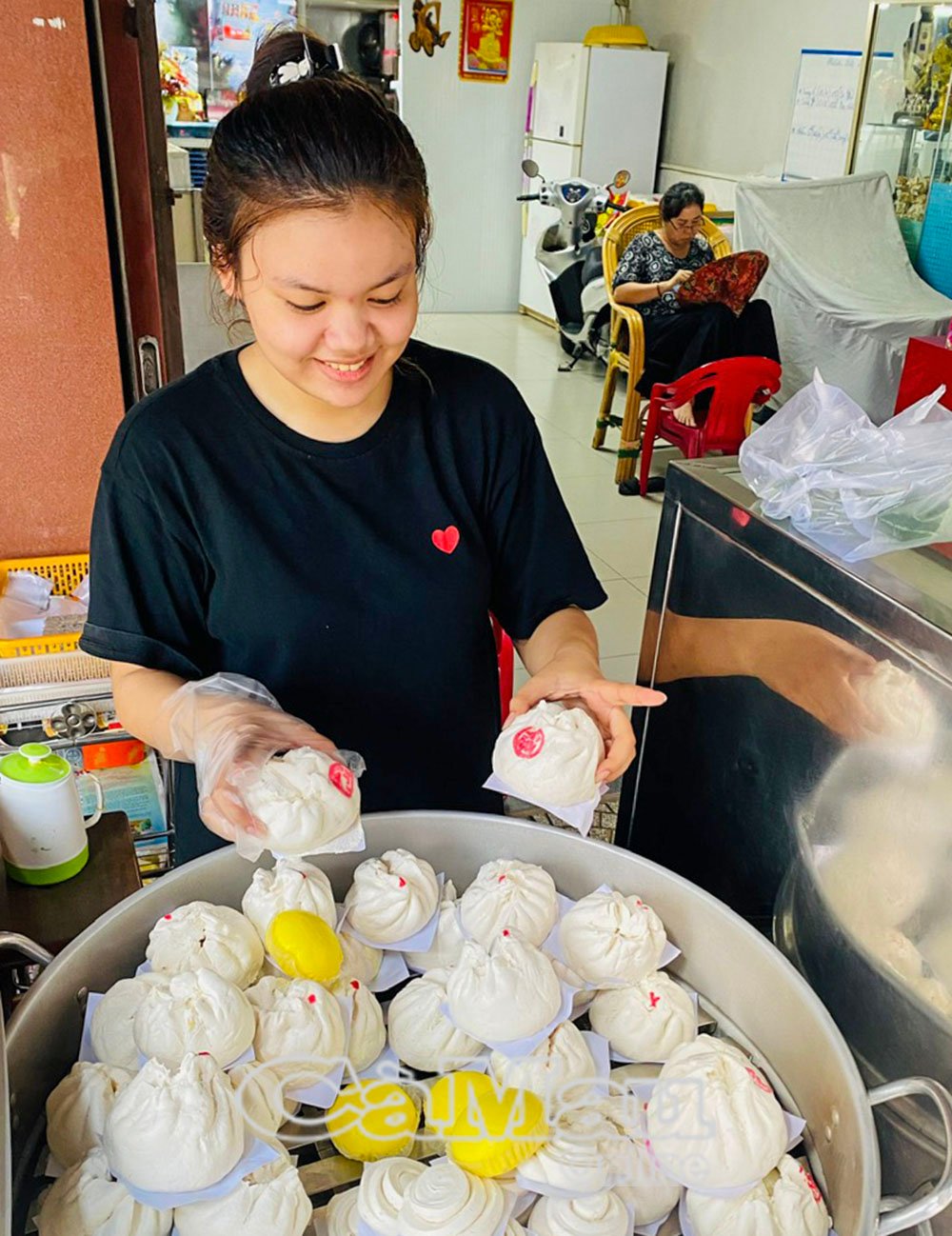
A Chinese-run steamed bun stall in Bac Lieu ward offers a variety of fillings.
On the other hand, steamed buns also symbolize strength, faith, and unity in overcoming evil, and are seen as a substitute to ward off misfortune. This meaning originates from a folk tale from the Three Kingdoms period. The story tells that Zhuge Liang had hundreds of thousands of steamed buns, each representing a human head, made to offer to the gods to ward off a plague that was harming his soldiers.
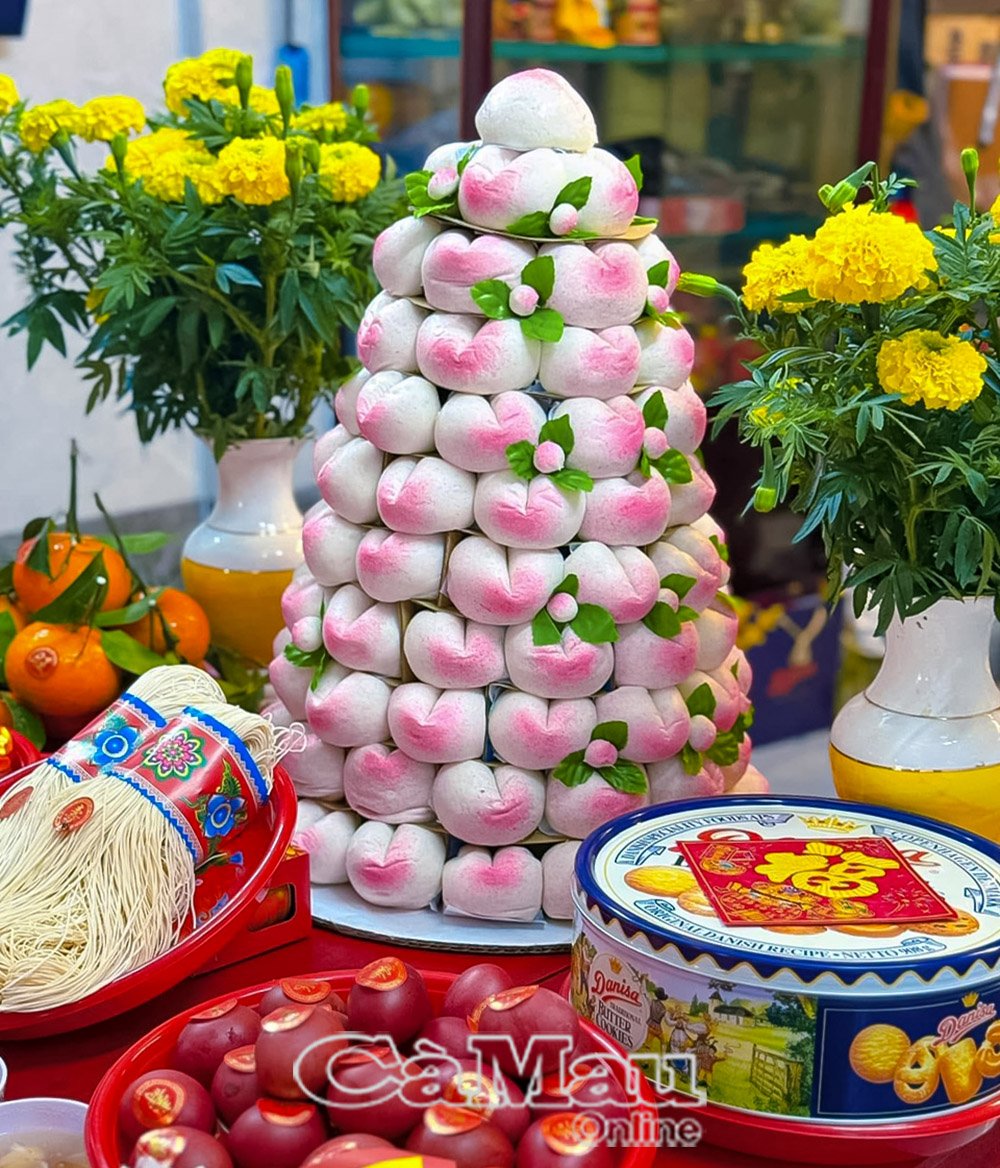
The tower of steamed buns shaped like peaches symbolizes longevity.
Throughout its thousands of years of history, the steamed bun has become an integral part of Chinese culture, embodying the values of traditional Chinese culture. Therefore, films about Chinese culture, history, or travel experiences inevitably mention steamed buns. They symbolize unity, with dozens or even hundreds of buns stacked into a tower during ancestral worship and thanksgiving ceremonies; they represent prosperity, stemming from the word "bao" (meaning "money bag" or "red envelope") being a homophone for "hou bao" (red envelope); and they symbolize abundance, with a wide variety of fillings such as mixed meat fillings with minced pork and cassava, Chinese sausage, duck eggs, char siu pork, wood ear mushrooms, etc., or sweet buns with mung bean, taro, or egg fillings (cade), as well as plain buns and fried buns served with fried chicken or braised duck.
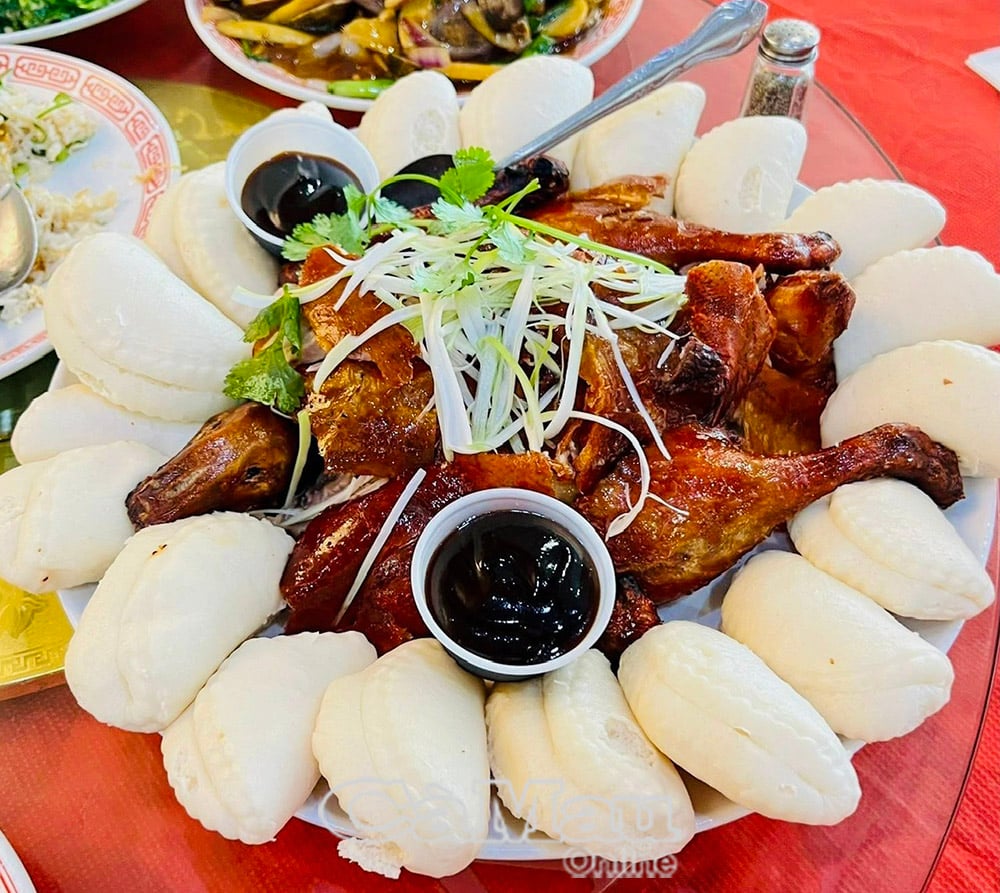
Steamed buns served with braised duck symbolize abundance.
Compared to other types of steamed buns, the steamed buns of the Teochew people in Ca Mau are mainly steamed buns seasoned to perfection, with a rich and sweet meat filling that is not greasy, and a soft, white skin that is easy to break without falling apart; especially the sweet buns, with their smooth skin, fragrant aroma, and many distinctive fillings.
Moreover, for the Chinese, this dish symbolizes community bonding and cohesion. Specifically, after traditional cultural festivals or celebrations, people often give each other a pair of steamed buns as gifts. These could be round buns symbolizing happiness, prosperity, and good fortune, or peach-shaped buns representing longevity. This also explains why Chinese steamed buns often feature the Chinese character for "fortune" (福).
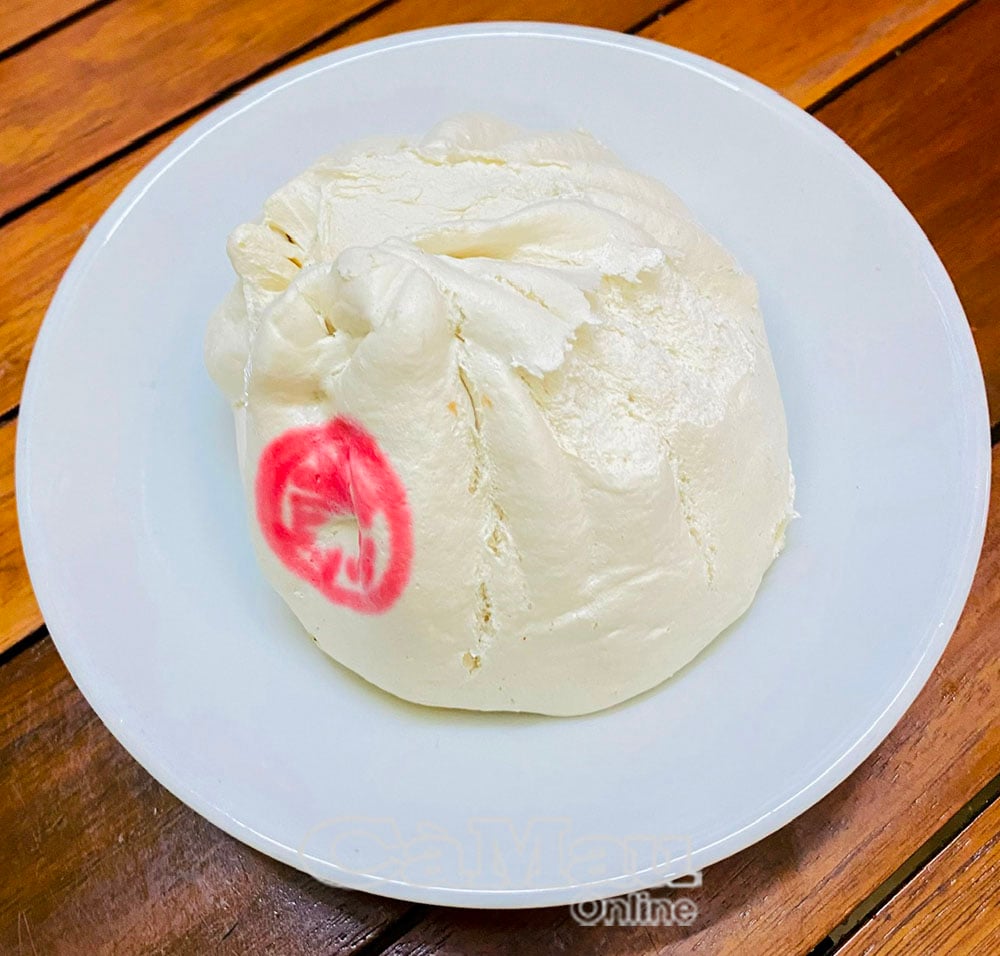
The steamed buns offered to the Earth God before the groundbreaking ceremony by the Teochew people of Ca Mau have the character "Fu" (meaning good fortune) printed on them (the plate of buns is in the middle of the altar).
One of Ca Mau province's strategic directions is to develop tourism, and exploiting the rich traditional culinary traditions of its ethnic groups will significantly contribute to leveraging this strength.
From traditional meat-filled steamed buns, we can create seafood steamed buns with shrimp and crab fillings, which will become a dish with a strong regional character and will certainly create a unique identity, especially since Ca Mau crabs and shrimp are already specialties.
Lu Dung
Source: https://baocamau.vn/my-thuc-cua-nguoi-hoa-ca-mau-a40037.html















































































Comment (0)