

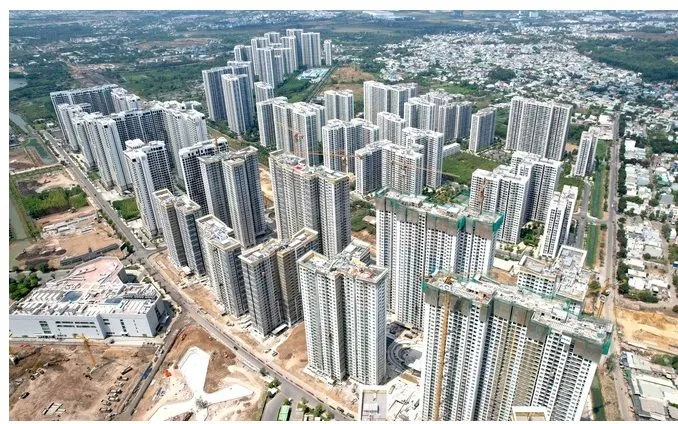
As we enter 2026, the first and most important factor reshaping the apartment market will be supply.
With a projected surge in supply, particularly from social housing, and a clear shift in investment towards genuine housing needs, 2026 is seen as the year the market enters a new cycle: less overheated but more sustainable.
Social housing becomes a "regulating valve".
Entering 2026, the first and most important factor reshaping the apartment market will be supply. After years of being hampered by legal obstacles, lengthy investment procedures, and the cautious sentiment of businesses amidst high interest rates, the market is witnessing a strong recovery cycle. The period of 2024-2025 has seen a clear recovery in the number of projects and products launched onto the market, paving the way for a more abundant supply in 2026, especially in the segment serving genuine housing needs.
According to assessments at real estate forums at the end of 2025, the real estate market will see the addition of over 100,000 units in 2025 alone, a more than 22% increase compared to 2024, with nearly 90,000 units being new supply. The scale of projects is also growing larger in both area and investment value. Notably, within this supply landscape, social housing stands out as a key component, not only addressing social welfare issues but also acting as a "regulatory valve" for the entire apartment market.
Many experts believe that 2026 will be the year when social housing is boosted more than ever, both in terms of quantity and speed of implementation. Social housing is expected to boom in 2026, as localities and management agencies aggressively remove bureaucratic hurdles and shorten processes to bring products to market sooner.
According to Mr. Ho Ngoc Tung, Deputy General Director of Sky Realty Joint Stock Company, the difference in the next cycle lies in the fact that: "In 2026, the supply of social housing will begin to appear, and it will be faster than commercial housing, because with the procedures for social housing, the Government and the People's Committees of cities are creating very favorable conditions to quickly bring the product to the market." When hundreds of thousands of social housing units are added, not only in Hanoi or Ho Chi Minh City but also in satellite provinces and cities, the apartment market will have another important pillar, helping to reduce demand pressure on the commercial housing segment.
In reality, in major cities, the price of social housing currently ranges from over 20 million to nearly 30 million VND/m², 2.5-3 times lower than commercial housing in the same area. This gap not only creates housing opportunities for the middle- and low-income groups but also forces the commercial market to adjust its product strategy. When buyers have more options that suit their affordability, the competition will no longer revolve around expectations of price increases, but around real usability, amenities, and sustainability.
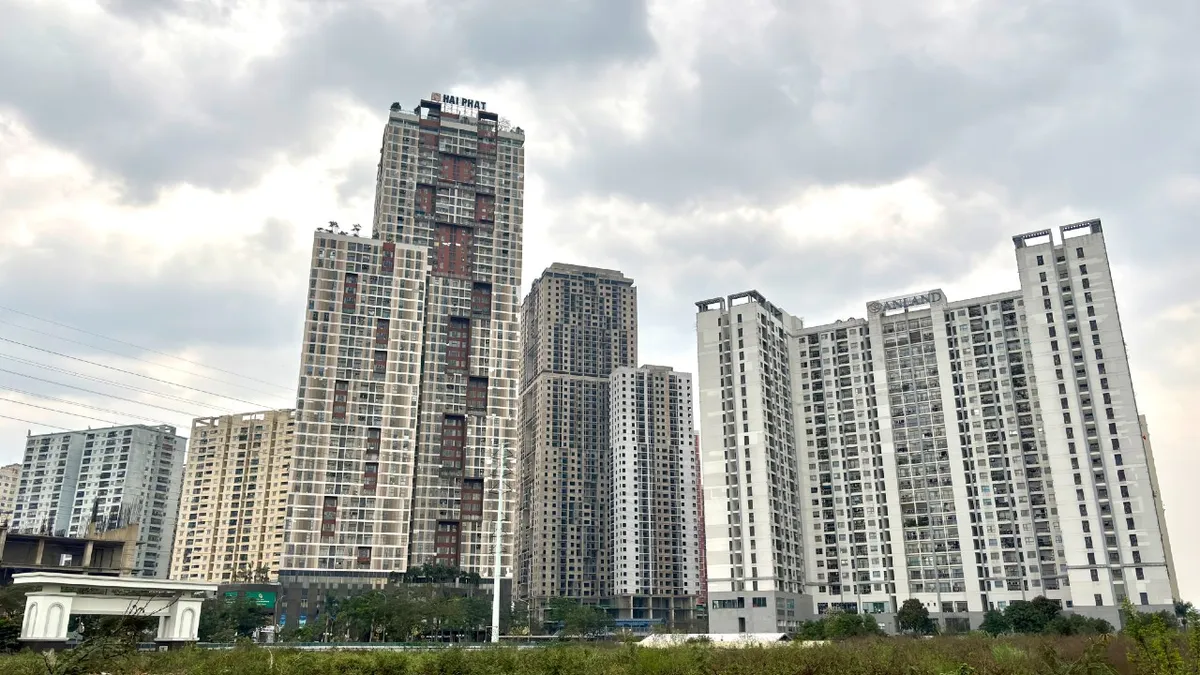
Over the past two years, apartments have become the "backbone" segment of the urban housing market.
Apartment prices have cooled down but haven't dropped significantly.
One of the biggest questions heading into 2026 is whether apartment prices will remain as "hot" as they were in 2024-2025. In fact, over the past two years, apartments have become the "backbone" of the urban housing market, accounting for approximately 60-70% of total transactions in Hanoi and Ho Chi Minh City. The supply, suppressed for many years, coupled with steadily increasing demand for housing and investment capital seeking safe havens, has driven up apartment prices significantly, averaging 30-50%, and even 40-60% in many primary projects, especially in the high-end and luxury segments.
However, this rapid increase also sets limits for the next cycle. According to Mr. Nguyen Anh Tuan, Chairman of the Board of Directors of Phuong Dong Investment Joint Stock Company, in the 2024-2025 cycle, apartment prices increased by 40-60% depending on the segment. He believes that in 2026, there is still room for growth, but it will not be as strong as before.
Analyzing further, Mr. Tuan pointed out that in 2026, the mid-range price segment of around 60-70 million VND, or at most 80 million VND, will be in line with current trends and will attract many buyers because it still has room for further price increases. "If we push prices too high, the number of potential investors will be significantly limited," he emphasized. This reflects an important reality: market purchasing power is increasingly dependent on real income, rather than relying heavily on short-term price appreciation expectations.
Sharing the same view, Mr. Ho Ngoc Tung believes that 2026 will be the year when speculative activity declines sharply. The decline in speculation does not necessarily mean a decrease in demand, but rather a clear shift towards genuine homebuyers. Mr. Tung predicts: “In 2026, real users, those who actually live in the property, will account for the vast majority of market demand, around 60%. Speculators or asset hoarders will account for a low percentage, around 30% or less.” When demand for actual housing prevails, the market is unlikely to maintain a “price surge,” but it will have a more stable foundation and be less volatile in the face of macroeconomic shocks.

Overall, 2026 is unlikely to be a "hot" year in the sense of explosive price increases and speculation.
The survival challenge of the apartment market.
Amidst increasing supply and cooling prices, the biggest challenge for the apartment market in 2026 lies in product restructuring. No longer a race for quick sales or price surges, the market forces developers to return to the core question: who are the products serving and what needs are they addressing?
According to Mr. Nguyen Anh Tuan, with prices ranging from 60-80 million VND/m², a mid-range apartment currently costs around 5 billion VND. This puts considerable pressure on young buyers. "With an apartment costing around 5 billion VND, if a couple borrows about 70-80% of the apartment's value, they might have to pay approximately 30-40 million VND in interest each month," he explained. Therefore, besides the selling price, payment policies, flexible payment schedules, and interest rate support become decisive factors in the market's absorption capacity.
Mr. Tuan believes that in 2026, the market will have two parallel product groups: ready-made projects serving immediate housing needs, and newly launched projects where buyers are willing to wait for better price levels.
Meanwhile, Mr. Ho Ngoc Tung emphasized the crucial role of social housing in reshaping the market. "Social housing is a channel that will reduce housing demand and simultaneously regulate the price level of the apartment market," he stated. When the price difference between social housing and commercial housing in the same location reaches 2.5-3 times, buyers will tend to consider their options more carefully, forcing commercial developers to recalculate the price and value equation.
Not only businesses, but also regulatory agencies are expected to play a leading role in the new cycle. Continuing to remove obstacles for stalled projects, improving institutions, and strongly developing social housing and affordable commercial housing are considered key to a healthy market operation. As supply improves, investor confidence gradually returns, and liquidity increases, the apartment market will enter a more sustainable development phase, closely linked to real housing needs and long-term urban development strategies.
Overall, 2026 is unlikely to be a "hot" year in the sense of price surges and speculation. Instead, it will be a year of consolidation, where apartments will continue to play a central role in the urban housing market, but their appeal will come from their ability to meet real living needs, affordable prices, and integrated infrastructure and amenities.
In a cycle where real estate is increasingly intertwined with the issues of welfare and sustainable development, the answer to the question "Are apartments still in high demand?" probably lies not in the temperature of prices, but in the quality of development.
Source: https://vtv.vn/nam-2026-chung-cu-co-con-nong-100260121191415755.htm













![[Image] Affirming the aspirations and new standards of the Vietnamese real estate market in the new era.](https://vphoto.vietnam.vn/thumb/402x226/vietnam/resource/IMAGE/2026/06/03/1780441948766_giai-thuong-bat-dong-san-2026-minh-duy-6-7364-jpg.webp)















































![[Video] Sunset at Lap An Lagoon – Where the sun sets over the fishing nets](https://vphoto.vietnam.vn/thumb/1200x675/vietnam/resource/IMAGE/2026/05/31/1780192137701_beach-landscape-sea-water-nature-grass-745871-pxhere-com.jpeg)






































Comment (0)