

Under pressure from both external and internal factors.
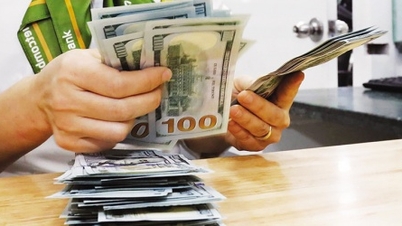
The foreign exchange market is a crucial factor for the State Bank of Vietnam (SBV). The VND is the third-highest depreciating currency in Asia in 2025, losing 3.1% against the USD, only lower than the depreciation of the Indian rupee (4.8%) and the Indonesian rupiah (3.5%), but higher than the depreciation of the Philippine peso.
Conversely, regional currencies benefited from the weakening USD trend, with gains ranging from 10% for the Malaysian ringgit to 0.3% for the Japanese yen over the past year. Based on these factors, UOB expects the State Bank of Vietnam to keep the refinancing rate unchanged at 4.5% throughout 2026.
UOB analysts maintain their view that the USD will weaken, primarily driven by expectations that the Fed will continue to ease monetary policy. Political risks could return and become a factor putting downward pressure on the USD in the coming months.
With Jerome Powell's term as FOMC Chairman set to end in May 2026, the market may begin pricing in the possibility that his successor will be more aligned with the Trump administration's preference for lower interest rates. This scenario would reinforce expectations of lower end-of-cycle policy interest rates, leading to a prolonged weakening trend for the USD.
UOB's latest forecast for the DXY index is 98.2 in Q1 2026, 97.3 in Q2 2026, 96.5 in Q3 2026, and 95.7 in Q4 2026. However, the pace of USD depreciation may be curbed by persistent inflation – still above the Fed's 2% target – and end-of-cycle factors, including the OIS curve which has already priced in to account for this possibility.
Mr. Dinh Duc Quang, Director of Currency Trading at UOB Vietnam, believes that exchange rate pressure in 2026 will come from both external and internal factors. The health of the US dollar and global monetary policy will directly affect exchange rate expectations. Domestically, the trade balance, remittances, and foreign direct investment (FDI) will play a crucial role in maintaining exchange rate stability.
 |
| Exchange rates are projected to remain under pressure throughout 2026. |
In 2026, UOB maintains a cautious view on the VND, forecasting the USD/VND exchange rate at 26,300 in Q1/2026, 26,100 in Q2/2026, 26,000 in Q3/2026, and 25,900 in Q4/2026, respectively.
According to Associate Professor Dr. Nguyen Huu Huan from the University of Economics Ho Chi Minh City, the exchange rate in 2026 will be strongly affected by an uncertain global environment, unpredictable capital flows, and an increasingly significant role played by expectations. The biggest challenge lies not in how much the VND will appreciate or depreciate, but in the ability to control fluctuations and prevent exchange rate shocks from harming macroeconomic stability and the financial system in a context where policy space is no longer as wide as before.
Balancing “growth” and “stability”
According to the 2026 Strategy Report published by VinaCapital on January 22nd, the State Bank of Vietnam (SBV) is seeking a balance between "growth" and "stability". The biggest risks that could negatively impact Vietnam's economy and stock market in 2026 include: an economic recession in the US; "Gray Swan" risks (geopolitical risks, reversal of carry-trade transactions in the Japanese Yen, etc.); and a sharp increase in VND interest rates.
The State Bank of Vietnam (SBV) is currently grappling with a balancing act faced by many central banks in emerging markets: reconciling macroeconomic stability and economic growth. Vietnam's current challenge is not the traditional trade-off between inflation and growth, but rather the trade-off between USD-VND exchange rate stability and the goal of economic growth.
Deposit interest rates have increased by approximately 100 basis points in 2025. VinaCapital predicts that 12-month deposit interest rates will continue to rise by another 50-100 basis points in 2026, reaching nearly 7%, due to two main factors: tightening liquidity in the banking system and pressure from the depreciation of the VND. The tight liquidity situation stems from credit growth being nearly 4 percentage points higher than deposit growth in 2025.
The State Bank of Vietnam (SBV) is exercising a certain degree of caution in managing monetary policy and allowing interest rates to rise slightly as it faces the challenge of balancing "growth" and "stability." Higher interest rates are necessary to limit the depreciation pressure of the USD-VND exchange rate from exceeding approximately 3%, given that foreign exchange reserves are still quite low (currently below 3 months of imports), while low interest rates help support economic growth.
In fact, the State Bank of Vietnam has implemented certain measures to meet the market's demand for VND, thereby addressing the challenge of balancing growth and stability.
At the end of 2025, the State Bank of Vietnam (SBV) cautiously injected liquidity into the banking system through open market operations, while raising the OMO interest rate (one of Vietnam's three key policy interest rates) by 50 basis points to 4.5%. The SBV also used flexible policy tools such as revocable forward contracts and 14-day forward swap contracts to stabilize market sentiment.
The State Bank of Vietnam has chosen to address the depreciation pressure of the VND and the tight liquidity situation through directional policy measures, instead of continuing to deplete foreign exchange reserves (affecting macroeconomic stability) or allowing interest rates to skyrocket (which would stifle growth).
Associate Professor Dr. Nguyen Huu Huan from the University of Economics Ho Chi Minh City also commented that, regarding the direction of monetary policy management this year, the overarching view is to continue maintaining an accommodative stance to support the economy. In this context, the Fed's implementation of its interest rate reduction roadmap plays a crucial role, as this move will create the necessary room for maneuver for Vietnam.
Thanks to the reduced pressure from international interest rates, domestic regulators will have more room and favorable conditions to try to maintain the stability of those supportive policies, ensuring a favorable financial environment for growth targets.
The State Bank of Vietnam's (SBV) policy response capability is quite flexible, coordinating exchange rates, interest rates, and open market operations within a multi-objective framework. The SBV does not pursue a rigid exchange rate peg but accepts controlled fluctuations, helping to absorb external shocks and avoid high costs related to foreign exchange reserves.
Regarding interest rates, the State Bank of Vietnam (SBV) does not use the policy interest rate as a direct tool but rather influences it indirectly through regulating VND liquidity. Open market operations play a key role, allowing for adjustments to liquidity levels through the issuance of treasury bills and flexible money injection and withdrawal, thereby stabilizing expectations without signaling prolonged tightening. This approach is appropriate given that exchange rate pressure is temporary and heavily influenced by psychological factors.
The key point is a holistic approach to governance, viewing exchange rates, interest rates, and liquidity as interconnected links. The strength of the State Bank of Vietnam lies in its calculated flexibility, prioritizing overall macroeconomic stability and market confidence rather than fixing an exchange rate target.
However, looking ahead to 2026, according to Associate Professor Dr. Huan, the challenges to the exchange rate will not lessen, and may even become more complex and difficult to predict, because the global financial landscape is likely to continue to fluctuate in a state of "prolonged uncertainty," rather than short-term shocks as before. Therefore, pressure on the exchange rate will not come from a single stimulus, but from the combined effect of many external and internal factors.
Source: https://baodautu.vn/nam-2026-ty-gia-chua-het-ap-luc-d521356.html
![[Photo] The courage of new recruits of Brigade 144 on the training ground.](https://vphoto.vietnam.vn/thumb/1200x675/vietnam/resource/IMAGE/2026/05/27/1779881651341_anh-man-hinh-2026-05-27-luc-18-32-52.png)


![[Photo] The heat at the fireworks display site on the opening night of the Da Nang International Fireworks Festival 2026](https://vphoto.vietnam.vn/thumb/1200x675/vietnam/resource/IMAGE/2026/05/27/1779889741485_ndo_br_z7872039145157-fecaba5112f39e8352544099d7ef4738-5140-jpg.webp)





















































![[Photo] The courage of new recruits of Brigade 144 on the training ground.](https://vphoto.vietnam.vn/thumb/402x226/vietnam/resource/IMAGE/2026/05/27/1779881651341_anh-man-hinh-2026-05-27-luc-18-32-52.png)

























Comment (0)