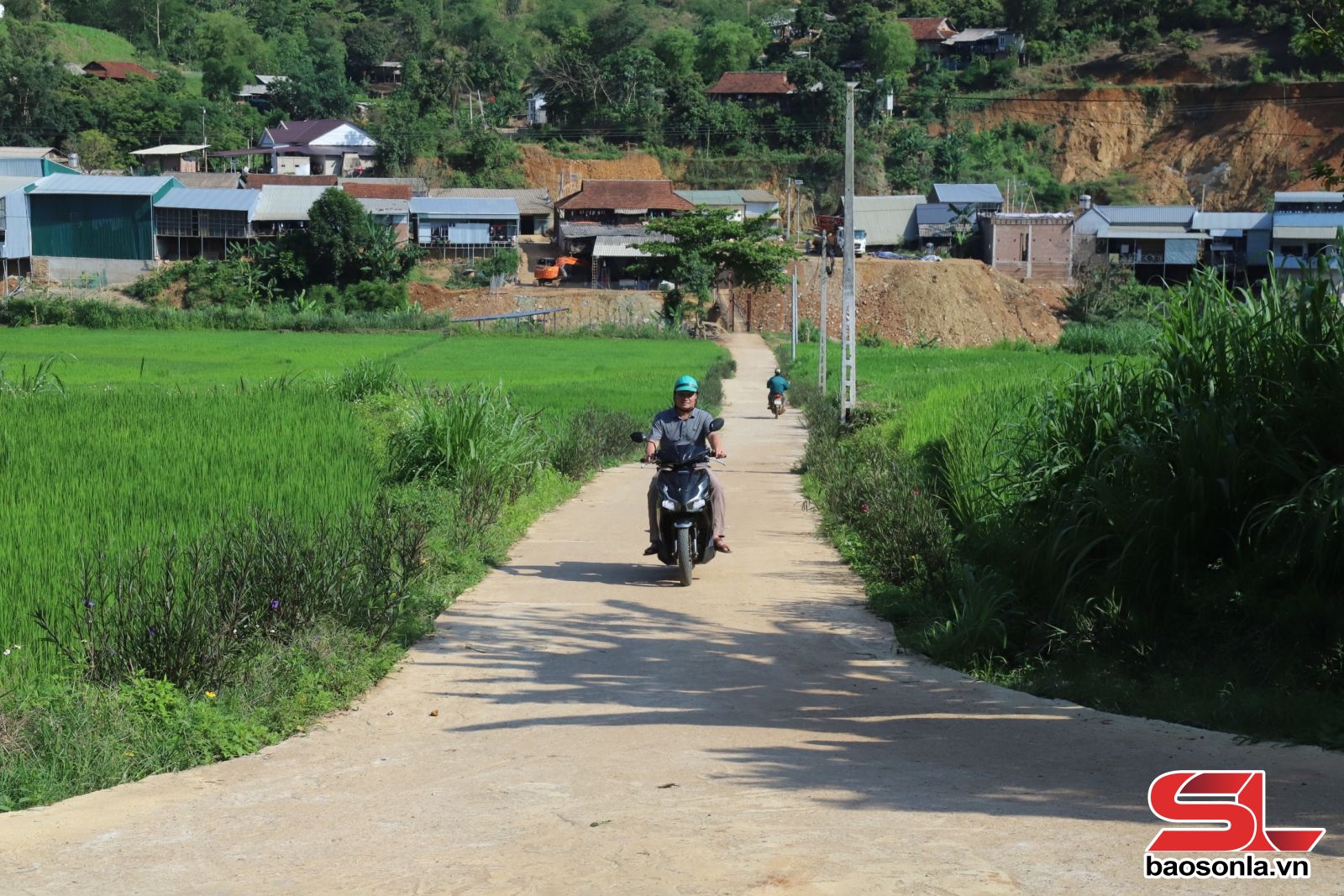
The road to Na Tong village has been paved with concrete.
Nam Ty is one of the particularly disadvantaged mountainous communes, with its predominantly hilly terrain and the Nam Ty stream flowing through it, making infrastructure investment extremely challenging. Along with strengthening the commune-level Steering Committee, the local authorities have established New Rural Development Committees in each village, with the Party Branch Secretary serving as the head. With the support of mass organizations and influential individuals, this has effectively unified leadership and promptly resolved obstacles at the grassroots level. Assessments show that the commune has now achieved 10 out of 19 criteria, including: irrigation and disaster prevention, electricity, schools, commercial infrastructure, information and communication, housing, labor, education and training, political system and access to law, and national defense and security. The nine criteria that have not been met include: planning, transportation, cultural infrastructure, income, multidimensional poverty, organization of production and rural economic development, health, culture, environment, and food safety.
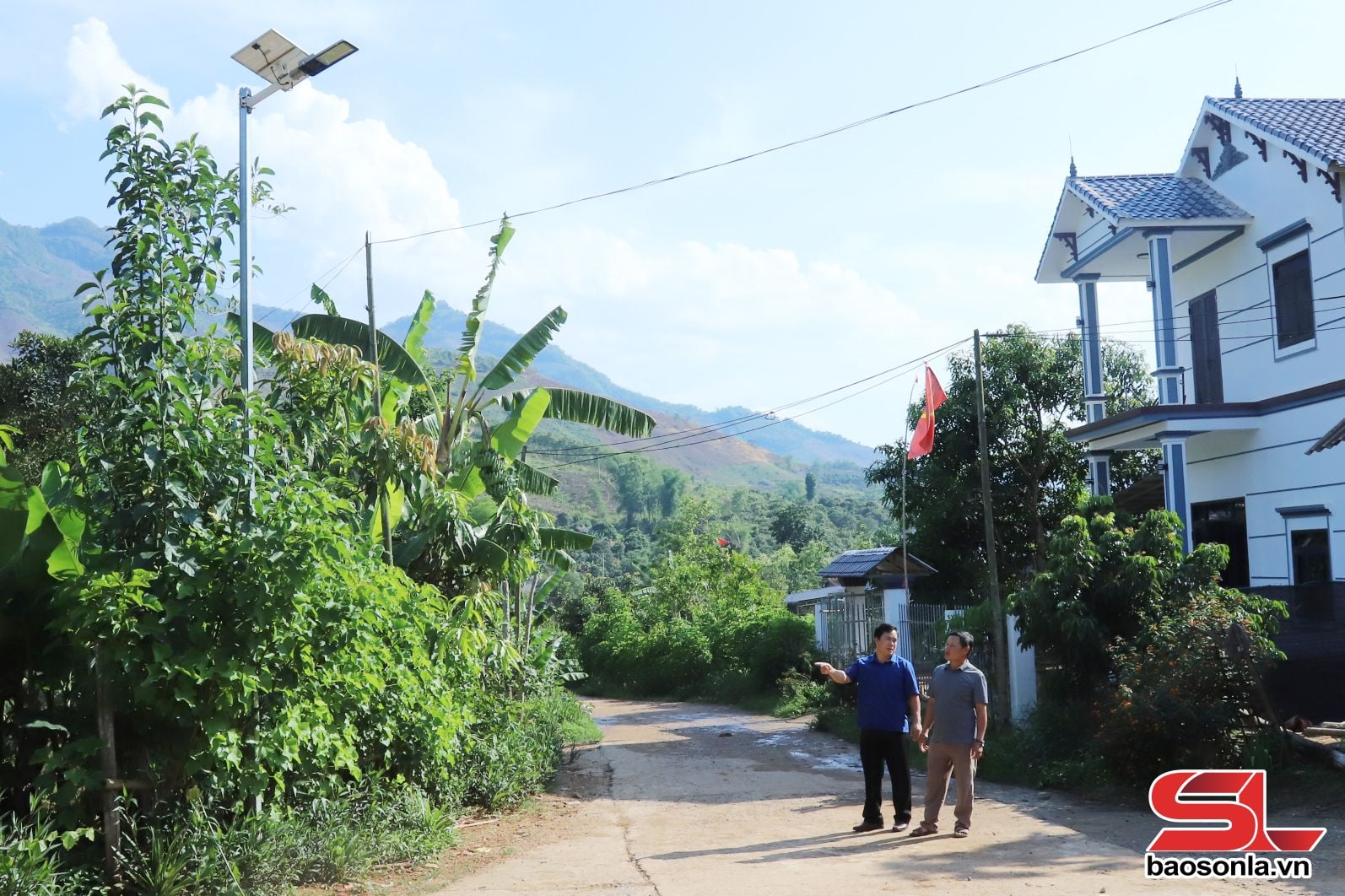
The solar-powered lighting system in Na Tong village, Nam Ty commune, was built through the mobilization of local resources.
Mr. Duong Hong Quang, Chairman of the People's Committee of the commune, shared: The commune has developed a specific plan and implementation roadmap for each criterion and each village, ensuring it is realistic and suitable to the conditions of the people. We effectively utilize capital from national target programs, mobilize people to donate land and contribute labor to build roads, install streetlights, and improve the environment; and build and replicate successful models and practices in new rural development to create a ripple effect in the community.
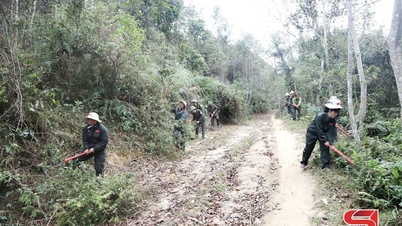
Selected as a model village for a "bright, green, clean, and beautiful" environment, Na Tong village has effectively leveraged the people's role as the main actors to comprehensively transform the rural landscape. At the end of 2025, with the support of 100 tons of cement from the State, the village held a meeting and unanimously agreed to contribute 46 million VND and 750 man-days of labor to complete the concrete paving of a 600-meter-long, 3-meter-wide road, contributing to raising the percentage of concrete-paved roads within the village to over 80%. In addition, Na Tong village mobilized its people to install solar-powered streetlights along 1.5 km of internal village roads, build a spacious welcome gate, and implement a flower-lined road model. Mr. Lo Van No, Party Secretary and Head of Na Tong village, said: "All policies are discussed openly and transparently by the village management board, thereby creating consensus and high determination among the people." In addition, the village encouraged livestock farmers to move their animal enclosures out from under their houses; 80% of households proactively built their own hygienic garbage pits. To date, the village has been recognized as a "bright, green, clean, and beautiful" village.
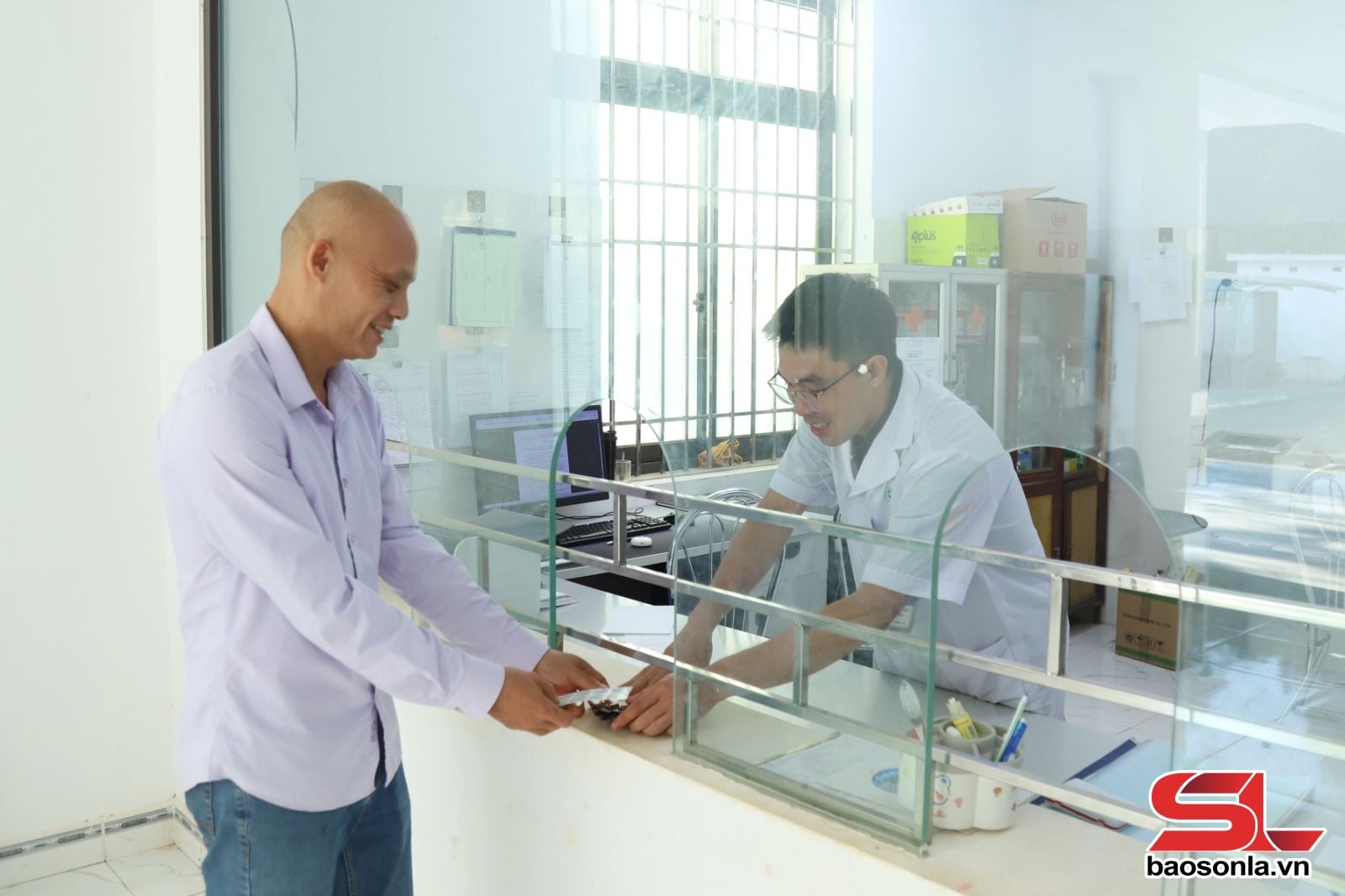
Health workers at Nậm Ty commune health station instruct people on how to use medicine to treat illnesses.
Thanks to the synchronized implementation of various solutions, the socio -economic infrastructure of Nam Ty commune has been gradually improved. To date, the commune has concreted 11 km of inter-commune roads; 2.7 km of inter-village and intra-village roads; and reinforced 18 out of 39 irrigation works. The number of households using safe electricity has reached 95.02%; the number of households using hygienic domestic water has reached 52.6%. Cultural and social institutions have been prioritized, with 27 out of 29 villages having cultural houses and 7 out of 29 villages achieving the title of cultural village. However, due to its characteristics as a remote commune, roads to the highland villages are still not paved; the percentage of poor and near-poor households in the commune remains high, accounting for 18.33% and 12.82% respectively; and the average per capita income is only 15 million VND/year.
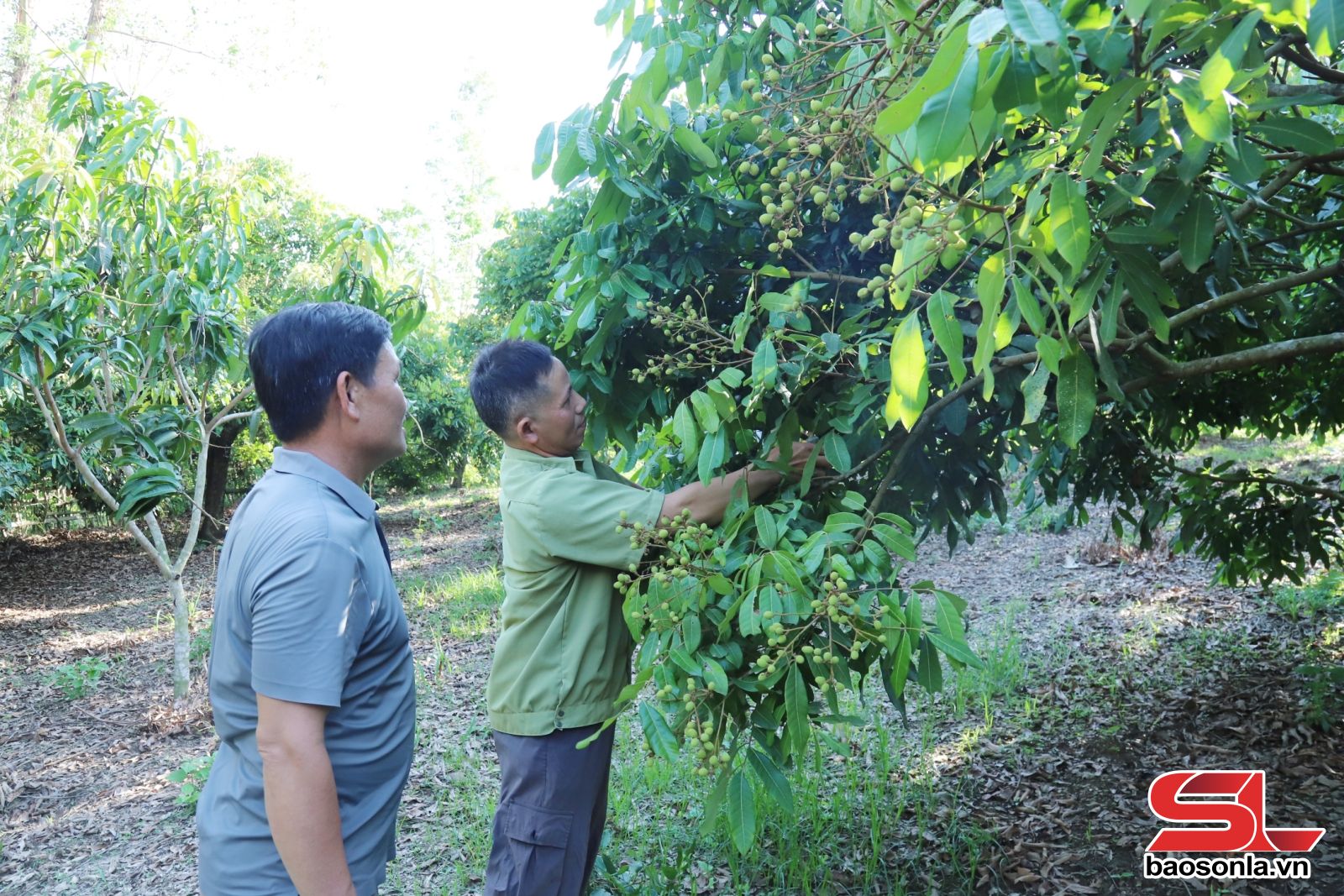
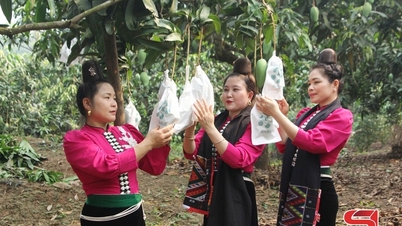
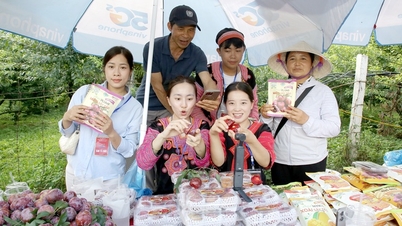
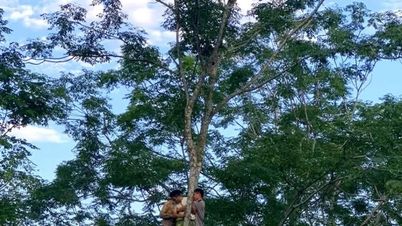
The model of longan cultivation by farmers in Nam Ty commune.
To achieve a breakthrough in the 2026-2030 period, the commune strives to meet five more criteria, including: planning; cultural infrastructure; production organization; healthcare; environment and food safety. Simultaneously, it aims to increase average per capita income to over 30 million VND/year, and reduce the poverty and near-poverty rate by an average of 3%/year. Nậm Ty commune is focusing on promoting awareness of the people's role as key stakeholders, while prioritizing resources for improving transportation infrastructure. It encourages the development of commodity production and the expansion of agricultural product consumption linkage models, applying digital transformation to management, operation, and promotion of local products. It integrates programs and projects and mobilizes social resources to create leverage for achieving the new rural development goals on schedule.
Source: https://baosonla.vn/nong-thon-moi/nam-ty-vuot-kho-xay-dung-nong-thon-moi-g0dwwV1DR.html




















































































Comment (0)