

Review and provide guidance on the implementation of environmental criteria.
After more than 12 years of implementing the National Target Program for New Rural Development, Son La province has now entered Phase III. The province has 59 out of 188 communes meeting the New Rural Development standards, with 5 communes achieving advanced New Rural Development status; Son La City has completed its New Rural Development program, and Quynh Nhai district is striving to meet the New Rural Development standards by 2025. The rural landscape in many localities has comprehensively improved, moving towards a modern, bright, green, clean, and beautiful environment.
Contributing to the implementation of environmental criteria by localities, over the years, the Department of Natural Resources and Environment has issued guiding documents including: Guidance No. 118/HD-STNMT dated May 10, 2022, on the implementation of some environmental criteria and indicators under the National Criteria Set for New Rural Communes and Advanced New Rural Communes in the 2021-2025 period; Guidance No. 156/HD-STNMT dated June 13, 2022, on the implementation of some environmental criteria and indicators under the National Criteria Set for New Rural Districts in the 2021-2025 period;
Guidance No. 376/HD-STNMT dated December 5, 2022, on implementing several environmental indicators in criterion No. 14, "Spatial Landscape and Quality of Living Environment," under the set of criteria for new rural villages and sub-districts in the 2022-2025 period; Guidance No. 122/HD-STNMT dated May 4, 2023, on implementing criteria (1, 2, 3, 4, 5, 8, 9) on landscape and quality of living environment for villages and sub-districts achieving model new rural standards under the set of criteria for new rural villages and sub-districts in the 2022-2025 period.
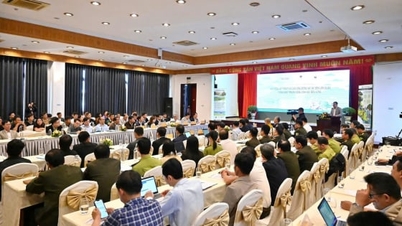
Every year, the province has implemented a plan to disseminate and publicize laws on environmental protection. In particular, it has proactively promoted the dissemination and training on environmental protection in the construction of new rural areas for delegates including officials from departments, agencies, district and city People's Committees, and commune, ward, and town People's Committees responsible for implementing the new rural area construction program.
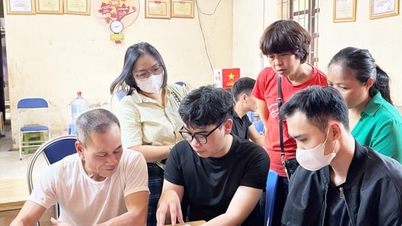
In 2023, 37 documents were issued to guide, direct, and urge the implementation of environmental criteria under the National New Rural Area Criteria Set for the 2021-2025 period. Inspections and guidance were provided to 4 communes registering to achieve New Rural Area standards and 3 communes registering to achieve advanced New Rural Area standards in 2023.
Directing specialized departments to urge and guide the People's Committee of Quynh Nhai district in organizing and implementing environmental targets and criteria; surveying, evaluating, and proposing investment policies for two environmental construction projects under the environmental criteria of Quynh Nhai district; coordinating with the Department of Construction, the Project Management Board for Civil and Industrial Works and Urban Development to work with the People's Committee of Quynh Nhai district to resolve difficulties and obstacles in the process of investing in wastewater and solid waste treatment facilities in the district.
Developing models and movements for environmental protection.
Based on the guidance of the Department of Natural Resources and Environment, the People's Committees of districts and cities have directed the Departments of Natural Resources and Environment to develop plans and guidelines for each indicator in the environmental criteria. In coordination with relevant departments and units, the People's Committees of communes have strengthened propaganda and mobilization efforts to raise public awareness of rural environmental protection, gradually changing the fundamental perceptions, habits, and customs of the community regarding the necessity of implementing environmental criteria.
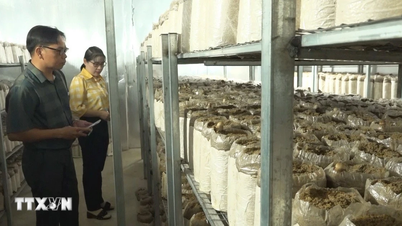
Environmental protection criteria have been incorporated into the village's regulations and customs; linked to the emulation of building culturally exemplary families. Initially, several models for preserving the ecological environment in conjunction with community tourism have been formed in the city and the districts of Moc Chau, Van Ho, Mai Son, etc.
Many effective environmental protection models have been developed and maintained, such as: environmental sanitation in villages and hamlets, the "My house is green, clean, and beautiful" movement, and the "building a family with 5 no's and 3 clean's" movement spearheaded by the Women's Union; "Farmers collecting, sorting, and processing rural waste into fertilizer at the source," and "Farmers self-managing environmental protection" spearheaded by the Farmers' Association; and the "Saturday trip to the grassroots" program in Mai Son, Thuan Chau, and Phu Yen districts, where officials help people renovate and beautify their houses and gardens, collect and process waste, and plant trees...
Continue to improve the quality of the rural environment.
However, since 2022, in implementing the set of criteria for new rural communes and advanced new rural communes for the period 2021-2025, some environmental indicators and criteria have increased their compliance levels compared to the previous period, causing difficulties for many localities in the implementation process. The quality of reviewing and evaluating the results of environmental indicators and criteria in communes remains weak, inaccurate, and incomplete according to the guidelines of the Department of Natural Resources and Environment.
In some localities, the involvement of local Party committees and authorities, as well as the participation and support of the people, is still low; communes have not done a good job of disseminating information and mobilizing people to participate in building new rural areas. Rural environmental landscapes have not received adequate attention, with the continued practice of keeping livestock under houses, production and business establishments failing to comply with environmental protection regulations, and planting flowers and trees along transportation routes; there is still a situation where solid waste collection and treatment are not carried out according to regulations...
Furthermore, some districts have not allocated sufficient funds to communes to organize the collection, transportation, and treatment of solid waste in accordance with regulations. Many production, business, and service establishments in numerous communes are mostly small-scale, scattered, and have not prioritized investment in environmental treatment systems.
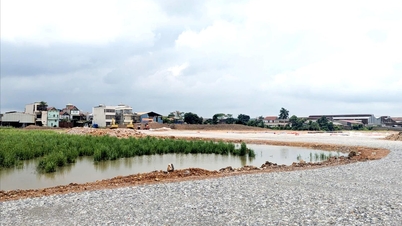
In Quynh Nhai district, according to the criteria for a New Rural Area, there must be a solid waste collection and treatment system that meets environmental requirements; the percentage of household solid waste directly buried should be 50% of the total generated. However, Quynh Nhai does not yet have a centralized household solid waste treatment facility; waste is currently collected and processed at a temporary landfill in Ai village, Muong Giang commune, through direct burial. Therefore, investing in a centralized household solid waste treatment facility using advanced technology requires significant investment and a long implementation period.
According to the leaders of the Provincial Department of Natural Resources and Environment, to address the difficulties faced by localities, since the beginning of the year, the Department has continued to strengthen inspection, supervision, and guidance of communes in implementing environmental targets and criteria. It has also innovated and diversified its efforts in disseminating policies and laws on environmental protection, mobilizing the public to enhance their role and responsibility in maintaining environmental hygiene and creating a beautiful rural landscape.
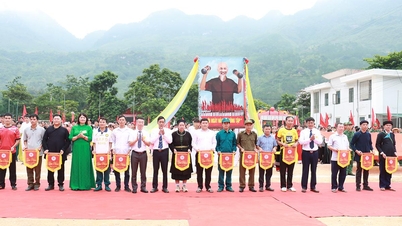
Regularly organize training courses for state management officials on environmental protection at the district and commune levels. Continue to urge and guide Quynh Nhai district to promote the implementation of environmental protection work. Organize a launching ceremony to respond to the Clean World Campaign 2023 in Quynh Nhai district, attracting a large number of people to participate...
In the coming period, the Department of Natural Resources and Environment requests that localities focus on maintaining and improving the quality of environmental criteria in new rural communes and advanced new rural communes. They should develop plans and roadmaps to complete environmental targets year by year, focusing on directing and allocating resources to support and strive to achieve the goals of the New Rural Development Program.
Assign specific tasks and responsibilities to members of the Steering Committee for New Rural Development, and to the commune's associations and organizations responsible for directly disseminating information, mobilizing, and guiding people in beautifying gates, fences, and keeping their houses clean, beautiful, and tidy. Develop and maintain flower-lined and tree-lined roads, creating a bright, green, clean, and beautiful environment. Maintain and expand self-governing models for environmental protection, waste collection and treatment, and waste sorting at source...
Source
















































































Comment (0)