Following a four-month ban (from September to December 2025), the Philippines reopened its international rice import market on January 1st. Currently, the country maintains a 15% tariff on imported rice, while a proposal to raise the tariff to 20% is still awaiting approval.
The Philippines is Vietnam's largest market for rice, accounting for nearly 40% of its rice exports in 2025. Therefore, the Philippines' resumption of rice imports has had a somewhat positive impact on Vietnam's rice exports. Customs data shows that in the first half of January 2026, rice exports reached 318,000 tons, about 50,000 tons higher than the same period in 2025.
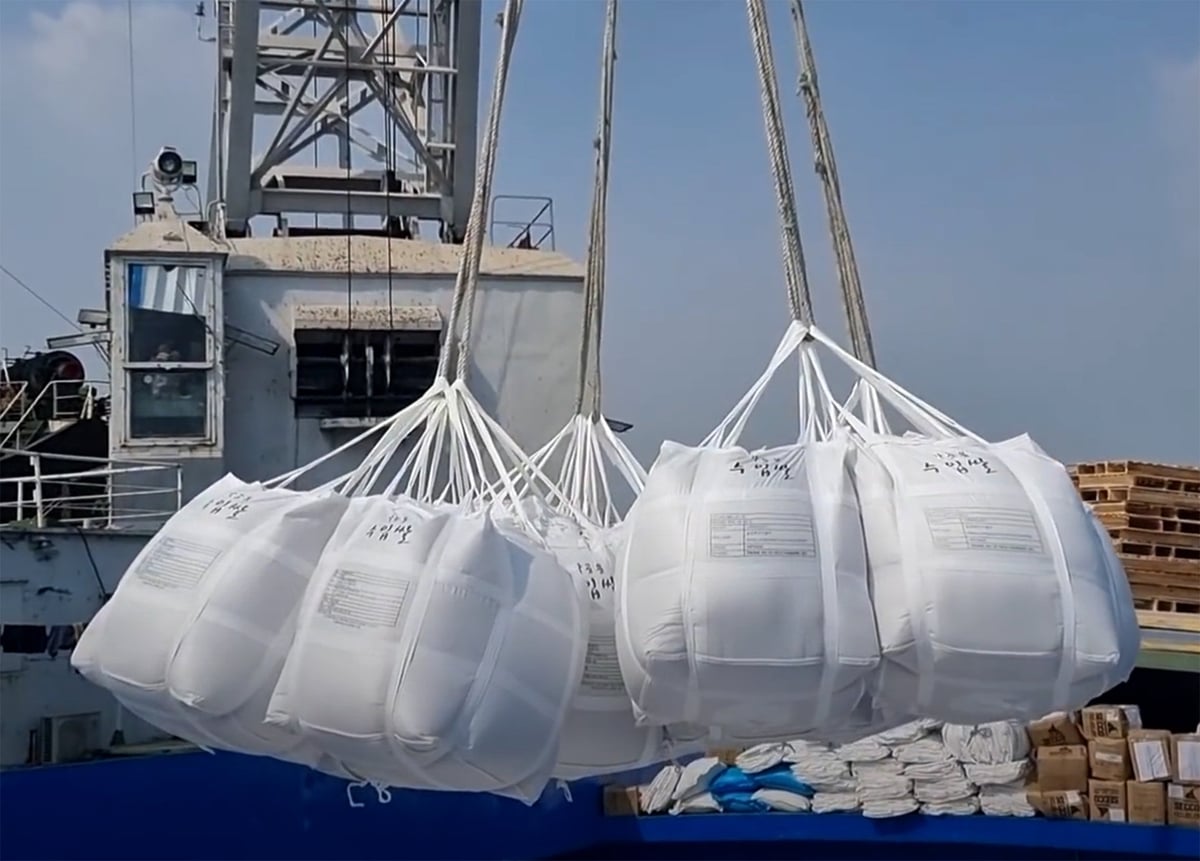
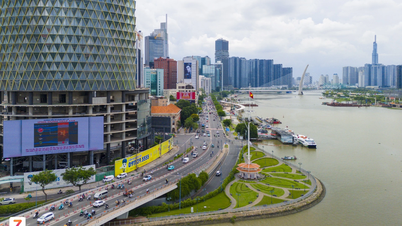
Rice exports through a port in Ho Chi Minh City. Photo: Thanh Son .
According to the Vietnam Trade Office in the Philippines, during a meeting with the Trade Office earlier this month, Philippine Agriculture Secretary Francisco P. Tiu Laurel Jr. stated that the Philippines plans to import 3.6 million tons of rice in 2026, of which 75-80% will come from Vietnam, equivalent to 2.7-2.88 million tons.
Although the Philippines has resumed rice imports, its new regulations are posing significant challenges to Vietnam's rice industry.



The Vietnam Trade Office in the Philippines stated that the Philippines will not stop importing rice in 2026; however, the country will implement measures to manage the volume of imports, especially during the harvest season for Filipino farmers.
To manage the volume of rice imports, the Philippines uses the Phytosanitary and Quarantine Import Permit (SPSIC) tool. According to the Vietnam Food Association (VFA), the new regulations of the Philippine government require rice imported into the country to pass through 17 designated ports and to arrive within 60 days of receiving the SPSIC.
Mr. Do Ha Nam, Chairman of the VFA, shared that at the beginning of the year, Vietnam usually focuses on exporting rice to the Philippines, with few contracts from other markets. Therefore, the Philippines' very sporadic issuance of SPSIC certificates each month is leading to a situation of intense competition among rice exporting businesses, thereby negatively impacting domestic rice prices and markets, especially as the winter-spring crop in the Mekong Delta is about to enter its main harvest season.
Given this situation, Mr. Do Ha Nam suggested that to ensure good sales of the 2025-2026 winter-spring rice crop, banks need to flexibly increase credit limits for businesses during the peak season of the winter-spring crop so that businesses have sufficient capital to purchase and temporarily store rice. When businesses have a ready supply of rice in their warehouses to sell gradually, foreign countries cannot force down the price of Vietnamese rice.
At the same time, instead of stockpiling rice, Mr. Do Ha Nam advised businesses to switch to stockpiling dry paddy because it has a much longer shelf life (if properly stored, dry paddy can be milled for 6 months or a year, and the quality of the rice remains good). Recently, some businesses have invested in silos for storing dry paddy.
At the same time, Mr. Do Ha Nam also suggested that the Government pay attention to the issue of temporarily storing rice from the 2025-2026 winter-spring crop. Currently, rice prices are low, and winter-spring rice is of very good quality, so temporarily storing winter-spring rice would be very beneficial.
In addition, attention should be paid to the implementation of government contracts that have been signed. Recently, the Vietnamese government has reached rice trade agreements with Singapore and Senegal. Based on these agreements, the VFA (Vietnam Food Association) has held meetings and authorized Vinafood 1 and Vinafood 2 to act as the focal points for implementing these contracts in accordance with the requirements of the Ministry of Industry and Trade . The current issue is the lack of government-agreed purchase contracts from Singapore and Senegal.


Regarding the Philippine market, a government-level agreement on rice trade will also be finalized in the near future. The Vietnam Trade Office in the Philippines stated that the Philippine Minister of Agriculture has announced that the two countries may proceed with exchanges to sign an agreement on 2.5 million tons of rice.
In 2025, Vietnam's rice exports to Bangladesh are expected to reach 105,000 tons, an increase of more than 203 times compared to 2024, thanks to the government-level rice trade agreement between the two countries.
Source: https://nongnghiepmoitruong.vn/philippines-tai-nhap-khau-gao-viet-d795484.html



![[Photo] Prime Minister Le Minh Hung presides over the thematic session on promoting science and technology development and innovation.](https://vphoto.vietnam.vn/thumb/1200x675/vietnam/resource/IMAGE/2026/06/23/1782207872934_ndo_br_dsc-1724-jpg.webp)